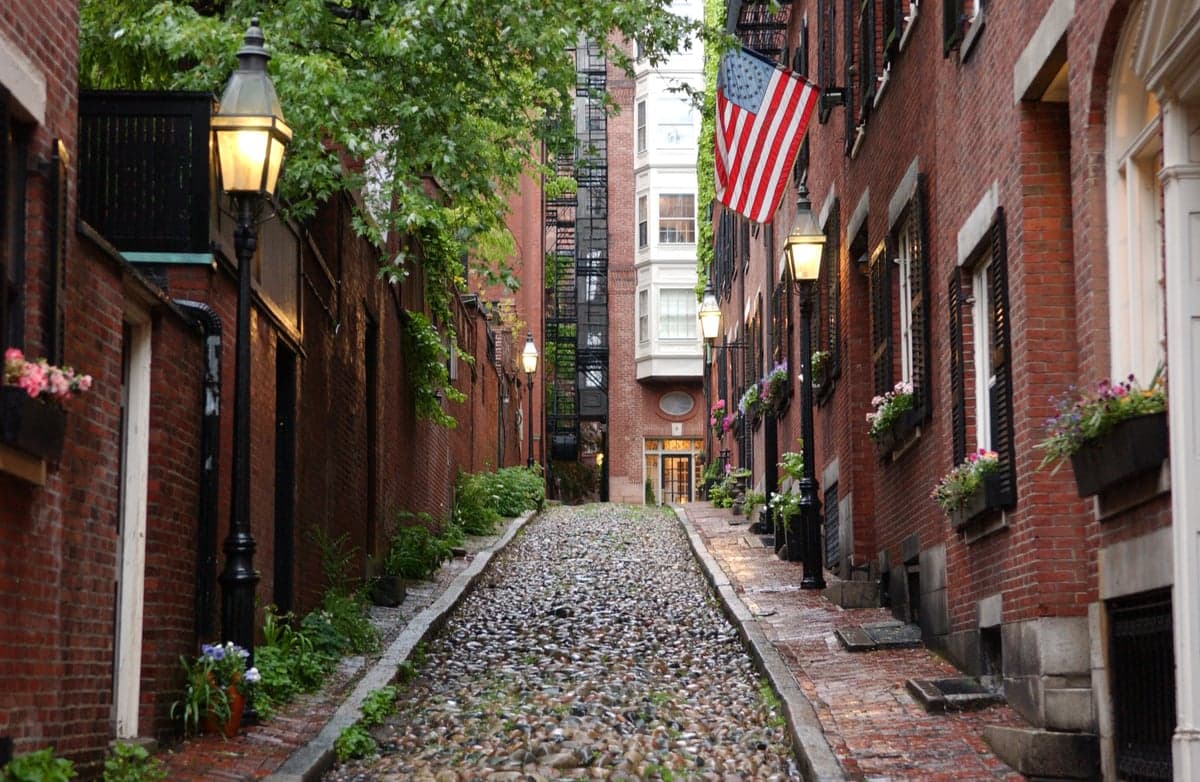
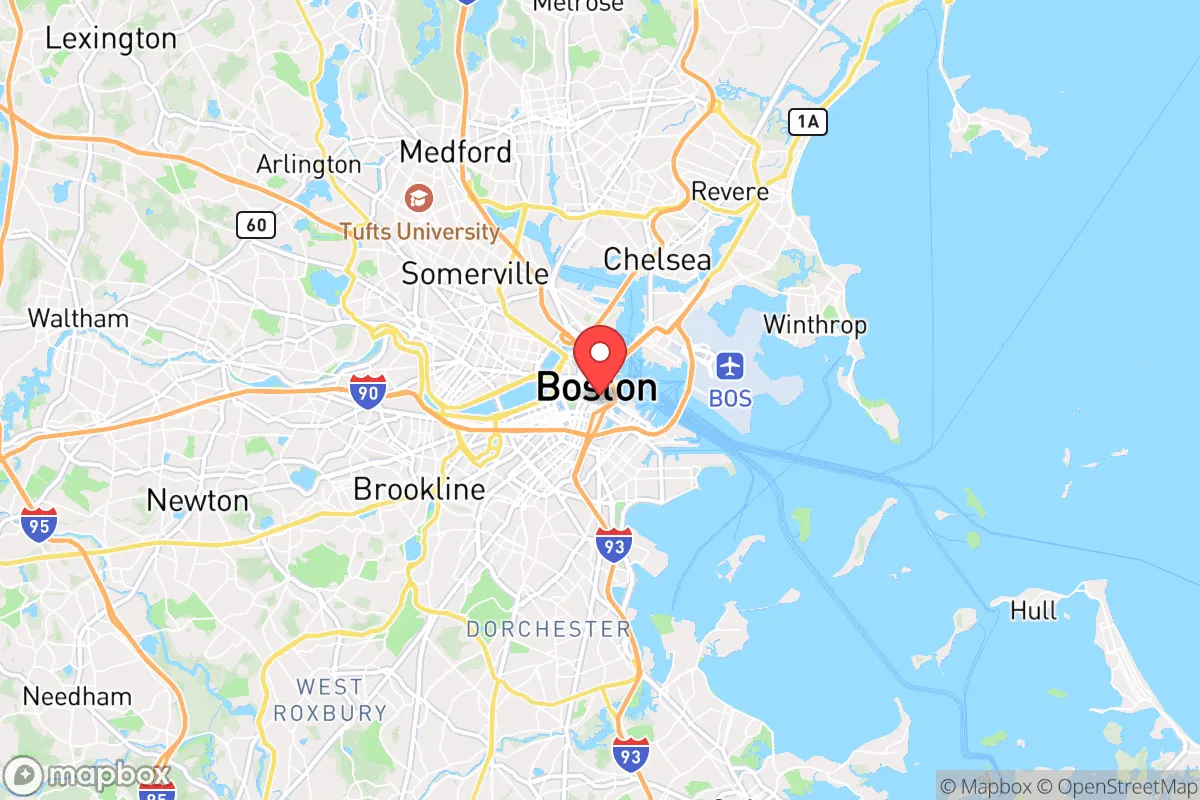
Photo: Wikipedia
Strategic Assessment of Boston, MA
High tactical risk. This location is likely close to major population centers, strategic targets, or sits in a high-disaster corridor. A retreat property and careful exit planning is required.
What does the Strategic Assessment tell us?
Our Strategic Assessment grades tactical survivability of an area. Major population centers, military targets, fallout zones, natural disasters, and border exposure all drive risk — lower exposure means a more defensible position in a crisis.
This is heavily inspired by Joel Skousen's Strategic Relocation book. Highly recommended you checkout the book ($)What does this tell us?
Our Strategic Assessment grades tactical survivability of an area. Major population centers, military targets, fallout zones, natural disasters, and border exposure all drive risk — lower exposure means a more defensible position in a crisis.
This is heavily inspired by Joel Skousen's Strategic Relocation book. Highly recommended you checkout the book ($)Strategic Pillars

Key Distances
Regional Safe Places
Below is our recommended "safe zones" in Massachusetts and the surrounding area based on our strategic heuristics. For most people, it's unrealistic to live in a “safe zone” full-time due to work, family or other personal reasons. They tend to be more rural. However, many of these areas are perfect for second homes and retreat properties that double as a vacation home or even a short-term rental.
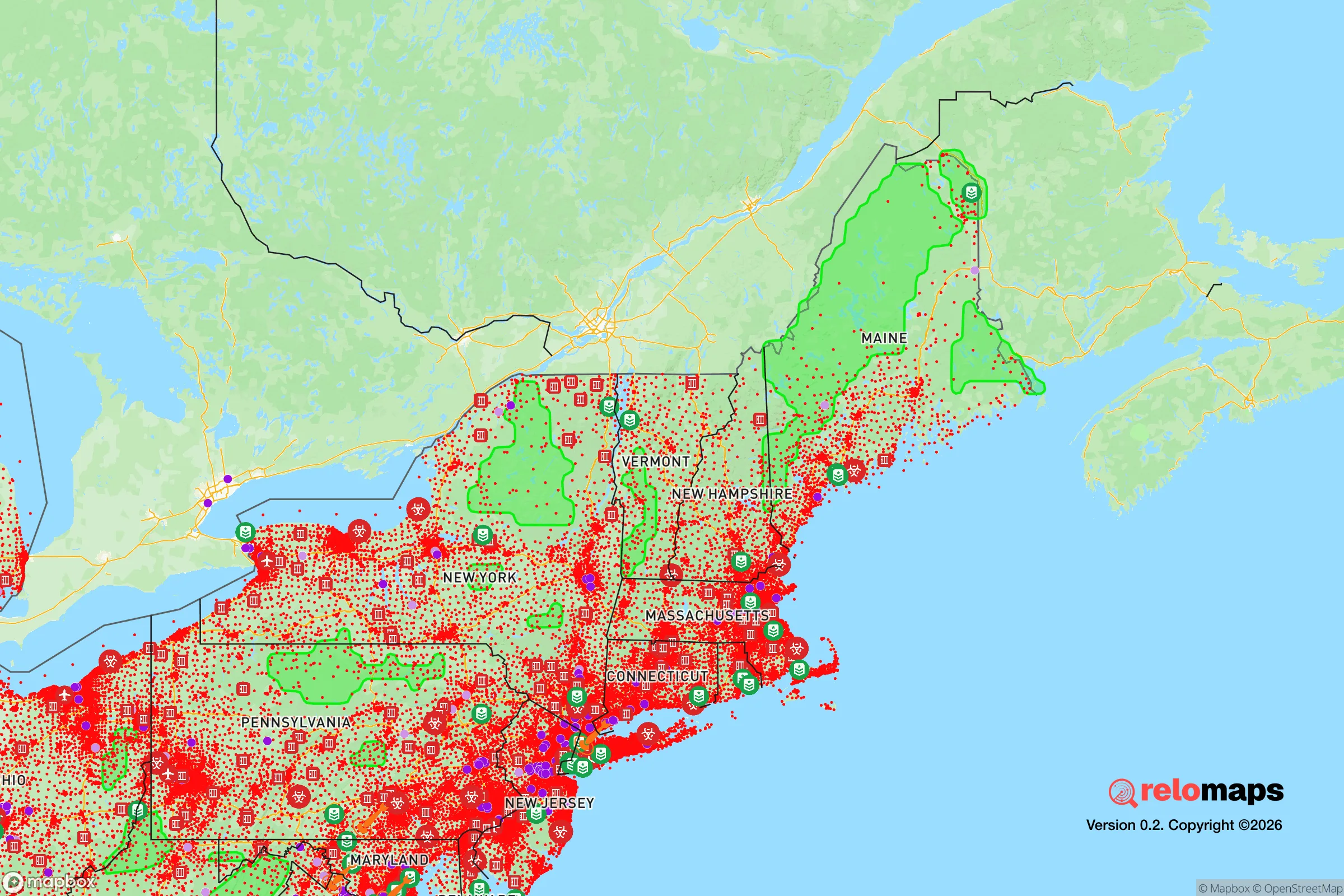
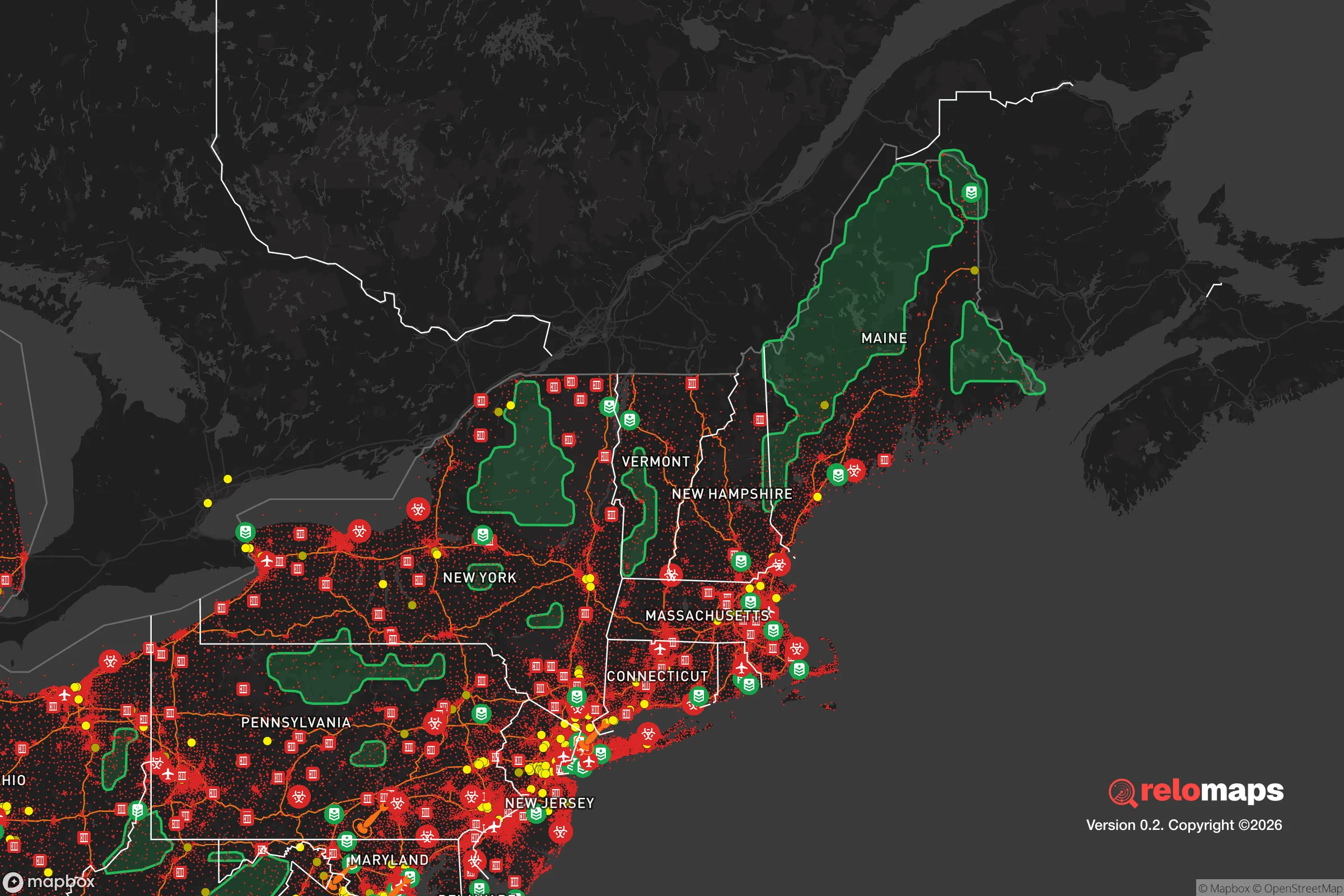


Important Note: For informational purposes only. This does not mean nothing bad ever happens in the green zones. Please use common sense. This is based on public data and modeled with AI. We tried to take a conservative approach but mistakes happen. We update this regularly as new information becomes available.
Solar Generator Recommendations
Backup power matters more here than in safer locations. We've picked three solar generators across budgets and capacity tiers — start with the budget unit if you only need a few essentials, or step up if you want to run a fridge and HVAC for days at a time.

Jackery Portable Power Station Explorer 300
Budget OptionPower on the Go: Weighing only 11 lbs, it's convenient to set up and store with book-sized foldable solar panels

BLUETTI Portable Power Station AC180
Designed for both indoor and outdoor scenarios, AC180 is highly capable as it has a robost capacity and continuous output power.

EF ECOFLOW DELTA Pro Ultra Power Station
Upgraded PickEcoFlow DELTA Pro Ultra is a whole-home energy system designed to grow with your family. Integrated with the Smart Home Panel 2, it scales to meet your evolving energy needs — keeping your home powered, intelligent, and secure through every stage of life.
We earn a commission, at no additional cost to you.
Strategic Assessment Analysis
Boston, Massachusetts, presents a complex strategic picture for the conservative-minded prepper or survivalist. While its deep history, world-class medical infrastructure, and dense network of universities offer certain resilience advantages, its geographic and political realities create severe liabilities for those prioritizing long-term security and self-sufficiency. The city’s position as a major coastal population center, a hub of global finance and academia, and a deep-blue political stronghold means it is simultaneously a high-value target and a low-likelihood environment for the kind of decentralized, community-based preparedness many in this audience seek. The core tension here is between Boston’s undeniable institutional strength and its extreme vulnerability to the very disruptions—civic unrest, infrastructure collapse, supply chain shocks—that preppers plan for.
Geographic position and natural advantages for long-term survival
Boston sits on a peninsula in Massachusetts Bay, a location that historically provided excellent natural harbor access and defensibility. The surrounding region offers a mix of coastal plains, rolling hills, and dense forests stretching west toward Worcester and the Berkshires. For a relocator, the key natural advantage is water: the Charles and Mystic Rivers, combined with the bay and numerous inland reservoirs like Quabbin Reservoir (about 65 miles west), provide abundant freshwater sources, though access within the city itself is heavily controlled by municipal infrastructure. The climate is four-season, with cold winters that can be harsh but also serve as a natural barrier to large-scale movement during a crisis. The region’s dense suburban and exurban ring—towns like Concord, Lexington, and Acton—offers some buffer from the urban core, but the entire eastern half of Massachusetts is effectively a continuous metroplex. For a prepper, the natural advantages are real but require a strategic retreat: the farther west you go into central or western Massachusetts, the more defensible terrain, forest cover, and agricultural land you find. Boston itself is a poor long-term bug-in location due to its density and reliance on fragile supply lines, but the broader region’s natural resources—timber, game, water—are better than many coastal cities.
Risks, exposures, and proximity to high-value fallout landmarks
Boston’s risk profile is dominated by its status as a Tier-1 target for any major geopolitical or domestic disruption. The city is home to Logan International Airport, the Port of Boston, and the headquarters of major financial institutions like Fidelity Investments and State Street Corporation. It also hosts Harvard University, MIT, and dozens of biotech and defense research labs—facilities that would be prime targets for cyberattacks, EMP strikes, or physical sabotage. The proximity to the Boston Navy Yard and the Massachusetts Military Reservation on Cape Cod adds another layer of military-related risk. For the prepper, the biggest concern is the fallout from a mass casualty event or civic unrest: Boston’s dense urban fabric, narrow streets, and reliance on public transit mean that any disruption—whether a terrorist attack, a pandemic resurgence, or a supply chain collapse—would cascade rapidly. The city’s political leadership is overwhelmingly progressive, which in a crisis could mean delayed or ideologically constrained responses to security threats, such as restrictions on firearms or private property rights. Additionally, Boston sits on the Atlantic coast, making it vulnerable to hurricane storm surge and sea-level rise, though these are slower-moving threats compared to the immediate dangers of civil disorder. For a relocator, the key takeaway is that being within 50 miles of Boston means being within the blast radius of any major event targeting the Northeast Corridor.
Practical resilience for a relocator: food, water, energy, and defensibility
For a single individual or family looking to establish a resilient foothold near Boston, the practical challenges are significant. Food security is a major weakness: the city imports nearly all its food via truck and rail, with local agriculture limited to small farms in the outer suburbs and western Massachusetts. Community gardens exist but are insufficient for any sustained disruption. Water security is better—the Massachusetts Water Resources Authority (MWRA) system draws from Quabbin and Wachusett Reservoirs, which are well-protected and gravity-fed, but the distribution network is aging and vulnerable to sabotage. A prepper would need a backup plan: rainwater catchment, well access (rare within city limits), or a filtration system for surface water. Energy is another weak point: Boston relies on natural gas and electricity from a grid that has shown fragility during winter storms (e.g., the 2015 gas explosions in the Merrimack Valley). Solar with battery backup is feasible in the suburbs but less so in the dense city. Defensibility is poor in Boston proper—dense rowhouses, limited sightlines, and a high population density make it hard to secure a home. The outer suburbs and exurbs (e.g., towns like Stow, Bolton, or Harvard) offer better options: larger lots, more rural character, and proximity to state forests for hunting and foraging. However, even these areas are within a 45-minute drive of downtown, meaning they would face refugee flows and resource competition during a crisis. For a relocator, the smartest play is to buy property at least 30 miles west of Boston, ideally near a reliable water source and with enough land for a garden and small livestock. The city’s medical infrastructure (Mass General, Brigham and Women’s) is world-class, but in a collapse scenario, those hospitals would be overwhelmed within hours.
The overall strategic picture for Boston is one of high risk and limited reward for the conservative prepper. The city’s institutional strengths—top-tier healthcare, dense social networks, and a robust economy—are real but are also the very reasons it would be a focal point for any major disruption. The political and cultural environment is deeply hostile to the firearms, self-reliance, and community-based preparedness that this audience values. For a single individual or family willing to live in the outer ring of the Boston metro area, there are pockets of opportunity: access to jobs in biotech or defense, good schools in conservative-leaning suburbs like Norfolk or Wrentham, and proximity to the natural resources of central Massachusetts. But the core advice from a survivalist perspective is clear: Boston itself is a bug-out location, not a bug-in location. If you must be in the region for work or family, position yourself as far west as practical, build a self-sufficient homestead with redundant water and power systems, and maintain a low profile. The city’s resilience is institutional, not individual—and in a crisis, institutions fail faster than prepared families. For those prioritizing long-term security over career opportunity, the smarter move is to look at states like New Hampshire or Maine, where the political climate and population density align better with a prepper mindset. Boston is a great place to visit for a medical emergency or a Patriots game, but it is a poor choice for a strategic relocation if your goal is to weather the coming storms.

* Values derived from national, state, county, city and local statistics and may differ in a specific area. Last updated: 2026-04-15T23:33:52.000Z
Narrative content on this page is AI-generated and may contain mistakes. Verify any details that matter before acting on them.
ReloMaps may earn a commission from affiliate links at no extra cost to you.

