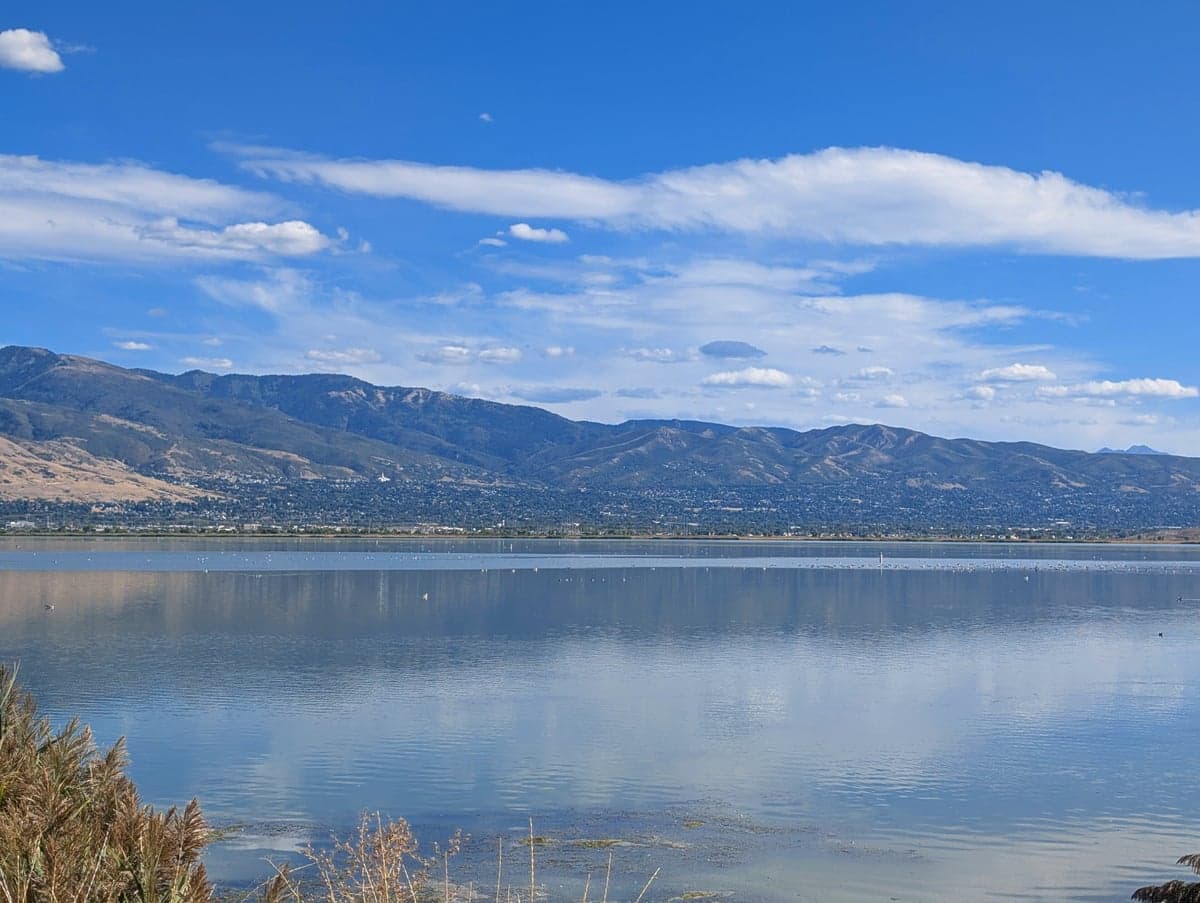
Photo: Wikipedia
Political ClimatePolitical Climate in Bountiful, UT
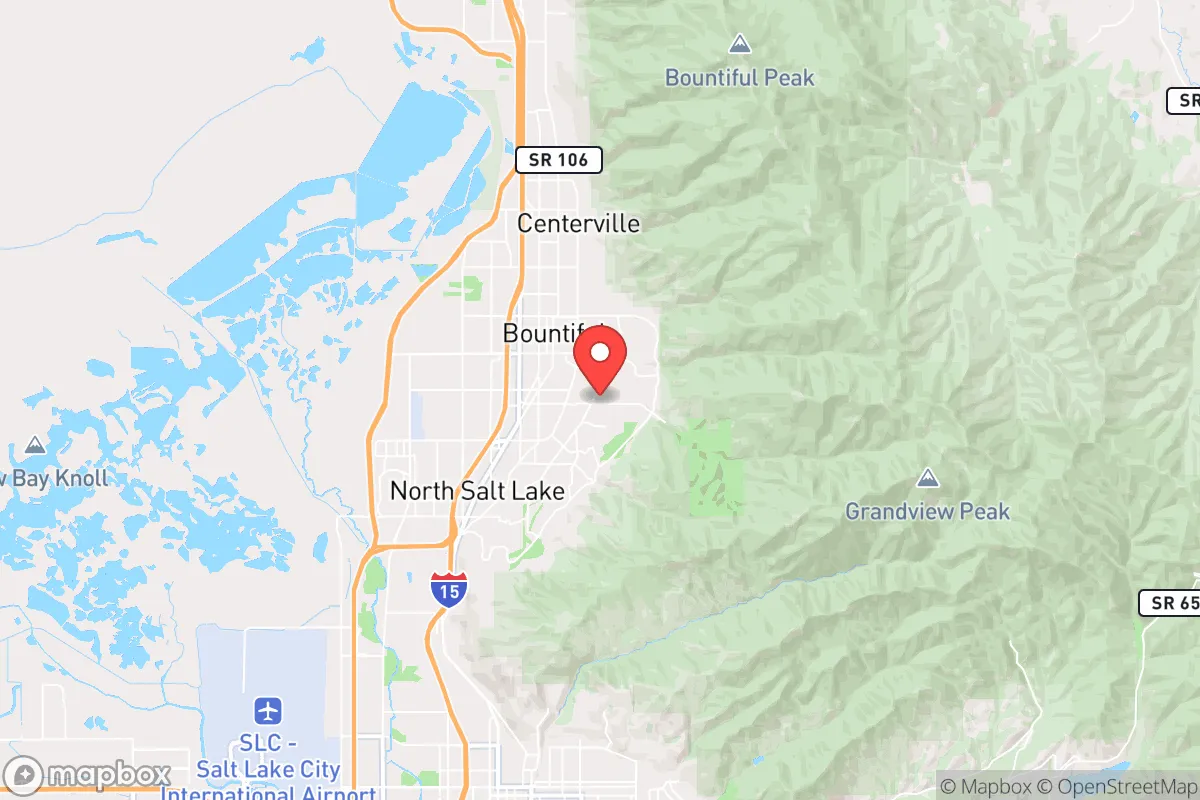
District shown is the primary district for this city’s centroid. Cities may span multiple districts.
Local Political AnalysisPolitical Analysis of Bountiful, UT
Bountiful, Utah, has long been a rock-solid conservative stronghold, and that hasn't changed much. With a Cook PVI of R+10, the city leans heavily Republican, and you can feel it in the local culture and voting patterns. But like a lot of places, there's been a slow, subtle shift over the last decade or so—nothing dramatic, but enough that longtime residents like me notice it. The core is still deeply red, but you're starting to see a few more progressive ideas creep in around the edges, especially among younger folks and newcomers from out of state.
How it compares
If you want to see what a truly deep-red Utah town looks like, drive 20 minutes north to Farmington or 30 minutes to Kaysville—those places are even more conservative, with a stronger emphasis on traditional values and less tolerance for anything that smells like government overreach. Bountiful is still very much in that camp, but it's a bit more moderate than its neighbors. Compare it to Salt Lake City, just 10 miles south, and the contrast is stark. Salt Lake has gone full progressive in many ways—higher taxes, more regulations, and a general acceptance of policies that feel like they're eroding personal freedoms. Bountiful, thankfully, has resisted that pull, but the proximity means you get some spillover. The city council here still leans conservative, but you'll hear more talk about "sustainability" and "equity" than you did 20 years ago, which is a red flag for anyone who values limited government.
What this means for residents
For the average family in Bountiful, the political climate means you can still live your life without too much government interference. Property taxes are reasonable, zoning laws are fairly relaxed compared to the chaos in Salt Lake, and there's a strong sense of community self-reliance. But I've seen the warning signs. There's been a push for more bike lanes and "complete streets" projects that feel like a backdoor way to control how you get around. And the school board, which used to be a lock for conservative voices, has seen a few more progressive candidates slip in, pushing curriculum changes that make you wonder if your kids are getting the same values you grew up with. The biggest concern for me is the creeping influence of state-level policies that try to micromanage local decisions—like housing mandates or environmental rules that sound good on paper but end up costing you more in taxes and less in freedom.
One thing that sets Bountiful apart is its strong LDS (Mormon) cultural foundation, which still anchors a lot of the political and social norms. That means you'll find a general respect for family values, personal responsibility, and community service—things that align with a conservative worldview. But I've noticed a growing tension between that traditional base and a newer, more secular crowd that wants to push things like denser housing, more public transit, and "inclusive" policies that feel like they're just a step away from government overreach. The long-term trajectory worries me a bit. If the trend continues, Bountiful could start looking more like a mini-Salt Lake in 10-15 years, with higher taxes, more regulations, and less room for the kind of personal freedom that made this area great. For now, it's still a great place to raise a family if you value conservative principles, but keep an eye on the local elections—that's where the real battle is happening.

State Political ClimatePolitical Climate in Utah
State Political AnalysisPolitical Environment in the State
Utah has long been one of the most reliably conservative states in the nation, with a Republican trifecta controlling the governorship and both legislative chambers for decades. The state’s dominant political coalition is a blend of the Church of Jesus Christ of Latter-day Saints’ cultural influence, a strong free-market ethos, and a deep skepticism of federal overreach. Over the last 10-20 years, the trajectory has been a slow but noticeable shift: the Wasatch Front metros have become more moderate and, in some pockets, outright progressive, while rural and suburban areas have hardened their conservative stance. The 2024 presidential election saw Donald Trump win Utah by about 21 points, down from 27 points in 2016, signaling a gradual erosion of the GOP’s supermajority in the state’s most populous counties.
Urban vs. rural divide
The political map of Utah is a study in contrasts. Salt Lake County, home to over 40% of the state’s population, has become a battleground. The city of Salt Lake itself is a blue island, with progressive city council members and a mayor who pushed for sanctuary city policies in 2017, though state law later preempted that. Meanwhile, the suburban cities of Sandy, Draper, and South Jordan remain reliably red, with precincts voting +20 to +30 points for Trump. Utah County, anchored by Provo and Orem, is the heart of the state’s conservative base, driven by Brigham Young University and a dense LDS population. In 2024, Utah County voted +35 for Trump. But even here, cracks appear: the city of Provo elected a Democratic mayor in 2021, and younger residents are increasingly libertarian-leaning on social issues. Rural Utah—places like Moab, Price, and Vernal—is deeply red, with coal and oil economies fueling a populist, anti-federal government streak. The divide isn’t just about party; it’s about worldview. Urbanites along the Wasatch Front are more likely to prioritize environmentalism and transit, while rural residents see federal land management as a direct threat to their livelihoods.
Policy environment
Utah’s policy environment is a mixed bag for conservatives. On the plus side, the state has no income tax on Social Security benefits, a flat 4.65% personal income tax rate, and a low 6.1% sales tax rate. Property taxes are among the lowest in the West, with a median effective rate of 0.57%. The regulatory posture is business-friendly: Utah was ranked #1 in economic outlook by the American Legislative Exchange Council (ALEC) in 2024, with right-to-work laws and minimal occupational licensing burdens. Education policy is a flashpoint. The state passed a universal school choice voucher program in 2023, the Utah Fits All Scholarship, which gives families up to $8,000 per child for private school or homeschooling expenses. This is a major win for parental rights. However, the state’s healthcare system is heavily regulated, with a Medicaid expansion under the Affordable Care Act that conservatives fought. Election laws are solid: voter ID is required, and the state has a closed primary system for Republicans. But there’s a growing concern about the influence of the Count My Vote initiative, which allows candidates to bypass the caucus-convention system by gathering signatures—a move that weakens grassroots control.
Trajectory & freedom
Utah is becoming more free in some areas and less free in others. On the positive side, the state expanded gun rights significantly in 2021 with the Constitutional Carry law, allowing permitless carry of concealed firearms for anyone 21 and older. The legislature also passed a Second Amendment Sanctuary resolution in 2023, vowing to resist federal gun control. Parental rights were strengthened with the Utah Parental Rights in Education law (2023), which requires schools to notify parents of any curriculum changes involving sexuality or gender identity and bans instruction on these topics in K-3 classrooms. Medical autonomy took a hit, though: the state passed a near-total abortion ban in 2020 (triggered by Dobbs), but a court blocked it, and the legislature has been unable to pass a clean ban since. Property rights are strong, with no statewide rent control and a robust Eminent Domain protection law. The concerning trend is the Inland Port Authority and Point of the Mountain development projects, which give state-appointed boards massive power to override local zoning—a classic case of government overreach in the name of economic growth. The state also passed a Social Media Regulation Act in 2023, requiring age verification and parental consent for minors, which some see as a necessary protection and others as a slippery slope toward speech control.
Civil unrest & political movements
Utah is not a hotbed of civil unrest, but there are visible flashpoints. The John Birch Society has a strong presence in rural areas, particularly in Cache County and Box Elder County, where anti-federal government sentiment runs deep. In 2020, the Utah Patriot Coalition organized large protests against COVID-19 lockdowns, drawing thousands to the state capitol. On the left, the Utah Rising movement has pushed for environmental justice and police reform, with protests in Salt Lake City following the George Floyd incident. Immigration politics are tense: the state passed a strict E-Verify mandate for employers in 2023, but sanctuary city rhetoric persists in Salt Lake City, where the mayor refused to cooperate with ICE in 2017. The Utah Legislature responded with a law banning sanctuary policies statewide. Election integrity controversies are minimal, but the Utah Democratic Party has filed lawsuits over the closed primary system, arguing it disenfranchises unaffiliated voters. A new resident would notice the strong presence of Libertarian Party activists, especially in Park City and Summit County, where the party regularly fields candidates.
Projection
Over the next 5-10 years, Utah will likely become more politically divided. In-migration from California and other blue states is accelerating, particularly to St. George and Washington County, which are growing at 3-4% annually. These newcomers tend to be more moderate or even left-leaning on environmental and social issues, which could flip Washington County from deep red to purple by 2032. The Wasatch Front will continue to see a rise in Democratic voters, especially in Salt Lake City and Summit County, where tech workers and outdoor enthusiasts are pushing for progressive policies. However, rural Utah will remain a conservative stronghold, and the state’s gerrymandered legislative districts will keep the GOP in power for at least another decade. The biggest wildcard is the Utah Legislature’s ongoing battle with the courts over abortion and school vouchers. If the state’s abortion ban is ultimately upheld, it could galvanize progressive voters and shift the balance in close races. A new resident moving in now should expect to find a state that is still conservative, but with growing pockets of blue that will make statewide elections more competitive than they’ve been in 50 years.
For a conservative relocating to Utah, the bottom line is this: you’ll find a state that largely respects your freedoms—low taxes, strong gun rights, school choice, and a culture of self-reliance. But you’ll also need to be vigilant. The urban centers are drifting left, and the state government’s appetite for big projects and regulatory overreach is growing. If you’re looking for a place where your values are the norm and your voice matters, stick to the suburbs of Utah County or the rural counties. If you move to Salt Lake City or Park City, expect to be in the minority politically, but still within a state that protects your rights at the ballot box. The key is to get involved early—join your local precinct caucus, vote in the closed primary, and keep an eye on the legislature. Utah is still a beacon of freedom in the West, but it’s not immune to the winds of change.
* Values derived from national, state, county, city and local statistics and may differ in a specific area. Last updated: 2026-04-21T12:16:27.000Z
Narrative content on this page is AI-generated and may contain mistakes. Verify any details that matter before acting on them.
ReloMaps may earn a commission from affiliate links at no extra cost to you.

