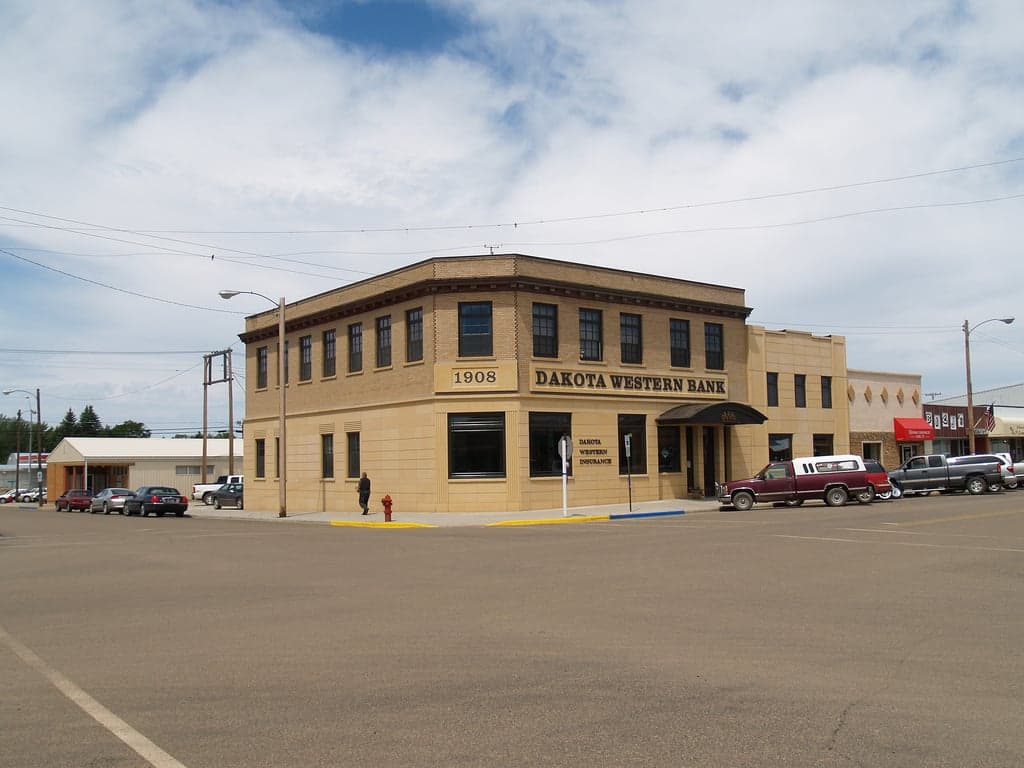
Photo: Wikipedia
Quality of Life in Bowman, ND
Above-average quality of iife. The area offers a reasonable cost of living, decent mobility, and a mix of neighborhood amenities.
What does Quality of Life tell us?
Quality of Life blends cost of living, nearby amenities, socioeconomic signals, and neighborhood character. City-level scores represent the whole municipality; individual neighborhoods can differ.
What does this tell us?
Quality of Life blends cost of living, nearby amenities, socioeconomic signals, and neighborhood character. City-level scores represent the whole municipality; individual neighborhoods can differ.
Cost of Living
28% below national average
The Real Cost of Living in Bowman, ND for 2026
| Tier | Individual | Family (4) |
|---|---|---|
| Survival | $14k | $27k |
| Comfortable | $35k | $52k |
| Luxury | $90k+ | $140k+ |
| Elite (Top 5%) | $106k+ | $165k+ |
137%
The Area Signal
A metric tracking the socioeconomic signals of the area.


Hobbies
Explore the areaGroceries
2 within 10 miles
Gas
0 within 10 miles
Hospital
0 within 20 miles
Airport
DEN — Denver International
Post Office
USPS — Bowman, ND
Critical Amenities
Quality-of-Life Analysis
Bowman, North Dakota, presents a distinctive quality-of-life profile shaped by its remote location, resource-driven economy, and notably low cost of living. With a cost-of-living index of 72—well below the national average of 100—the area attracts a mix of energy-sector workers, ranchers, and families seeking affordability and a slower pace. The population skews toward middle-income households, with a median home value of $181,300 and median rent of $904, making homeownership accessible compared to much of the country. This is a community where economic stability from oil and agriculture meets the practical realities of small-town living in the northern Great Plains.
Cost of living, housing affordability, and how Bowman compares to nearby towns
Bowman’s housing market is a standout feature for affordability. The median home value of $181,300 is roughly 40% below the national median, while the median rent of $904 is similarly low. This places Bowman well below nearby Dickinson (median home value ~$250,000) and even more affordable than Bismarck (~$280,000). The overall cost-of-living index of 72 reflects lower costs across utilities, groceries, and transportation. The average commute of just 18 minutes is a significant quality-of-life advantage, reducing vehicle wear and fuel expenses in a region where distances between towns can be long. For comparison, the national average commute is about 26 minutes. This short drive time means residents spend far less time in transit, freeing up hours for family, recreation, or work.
Local amenities, schools, and what daily life feels like in Bowman
Daily life in Bowman revolves around a compact downtown with essential services, a strong sense of community, and outdoor recreation. The Bowman County School District serves K-12 with a single elementary, middle, and high school, maintaining small class sizes and a graduation rate above 90%. For shopping and dining, residents rely on local businesses—such as the Bowman Hardware & Supply and the Dakota Inn restaurant—or make the 45-minute drive to Dickinson for big-box retailers and medical specialists. The nearby Little Missouri State Park and the Maah Daah Hey Trail offer hiking, horseback riding, and mountain biking, while the Bowman-Haley Lake provides fishing and boating. Winters are long and cold (average January high of 24°F), but the community embraces the season with events like the Bowman Rodeo and the annual Bowman County Fair. The rhythm is quiet and predictable: work, school, local sports, and weekend trips to the Badlands.
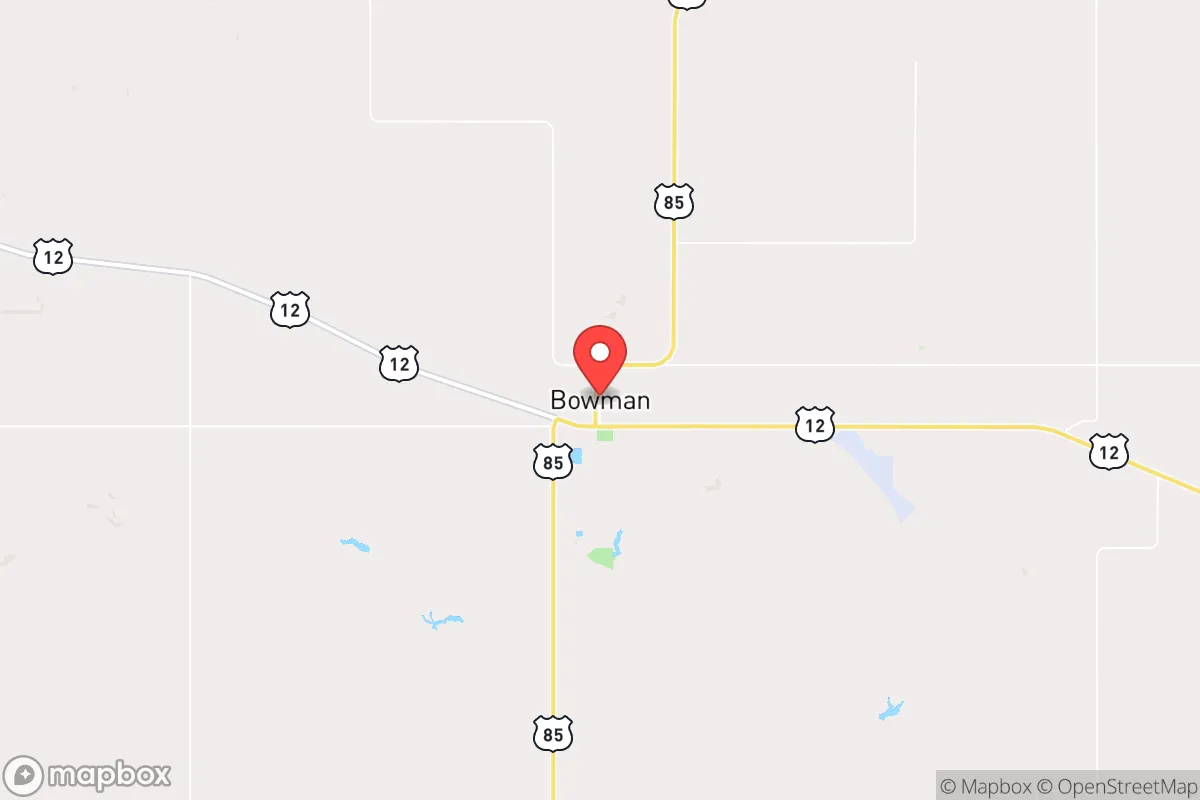
Bowman is best suited for individuals and families who prioritize affordability, short commutes, and a close-knit rural environment over urban amenities. Energy-sector workers—particularly those in oil field services or pipeline maintenance—will find stable employment and reasonable housing costs. Retirees on fixed incomes can stretch savings further here than in most U.S. towns. However, those seeking diverse dining, cultural venues, or robust public transit will find Bowman limiting. The area’s isolation (the nearest major city, Bismarck, is 130 miles east) means self-reliance and a tolerance for long drives for specialized services are essential. For the right person, Bowman offers a low-stress, financially manageable lifestyle with genuine access to the outdoors—a trade-off that works well for those who value space and simplicity over convenience.

Crime in Bowman, ND
Lower crime rates than 95% of comparable U.S. locations.
Violent CrimeViolent Crime Analysis
Property CrimeProperty Crime Analysis
Crime Analysis
Bowman, North Dakota, is a notably safe small city, with violent and property crime rates that are a fraction of both state and national averages. The city’s violent crime rate of 71.2 incidents per 100,000 residents is roughly 80% lower than the national average, while its property crime rate of 284.9 per 100,000 is about 60% below the U.S. figure. This safety profile is consistent with Bowman’s character as a tight-knit, rural community in the southwestern part of the state.
Crime in context
Bowman’s crime data places it among the safest municipalities in North Dakota. The state’s own violent crime rate (approximately 330 per 100,000) is already well below the national average, and Bowman’s rate is less than a quarter of that. Property crime in Bowman is similarly low; the city’s rate is less than half the North Dakota average of roughly 600 per 100,000. For comparison, the national violent crime rate hovers around 380 per 100,000, and property crime around 2,200 per 100,000. Bowman’s numbers are exceptional, reflecting a community where serious crime is rare. This stands in stark contrast to large metropolitan areas, particularly those with liberal and progressive district attorneys who often prioritize offender rehabilitation over public safety, leading to higher recidivism and more criminals on the street. Bowman’s local justice system, operating in a conservative rural context, does not face those systemic pressures.
What residents experience
For residents, the low crime rates translate into a daily life where unlocked doors and casual neighborhood trust are common. The most frequent incidents are minor thefts and vandalism, not violent confrontations. The Bowman Police Department maintains a visible but low-key presence, and community policing is the norm. The city’s small population (under 1,700) means that most residents know one another, creating natural social oversight that deters crime. There are no significant gang or drug-related violent crime problems that plague larger cities. The overall sense of security is a major draw for families and retirees moving to the area.
Neighborhood-level variation is minimal in Bowman. The entire city is relatively homogeneous in terms of safety, with no statistically significant high-crime districts. The most notable difference is between the residential core and the commercial corridors along Highway 85, where transient traffic can lead to occasional thefts from vehicles. Even there, incidents are infrequent. For those seeking the safest possible environment, the quiet residential streets east of the railroad tracks see the least activity of any kind. Overall, Bowman offers a level of personal safety that is increasingly rare in the United States, particularly when compared to the permissive criminal justice policies found in many progressive-run urban centers.
* Values derived from national, state, county, city and local statistics and may differ in a specific area. Last updated: 2026-04-19T06:17:29.000Z
Narrative content on this page is AI-generated and may contain mistakes. Verify any details that matter before acting on them.
ReloMaps may earn a commission from affiliate links at no extra cost to you.

