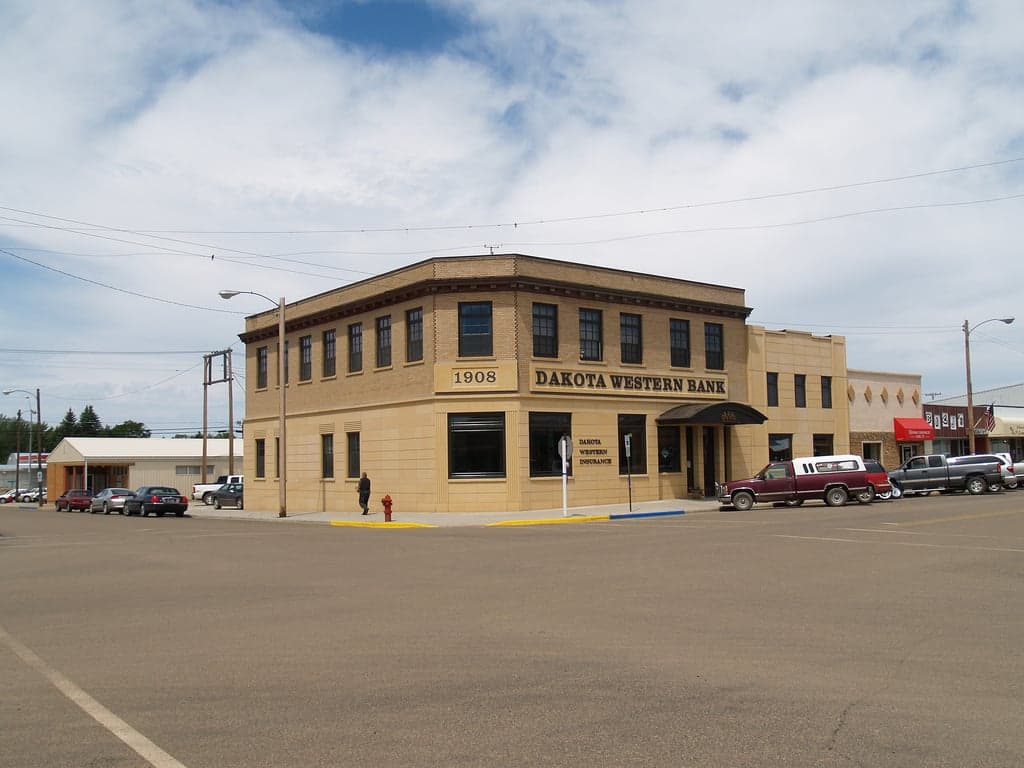
Photo: Wikipedia
Strategic Assessment of Bowman, ND
Strong survivability profile. Good buffer from population centers, with manageable environmental and tactical risks.
What does the Strategic Assessment tell us?
Our Strategic Assessment grades tactical survivability of an area. Major population centers, military targets, fallout zones, natural disasters, and border exposure all drive risk — lower exposure means a more defensible position in a crisis.
This is heavily inspired by Joel Skousen's Strategic Relocation book. Highly recommended you checkout the book ($)What does this tell us?
Our Strategic Assessment grades tactical survivability of an area. Major population centers, military targets, fallout zones, natural disasters, and border exposure all drive risk — lower exposure means a more defensible position in a crisis.
This is heavily inspired by Joel Skousen's Strategic Relocation book. Highly recommended you checkout the book ($)Strategic Pillars

Key Distances
Regional Safe Places
Below is our recommended "safe zones" in North Dakota and the surrounding area based on our strategic heuristics. For most people, it's unrealistic to live in a “safe zone” full-time due to work, family or other personal reasons. They tend to be more rural. However, many of these areas are perfect for second homes and retreat properties that double as a vacation home or even a short-term rental.
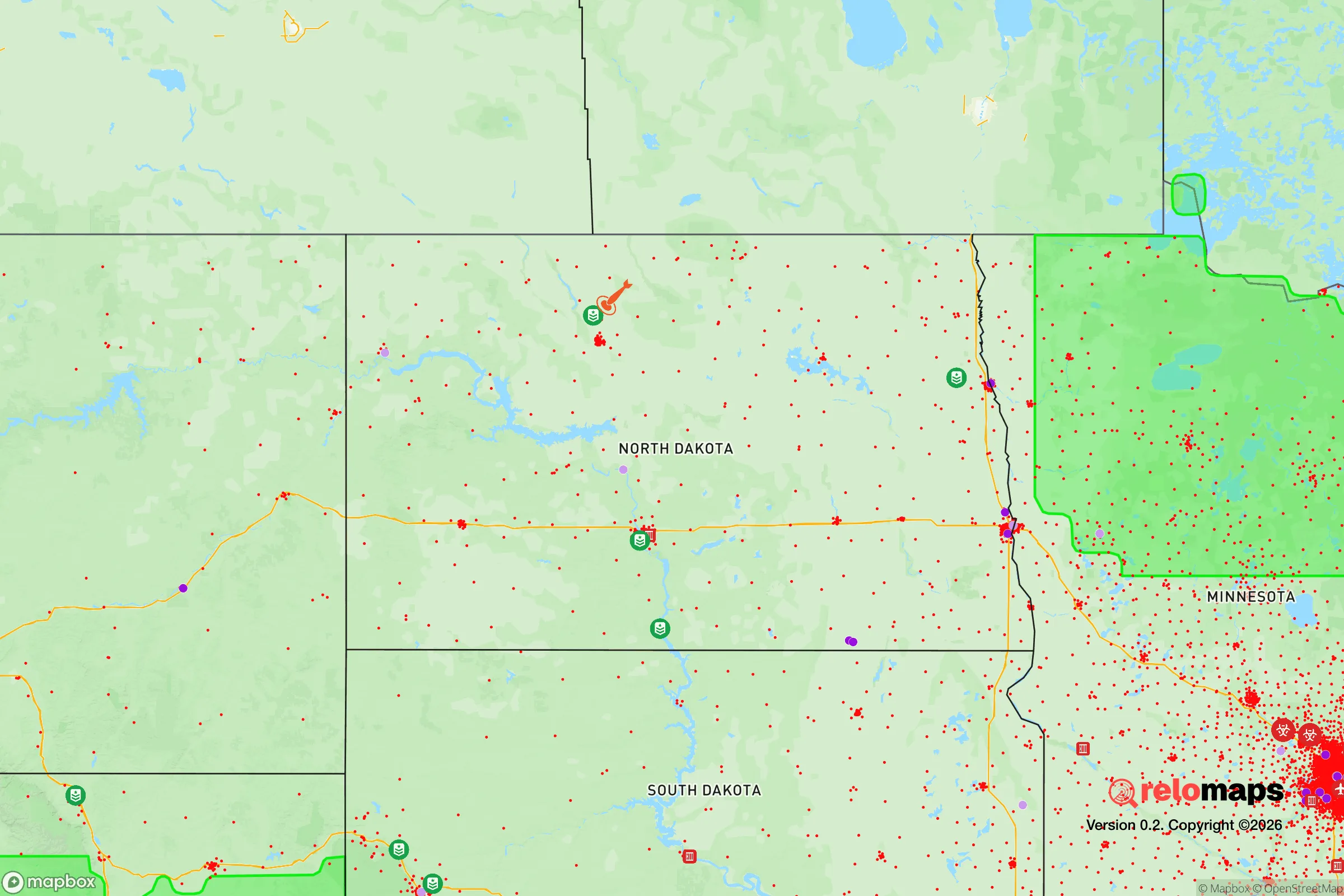
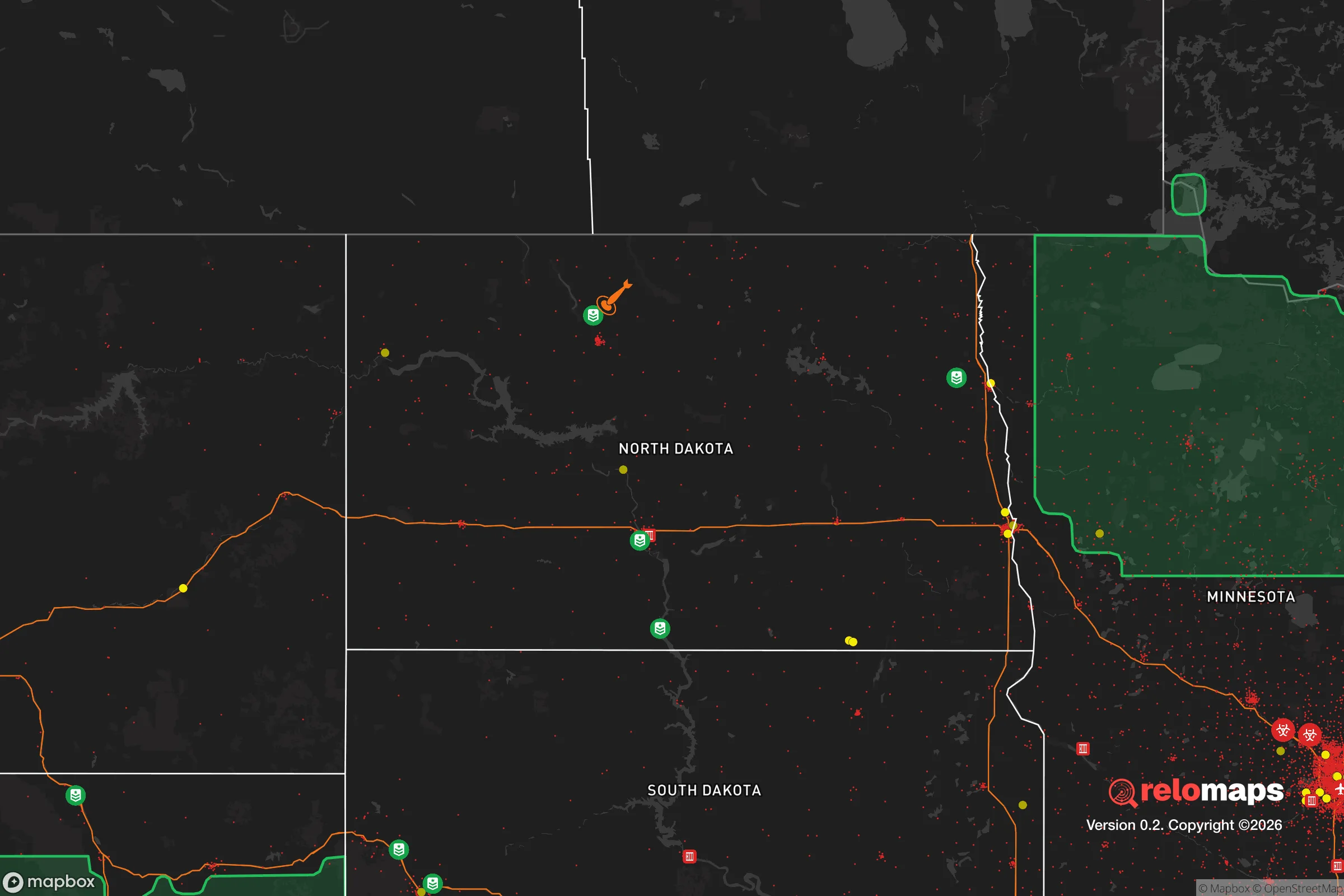


Important Note: For informational purposes only. This does not mean nothing bad ever happens in the green zones. Please use common sense. This is based on public data and modeled with AI. We tried to take a conservative approach but mistakes happen. We update this regularly as new information becomes available.
Solar Generator Recommendations
Backup power matters more here than in safer locations. We've picked three solar generators across budgets and capacity tiers — start with the budget unit if you only need a few essentials, or step up if you want to run a fridge and HVAC for days at a time.

Jackery Portable Power Station Explorer 300
Budget OptionPower on the Go: Weighing only 11 lbs, it's convenient to set up and store with book-sized foldable solar panels

BLUETTI Portable Power Station AC180
Designed for both indoor and outdoor scenarios, AC180 is highly capable as it has a robost capacity and continuous output power.

EF ECOFLOW DELTA Pro Ultra Power Station
Upgraded PickEcoFlow DELTA Pro Ultra is a whole-home energy system designed to grow with your family. Integrated with the Smart Home Panel 2, it scales to meet your evolving energy needs — keeping your home powered, intelligent, and secure through every stage of life.
We earn a commission, at no additional cost to you.
Strategic Assessment Analysis
Bowman, North Dakota, offers a strategic relocation option for those prioritizing resilience, self-sufficiency, and distance from the vulnerabilities of major population centers. Its location in the far southwestern corner of the state, near the Montana line, places it in a region characterized by low population density, a strong agricultural and energy economy, and a culture of self-reliance that aligns with a prepper or survivalist mindset. For single individuals and parents seeking a haven from the risks of civic unrest, mass casualty events, and cascading infrastructure failures, Bowman presents a compelling case built on geographic isolation and practical resource advantages.
Geographic position and natural advantages for long-term security
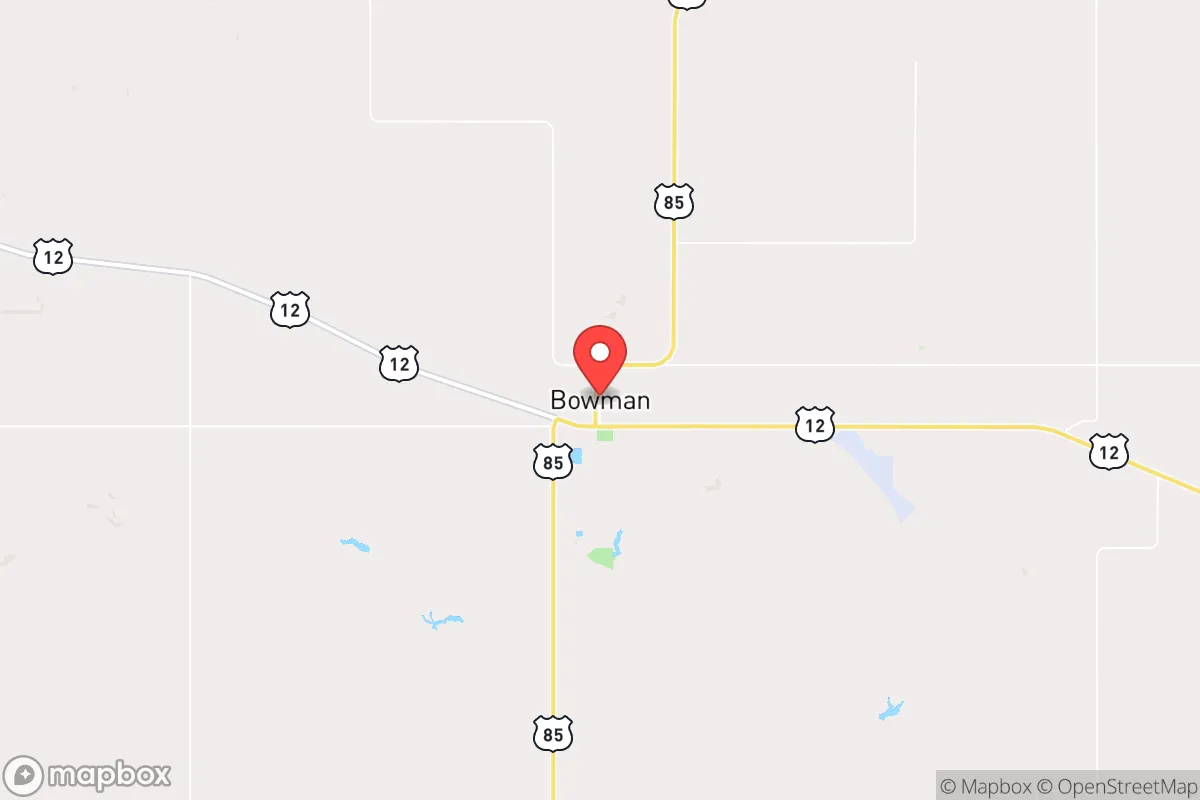
Bowman’s primary strategic asset is its remoteness. The nearest city of significant size is Bismarck, roughly 130 miles to the east, while the major metropolitan areas of the Upper Midwest—Minneapolis, Denver, and Billings—are all several hours away. This distance acts as a natural buffer against the chaos that can erupt in densely populated zones during a crisis. The surrounding landscape is open, semi-arid plains and badlands, offering long sightlines and limited cover for any potential threat. The area is also part of the Bakken oil formation, which provides a local energy surplus. Bowman County has a population density of roughly 3 people per square mile, meaning a relocator can secure significant acreage without neighbors within earshot, a critical factor for both privacy and defensibility. The local economy is anchored by agriculture (wheat, cattle, and sunflowers) and energy extraction, meaning the community is already accustomed to hard work, practical skills, and mutual aid—values that resonate with a conservative, self-sufficient worldview. The region’s low crime rates and strong local law enforcement presence further reduce the likelihood of internal unrest.
Risks, exposures, and proximity to fallout-relevant landmarks
No location is without risk, and Bowman’s strategic profile includes several exposures that must be weighed. The most significant is its proximity to the Bakken oil fields, which are concentrated to the north and west. While this provides energy independence, it also introduces a risk of industrial accidents, pipeline failures, or even targeted infrastructure attacks. The rail lines that carry crude oil through the area are a potential vulnerability. Additionally, Bowman is roughly 100 miles from the Fort Peck Dam in Montana, a major hydroelectric facility that, if compromised, could cause downstream flooding or regional power disruptions. On the positive side, the area is far from any major nuclear power plants, military bases, or large-scale chemical storage facilities that would be primary targets in a conflict or terrorist event. The nearest significant military installation is the Minot Air Force Base, about 200 miles north, which could be a target but is far enough away that fallout or secondary effects would be minimal. The region’s low population also means it is unlikely to be a destination for refugees fleeing coastal or urban disasters, reducing the risk of resource competition and disease spread.
Practical resilience for a relocator: food, water, energy, and defensibility
For a relocator serious about long-term preparedness, Bowman offers a strong foundation. Water access is a critical consideration; the area is semi-arid, with average annual precipitation around 15 inches. The Little Missouri River and several smaller creeks run through the county, but a well is essential for any property. Groundwater quality is generally good, but depth can vary, so pre-purchase testing is non-negotiable. For food, the agricultural base means local grain, beef, and produce are available, and the growing season, while short (about 120 days), is sufficient for cold-hardy crops like potatoes, carrots, and kale. The local farmers' market and co-ops provide a buffer against supply chain disruptions. Energy is a standout advantage: North Dakota is a net energy exporter, and Bowman County has access to natural gas and oil. Solar and wind potential are also high, with the region averaging over 200 sunny days per year. A relocator could feasibly set up a solar array with battery backup or a small wind turbine to achieve near-total energy independence. For defensibility, the open terrain works both ways: it provides clear sightlines but also limited cover. A well-chosen property with a defensible perimeter—such as a hilltop or a location with natural barriers like creek beds—is ideal. The local culture of hunting and gun ownership is strong, and the sheriff’s office is responsive, but in a prolonged crisis, a relocator should plan to rely on their own capabilities and a trusted network of like-minded neighbors.
The overall strategic picture for Bowman is one of high potential with manageable trade-offs. It is not a perfect fortress—no place is—but it scores well on the metrics that matter most for a survivalist or prepper: isolation, resource availability, and a community ethos that values self-reliance over government dependency. The distance from major cities and high-value targets is a significant positive, while the industrial risks from oil and rail are real but localized. For a single individual or a family willing to invest in a well, solar panels, and a deep pantry, Bowman offers a realistic base from which to weather the storms of a destabilizing world. The winters are harsh, the summers are dry, and the nearest Costco is a four-hour drive, but for those who see the current trajectory of the country as a reason to prepare, that is a small price to pay for genuine security.

* Values derived from national, state, county, city and local statistics and may differ in a specific area. Last updated: 2026-04-19T06:17:29.000Z
Narrative content on this page is AI-generated and may contain mistakes. Verify any details that matter before acting on them.
ReloMaps may earn a commission from affiliate links at no extra cost to you.

