
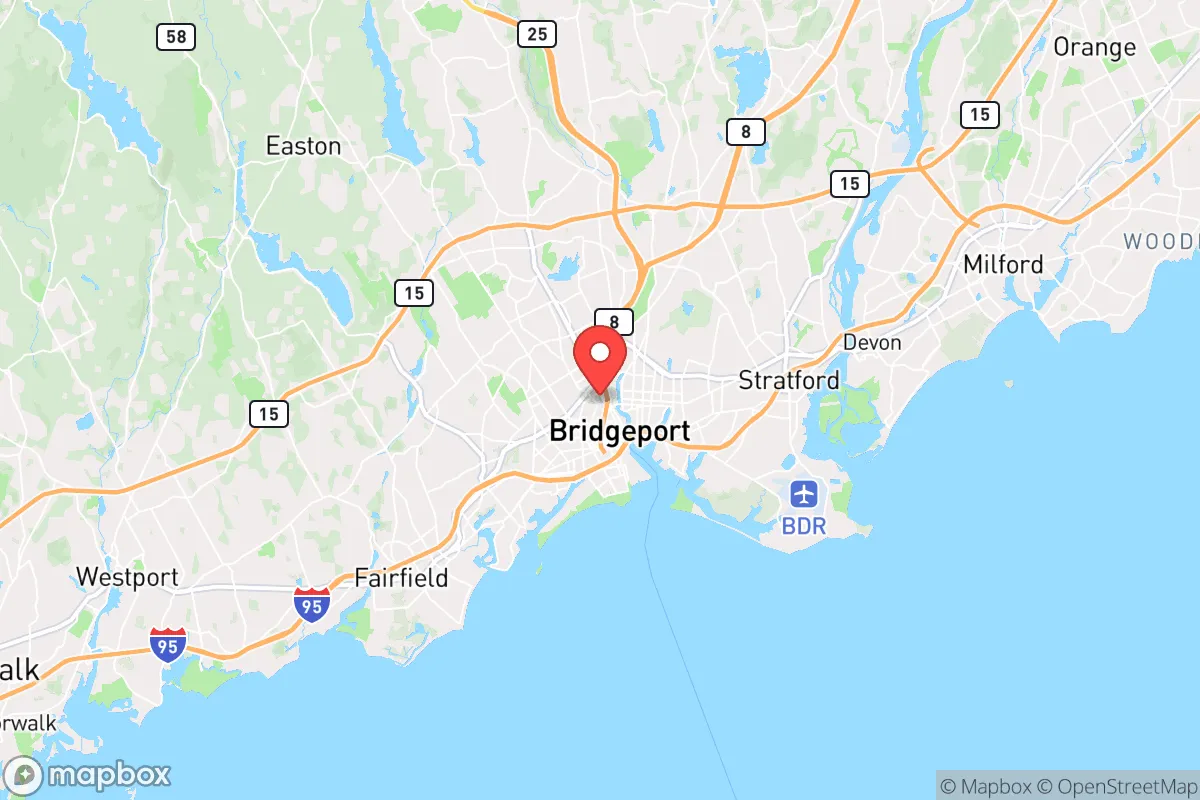
Photo: Wikipedia
Personal Sovereignty in Bridgeport, CT
Viable for self-reliance. Generally workable, though some barriers may limit total independence.
What does Personal Sovereignty tell us?
Personal Sovereignty measures your capacity for self-reliance and independence with minimal government friction. Higher scores mean fewer barriers between you and the way you want to live... but it assumes you have the space you need and good neighbors.
What does this tell us?
Personal Sovereignty measures your capacity for self-reliance and independence with minimal government friction. Higher scores mean fewer barriers between you and the way you want to live... but it assumes you have the space you need and good neighbors.
State Policy
Energy independence: Importer (5% of energy produced in-state)
Personal Liberty
Homesteading

Personal Liberty Analysis
Bridgeport, Connecticut, presents a challenging environment for personal sovereignty, where state-level overreach significantly constrains individual autonomy despite the city's own local dynamics. For those prioritizing self-reliance, minimal government interference, and the ability to live according to one's own values, Bridgeport sits firmly in a high-regulation, high-tax jurisdiction that systematically limits personal freedom. The city's dense urban fabric and deep-blue state governance create a landscape where survivalist and prepper priorities—such as firearm ownership, off-grid living, and medical autonomy—face substantial legal and practical hurdles. This analysis examines the specific constraints on personal sovereignty in Bridgeport, offering a clear-eyed assessment for those considering relocation from a conservative, liberty-minded perspective.
Tax burden and regulatory climate: how Connecticut's fiscal posture limits autonomy
Connecticut's tax burden is among the heaviest in the nation, and Bridgeport residents bear the full weight of this fiscal reality. The state imposes a progressive income tax with rates reaching 6.99%, and Bridgeport adds a local property tax rate that is one of the highest in Fairfield County, often exceeding 40 mills. This means a modest home assessed at $200,000 can carry an annual property tax bill of $8,000 or more—a significant drain on resources that could otherwise fund personal preparedness, land acquisition, or off-grid investments. The regulatory posture is equally aggressive: Connecticut has some of the strictest environmental and building codes in the Northeast, making any kind of independent construction or modification—such as adding a root cellar, installing solar panels, or building a detached workshop—subject to lengthy permitting processes and costly compliance. For the prepper mindset, this translates into a system where the state extracts maximum revenue while simultaneously controlling how you can use your own property. The cumulative effect is a reduced capacity for financial independence and a constant bureaucratic friction that erodes the ability to act decisively on personal preparedness goals.
Self-defense rights and gun law specifics: what Bridgeport residents face
Connecticut's gun laws are among the most restrictive in the United States, and Bridgeport residents must navigate a dense web of regulations that fundamentally limit the right to self-defense. The state requires a permit to purchase any handgun or long gun, mandates a background check for every sale (including private transfers), and maintains a ban on "assault weapons" and magazines capable of holding more than 10 rounds. For the survivalist, this means no AR-15 platform rifles, no standard-capacity magazines for handguns, and a legal environment where self-defense tools are heavily circumscribed. Concealed carry is shall-issue, but the permitting process is costly and time-consuming, involving an 8-hour safety course, fingerprinting, and a local police chief's sign-off—which in Bridgeport can be subject to administrative delays. Open carry is effectively prohibited by law. Stand-your-ground protections do not exist; Connecticut imposes a duty to retreat before using deadly force, even in one's own home, unless the attacker is inside the dwelling. For those who view firearm ownership as a non-negotiable component of personal sovereignty, Bridgeport's legal landscape is deeply hostile. The practical takeaway: if you value the ability to own standard defensive firearms and carry them without government permission, Bridgeport is not a viable option.
Self-reliance and homesteading viability: lot sizes, zoning, and off-grid feasibility
Bridgeport's urban density and zoning code make traditional homesteading or off-grid living nearly impossible. The city is built on small lots—typically 4,000 to 6,000 square feet—with most properties lacking the space for substantial food production, livestock, or water independence. Zoning regulations prohibit chickens, goats, or any farm animals on residential lots under one acre, which covers the vast majority of the city. Rainwater collection is technically allowed but must comply with state health codes that effectively discourage large-scale cistern systems. Solar panel installation is permitted but requires electrical permits and utility interconnection agreements that add cost and complexity. Composting toilets and alternative waste systems are not allowed on municipal sewer lines, which serve virtually all properties. For the prepper seeking to reduce reliance on grid infrastructure, Bridgeport offers little room for meaningful self-sufficiency. The city's housing stock is predominantly older multi-family homes and small single-family houses, with limited yard space and no agricultural zoning. Even community gardening faces bureaucratic hurdles. The bottom line: Bridgeport is a consumer city, not a producer city, and anyone serious about homesteading or off-grid resilience should look to rural areas of the state or elsewhere entirely.
Personal liberties: parental rights, medical autonomy, speech, and property
Connecticut's state government has aggressively asserted authority over areas traditionally considered personal or family matters, and Bridgeport residents are subject to these policies. Parental rights have been eroded by laws that allow minors to consent to certain medical treatments—including mental health care and substance abuse treatment—without parental notification. Vaccine mandates for school attendance are strict, with no philosophical exemption and a narrow religious exemption that has been effectively eliminated by court rulings. During the COVID-19 pandemic, Connecticut maintained one of the longest-lasting emergency declarations in the country, including mask mandates and business closures that were enforced in Bridgeport. Medical autonomy is further constrained by the state's prescription drug monitoring program and restrictions on alternative treatments. Free speech is constitutionally protected, but local noise ordinances and public assembly permit requirements can be used to limit protest or expressive activity. Property rights are heavily circumscribed by zoning, environmental regulations, and a statewide rent control preemption that does not apply to Bridgeport's own rent stabilization ordinance—meaning landlords face additional restrictions on how they manage their own property. For the conservative individual, the cumulative effect is a state that treats parents as secondary decision-makers, mandates medical interventions, and subjects property use to extensive government approval. This is not a jurisdiction that respects the principle that your body, your children, and your land are yours to govern.
In the broader context of personal sovereignty, Bridgeport ranks poorly compared to other regions of the country. The combination of high taxes, restrictive gun laws, dense urban zoning, and aggressive state intervention in family and medical decisions creates an environment where self-reliance is systematically discouraged. For the survivalist or prepper, the city offers few advantages and many obstacles. While some may find community or employment opportunities here, those seeking to maximize personal autonomy—to own defensive firearms without bureaucratic hurdles, to raise food on their own land, to make medical decisions for their family without state interference—will find Bridgeport a frustrating and limiting place to live. The strategic relocation decision for liberty-minded individuals should strongly favor states with lower tax burdens, stronger property rights, and greater respect for the Second Amendment and parental authority. Connecticut, and Bridgeport specifically, represents the opposite of that ideal.

* Values derived from national, state, county, city and local statistics and may differ in a specific area. Last updated: 2026-04-24T12:22:16.000Z
Narrative content on this page is AI-generated and may contain mistakes. Verify any details that matter before acting on them.
ReloMaps may earn a commission from affiliate links at no extra cost to you.

