Photo: Wikipedia
Demographics of Bridgeport, CT
Affluence Level in Bridgeport, CT
A below-average socioeconomic profile. Incomes, home values, and educational attainment trail the U.S., with higher poverty and unemployment.
People of Bridgeport, CT
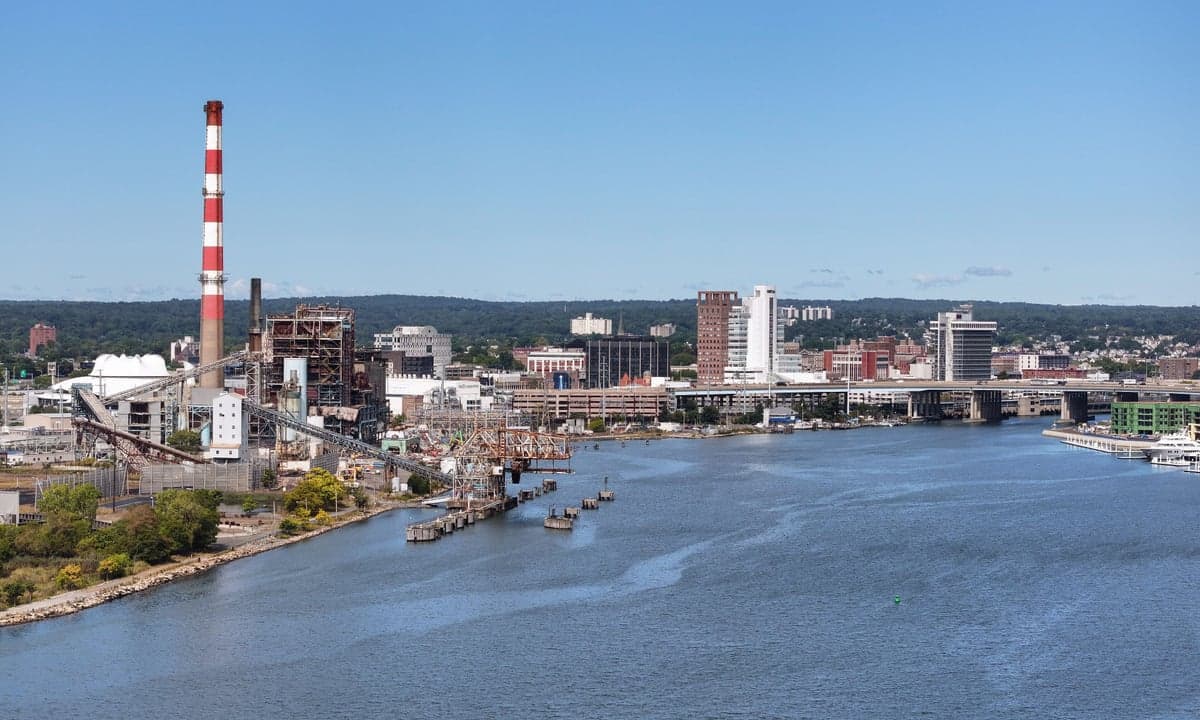
Bridgeport, Connecticut, is a dense, majority-minority city of 148,012 residents, defined by its deep ethnic layers and a working-class character that persists despite decades of industrial decline. The city is 44.6% Hispanic, 25.6% White, 19.5% Black, 3.6% East/Southeast Asian, and 1.7% Indian (subcontinent), with 17.9% foreign-born and only 23.1% holding a college degree. Its population is younger and more diverse than Connecticut’s average, but it also carries higher poverty rates and a reputation as a gritty, affordable alternative to pricier Fairfield County suburbs.
How the city was settled and grew
Bridgeport’s population history begins with its 19th-century rise as a manufacturing hub. Incorporated as a city in 1836, it drew waves of European immigrants to work in its factories, brass mills, and sewing-machine plants (notably the Wheeler & Wilson Manufacturing Company). The first major wave was Irish, settling in the East Side and South End neighborhoods near the harbor and rail yards. Germans followed, clustering in the North End around what is now Park Avenue, building breweries and churches. By the early 1900s, Italian and Polish immigrants arrived, with Italians concentrating in the West Side and Hollow (a working-class district near the downtown core), while Poles formed a tight-knit community in the East End. These groups built the city’s dense, triple-decker housing stock and Catholic parish network. The city peaked at 156,748 residents in 1950, nearly all White, powered by wartime manufacturing at companies like Remington Arms and General Electric.
Modern era (post-1965)
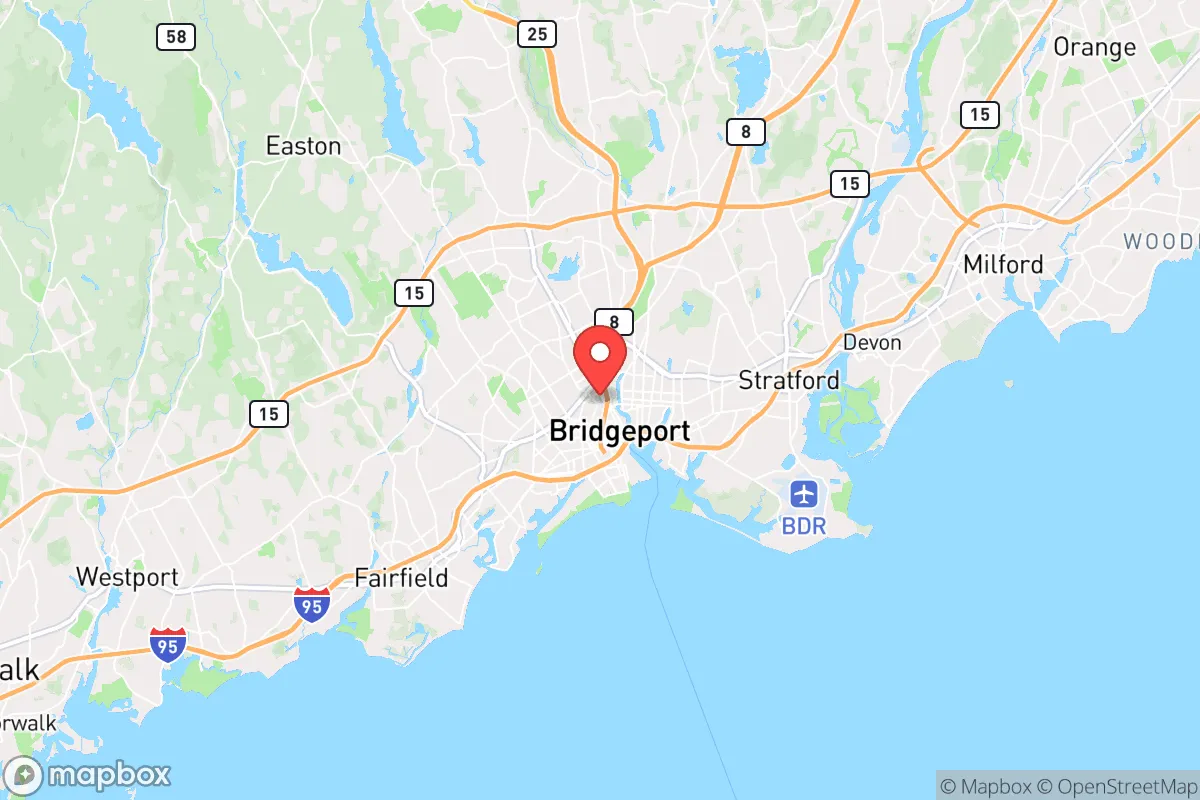
The 1965 Hart-Cellar Act and the collapse of Bridgeport’s industrial base reshaped the city’s population dramatically. Between 1950 and 1980, the city lost over 30,000 residents as White families left for suburbs like Trumbull and Stratford, a classic case of white flight. Into this vacuum came two major groups. First, Black migrants from the American South, who had been arriving since the 1940s for factory jobs, consolidated in the East Side and South End, areas that had once been Irish and Italian. Second, Puerto Rican migrants began arriving in the 1960s, settling heavily in the Hollow and West Side, where they replaced aging Italian populations. By 1990, the city was roughly 40% White, 40% Black, and 20% Hispanic. The 2000s brought a new wave: Central Americans (Guatemalans, Salvadorans) and Mexicans, who moved into the East End and North End, pushing the Hispanic share past 40% by 2020. The East/Southeast Asian population (3.6%) is concentrated in the North End near the University of Bridgeport, with a smaller Vietnamese cluster in the West Side. The Indian subcontinent population (1.7%) is newer and more dispersed, with small clusters in the North End and Black Rock neighborhood.
The future
Bridgeport’s population is not homogenizing; it is tribalizing into distinct ethnic enclaves. The Hispanic share is still growing, driven by both immigration and higher birth rates, and is projected to approach 50% by 2035. The White share continues to shrink, now 25.6%, concentrated in the Black Rock and St. Vincent’s areas near the Fairfield border. The Black population has plateaued at around 20%, with some outmigration to suburbs like Stratford and Milford. East/Southeast Asian and Indian communities are small but growing slowly, drawn by the University of Bridgeport and affordable housing. The foreign-born share (17.9%) is stable, not surging, suggesting that immigration is not accelerating. The city remains a low-education, low-income outlier in Fairfield County, and its future depends on whether it can retain the second-generation Hispanic population, which often leaves for the suburbs. For a newcomer, Bridgeport offers the most affordable housing on the Gold Coast, but also the highest crime rates and weakest schools in the region.
Bridgeport is becoming a predominantly Hispanic working-class city with a Black minority and a shrinking White presence, a pattern common to older industrial cities in the Northeast. For a conservative-leaning mover, this means a place where community is often ethnic and insular, where English proficiency varies by neighborhood, and where the public school system struggles. The city is not gentrifying rapidly, but it is not emptying out either—it is settling into a stable, diverse, and economically strained equilibrium. Moving in means accepting a city that is dense, loud, and real, with a population that has deep roots but little upward mobility.

* Values derived from national, state, county, city and local statistics and may differ in a specific area. Last updated: 2026-04-24T12:22:16.000Z
Narrative content on this page is AI-generated and may contain mistakes. Verify any details that matter before acting on them.
ReloMaps may earn a commission from affiliate links at no extra cost to you.

