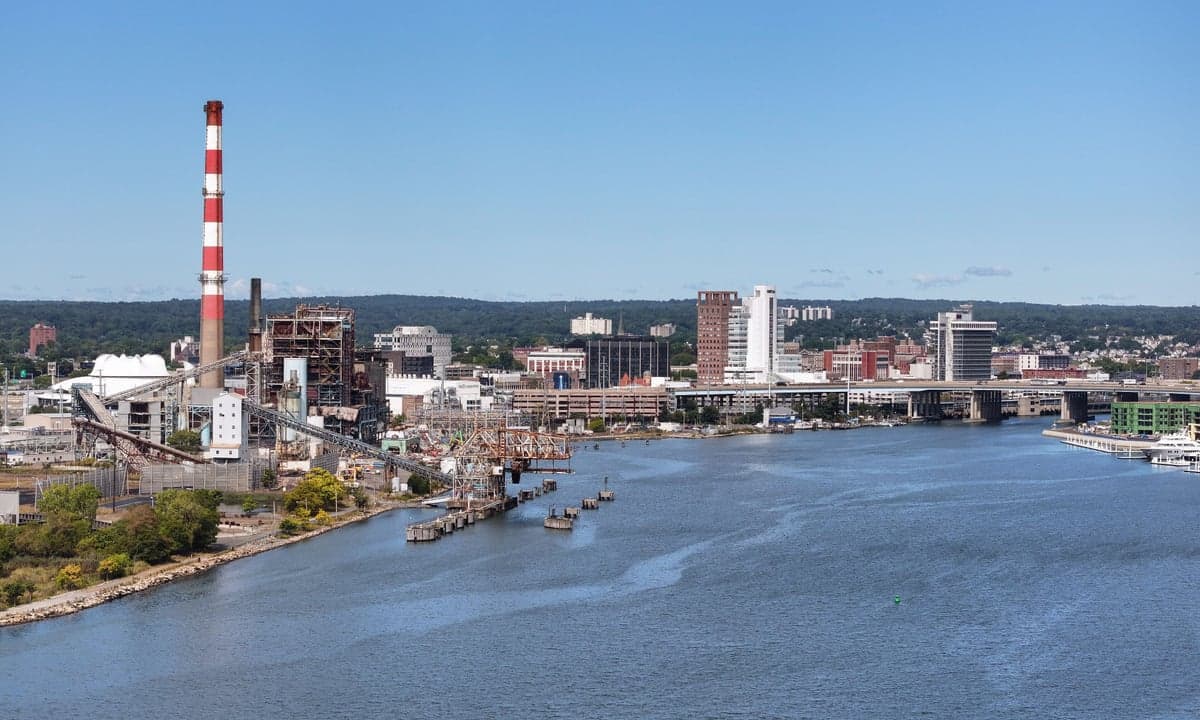
Photo: Wikipedia
Political ClimatePolitical Climate in Bridgeport, CT
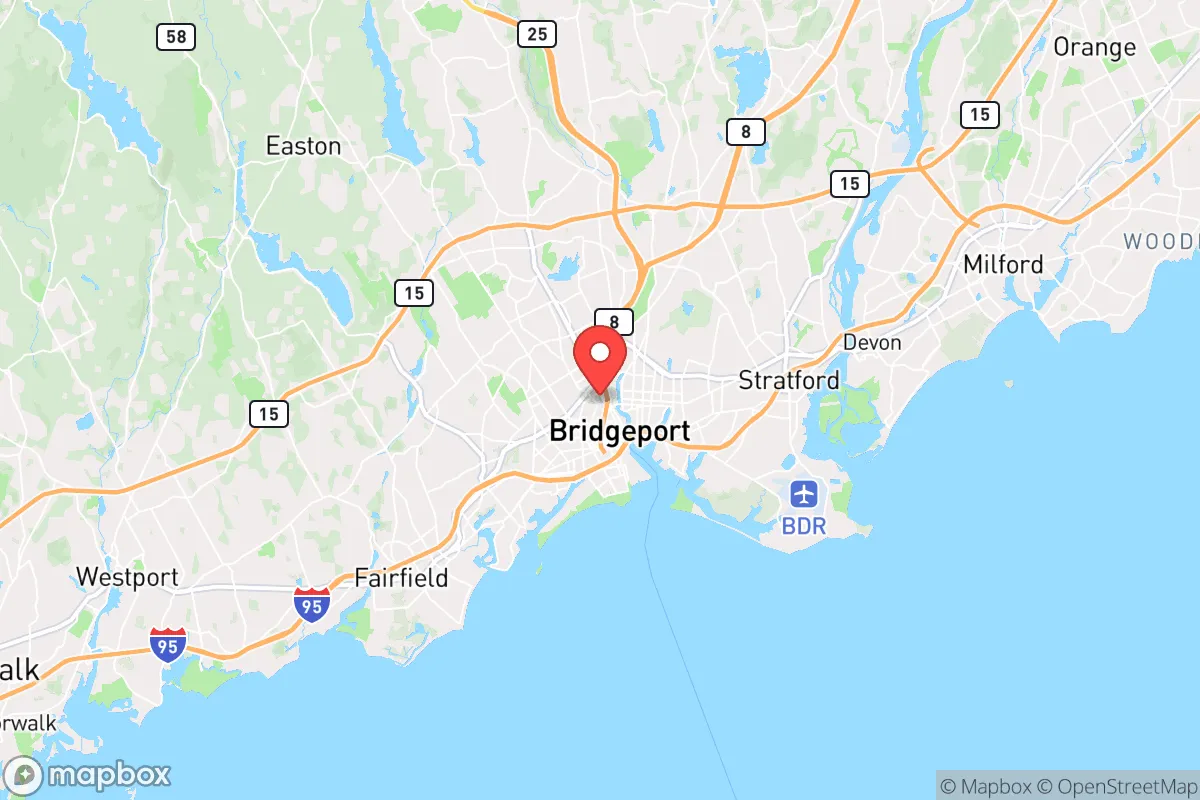
District shown is the primary district for this city’s centroid. Cities may span multiple districts.
Local Political AnalysisPolitical Analysis of Bridgeport, CT
Bridgeport, Connecticut, is a deep blue city in a deep blue state, and if you’ve lived here as long as I have, you’ve watched that political identity harden over the decades. The Cook PVI sits at D+13, which means the city leans more than a dozen points more Democratic than the national average—and in practice, that translates to a near-total lock for progressive candidates in local and state races. In the 2024 presidential election, Bridgeport gave Joe Biden roughly 70% of the vote, while surrounding Fairfield County towns like Trumbull and Monroe split much closer to 50-50. The trajectory here isn’t toward moderation; it’s toward a more aggressive, top-down progressive agenda that touches everything from zoning to school policy to how the police operate. If you value local control and personal freedom, that’s a trend worth watching closely.
How it compares
Drive ten miles in almost any direction and you’ll hit a different political world. To the north, Trumbull and Shelton are reliably purple-to-light-red, with Republican mayors and school boards that push back on state mandates. To the east, Stratford and Milford lean more moderate, often splitting their tickets between Democratic state reps and Republican local officials. Bridgeport, by contrast, is the anchor of the region’s progressive wing. The city’s delegation in Hartford—state senators and representatives—votes in lockstep with the most liberal leadership, backing bills like the 2023 police accountability overhaul and the 2024 expansion of absentee voting without ID requirements. The contrast isn’t subtle: while neighboring towns debate property tax caps and school choice, Bridgeport’s city council spends its energy on sanctuary city resolutions and rent control studies. For someone who believes government should stay out of your wallet and your home, that’s a red flag.
What this means for residents
If you live in Bridgeport, the political climate directly affects your daily life in ways that can feel intrusive. The city’s progressive tax policies—like the 2024 push for a local income tax surcharge on residents earning over $100,000—mean you’re likely paying more to fund programs you may not support. The school board, dominated by union-backed Democrats, has resisted charter school expansion and parental opt-out options for controversial curriculum materials. On public safety, the 2023 police reform law tied officers’ hands in ways that have some long-time residents feeling less safe, especially in neighborhoods like the East End and Hollow. And if you own a small business, the city’s paid sick leave mandate and minimum wage hikes (now at $16.35 an hour, with a path to $18) squeeze margins tighter every year. The message from City Hall is clear: compliance, not choice.
What this means for residents
Looking ahead, the near-term outlook is more of the same. Bridgeport’s Democratic machine is entrenched, and with a D+13 PVI, there’s little electoral incentive to moderate. The 2025 mayoral race will likely feature a primary between two progressives, with the winner pushing for more housing mandates, higher taxes, and tighter business regulations. The long-term concern is that as the city’s fiscal base shrinks—property values have stagnated relative to the suburbs—the political class will double down on redistribution rather than reform. Culturally, Bridgeport has become a place where the phrase “personal freedom” is often met with suspicion, whether it’s about homeschooling, carrying a firearm, or opting your kid out of a social-emotional learning program. If you’re looking for a community that respects individual rights and limited government, you’ll find more breathing room in the towns just over the line. Here, the political tide is rising, and it’s not turning back anytime soon.

State Political ClimatePolitical Climate in Connecticut
State Political AnalysisPolitical Environment in the State
Connecticut has shifted from a classic New England swing state into a solidly blue stronghold over the past two decades, with Democrats now holding every statewide office and supermajorities in both legislative chambers. The state voted for Hillary Clinton by 14 points in 2016 and Joe Biden by 20 points in 2020, a dramatic leftward lurch from 2004 when John Kerry won it by just 10 points. For a conservative-leaning individual or family, the political climate here is increasingly defined by one-party rule, aggressive progressive policymaking, and a cultural environment that can feel hostile to traditional values.
Urban vs. rural divide
The political map of Connecticut is a tale of two worlds. The southwestern corner—Fairfield County, anchored by Stamford, Bridgeport, and New Haven—is the Democratic engine room, with New Haven County delivering a 30-point margin for Biden in 2020. These cities are dense, diverse, and heavily unionized, with a strong progressive activist base that drives the state's agenda. In contrast, the eastern half of the state—Windham County and New London County—is more rural and working-class, where Trump improved on his 2016 margins in 2020, particularly in towns like Killingly and Plainfield. The Litchfield Hills in the northwest, including towns like Torrington and Winsted, also lean redder but lack the population to counterbalance the urban centers. The suburbs of Hartford—places like West Hartford and Glastonbury—have flipped from purple to reliably blue over the last decade, driven by an influx of white-collar professionals who align with the Democratic Party on social and fiscal issues.
Policy environment
Connecticut's policy environment is a cautionary tale for anyone wary of government overreach. The state has one of the highest tax burdens in the nation: a progressive income tax that tops out at 6.99%, a sales tax of 6.35% (with no exemptions for groceries or clothing), and some of the highest property taxes in the country—Hartford and Bridgeport have effective rates above 3%. In 2023, the legislature passed a paid family and medical leave program funded by a new payroll tax, and in 2024, they enacted a clean slate law that automatically erases certain criminal records, which critics argue weakens public safety. On education, the state has a universal school choice program that includes charter schools and magnet schools, but it's limited in scope and heavily regulated. The 2023 "Safe Harbor" law expanded protections for transgender youth, including shielding them from parental notification requirements in some cases—a flashpoint for parents concerned about medical autonomy and family rights. Election laws are among the most liberal: no-excuse absentee voting was expanded in 2023, and early voting was implemented for the first time in 2024, moves that have raised eyebrows among those concerned about ballot integrity.
Trajectory & freedom
The trajectory is unmistakably toward less personal freedom. In 2023, the legislature passed HB 6667, which banned the open carry of firearms and raised the minimum age to purchase a long gun to 21, building on the state's already strict 2013 assault weapons ban and magazine capacity limits. The 2022 "Responsible and Equitable Regulation of Adult-Use Cannabis Act" legalized recreational marijuana but imposed heavy state control over licensing, creating a slow rollout that has kept the black market thriving. On medical freedom, the state's 2021 vaccine mandate for healthcare workers remains in effect, and there is no religious exemption for school vaccine requirements. The 2024 "Data Privacy Act" gives residents some control over how companies use their personal data, but it's weaker than similar laws in Virginia or California. Property rights are under pressure from the 2023 "Fair Share" housing bill, which forces towns to zone for more multi-family housing—a move supporters call anti-segregation but critics see as a state-level assault on local control and suburban character.
Civil unrest & political movements
Connecticut has seen its share of political flashpoints. The 2020 Black Lives Matter protests in New Haven and Hartford were large and occasionally violent, leading to property damage and a lasting tension between activists and police. The 2022 "Parents' Bill of Rights" movement, which sought to require schools to notify parents about curriculum changes and medical decisions, was defeated in the legislature after fierce opposition from teachers' unions and progressive groups. Immigration politics are a live wire: the state is a sanctuary state under a 2019 law that limits cooperation between local police and federal immigration authorities, and in 2023, the legislature expanded driver's licenses to undocumented residents. The 2024 election integrity debate was muted compared to other states, but concerns persist about the state's use of drop boxes and the lack of voter ID requirements. A small but vocal secession movement in the eastern part of the state, calling itself "The 51st State," has gained some traction in rural towns like Canterbury and Scotland, but it remains a fringe effort with no realistic path to success.
Projection
Over the next 5-10 years, Connecticut is likely to become even more progressive. The state's population is aging and shrinking—it lost about 20,000 residents between 2020 and 2024—and the people moving in tend to be younger, more diverse, and more liberal, drawn to jobs in finance, insurance, and biotech in the Hartford-New Haven corridor. The rural and exurban areas that vote Republican are losing population faster than the urban centers, which means the Democratic supermajorities in the legislature are likely to grow. Expect more tax increases, more housing mandates, more gun control, and more state-level intervention in local schools and zoning. The 2025 legislative session is already expected to take up a single-payer healthcare bill and a wealth tax on high-income earners, both of which would further cement the state's reputation as a high-cost, high-regulation environment.
For a conservative-leaning individual or family considering a move, the bottom line is this: Connecticut offers excellent schools in certain suburbs, a strong job market in finance and insurance, and beautiful natural scenery, but you will be living under a government that is actively hostile to many of your values. Your taxes will be high, your gun rights will be severely restricted, your children's education will be shaped by progressive curriculum mandates, and your voice in state politics will be drowned out by the urban vote. If you can afford the cost and are willing to adapt, places like Litchfield County or eastern Connecticut offer pockets of conservative community, but the state as a whole is moving in a direction that will make those pockets smaller and more isolated with each passing year.
* Values derived from national, state, county, city and local statistics and may differ in a specific area. Last updated: 2026-04-24T12:22:16.000Z
Narrative content on this page is AI-generated and may contain mistakes. Verify any details that matter before acting on them.
ReloMaps may earn a commission from affiliate links at no extra cost to you.

