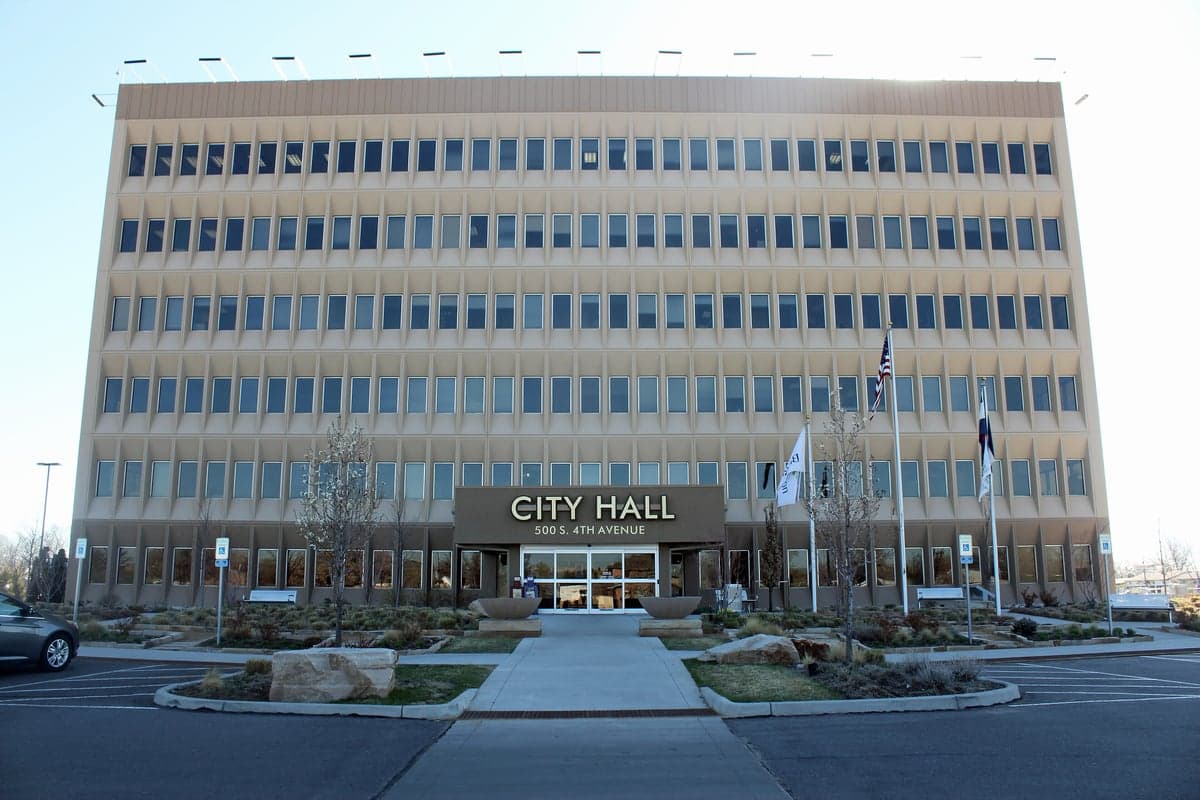
Photo: Wikipedia
Personal Sovereignty in Brighton, CO
Viable for self-reliance. Generally workable, though some barriers may limit total independence.
What does Personal Sovereignty tell us?
Personal Sovereignty measures your capacity for self-reliance and independence with minimal government friction. Higher scores mean fewer barriers between you and the way you want to live... but it assumes you have the space you need and good neighbors.
What does this tell us?
Personal Sovereignty measures your capacity for self-reliance and independence with minimal government friction. Higher scores mean fewer barriers between you and the way you want to live... but it assumes you have the space you need and good neighbors.
State Policy
Energy independence: Net exporter (110% of energy produced in-state)
Personal Liberty
Homesteading

Personal Liberty Analysis
Brighton, Colorado, offers a mixed bag for those prioritizing personal sovereignty, where the state’s progressive tilt clashes with the city’s more rural, conservative roots. While Colorado’s overall regulatory environment leans heavily toward government oversight, Brighton’s location in Adams and Weld counties provides a buffer of more local control and a community that values self-reliance. For a survivalist or prepper, the key is understanding where the state’s overreach ends and where local autonomy begins—and Brighton sits on that fault line, offering both opportunities and frustrations.
Tax burden and regulatory posture in Brighton
Colorado’s state-level tax burden is moderate, with a flat income tax rate of 4.4% and a state sales tax of 2.9%, but Brighton adds its own local sales tax of 3.5%, bringing the combined rate to roughly 8.4% in most areas. Property taxes are relatively low compared to the national average, with effective rates around 0.5% of assessed value, which is a plus for landowners. However, the state’s regulatory posture is where sovereignty takes a hit. Colorado has some of the strictest environmental and land-use regulations in the West, particularly under the Colorado Oil and Gas Conservation Commission and the Department of Public Health and Environment. This means that anything from building a new structure to drilling a well can trigger layers of permitting and red tape. Brighton’s city government is generally more business-friendly than Denver’s, but it still enforces zoning codes that limit what you can do on your property without approval. For a prepper, the tax burden is manageable, but the regulatory creep is a constant annoyance that requires careful navigation.
Self-defense and gun law specifics in Brighton
Colorado is a shall-issue state for concealed carry permits, meaning that if you meet the requirements—including a background check and a training course—the county sheriff must issue the permit. Adams County, where most of Brighton sits, has a sheriff’s office that generally respects Second Amendment rights, though the state has enacted several restrictions in recent years. Colorado now has a red flag law (Extreme Risk Protection Order), a 15-round magazine capacity limit, and a universal background check requirement for all firearm transfers, including private sales. These laws are a direct infringement on personal sovereignty, as they create a registry-like system and allow for firearms to be seized without a criminal conviction. On the plus side, open carry is legal in Brighton without a permit, and the city has not enacted any additional local gun ordinances beyond state law. For a survivalist, this means you can carry openly for self-defense, but you must be aware that the red flag law can be weaponized by neighbors or family members. The best strategy is to keep a low profile, avoid confrontations, and ensure all firearms are stored securely to prevent any legal pretext for seizure.
Self-reliance and homesteading viability in Brighton
Brighton still has a semi-rural character, with many properties zoned for agricultural use and lot sizes that can accommodate a serious homesteading operation. In the unincorporated areas of Weld County, which borders Brighton to the east, you can find parcels of 1 to 5 acres that are ideal for raising livestock, growing food, and installing off-grid systems. The city’s zoning code does allow for chickens, goats, and even horses on larger lots, but you’ll need to check the specific zoning district—R-1 and A-1 zones are your best bet. Off-grid feasibility is limited by state and local building codes that require connection to the municipal water and sewer system in most developed areas, but if you buy land in the county, you can drill a well and install a septic system. Solar panels are allowed, but net metering rules are set by Xcel Energy, the dominant utility, and they’re not particularly friendly to full off-grid setups—you’ll likely need battery storage to avoid grid-tie complications. The growing season is short (about 150 days) and the climate is semi-arid, so you’ll need irrigation or drought-tolerant crops. Overall, Brighton offers a viable path to self-reliance if you choose your property carefully and are willing to work within the regulatory framework, but it’s not a free-for-all like some rural counties in the Midwest.
Personal liberties in Brighton: parental rights, medical autonomy, speech, and property
Parental rights in Colorado are under increasing pressure, with the state mandating comprehensive sex education in public schools and allowing minors to consent to certain medical treatments without parental notification. Brighton’s school district, School District 27J, has a conservative-leaning board that has pushed back against some state mandates, but they are ultimately bound by state law. Medical autonomy is another sore spot: Colorado has legalized both medical and recreational marijuana, but the state also has strict vaccine mandates for school attendance and has shown a willingness to enforce public health orders during emergencies. For a prepper, this means you need to be prepared to homeschool or use private schools if you want to avoid state indoctrination, and you should have a plan for medical care that doesn’t rely on the mainstream system. Free speech is protected under the First Amendment, but Colorado has enacted laws that restrict speech deemed “harassing” or “threatening,” which can be interpreted broadly. Property rights are relatively strong in Brighton, with no rent control and a generally pro-development city council, but the state’s environmental regulations can limit what you do with your land, especially near waterways or wetlands. The key takeaway is that personal liberties in Brighton are a constant negotiation—you have more freedom than in Denver or Boulder, but you’re still operating within a state that views government as the primary arbiter of rights.
Overall, Brighton offers a better sovereignty profile than most of Colorado’s Front Range, but it’s still a compromise. The low property taxes and semi-rural zoning give you room to build a self-reliant lifestyle, while the state’s gun laws and regulatory overreach are constant reminders that you’re not in a free state. For a survivalist or prepper, Brighton is a strategic location if you’re willing to fight for your rights at the local level and keep a low profile on the state level. It’s not Texas or Idaho, but it’s a solid foothold in a region that’s otherwise hostile to personal sovereignty.

* Values derived from national, state, county, city and local statistics and may differ in a specific area. Last updated: 2026-05-01T10:55:43.000Z
Narrative content on this page is AI-generated and may contain mistakes. Verify any details that matter before acting on them.
ReloMaps may earn a commission from affiliate links at no extra cost to you.

