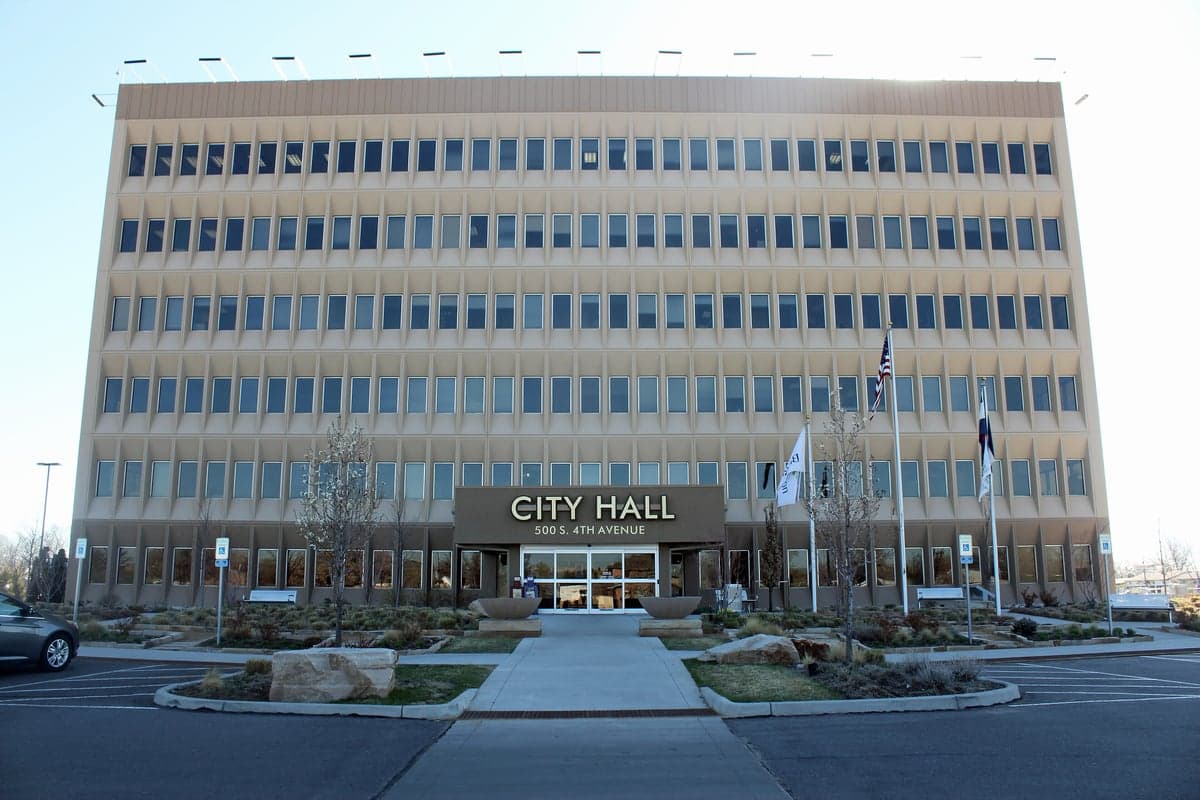
Photo: Wikipedia
Political ClimatePolitical Climate in Brighton, CO
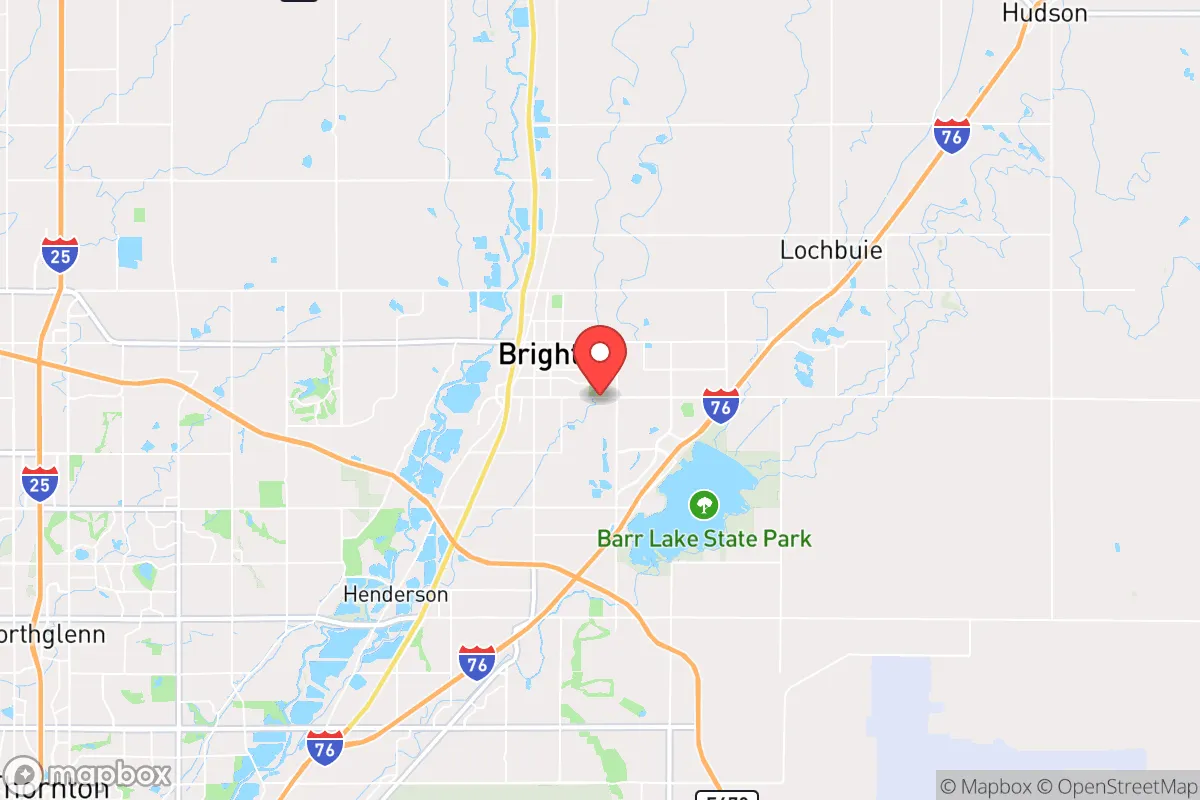
District shown is the primary district for this city’s centroid. Cities may span multiple districts.
Local Political AnalysisPolitical Analysis of Brighton, CO
Brighton, Colorado, sits in a political tug-of-war that mirrors its rapid growth, and if you've been around here long enough, you've watched it shift from a reliably conservative farming community to a place where the Cook PVI rating of "EVEN" tells you everything and nothing. Back in the day, Adams County was a Democratic stronghold, but Brighton itself leaned red, with folks who valued personal responsibility and didn't want the government poking into their land or their lives. Now, with Denver's sprawl creeping north and new housing developments packing in transplants, the balance has tipped—and not in a way that sits well with those of us who remember when "live and let live" wasn't a slogan, it was just how things worked.
How it compares
Drive ten miles west to Thornton or Westminster, and you'll hit suburbs that have gone solidly blue, with progressive city councils pushing higher taxes and more regulations on everything from short-term rentals to lawn watering. Head east toward Fort Morgan or Brush, and you're back in deep-red territory, where the county commissioners still talk about property rights and Second Amendment protections like they're non-negotiable. Brighton is caught in the middle—literally and politically. The city council here has a few conservative voices left, but they're increasingly outnumbered by folks who see government as the solution, not the problem. Compared to nearby Erie, which has become a poster child for Boulder County-style zoning and school board activism, Brighton still feels a little more grounded, but the pressure is building.
What this means for residents
For those of us who moved here to escape the overreach we saw in Denver or Aurora, the warning signs are blinking. The county's push for more affordable housing mandates sounds nice on paper, but it often means developers get sweetheart deals while existing homeowners get hit with higher impact fees and stricter building codes. The school board has started flirting with equity initiatives that sound a lot like the kind of curriculum battles that tore apart districts in Jefferson County—and if you value parental control over what your kids are taught, that's a red flag you can't ignore. Property taxes are climbing, and while some of that is just growth, some of it is the city finding new ways to spend your money on programs you never asked for. The local elections are where the real fight is, and turnout among conservatives has been slipping. If that doesn't change, Brighton will look a lot more like Thornton in five years.
The cultural shift shows up in small ways that add up. The annual Adams County Fair still has a rodeo and a 4-H livestock auction, but now there's a "sustainability village" and a drag story hour that feels imported from somewhere else. The gun range out on Highway 85 is still busy, but the city council recently debated a "safe storage" ordinance that would have required locked safes in every home—a solution in search of a problem that only punishes law-abiding owners. The long-term trajectory depends on who shows up to vote in the next few cycles. If you're the kind of person who believes the government that governs least governs best, Brighton is still worth fighting for, but the fight is real, and it's happening right now.

State Political ClimatePolitical Climate in Colorado
State Political AnalysisPolitical Environment in the State
Colorado has shifted from a classic purple swing state to a solidly blue-leaning state over the past two decades, with Democrats now controlling the governorship, both chambers of the legislature, and all statewide offices. The state voted for Hillary Clinton by 5 points in 2016, Joe Biden by 13 points in 2020, and Kamala Harris by 11 points in 2024, reflecting a durable leftward tilt driven by massive in-migration from coastal states and rapid urbanization. For a conservative considering relocation, the key takeaway is that Colorado’s political center of gravity has moved decisively left, but the state still contains significant red pockets and a growing backlash movement worth understanding.
Urban vs. rural divide
The political map of Colorado is a textbook study in geographic polarization. The Denver metro area—including Denver County, Jefferson County, Arapahoe County, and Boulder County—generates roughly 60% of the state’s vote and leans heavily Democratic. Boulder County is one of the most liberal jurisdictions in the nation, routinely voting 80%+ Democratic. Denver itself is a deep-blue city with a progressive city council that has defunded police and implemented sanctuary policies. The I-25 corridor from Fort Collins down through Denver to Colorado Springs is the state’s political spine, with Colorado Springs being the notable conservative outlier—El Paso County voted +14 for Trump in 2024, making it the largest reliably red county in the state. Rural areas like the Eastern Plains (Yuma, Kit Carson, Prowers counties) and the Western Slope (Mesa, Montrose, Delta counties) vote heavily Republican, but their populations are too small to offset the Front Range urban machine. A key flip to watch: Jefferson County, once a bellwether that voted for George W. Bush twice, has trended blue and now votes Democratic by 10+ points. The mountain resort counties—Summit, Eagle, Pitkin—have also shifted hard left as wealthy second-home owners and remote workers from California and New York have moved in.
Policy environment
Colorado’s state-level policy environment is increasingly progressive and interventionist. The state income tax rate is a flat 4.4%, which is moderate, but property taxes have been rising sharply—up 40% in some Front Range counties between 2022 and 2024—driven by soaring home values and a state assessment system that caps residential growth but shifts the burden to commercial and new homeowners. The regulatory posture is heavy: Colorado has some of the strictest environmental regulations in the interior West, including a 2024 law (SB24-233) that mandates a 100% renewable energy grid by 2040 and effectively bans new natural gas hookups in many new construction projects. Education policy is a flashpoint: the state has a school choice system with charter schools and open enrollment, but the Denver Public Schools district has been embroiled in controversies over critical race theory-inspired curriculum and a 2023 policy that allows teachers to use students’ preferred pronouns without parental notification. Healthcare is dominated by the state-run Connect for Health Colorado exchange, and the state expanded Medicaid under the Affordable Care Act. Election laws are among the most liberal in the nation: Colorado automatically mails ballots to every registered voter, allows same-day registration, and has no voter ID requirement at the polls (though mail ballots require a signature match). This system has been praised for turnout but criticized by conservatives for lacking basic security measures like photo ID.
Trajectory & freedom
Colorado is becoming less free across multiple dimensions, particularly for conservatives. On gun rights, the state has passed some of the most restrictive laws in the West: a 2013 magazine capacity ban (15 rounds), a 2023 red flag law (HB23-1219) that allows family members or law enforcement to petition for temporary firearm seizure without a criminal conviction, and a 2024 law (SB24-131) that bans carrying firearms in most government buildings and public spaces. Parental rights have been eroded: a 2023 law (HB23-1221) prohibits schools from notifying parents if a student changes their gender identity or pronouns, overriding parental authority. Medical autonomy has been curtailed by strict vaccine mandates for healthcare workers and schoolchildren, though a 2024 ballot measure (Proposition 131) did legalize psilocybin therapy for mental health treatment. Property rights are under pressure from a 2023 law (SB23-213) that allows local governments to impose rent control on mobile home parks, and from a 2024 law (HB24-1048) that restricts short-term rentals in mountain communities. On the positive side for freedom, Colorado has no state sales tax on groceries, and the Taxpayer’s Bill of Rights (TABOR) still limits state spending growth, though lawmakers have found ways to work around it through fee increases and enterprise funds.
Civil unrest & political movements
Colorado has seen significant civil unrest and political activism in recent years. The 2020 George Floyd protests in Denver turned violent, with property damage estimated at $2 million and the Denver Police Department facing lawsuits over excessive force. The state has a strong sanctuary policy: the 2019 “Colorado Immigrant Rights Act” (HB19-1124) limits local law enforcement cooperation with federal immigration authorities, and Denver has been a “welcoming city” that provides taxpayer-funded legal defense for illegal immigrants. This has become a flashpoint as the state has seen a surge in migrant arrivals—over 40,000 since 2022—straining shelter systems and public services. On the right, the Colorado Republican Party has fractured between establishment and populist factions, with the 2024 state convention devolving into a chaotic fight over delegate selection. There have been serious election integrity concerns: in 2020, Mesa County Clerk Tina Peters was indicted for allegedly allowing unauthorized access to voting machines, a case that has become a national symbol of election security debates. The “Colorado Project” movement, a loose coalition of conservative activists, has been organizing at the county level to challenge school board policies and land-use regulations. Secession talk has emerged in rural areas: Weld County and several Eastern Plains counties have discussed joining Wyoming or forming a new “North Colorado” state, though these efforts have gone nowhere legislatively.
Projection
Over the next 5-10 years, Colorado is likely to continue its leftward drift, but with growing friction. Demographic trends favor Democrats: the state is adding 100,000 new residents annually, most of whom settle in the Denver metro area and come from blue states. The Hispanic population, now 22% of the state, is growing and leans Democratic. However, there are countervailing forces: the cost of living crisis—median home prices in Denver hit $600,000 in 2024—is driving some middle-class families to cheaper red states, and the state’s regulatory burden is pushing small businesses to relocate to Texas or Idaho. The 2026 gubernatorial race will be a key test: if a moderate Republican like former state senator Kevin Priola (who switched parties in 2022) can’t win, the GOP may become irrelevant statewide. Expect more progressive legislation on rent control, carbon taxes, and gun restrictions, but also a growing backlash in suburban counties like Douglas and El Paso, which could flip some legislative seats. A new resident moving in now should expect to live in a state where the political culture is increasingly hostile to conservative values, but where local control in red counties still offers some breathing room—at least for now.
For a conservative moving to Colorado, the bottom line is this: you can still find a good life here, but you’ll need to pick your location carefully. Colorado Springs, the Western Slope towns like Grand Junction, and the Eastern Plains communities like Sterling offer a more traditional, freedom-oriented environment. But you’ll be fighting an uphill battle at the state level, where the legislature and governor are actively expanding government control over your guns, your children’s education, and your property. If you value low taxes, parental rights, and limited government, Colorado is no longer the libertarian paradise it was in the 1990s—it’s a blue state with red pockets, and the red is shrinking. Visit before you commit, and talk to locals in the county you’re considering. The mountains are still beautiful, but the political climate is getting colder for conservatives every year.
* Values derived from national, state, county, city and local statistics and may differ in a specific area. Last updated: 2026-05-01T10:55:43.000Z
Narrative content on this page is AI-generated and may contain mistakes. Verify any details that matter before acting on them.
ReloMaps may earn a commission from affiliate links at no extra cost to you.

