 Popular
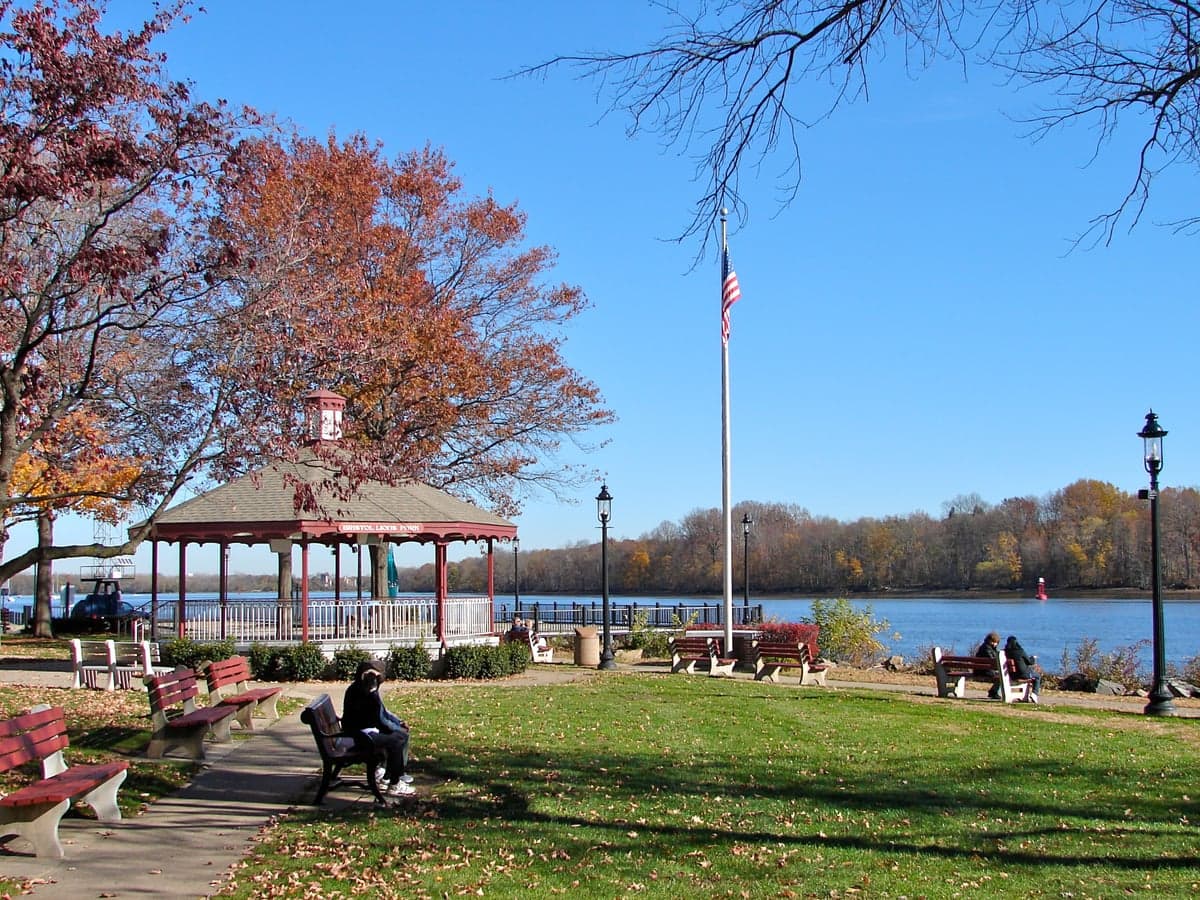
Photo: Wikipedia
Demographics of Bristol, PA
Affluence Level in Bristol, PA
A middle-class area roughly in line with national averages across income, home values, education, and employment.
People of Bristol, PA
The people of Bristol, Pennsylvania, today form a compact, historically rooted community of roughly 9,874 residents, characterized by a predominantly white population (71.1%) with a significant and growing Hispanic minority (17.4%). The city’s identity is shaped by its working-class industrial heritage along the Delaware River, a strong sense of local pride in its historic downtown, and a demographic profile that is notably less diverse than nearby Philadelphia or Trenton. With a low foreign-born share of just 1.6% and a college-educated rate of 23.2%, Bristol’s population is largely native-born and blue-collar, giving it a stable, family-oriented character that appeals to those seeking an affordable, small-city atmosphere with deep roots.
How the city was settled and grew
Bristol’s population history begins with its founding in 1681 by English Quakers, who were granted land by William Penn. The town’s location on the Delaware River made it a natural port and early industrial center. Throughout the 18th and 19th centuries, the population grew slowly but steadily, driven by shipbuilding, milling, and later, the arrival of the Pennsylvania Canal and the railroad. The first major demographic wave came in the mid-19th century with the arrival of Irish and German immigrants, who found work in the burgeoning factories and docks. These groups settled in the Historic District along Mill Street and in the working-class rowhomes near the riverfront, establishing the Catholic and Lutheran parishes that still anchor the community. A second wave of Italian and Polish immigrants arrived in the late 19th and early 20th centuries, drawn by jobs in the Bristol Steel Works and other heavy industries. They concentrated in the West Bristol neighborhood, building tight-knit ethnic enclaves around St. Mark’s Church and the Polish American Club. By 1950, Bristol was a thriving industrial town with a population of over 12,000, overwhelmingly white and of European descent.
Modern era (post-1965)
The post-1965 era brought significant demographic shifts, though Bristol’s changes were more gradual than in larger cities. The 1965 Hart-Cellar Act opened immigration from new regions, but Bristol’s low foreign-born rate (1.6% today) indicates that international migration had a minimal direct impact. Instead, the major change was domestic in-migration of Hispanic families, primarily of Puerto Rican and Mexican heritage, who arrived from the 1980s onward seeking affordable housing and manufacturing jobs. This community has concentrated in the Maple Beach and Edgely neighborhoods, where older housing stock and proximity to industrial corridors provided entry points. The Hispanic share of the population now stands at 17.4%, making it the largest minority group. Meanwhile, the Black population (4.0%) has remained relatively small and stable, with a historic presence in the Bristol Borough area near the river. The East/Southeast Asian (0.2%) and Indian subcontinent (0.4%) communities are tiny, reflecting the city’s limited draw for newer immigrant groups. Suburbanization after 1970 led to a population decline from its peak, as many white families moved to newer developments in surrounding Bucks County, leaving Bristol with an older, more settled demographic base.
The future
Bristol’s population is projected to remain stable or see modest growth, driven by its affordability relative to the Philadelphia metro area and ongoing redevelopment of the riverfront. The Hispanic share is likely to continue increasing, potentially reaching 20-25% within the next decade, as younger families move into the West Bristol and Maple Beach areas, where housing remains relatively inexpensive. The white population, while still the majority, is aging, and the city may see a gradual diversification as younger, more diverse residents replace older cohorts. The foreign-born share is expected to remain low, as Bristol lacks the immigrant infrastructure of larger cities. The city’s cultural identity is evolving from a historically white ethnic enclave to a more Hispanic-influenced community, with bilingual signage and Latino-owned businesses becoming more visible along Route 13. However, the overall character is likely to remain working-class and family-oriented, with little influx of high-income or highly educated newcomers.
For someone moving in now, Bristol offers a stable, affordable, and historically grounded community with a clear demographic trajectory: a slowly diversifying, predominantly white and Hispanic population that values its industrial past and tight-knit neighborhoods. The city is not becoming a melting pot of global diversity, but rather a more locally rooted, bilingual version of its former self, making it a practical choice for families seeking a low-cost, safe, and community-focused environment in the Philadelphia region.

* Values derived from national, state, county, city and local statistics and may differ in a specific area. Last updated: 2026-08-25T10:51:30.000Z
Narrative content on this page is AI-generated and may contain mistakes. Verify any details that matter before acting on them.
ReloMaps may earn a commission from affiliate links at no extra cost to you.

