 Popular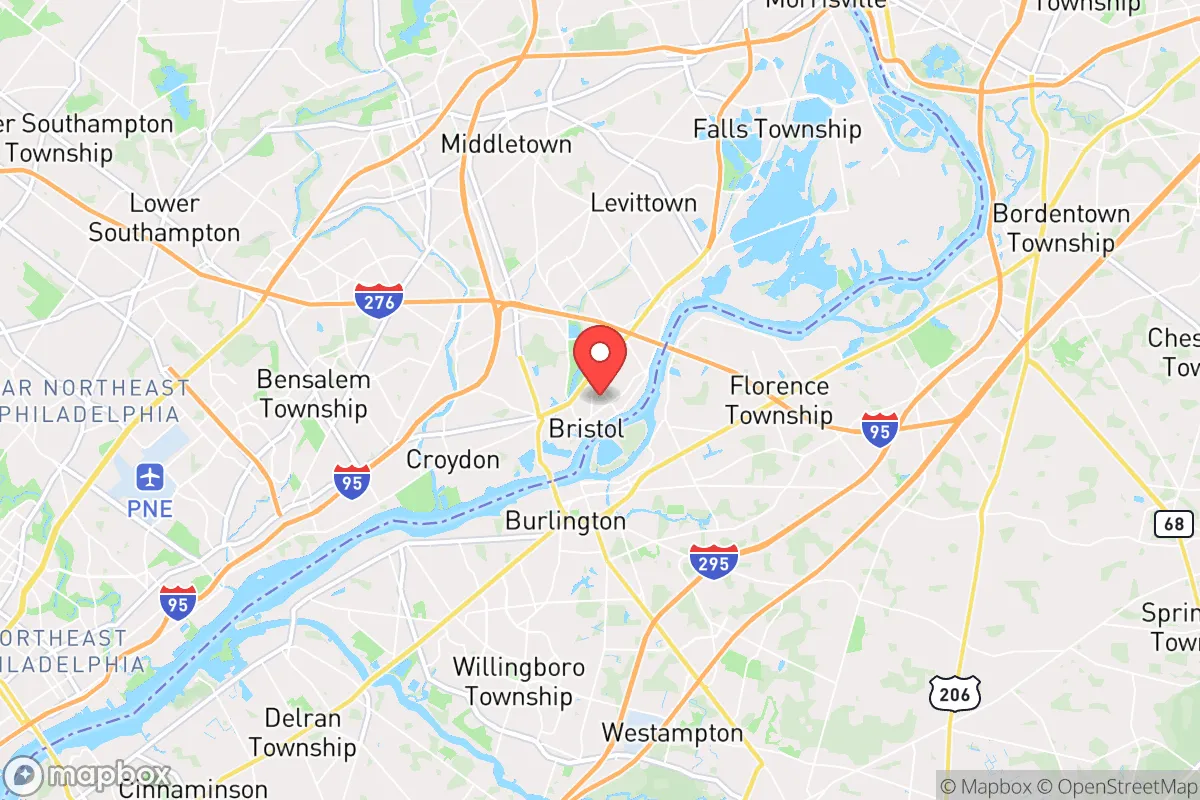
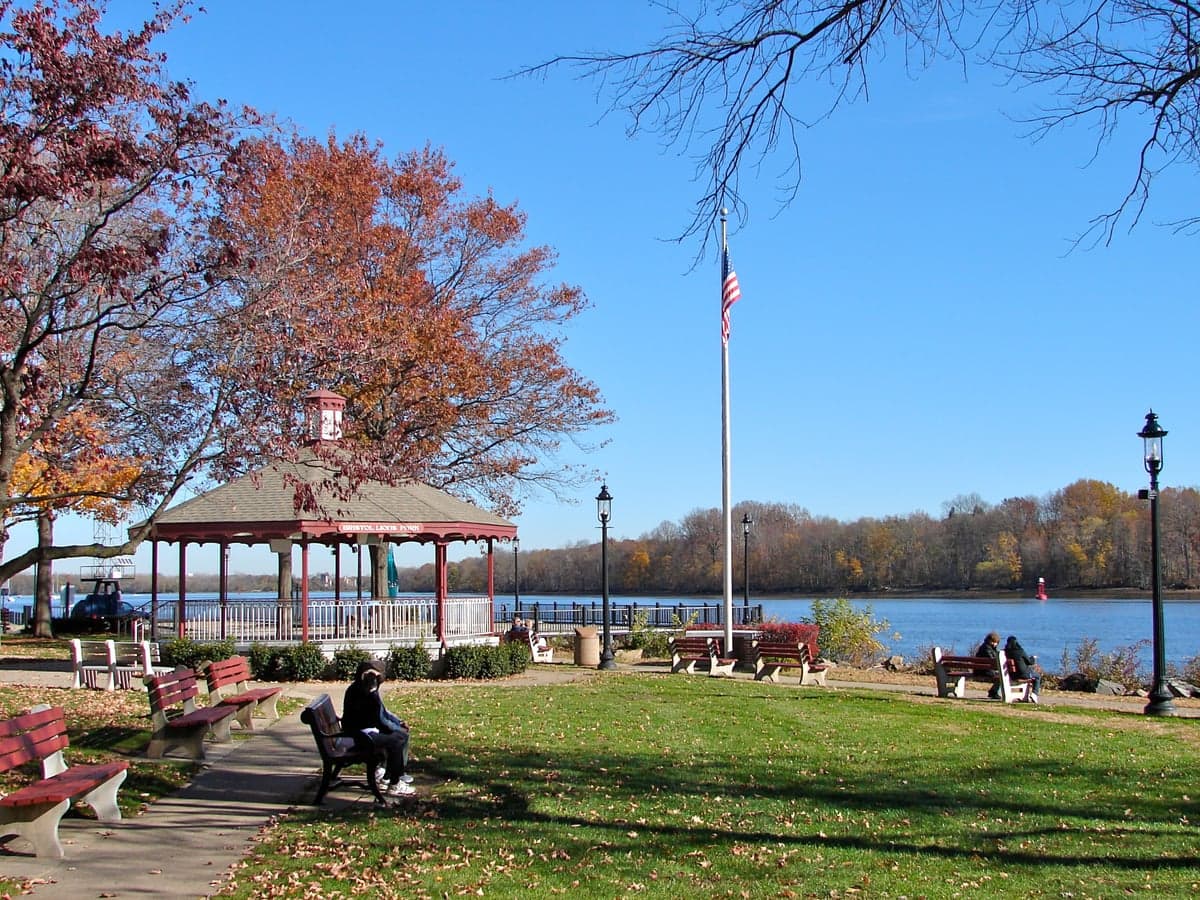
Photo: Wikipedia
Political ClimatePolitical Climate in Bristol, PA
District shown is the primary district for this city’s centroid. Cities may span multiple districts.
Local Political AnalysisPolitical Analysis of Bristol, PA
Bristol, PA, sits in a political sweet spot that’s more competitive than its Bucks County neighbors might suggest. With a Cook Partisan Voting Index (PVI) of D+1, the borough leans slightly Democratic, but it’s a far cry from the deep-blue suburbs of Philadelphia proper. This isn’t a place where one party dominates the dinner table conversation—it’s a community where elections are decided by a few hundred votes, and the political mood can shift with a single local issue. The trajectory here is subtle: while the state of Pennsylvania as a whole is rated EVEN on the PVI, Bristol’s D+1 reflects a modest but persistent Democratic edge, driven largely by working-class roots and a growing diversity that contrasts with the more conservative rural towns just a few miles up the Delaware River.
How it compares
Compared to Pennsylvania’s statewide EVEN rating, Bristol’s D+1 might seem like a rounding error, but in practice, it means the borough is a political outlier in its own backyard. Drive ten minutes north to Morrisville or Tullytown, and you’ll find similar blue-leaning pockets, but head west to Langhorne or Newtown, and the landscape turns reliably Republican. The real contrast is with the surrounding townships—Bristol Township, for instance, leans more Democratic than the borough itself, while nearby Levittown has a mix that mirrors the state’s swing nature. Statewide, Pennsylvania’s EVEN rating reflects a dead heat between urban centers like Philadelphia and Pittsburgh and the vast rural and suburban areas in between. Bristol’s D+1 is a microcosm of that tension: it’s a blue dot in a purple county, where local elections often hinge on bread-and-butter issues like school funding and infrastructure, not national culture wars.
What this means for residents
For conservative residents, Bristol’s D+1 lean means their votes still matter—especially in local races where turnout is low. A Republican candidate can win a council seat or school board position by appealing to the borough’s strong sense of community and fiscal pragmatism, even if national Democrats carry the precinct. For liberal residents, the edge provides a comfortable baseline, but it’s not a mandate; they can’t take victories for granted, and issues like zoning, taxes, and public safety often require coalition-building across party lines. In practice, this creates a political reality where both sides have to show up and talk to each other. The borough’s small size—around 9,700 people—means that personal relationships often trump party labels, and a neighbor’s opinion on the new riverfront development can matter more than their presidential vote.
Culturally, Bristol stands apart from the rest of Bucks County with its old-town, riverfront character and a history that includes being one of Pennsylvania’s oldest boroughs. Policy-wise, this translates into a focus on local issues like flood control, historic preservation, and maintaining a walkable downtown—priorities that don’t always align with the suburban sprawl politics of the county’s more conservative areas. The borough’s Democratic lean is also reflected in its support for public transit and environmental initiatives along the Delaware, though fiscal conservatism still runs deep among many long-time residents. Looking ahead, Bristol’s political future will likely hinge on demographic shifts—newer, younger residents moving in from Philadelphia could push it further left, while older families who’ve been here for generations may hold the line. Either way, it’s a place where the political climate is as much about local character as it is about party registration.

State Political ClimatePolitical Climate in Pennsylvania
State Political AnalysisPolitical Environment in the State
Pennsylvania is the ultimate swing state, with a Cook PVI of EVEN that perfectly captures its role as a national bellwether. Over the past 20 years, the state has shifted from a reliable blue anchor in presidential elections to a true battleground, with the 2016 and 2020 races decided by margins of less than 1.5%. The dominant coalition is a fragile balance: the heavily populated southeastern counties (Philadelphia and its suburbs) and the urban cores of Pittsburgh, Allentown, and Erie lean Democratic, while the vast rural and exurban expanse stretching from the northern tier down through the central spine and into the southwest is deeply Republican. The trajectory is a slow, grinding polarization — the old "Pennsylvania moderate" is vanishing, replaced by a state where your zip code almost perfectly predicts your vote.
Urban vs. rural divide
The political map of Pennsylvania is a tale of two states. Philadelphia County alone delivers roughly 500,000 Democratic votes, making it the party's single biggest engine. The collar counties — Montgomery, Delaware, Chester, and Bucks — were once classic Republican suburbs but have shifted blue over the last decade, driven by college-educated professionals moving in from the city. In 2020, Joe Biden won all four, with Montgomery County giving him a 25-point margin. Meanwhile, the rural "T" — the vast region from the Lake Erie shore down through the Alleghenies and into the south-central farm country — is deeply red. Lancaster County, home to a large Amish and conservative Christian population, voted +16 for Trump in 2020. The real action is in the "collar counties" and the old industrial towns like Scranton and Wilkes-Barre in the northeast, where working-class voters have flipped from reliably Democratic to increasingly Republican. The 2020 election saw Erie County flip back to blue by a razor-thin 1,400 votes, while Northampton County (Bethlehem) went blue by just 1 point — these are the micro-battlegrounds that decide the state.
Policy environment
Pennsylvania's policy landscape is a patchwork that reflects its divided government. The state has a flat income tax of 3.07%, one of the lowest in the nation, and a sales tax of 6% (with no tax on clothing or groceries). Property taxes are high, averaging about 1.5% of home value, and vary wildly by school district — a key concern for families. The regulatory posture is moderate: Pennsylvania is not a "right-to-work" state, but it's also not as union-dominated as it was 30 years ago. Education policy is a flashpoint: the state has a massive funding disparity between wealthy suburban districts and poorer rural ones, and a 2023 court ruling declared the system unconstitutional, setting up a long-term reform battle. Healthcare is a mixed bag: the state expanded Medicaid under the ACA, but private insurance costs are above average. Election laws are a constant source of tension: Pennsylvania has no-excuse mail-in voting (passed with bipartisan support in 2019), but the law is under constant legal challenge, and the state's voter ID requirements are relatively weak — a photo ID is requested but not strictly required for first-time voters.
Recent policy direction
The last five years have seen Pennsylvania lurch in both directions, depending on which party controls the governor's mansion. Under Democratic Governor Josh Shapiro (elected 2022), the state has moved left on several fronts: gun laws saw a 2023 expansion of background checks for long guns (though a full "universal background check" bill stalled), and a "red flag" law was signed in 2023 allowing courts to temporarily seize firearms from individuals deemed a threat. Parental rights are a hot topic: the state has no explicit "parents' bill of rights," but a 2022 law requires schools to notify parents of "sexually explicit" instructional materials. Medical and bodily autonomy is a major dividing line: abortion remains legal up to 24 weeks (codified by a 2022 executive order from Shapiro), but the state has no shield law for out-of-state patients, and a 2023 bill to enshrine abortion rights in the state constitution failed. Property rights are generally strong, with no statewide rent control and relatively low eminent domain use. Voting and ballot access are in flux: the 2020 election saw massive mail-in ballot usage, but a 2024 law tightened signature verification and banned private funding of election administration. Privacy and surveillance are relatively lax — Pennsylvania has no comprehensive data privacy law, and police can access cell phone location data with a warrant, but not without one.
Civil unrest & political movements
Pennsylvania has been a flashpoint for political activism on both sides. The 2020 election aftermath saw massive protests in Philadelphia and Harrisburg over ballot counting, with Trump supporters gathering at the Pennsylvania Convention Center. The state has a strong Second Amendment movement, with groups like Pennsylvania Firearms Association actively pushing for permitless carry (which passed in 2022). On the left, the Indivisible network is active in the suburbs, and the Working Families Party has a real presence in Philadelphia. Immigration politics are relatively quiet compared to border states, but Philadelphia is a self-declared "sanctuary city," which has drawn criticism from rural Republicans. The election integrity debate remains raw: a 2023 audit of the 2020 election by the Republican-controlled Senate found "no evidence of widespread fraud," but the issue still animates grassroots activism. There have been no serious secession or nullification movements, but the state's rural-urban divide has spawned talk of splitting Pennsylvania into two states — a non-starter but a telling indicator of the cultural chasm.
Projection
Over the next 5-10 years, Pennsylvania will likely remain a toss-up, but the demographic trends favor Democrats in the long run. The Philadelphia suburbs are growing and diversifying, while many rural counties are losing population. However, the in-migration from blue states (New York, New Jersey) is concentrated in the southeast, which could accelerate the state's leftward drift. The wild card is the northern tier and the coal country around Wilkes-Barre and Hazleton, where population loss is steep but the remaining voters are becoming more Republican. A new resident moving in now should expect a state that will remain politically competitive for at least another decade, with the balance of power likely determined by turnout in the suburbs and the old industrial towns. The state's policy direction will continue to seesaw: a Republican legislature and a Democratic governor will produce gridlock on major issues, with incremental changes on gun laws, abortion, and election rules.
For a new resident, the bottom line is that Pennsylvania offers a genuine swing-state experience. If you're conservative, you'll find a strong community in the rural areas and exurbs, but you'll be living under a Democratic governor who can veto most of the legislature's agenda. If you're liberal, you'll feel at home in the cities and inner suburbs, but you'll face a Republican-controlled legislature that blocks most progressive priorities. The practical takeaway: your quality of life will depend heavily on which county you choose. Pick Chester County for a purple suburban mix with good schools, Lancaster County for a conservative rural lifestyle, or Philadelphia for a deep-blue urban environment. Just know that wherever you land, you'll be living in a state that perfectly mirrors the nation's political divide — for better or worse.
* Values derived from national, state, county, city and local statistics and may differ in a specific area. Last updated: 2026-08-25T10:51:30.000Z
Narrative content on this page is AI-generated and may contain mistakes. Verify any details that matter before acting on them.
ReloMaps may earn a commission from affiliate links at no extra cost to you.

