 Popular
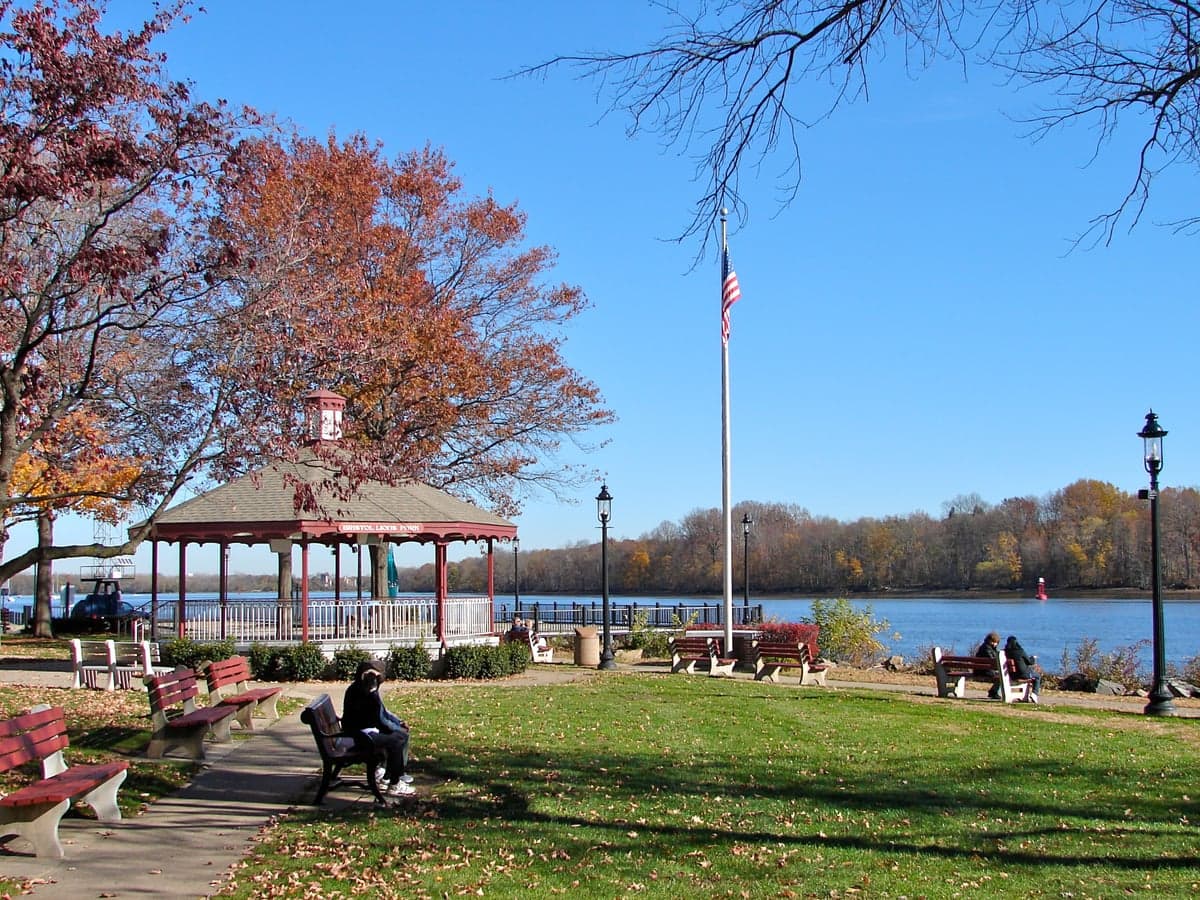
Photo: Wikipedia
Personal Sovereignty in Bristol, PA
Strong independent fundamentals that actively favor personal liberty and low regulation.
What does Personal Sovereignty tell us?
Personal Sovereignty measures your capacity for self-reliance and independence with minimal government friction. Higher scores mean fewer barriers between you and the way you want to live... but it assumes you have the space you need and good neighbors.
What does this tell us?
Personal Sovereignty measures your capacity for self-reliance and independence with minimal government friction. Higher scores mean fewer barriers between you and the way you want to live... but it assumes you have the space you need and good neighbors.
State Policy
Energy independence: Net exporter (150% of energy produced in-state)
Personal Liberty
Homesteading

Personal Liberty Analysis
Bristol, Pennsylvania, offers a mixed personal sovereignty environment shaped by its location in a densely regulated state with strong municipal authority. While the borough itself operates under a traditional small-town governance structure, residents must contend with Pennsylvania’s statewide tax burden, firearm preemption limits, and zoning codes that constrain self-reliance. For a relocation reader prioritizing autonomy, the key trade-off is between the convenience of suburban infrastructure and the regulatory overhead that comes with it.
Tax burden and regulatory posture in Bristol Borough
Pennsylvania’s state-level tax structure is relatively moderate compared to neighboring states, but local taxes in Bristol add up. The state income tax is a flat 3.07%, one of the lowest in the Northeast, and there is no tax on retirement income such as Social Security or 401(k) withdrawals. However, Bristol Borough imposes its own earned income tax of roughly 1%, plus a local services tax of $52 per year for most workers. Property taxes in Bucks County are above the state median, with Bristol’s combined millage rate (borough, county, and school district) typically falling between 25 and 30 mills, meaning a $250,000 home carries an annual tax bill of $6,250 to $7,500. The regulatory posture is heavy-touch in several areas: Pennsylvania requires annual vehicle safety inspections and emissions testing, and the borough enforces a strict property maintenance code that limits exterior modifications without a permit. Business licensing is straightforward for home-based operations, but zoning restrictions (discussed below) can complicate commercial activity on residential lots. Overall, the tax burden is moderate for the region but not low by national standards, and the regulatory environment leans toward active enforcement rather than laissez-faire.
Self-defense and gun law specifics in Bristol
Pennsylvania is a shall-issue state for concealed carry permits, meaning Bristol residents can obtain a License to Carry Firearms (LCF) from the Bucks County Sheriff’s Office without a discretionary review process. The application fee is $20, and permits are valid for five years. Open carry is legal without a permit in most of the state, but Bristol Borough’s status as a first-class township (population over 10,000) means open carry is prohibited during a declared state of emergency—a nuance that matters for those who prefer visible carry. The state preempts local firearm ordinances, so Bristol cannot ban guns in parks or municipal buildings beyond what state law allows. However, Pennsylvania does not have a “stand your ground” statute; instead, it follows the Castle Doctrine, which provides a legal presumption of reasonable fear when using deadly force against an intruder in one’s home or vehicle. There is no duty to retreat in one’s dwelling, but outside the home, a person must attempt to retreat if safely possible before using deadly force. Magazine capacity is not restricted by state law, and there is no universal background check requirement for private sales. For a gun owner, Bristol offers a reasonably permissive legal framework, though the lack of stand your ground and the emergency open-carry restriction are notable limitations compared to more libertarian states.
Self-reliance and homesteading viability in Bristol
Homesteading and off-grid living face significant practical hurdles in Bristol Borough. The typical residential lot size in the borough is 0.1 to 0.25 acres, with many homes on narrow 25-foot-wide lots in the historic district. Zoning codes in the R-1 and R-2 districts permit backyard chickens (hens only, no roosters) with a limit of six birds, but require a coop setback of at least 10 feet from property lines. Beekeeping is allowed with registration, but large livestock such as goats or pigs is prohibited on lots under one acre—which covers virtually all borough properties. Rainwater collection is not restricted by state law, but Bristol’s municipal water authority discourages it for potable use, and the borough’s stormwater management ordinance may require permits for cisterns over 100 gallons. Solar panels are permitted but subject to historic district review if the property is in the designated historic zone, which covers much of the older residential area. Off-grid living is essentially infeasible: the borough requires connection to municipal water and sewer, and building codes mandate grid-tied electrical service for new construction. For those seeking true self-reliance, rural areas of upper Bucks County (e.g., Bedminster or Tinicum townships) offer 1- to 5-acre lots with fewer restrictions, but Bristol itself is a suburban environment where independence is exercised within tight municipal boundaries.
Personal liberties in Bristol: parental rights, medical autonomy, speech, and property
Pennsylvania law provides a baseline of personal liberties that apply in Bristol, though local enforcement can vary. Parental rights are generally strong: the state does not have a universal vaccine mandate for schoolchildren (medical and religious exemptions are available), and parents can opt out of sex education or specific health curricula with a written request. Medical autonomy is mixed—Pennsylvania requires parental consent for minors seeking abortion, but the state has no law restricting gender-affirming care for minors, which may be a concern for conservative families. Free speech protections are robust under both the U.S. and Pennsylvania constitutions, and Bristol has not enacted any local ordinances restricting political signage or public assembly beyond standard time-place-manner rules. Property rights are constrained by the borough’s zoning code, which limits home-based businesses to low-impact occupations (e.g., office work, tutoring) and prohibits signs larger than two square feet. The borough also enforces a rental inspection program that requires landlords to obtain a license and pass annual safety checks—a regulation that affects property owners’ autonomy over their investment. Overall, Bristol offers a moderate level of personal liberty: strong on speech and parental opt-outs, but more restrictive on medical autonomy and property use than less densely populated areas.
Compared to other parts of Pennsylvania, Bristol’s personal sovereignty profile is constrained by its suburban density and municipal oversight. The tax burden is higher than in rural counties like Bradford or Tioga, and the zoning code is tighter than in unincorporated townships. For a relocation reader who values maximum autonomy—such as off-grid living, minimal regulation, or permissive gun laws—areas like Forest County or the northern tier of the state offer a lighter touch. However, Bristol provides a workable environment for those who accept moderate regulation in exchange for proximity to Philadelphia and the Delaware River. The borough’s governance is not hostile to personal freedom, but it operates on the assumption that residents will participate in municipal systems rather than opt out of them. For a family or individual who prioritizes self-reliance within a community framework, Bristol is a reasonable choice; for those seeking near-total sovereignty, it is not.

* Values derived from national, state, county, city and local statistics and may differ in a specific area. Last updated: 2026-08-25T10:51:30.000Z
Narrative content on this page is AI-generated and may contain mistakes. Verify any details that matter before acting on them.
ReloMaps may earn a commission from affiliate links at no extra cost to you.

