Photo: Wikipedia
Strategic Assessment of Bristol, VA
Workable tactical position. Some exposure to population density or targets, but generally defensible in a crisis.
What does the Strategic Assessment tell us?
Our Strategic Assessment grades tactical survivability of an area. Major population centers, military targets, fallout zones, natural disasters, and border exposure all drive risk — lower exposure means a more defensible position in a crisis.
This is heavily inspired by Joel Skousen's Strategic Relocation book. Highly recommended you checkout the book ($)What does this tell us?
Our Strategic Assessment grades tactical survivability of an area. Major population centers, military targets, fallout zones, natural disasters, and border exposure all drive risk — lower exposure means a more defensible position in a crisis.
This is heavily inspired by Joel Skousen's Strategic Relocation book. Highly recommended you checkout the book ($)Strategic Pillars

Key Distances
Regional Safe Places
Below is our recommended "safe zones" in Virginia and the surrounding area based on our strategic heuristics. For most people, it's unrealistic to live in a “safe zone” full-time due to work, family or other personal reasons. They tend to be more rural. However, many of these areas are perfect for second homes and retreat properties that double as a vacation home or even a short-term rental.
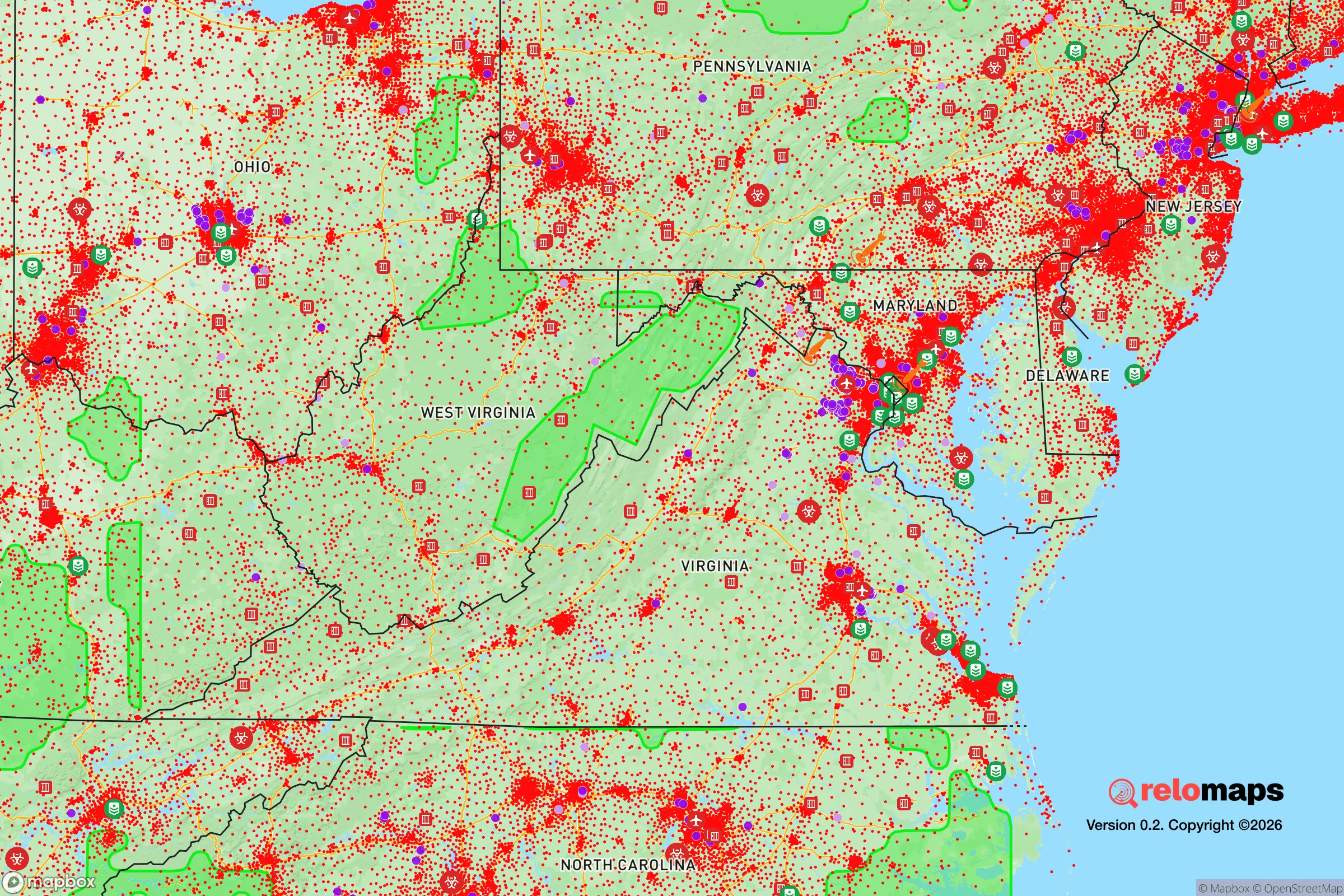
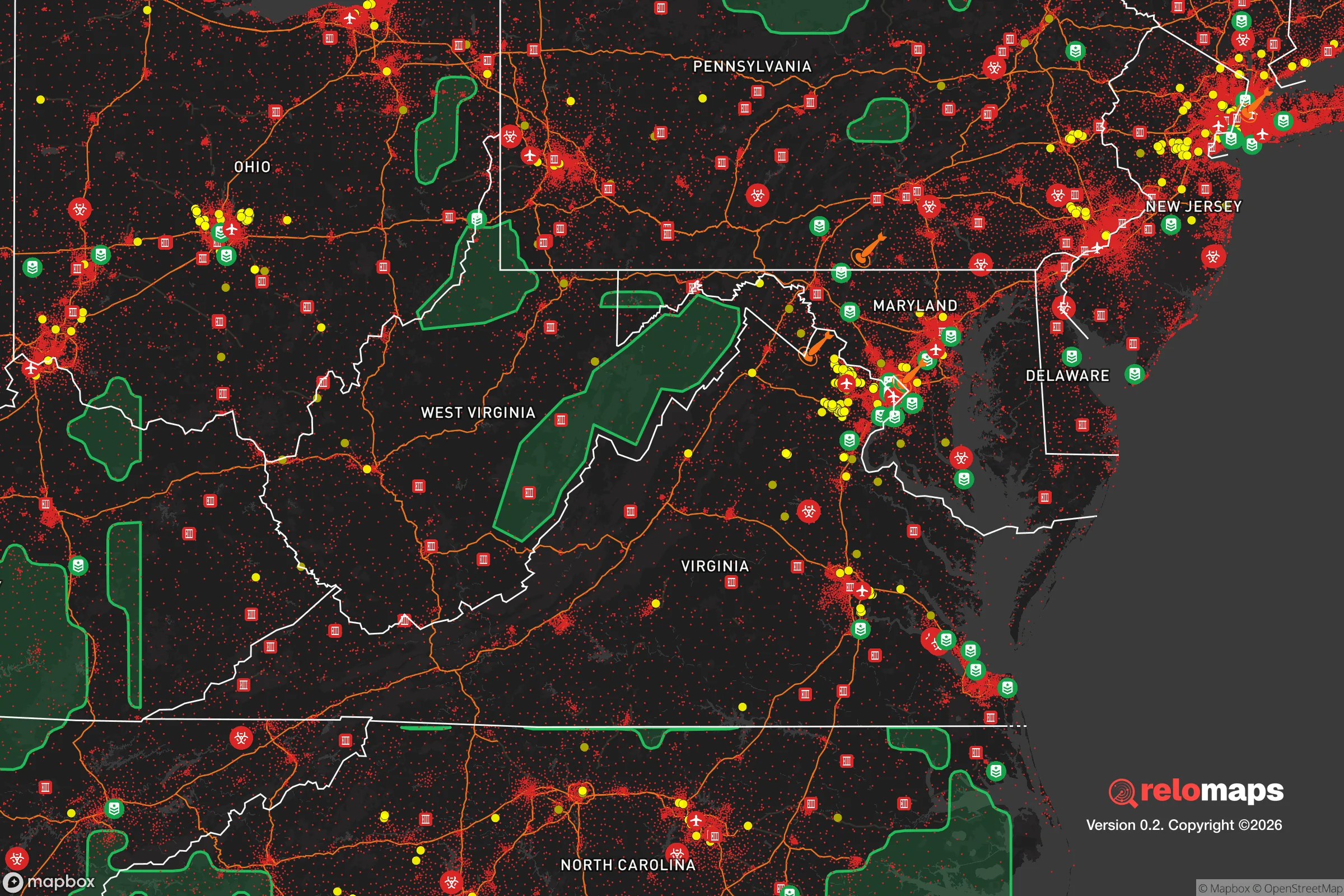


Important Note: For informational purposes only. This does not mean nothing bad ever happens in the green zones. Please use common sense. This is based on public data and modeled with AI. We tried to take a conservative approach but mistakes happen. We update this regularly as new information becomes available.
Solar Generator Recommendations
Backup power matters more here than in safer locations. We've picked three solar generators across budgets and capacity tiers — start with the budget unit if you only need a few essentials, or step up if you want to run a fridge and HVAC for days at a time.

Jackery Portable Power Station Explorer 300
Budget OptionPower on the Go: Weighing only 11 lbs, it's convenient to set up and store with book-sized foldable solar panels

BLUETTI Portable Power Station AC180
Designed for both indoor and outdoor scenarios, AC180 is highly capable as it has a robost capacity and continuous output power.

EF ECOFLOW DELTA Pro Ultra Power Station
Upgraded PickEcoFlow DELTA Pro Ultra is a whole-home energy system designed to grow with your family. Integrated with the Smart Home Panel 2, it scales to meet your evolving energy needs — keeping your home powered, intelligent, and secure through every stage of life.
We earn a commission, at no additional cost to you.
Strategic Assessment Analysis
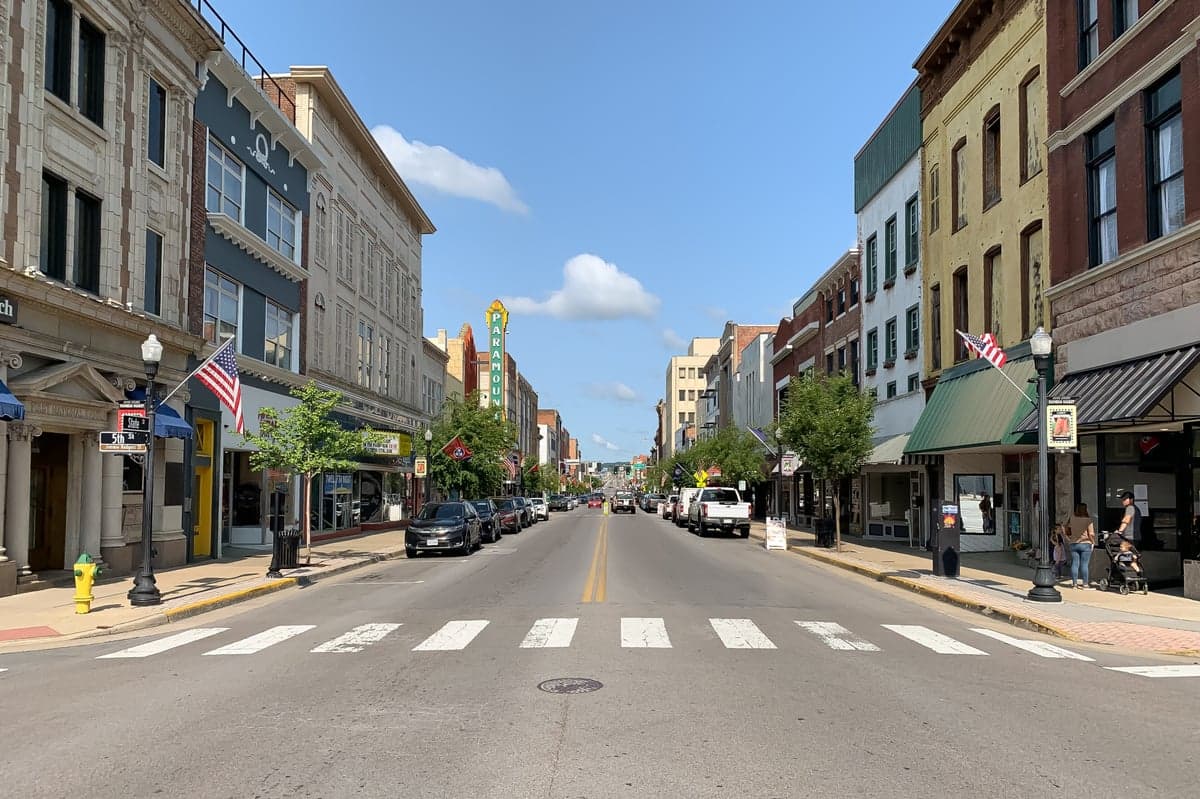
Bristol, Virginia, straddling the Tennessee state line, offers a strategic relocation option for those prioritizing resilience and self-sufficiency in an increasingly uncertain national landscape. Its position in the Appalachian highlands provides natural buffers against coastal threats and major metropolitan chaos, while the region's historical independence and lower population density create a foundation for sustained community stability. For a conservative-minded individual or family looking to weather potential civic unrest, supply chain disruptions, or mass casualty events, Bristol presents a compelling mix of geographic advantage and practical preparedness potential.
Geographic position and natural advantages for long-term stability
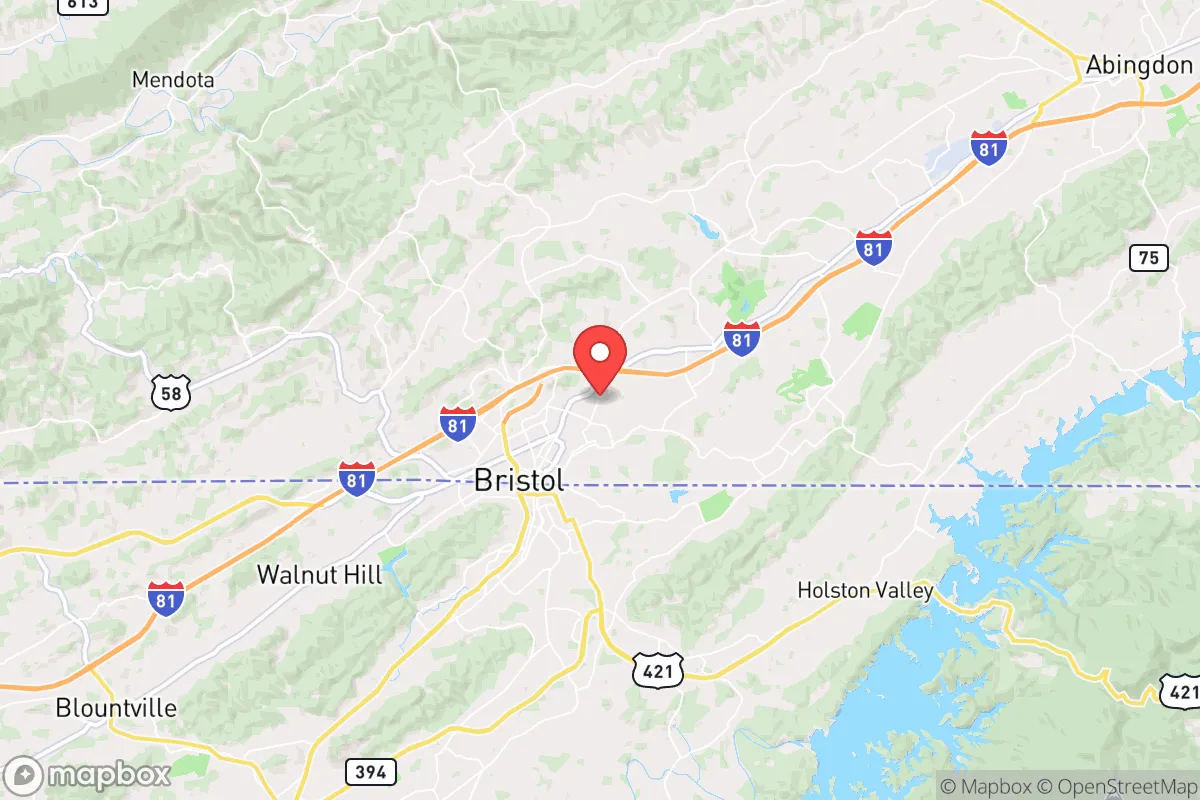
Bristol sits in a valley between the Blue Ridge and Appalachian Mountains, roughly 120 miles from both Knoxville and Roanoke, and about 200 miles from Charlotte. This distance from major urban centers is a double-edged sword: close enough for access to specialized medical care or supply runs, but far enough that a cascading failure in a city like Charlotte or Nashville would likely not reach Bristol for days or weeks. The surrounding terrain—steep ridges, dense forests, and limited major highways—acts as a natural choke point. The only primary routes in and out are I-81 and US-11, both of which can be monitored or blocked if needed. The region's elevation (around 1,600 feet) means cooler summers and less extreme weather than the Deep South, reducing heat-related risks during prolonged power outages. The area also sits outside the primary hurricane strike zone and is far from known earthquake fault lines, though minor tremors are possible. The New River and South Holston Lake provide substantial freshwater resources, and the surrounding national forests (Jefferson and Cherokee) offer game and forage potential. For a prepper, the key advantage is that Bristol is not a target—no major military bases, no critical infrastructure hubs, no massive population centers that would draw looters or federal attention during a collapse.
Risks, exposures, and proximity to fallout-relevant landmarks
No location is immune to risk, and Bristol has specific vulnerabilities that a strategic relocator must weigh. The most significant is the proximity to the Oak Ridge National Laboratory in Tennessee, roughly 150 miles southwest. While not a nuclear power plant in the traditional sense, Oak Ridge handles weapons-grade materials and research reactors. A catastrophic event there—whether accident or sabotage—could produce a fallout plume that, depending on wind patterns, might reach the Bristol area within hours. Similarly, the Tennessee Valley Authority's coal and nuclear plants along the Tennessee River corridor (like Watts Bar and Sequoyah) are within a 200-mile radius. The I-81 corridor itself is a major trucking route for hazardous materials, including propane and industrial chemicals, which could cause localized incidents. The region also has a history of flash flooding in low-lying areas near the Holston River, though most of Bristol's residential zones are on higher ground. For a prepper, the main concern is that a national-scale event—like a grid-down scenario or widespread civil unrest—would see refugees from Knoxville, Johnson City, and even Charlotte flowing toward the mountains. Bristol's position as a regional hub (with a hospital, Walmart, and major retail) could make it a target for desperate populations. The city's police force is small (around 60 officers), and the surrounding county (Washington County, VA) has limited law enforcement resources. During a prolonged crisis, residents would largely need to rely on themselves and their immediate neighbors for security.
Practical resilience for a relocator: food, water, energy, and defensibility
For a family or individual serious about preparedness, Bristol offers several practical advantages. Water is abundant: the South Holston Lake and the Holston River provide year-round sources, and the region's average annual rainfall of 45 inches means rainwater catchment is viable. The local water utility draws from surface sources, but during a grid failure, wells and springs in the surrounding hills would be critical. Food production is feasible—the growing season runs from April to October, and the valley soils are fertile enough for gardens. Local farmers' markets and co-ops (like the Bristol Farmers Market) offer a network for sourcing seeds, livestock, and supplies without relying on big-box stores. For energy, the area has decent solar potential (about 4.5 peak sun hours per day), and the mountainous terrain allows for micro-hydro setups on smaller creeks. Wood is the primary heating fuel here; most rural homes already have wood stoves, and the national forests provide ample fuel if managed responsibly. Defensibility is mixed. Bristol's downtown is compact and walkable, but the suburban sprawl along I-81 and US-11 creates vulnerable choke points. A better strategy for a relocator is to look at properties on the outskirts—toward Bluff City or along the Virginia-Tennessee line near South Holston Lake—where single-lane roads and ridge lines offer natural defensive positions. The local culture is generally gun-friendly (Virginia is a shall-issue state for concealed carry, and Tennessee has no permit requirement for open carry), and the region has a strong hunting tradition. The biggest practical challenge is the lack of a robust local manufacturing base; most goods come from outside the region, so stockpiling essential supplies (ammunition, medical gear, spare parts) is non-negotiable. The nearest major medical center is Bristol Regional Medical Center, a solid facility but one that would be overwhelmed in a mass casualty event. For serious trauma, you're looking at a 2-hour drive to Johnson City or a 3-hour drive to Knoxville.
Overall, Bristol represents a middle-ground strategic option for the conservative prepper. It's not the remote mountain redoubt of Montana or Idaho, but it offers a realistic balance of accessibility and isolation. The region's political leanings (heavily Republican, with Washington County voting +40 R in recent elections) mean you'll find like-minded neighbors who value self-reliance and community defense. The cost of living is low (median home price around $200,000), and property taxes are manageable. The downsides are real: proximity to Oak Ridge, the I-81 refugee corridor, and limited local manufacturing. But for someone who wants to be within a day's drive of family in the Southeast while still having a defensible position with water, wood, and food potential, Bristol is worth a serious look. The key is to buy land with a good well, install solar panels, and build relationships with the local farming community before any crisis hits. In a world where the next disruption could come from any direction, Bristol offers a solid foundation—not a fortress, but a place where a prepared family can hold their ground.

* Values derived from national, state, county, city and local statistics and may differ in a specific area. Last updated: 2026-05-01T02:16:26.000Z
Narrative content on this page is AI-generated and may contain mistakes. Verify any details that matter before acting on them.
ReloMaps may earn a commission from affiliate links at no extra cost to you.

