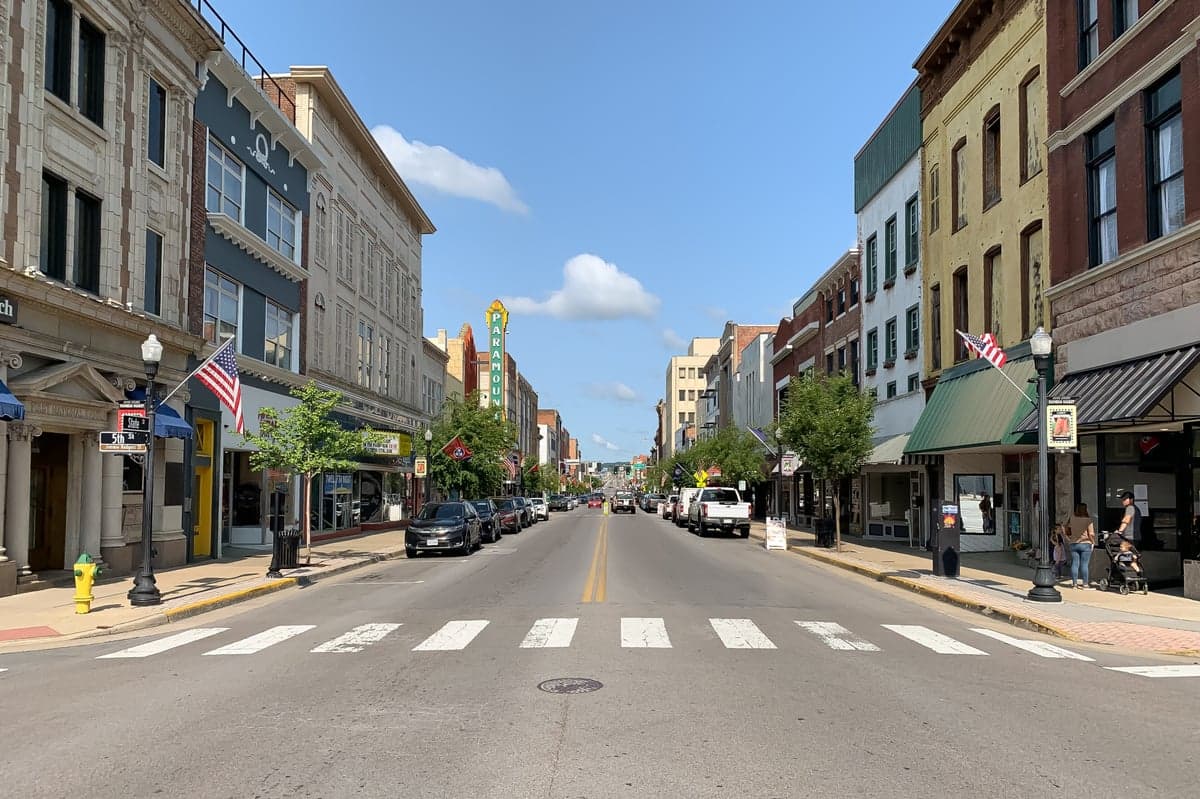
Photo: Wikipedia
Political ClimatePolitical Climate in Bristol, VA
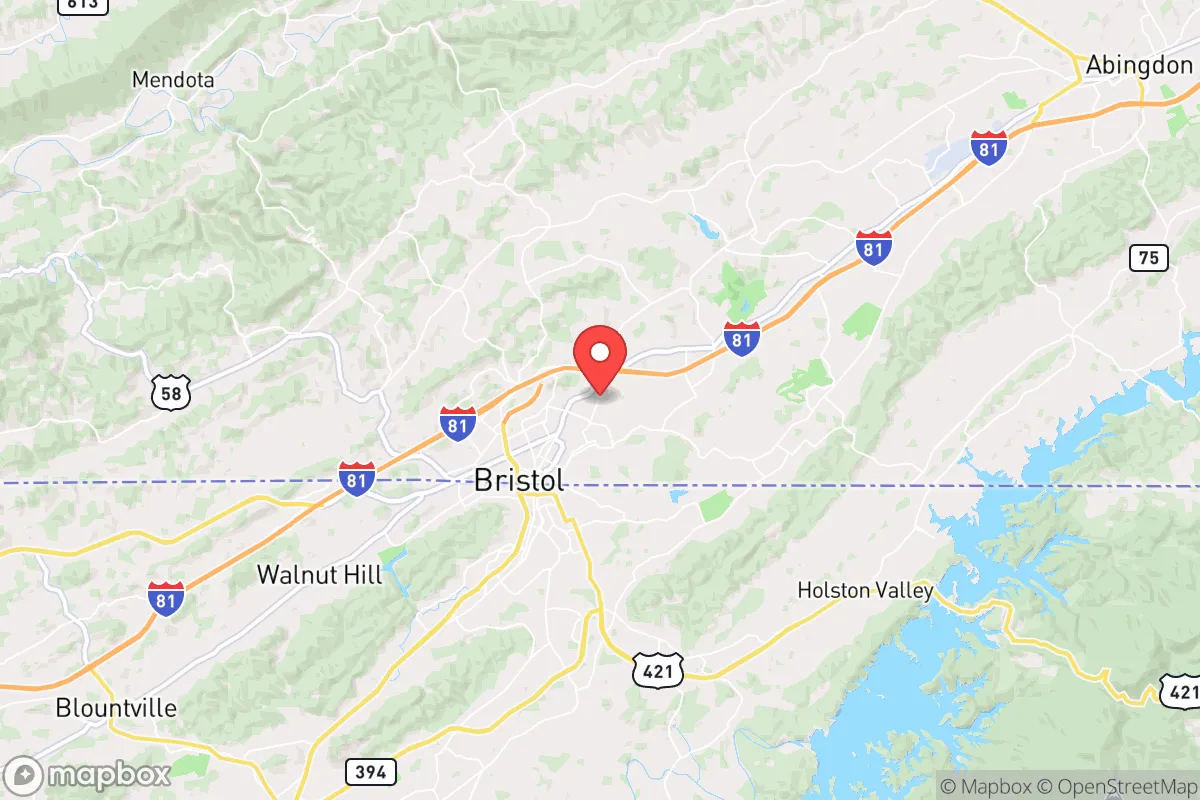
District shown is the primary district for this city’s centroid. Cities may span multiple districts.
Local Political AnalysisPolitical Analysis of Bristol, VA
Bristol, Virginia, is about as reliably conservative as it gets in the commonwealth, with a Cook PVI of R+22 that puts it in the deep-red column. That number isn't just a statistic—it reflects a community where folks have long believed in local control, the Second Amendment, and keeping government out of your business. The political lean here hasn't budged much over the decades, but like a lot of places, you can feel the pressure from outside influences trying to chip away at that foundation. The trajectory is still solidly conservative, but it takes vigilance to keep it that way.
How it compares
Drive 20 minutes north to Abingdon, and you'll find a similar conservative vibe, though it's a bit more polished and tied to the tourism and arts scene. Head east toward Marion or Wytheville, and the politics get even more rural and traditional. The real contrast is just across the state line in Bristol, Tennessee, where the politics are equally red but the tax structure and gun laws are even more favorable to personal liberty. The biggest difference you'll notice is when you go to Roanoke or Blacksburg—those places have shifted noticeably left in recent years, with Roanoke city council pushing progressive policies that would never fly here. Bristol, VA residents watch that and shake their heads, knowing that kind of government overreach into personal freedoms is a red flag they won't tolerate.
What this means for residents
For the people living here, the political climate means you can pretty much live your life without the state breathing down your neck. Gun ownership is a given—you don't get sideways looks for carrying, and the local sheriff's office isn't interested in enforcing any feel-good gun control schemes from Richmond. Taxes are relatively low compared to northern Virginia, and the local government tends to focus on roads, schools, and public safety rather than social engineering. The downside is that any shift toward progressive ideology—like the push for "equity" initiatives in the school system or zoning changes that threaten property rights—gets met with serious pushback at town hall meetings. Voter turnout here is high for local elections because people know that's where the real battles are fought, not in some D.C. echo chamber.
Culturally, Bristol, VA still holds onto its Appalachian roots, which means a strong sense of community self-reliance and a healthy skepticism of any politician promising to "fix" things from the top down. The policy distinctions that matter most here are the ones that protect individual liberty: Virginia's "shall-issue" concealed carry laws are respected, and the local economy is built on small businesses and manufacturing, not government contracts. The long-term concern is that Richmond keeps trying to chip away at local control—like the recent push to eliminate single-family zoning or mandate green energy standards that would hammer working-class families. For now, the political climate in Bristol, VA is a refuge for those who want to be left alone, but it takes constant attention to keep it that way. If you're looking for a place where your vote actually counts and your voice matters, this is it—just don't expect it to stay that way without showing up.

State Political ClimatePolitical Climate in Virginia
State Political AnalysisPolitical Environment in the State
Virginia has transformed from a reliably conservative-leaning state into a solidly blue stronghold over the past two decades, driven by explosive growth in the Washington D.C. suburbs. The state hasn’t voted for a Republican presidential candidate since 2004, and Democrats now control the governorship, both chambers of the legislature, and both U.S. Senate seats. For a conservative considering relocation, the key takeaway is that Virginia’s political center of gravity has shifted decisively northward, with the rural south and west increasingly outgunned by the urban crescent from Northern Virginia down to Richmond.
Urban vs. rural divide
The political map of Virginia is a tale of two states. The urban crescent—Arlington, Alexandria, Fairfax County, and Loudoun County—now accounts for over half the state’s vote. These jurisdictions routinely deliver 65-75% of their ballots to Democrats. Richmond and Norfolk follow the same pattern, while Virginia Beach remains a purple battleground that has trended left. In contrast, the rural south and southwest—places like Roanoke, Lynchburg, and the Shenandoah Valley—vote Republican by margins of 30-40 points. The divide isn’t just geographic; it’s cultural. Northern Virginia’s economy is tied to the federal government and tech, while rural Virginia depends on agriculture, manufacturing, and military bases. The result is a state where statewide races are decided by the suburbs of D.C., not the rest of the commonwealth.
Policy environment
Virginia’s policy landscape has shifted dramatically leftward since Democrats took full control in 2019. The state income tax is a flat 5.75%, but the sales tax varies by locality, with Northern Virginia adding an extra 1% for transportation. Property taxes are set locally and are generally moderate outside the D.C. suburbs. On education, the state has embraced the Virginia Department of Education’s 2020 “Equity in Education” policies, which critics say dilute academic standards and parental oversight. The 2021 repeal of the “First in the Nation” public school choice program for military families was a blow to educational freedom. Healthcare policy has expanded Medicaid under the Affordable Care Act, and the state now mandates abortion access up to the third trimester under the 2020 Reproductive Health Protection Act. Election laws have shifted to no-excuse absentee voting and same-day registration, with voter ID requirements weakened. For conservatives, the regulatory environment is increasingly hostile to gun rights, with the 2020 passage of universal background checks, a “one handgun a month” limit, and red flag laws.
Trajectory & freedom
Virginia is becoming less free by nearly any measure of personal liberty. The 2020 General Assembly session was a watershed: Democrats passed the Virginia Clean Economy Act, which effectively bans new natural gas connections and mandates a 100% renewable grid by 2050, driving up energy costs. The same session saw the repeal of the state’s right-to-work law for public-sector unions, a move that weakens economic freedom. On gun rights, the 2020 red flag law allows for temporary seizure of firearms without a criminal conviction, and the “one handgun a month” limit restricts lawful purchases. Parental rights took a hit with the 2021 passage of the Virginia Values Act, which expanded anti-discrimination protections to include sexual orientation and gender identity in schools, overriding parental notification. The 2022 repeal of the state’s “Parents’ Bill of Rights” proposal further eroded family autonomy. On the positive side, the state has no personal property tax on vehicles, and the homestead exemption for property taxes offers some relief. But the overall trajectory is toward more government control over daily life.
Civil unrest & political movements
Virginia has been a flashpoint for political conflict. The 2017 “Unite the Right” rally in Charlottesville remains a scar on the state’s image, leading to the removal of Confederate statues and a statewide debate over historical memory. The 2020 protests in Richmond saw the Robert E. Lee statue become a focal point for both Black Lives Matter demonstrations and counter-protests. More recently, the 2021 gubernatorial race between Glenn Youngkin and Terry McAuliffe was a proxy war over parental rights in education, with Youngkin’s victory signaling a conservative backlash. However, the Democratic-controlled legislature has since blocked many of Youngkin’s initiatives, including a proposed 15-week abortion ban. Immigration politics are less heated than in border states, but Fairfax County and Arlington have declared themselves “sanctuary cities,” limiting cooperation with ICE. Election integrity remains a concern for conservatives, with the 2020 election seeing widespread use of drop boxes and mail-in ballots without the strict chain-of-custody rules found in states like Florida. The 2023 legislative elections saw Democrats retain control, suggesting the Youngkin wave was a temporary blip.
Projection
Over the next 5-10 years, Virginia will likely continue its leftward drift. Demographic trends are clear: Northern Virginia is growing faster than the rest of the state, and its population is younger, more diverse, and more progressive. The rural areas are aging and losing population. The 2030 redistricting cycle will likely cement Democratic control of the legislature. The only wildcard is if the federal government downsizes its workforce in D.C., which could slow Northern Virginia’s growth. But even then, the tech sector in Reston and Tysons is self-sustaining. For a conservative moving in now, expect to live under a state government that is increasingly hostile to gun rights, parental authority, and economic freedom. The best-case scenario is a divided government like the Youngkin years, but that appears to be the exception, not the rule. The state’s tax burden will likely increase as the Democratic majority funds its priorities, and energy costs will rise with the green mandate.
For a conservative relocating to Virginia, the bottom line is this: you’ll find like-minded communities in the Shenandoah Valley, around Lynchburg, and in parts of Virginia Beach, but you’ll be living under a state government that does not share your values. The local politics in your county or city may be conservative, but the state-level policies on taxes, education, guns, and parental rights will be a constant source of frustration. If you value personal freedom and limited government, Virginia is no longer the safe bet it was 20 years ago. Consider the trade-offs carefully before making the move.
* Values derived from national, state, county, city and local statistics and may differ in a specific area. Last updated: 2026-05-01T02:16:26.000Z
Narrative content on this page is AI-generated and may contain mistakes. Verify any details that matter before acting on them.
ReloMaps may earn a commission from affiliate links at no extra cost to you.

