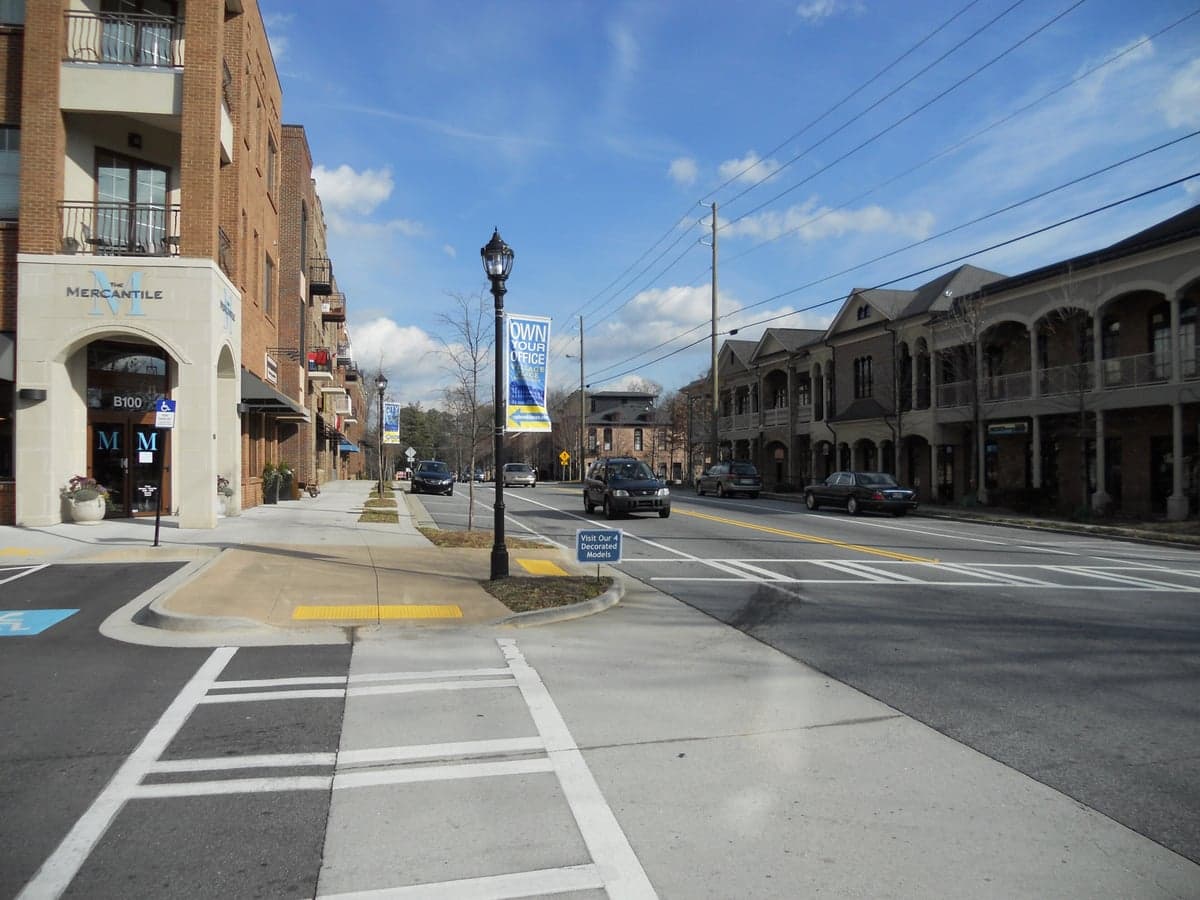
Photo: Wikipedia
Political ClimatePolitical Climate in Brookhaven, GA
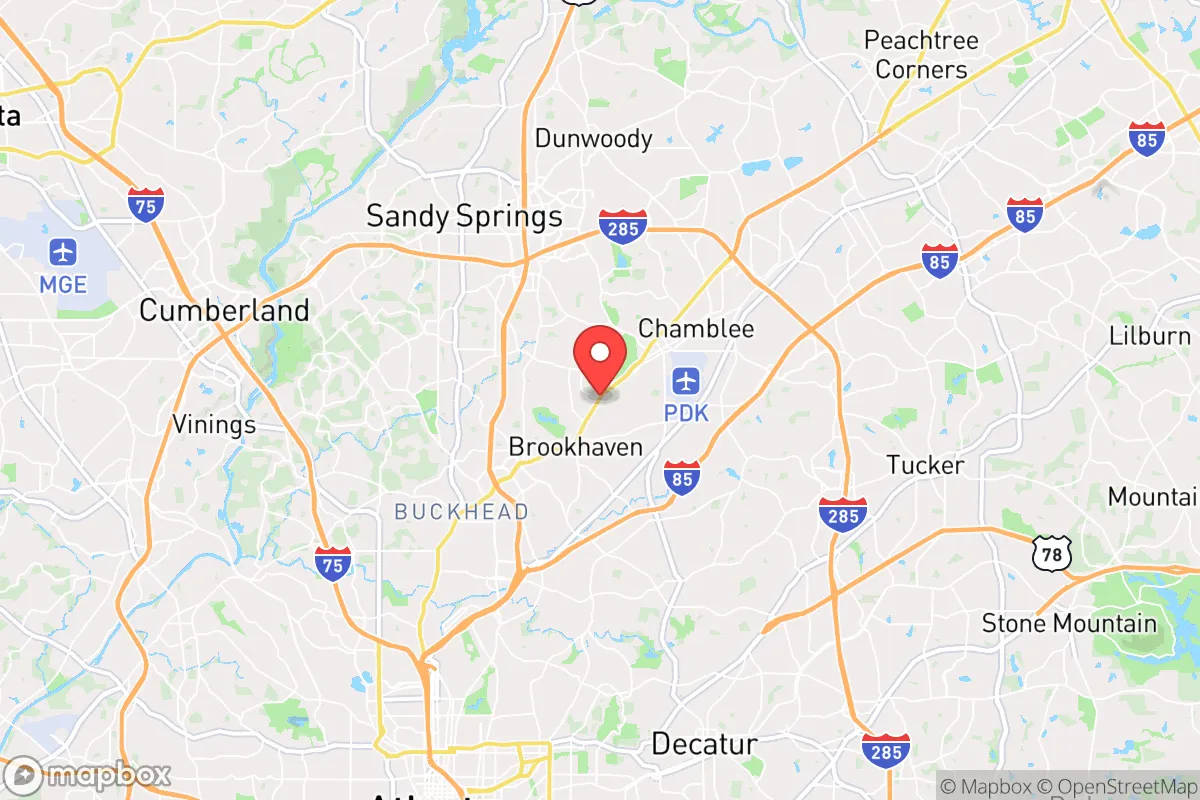
District shown is the primary district for this city’s centroid. Cities may span multiple districts.
Local Political AnalysisPolitical Analysis of Brookhaven, GA
Brookhaven, Georgia, is about as blue as it gets in the metro Atlanta area, with a Cook PVI of D+36, meaning it votes Democratic by a massive 36-point margin compared to the national average. That wasn't always the case—when the city incorporated in 2012, it was a pretty mixed bag politically, with a lot of old-school conservative families who valued low taxes and minimal fuss from local government. But over the last decade, the influx of young professionals, transplants from blue states, and a heavy push from developers has flipped the script hard. Today, you're looking at a place where progressive policies are the norm, and the old guard of fiscal conservatives and libertarian-leaning residents are feeling increasingly outnumbered and outspoken.
How it compares
To understand Brookhaven's politics, you have to look at its neighbors. Drive five miles north to Dunwoody, and you'll find a more moderate, business-friendly vibe—still blue-leaning, but with a stronger tax-conscious streak and less appetite for social experimentation. Head west to Smyrna or Vinings, and you get a similar story: Democratic, but with a pragmatic, "don't mess with my property values" attitude. But Brookhaven? It's the epicenter of the progressive wave. Compare it to places like Tucker or even parts of Sandy Springs, where you still see a healthy conservative minority pushing back on zoning changes and spending, and Brookhaven feels like a different country. The city council and school board are dominated by activists who see government as a tool for social engineering, not just basic services. That D+36 number isn't an accident—it's a reflection of a community that has embraced a one-party rule mentality, where dissent on issues like housing density, police funding, or tax hikes is often dismissed as outdated.
What this means for residents
For the average person living here, the political climate translates into a lot of government involvement in daily life. You've got strict tree ordinances that can turn a simple backyard project into a bureaucratic nightmare, zoning rules that prioritize high-density apartments over single-family homes, and a school system that's more focused on equity initiatives than academic rigor. Property taxes have climbed steadily as the city adds new programs and staff, and there's little organized opposition to stop it. If you value personal freedoms—like the right to modify your own property without a permit battle, or the freedom to send your kids to a school that doesn't push a political agenda—Brookhaven can feel suffocating. The local elections are essentially decided in the Democratic primary, so your vote in the general election is mostly symbolic. The long-term trajectory is more of the same: more regulations, more spending, and a culture that rewards compliance over independence.
Culturally, Brookhaven has become a place where progressive orthodoxy is the social norm, not just a political stance. You'll see "In This House We Believe" signs in every other yard, and local businesses are expected to fly the rainbow flag year-round. The city has also leaned into "sanctuary" policies, limiting cooperation with federal immigration enforcement, which sounds compassionate but raises real questions about public safety and rule of law. For those of us who remember when Brookhaven was a quiet, affordable suburb where you could live your life without the government breathing down your neck, it's a tough pill to swallow. The future looks like more of the same—unless the conservative and libertarian-leaning residents get organized and start showing up at city council meetings. But right now, the momentum is all one direction, and it's not toward freedom.

State Political ClimatePolitical Climate in Georgia
State Political AnalysisPolitical Environment in the State
Georgia has shifted from a reliably Republican stronghold to a true battleground state over the past two decades, with the 2020 presidential election flipping the state blue for the first time since 1992 by a razor-thin margin of just 0.2%. The state’s political landscape is now defined by a coalition of fast-growing, diverse suburban voters in metro Atlanta, combined with a deeply conservative rural and exurban base that still holds significant power in the state legislature. Over the last 10-15 years, the GOP’s dominance has eroded from a 10-point+ margin in 2004 to a near 50-50 split, driven by massive in-migration from other states and demographic shifts in the Atlanta suburbs.
Urban vs. rural divide
The political map of Georgia is a textbook case of the urban-rural chasm. Metro Atlanta’s core counties — Fulton, DeKalb, Cobb, Gwinnett, and Clayton — now reliably vote Democratic, with Fulton and DeKalb delivering margins of 70%+ for Democratic candidates. The explosion of population in Gwinnett County, which flipped from red to blue between 2016 and 2020, is the single most important shift: it’s now home to over 950,000 people, many of them transplants from other states and countries. Meanwhile, the rural “Black Belt” counties in southwest Georgia, like Dougherty County (Albany) and Macon-Bibb County, remain solidly Democratic due to high African American populations. On the other side, the rest of the state is overwhelmingly Republican. Forsyth County, just north of Atlanta, is one of the most conservative counties in the nation, routinely voting 70%+ Republican. Hall County (Gainesville) and Houston County (Warner Robins) are also deep red, driven by military families, manufacturing workers, and evangelical Christians. The divide isn’t just about Atlanta versus the rest — it’s about the sprawling, diverse suburbs versus the small towns and rural areas that feel left behind by the state’s economic growth.
Policy environment
Georgia’s policy environment is a mixed bag for conservatives. On the plus side, the state has a flat income tax rate of 5.49% (down from 6% in 2022), with a scheduled phase-down to 4.99% by 2029. There’s no estate tax, and property taxes are relatively low, with a median effective rate of 0.87% of home value. The state is a right-to-work state with a Republican-controlled legislature that has consistently passed business-friendly tort reform and kept regulations light. However, the education landscape is contentious: Georgia has a universal school voucher program (the Georgia Promise Scholarship Act, passed in 2024) that allows families in low-performing school districts to use state funds for private school, but it’s capped at $6,500 per student and only applies to districts ranked in the bottom 25%. The state also expanded Medicaid under the Affordable Care Act in 2023, a move that many conservatives opposed as a government overreach. On election integrity, Georgia passed SB 202 in 2021, which added a photo ID requirement for absentee ballots, limited drop boxes, and shortened the runoff election window — a law that drew national criticism but was upheld in court. The state also has a permitless carry law (HB 218, passed in 2022), allowing anyone 21 or older to carry a concealed firearm without a license, which is a major win for Second Amendment advocates.
Trajectory & freedom
Georgia’s trajectory on personal freedom is a tug-of-war between conservative gains and progressive encroachment. The state has expanded gun rights significantly with permitless carry and the elimination of the “license to carry” requirement. Parental rights were strengthened in 2022 with the passage of SB 377, which requires schools to notify parents of any changes to a student’s “services or monitoring” related to mental, emotional, or physical health — effectively a parental notification law for gender-related issues. However, the state has also seen a push for government overreach in other areas. In 2023, Governor Brian Kemp signed a law banning gender-affirming care for minors, which conservatives see as protecting children from irreversible medical procedures, but progressives view as an infringement on medical autonomy. On the economic freedom front, the state’s income tax phase-down is a positive sign, but the expansion of Medicaid and the state’s growing reliance on federal dollars (over 30% of the state budget comes from Washington) is a concern for limited-government advocates. The biggest threat to freedom in Georgia is the rapid urbanization of the Atlanta metro, which is driving up housing costs, congestion, and government spending — the state’s budget has grown from $26 billion in 2015 to over $36 billion in 2025, outpacing population growth.
Civil unrest & political movements
Georgia has been a flashpoint for political activism on both sides. The 2020 election cycle saw massive protests in Atlanta following the murder of George Floyd, with the city experiencing several nights of property damage and arson in the downtown and Buckhead areas. The “Stop Cop City” movement, which opposes the construction of a $90 million police training facility in DeKalb County, has led to ongoing protests, arrests, and even a domestic terrorism designation by the state for some activists. On the right, the Georgia Republican Party has been energized by election integrity concerns, with groups like the Georgia Election Integrity Coalition pushing for stricter voter ID laws and audits. The state also saw a high-profile election fraud case in 2020 in Coffee County, where a breach of voting equipment led to a criminal investigation and a renewed push for paper ballot audits. Immigration politics are a hot-button issue: Georgia has a strict E-Verify requirement for employers (since 2013), but the influx of migrants through the southern border has led to tensions in Dalton and Gainesville, where the carpet and poultry industries rely heavily on immigrant labor. There’s no sanctuary city policy in Georgia — state law (HB 87, 2011) actually prohibits it — but Atlanta’s city council has passed symbolic resolutions opposing federal immigration enforcement.
Projection
Over the next 5-10 years, Georgia will likely continue its slow drift toward a purple or even blue state, driven by the relentless growth of the Atlanta metro. The state is adding about 100,000 new residents per year, with the vast majority settling in the suburbs of Gwinnett, Cobb, and Forsyth counties. If current trends hold, the state could become competitive for Democrats in statewide races by 2028 or 2032, especially if the GOP fails to hold onto the suburban vote. However, the state legislature is gerrymandered to favor Republicans, so the House and Senate will likely remain red for at least another decade. The wild card is the exurban and rural vote: if the GOP can turn out its base in places like Rome, Valdosta, and Augusta, they can offset Atlanta’s blue tide. For a conservative moving in now, expect to see more ballot initiatives on school choice, tax cuts, and Second Amendment rights, but also more battles over transgender policies, election laws, and the role of government in healthcare. The state’s economic growth is a double-edged sword — it brings opportunity but also higher taxes, more regulation, and a more diverse electorate that may not share your values.
Bottom line: Georgia is still a good bet for conservatives who want a low-tax, business-friendly environment with strong gun rights and a Republican-controlled legislature. But the state is changing fast, and the Atlanta metro’s political influence is growing every year. If you’re moving here, get involved in local politics — school boards, county commissions, and city councils — because that’s where the real battles over freedom and government overreach are being fought. The state’s future depends on whether the conservative base can hold the line in the suburbs while the rural areas continue to punch above their weight. It’s not Texas or Florida yet, but it’s still a place where your vote counts — for now.
* Values derived from national, state, county, city and local statistics and may differ in a specific area. Last updated: 2026-04-29T18:01:14.000Z
Narrative content on this page is AI-generated and may contain mistakes. Verify any details that matter before acting on them.
ReloMaps may earn a commission from affiliate links at no extra cost to you.

