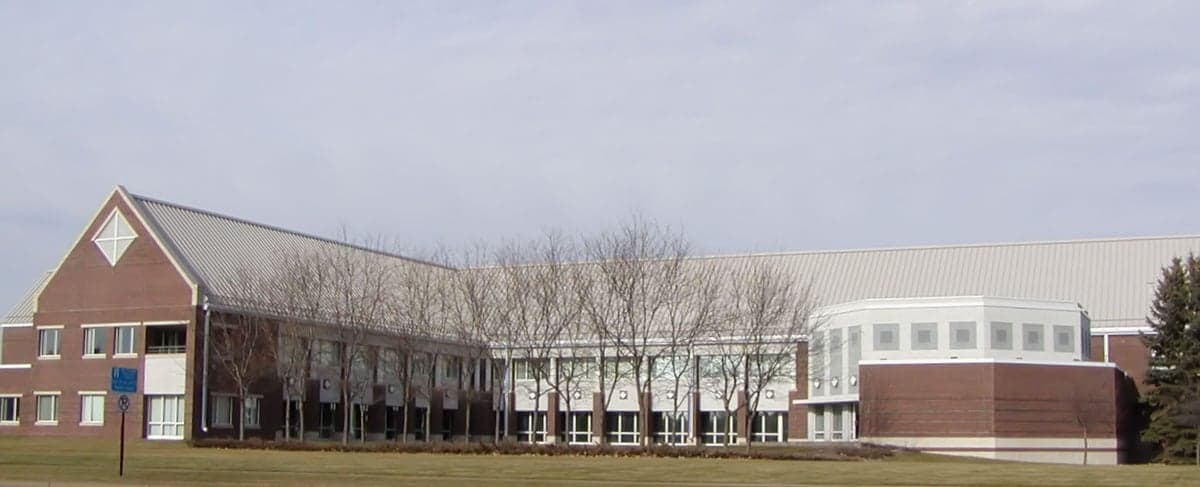
Photo: Wikipedia
Demographics of Brooklyn Park, MN
Affluence Level in Brooklyn Park, MN
A middle-class area roughly in line with national averages across income, home values, education, and employment.
People of Brooklyn Park, MN
Brooklyn Park, Minnesota, is a city of 84,349 residents defined by its striking racial and ethnic diversity, a stark contrast to the largely white, rural landscape that surrounded it for most of the 20th century. Today, the city is a majority-minority suburb where no single racial group holds a numerical majority, with a population that is 36.3% white, 30.1% Black, 19.0% East/Southeast Asian, and 6.4% Hispanic. This demographic profile, combined with a foreign-born population of 8.8% and a college-educated rate of 31.7%, paints a picture of a working- and middle-class suburb that has been reshaped by successive waves of domestic and international migration.
How the city was settled and grew
Brooklyn Park’s human history is almost entirely a post-World War II story. Unlike older Mississippi River towns, it was not a 19th-century settlement. The area was originally farmland, part of the vast agricultural tracts that fed the Twin Cities. The first major population wave came in the 1950s and 1960s, driven by the post-war housing boom and the construction of Interstate 94 and Highway 169, which made the area commutable to downtown Minneapolis. These early residents were overwhelmingly white, middle-class families seeking affordable single-family homes on larger lots. The original subdivisions—such as Brooklyn Center (a separate city to the south) and the early developments around Zachary Lane and Noble Parkway—were built for this demographic. The city’s first major employer, the Honeywell plant (now part of Honeywell Aerospace), opened in the 1950s and anchored the local economy, drawing skilled workers from across the Midwest.
Modern era (post-1965)
The 1965 Immigration and Nationality Act opened the door to new migration patterns, but Brooklyn Park’s transformation accelerated in the 1980s and 1990s. The first major non-white group to arrive were Black families, many of them second- and third-generation African Americans moving out of Minneapolis’s North Side neighborhoods like Jordan and Near North. They settled in the central and eastern parts of the city, particularly around Brooklyn Park Drive and Zane Avenue, where older, more affordable housing stock was available. By the 2000s, a second wave of Black migration arrived, this time from East Africa—primarily Somalia and Ethiopia—creating a vibrant community centered near Brooklyn Boulevard and West Broadway Avenue. Simultaneously, East and Southeast Asian communities—particularly Hmong, Vietnamese, and Chinese families—began moving into the city, drawn by the same affordable housing and proximity to jobs. They concentrated in the Ridgewood and Palmer Lake neighborhoods, where they established ethnic grocery stores, churches, and community organizations. The Hispanic population, though smaller at 6.4%, grew steadily through the 2000s and 2010s, settling in the Northwood area and along the Brooklyn Park Industrial Park corridor, where many found work in manufacturing and logistics.
The future
Brooklyn Park’s population is not homogenizing; it is tribalizing into distinct, stable enclaves. The white population, which was over 90% in 1980, has declined to 36.3% and continues to shrink as older residents age in place or move to exurbs. The Black population (30.1%) is the largest single group and is projected to grow, driven by both domestic migration from Minneapolis and continued East African immigration. The East/Southeast Asian population (19.0%) is plateauing, with younger generations assimilating into the broader metro economy and moving to newer suburbs like Maple Grove and Plymouth. The Hispanic population (6.4%) is growing slowly but steadily, primarily through natural increase. The city’s foreign-born share (8.8%) is lower than many inner-ring suburbs, suggesting that Brooklyn Park is now a second- or third-stop destination for immigrant families who first settled in Minneapolis. Over the next 10-20 years, the city will likely become even more Black and Hispanic, with the white and Asian shares continuing to decline. The key question is whether the city’s distinct ethnic neighborhoods—the Somali corridor along Brooklyn Boulevard, the Hmong enclave in Ridgewood, the African American core near Zane Avenue—will remain separate or begin to blend into a more integrated whole.
For a conservative-leaning individual or family considering a move, Brooklyn Park offers a genuinely diverse, middle-class suburb with solid schools and a strong industrial job base. It is not a place of rapid gentrification or white flight, but a stable, multi-ethnic community where different groups coexist in distinct neighborhoods. The city’s future is one of continued diversity, with no single group likely to dominate, and a political landscape that leans Democratic but is more moderate than Minneapolis proper. If you value a community where your neighbors are likely to be immigrants or the children of immigrants, and where the local economy is anchored by manufacturing, logistics, and healthcare, Brooklyn Park is a pragmatic choice. If you seek a more homogeneous, culturally conservative environment, the exurbs to the north and west may be a better fit.

* Values derived from national, state, county, city and local statistics and may differ in a specific area. Last updated: 2026-04-24T08:37:26.000Z
Narrative content on this page is AI-generated and may contain mistakes. Verify any details that matter before acting on them.
ReloMaps may earn a commission from affiliate links at no extra cost to you.

