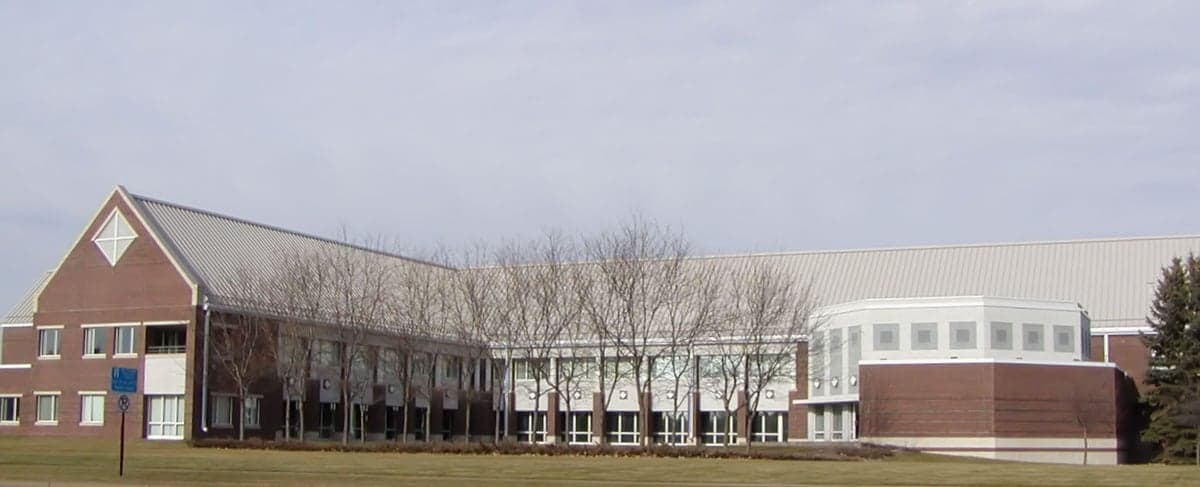
Photo: Wikipedia
Political ClimatePolitical Climate in Brooklyn Park, MN
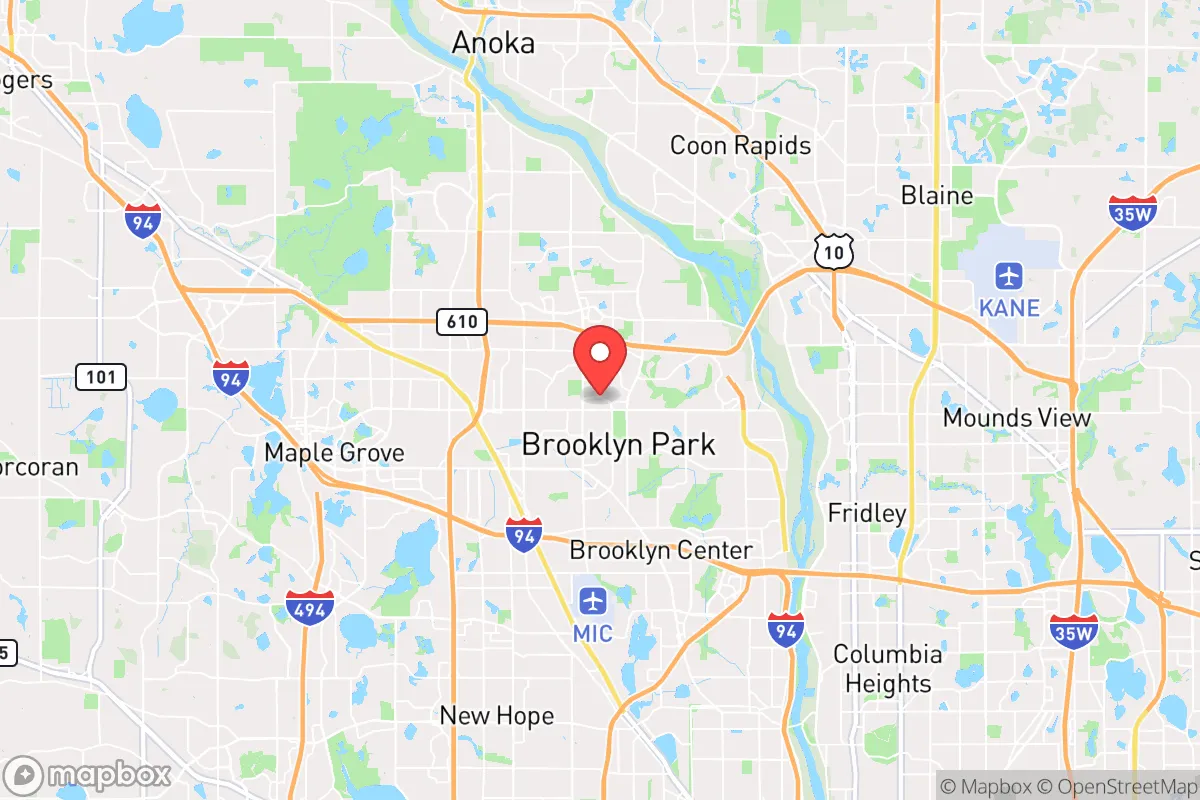
District shown is the primary district for this city’s centroid. Cities may span multiple districts.
Local Political AnalysisPolitical Analysis of Brooklyn Park, MN
Brooklyn Park has been trending hard to the left for years, and the numbers back it up. The Cook PVI of D+11 tells you most of what you need to know: this isn't a swing suburb anymore. It's a solidly Democratic stronghold where progressive policies have taken root, and the shift has been noticeable to anyone who's lived here through the 2010s and into the 2020s. The city council and school board have moved in lockstep with the county's broader leftward drift, and if you value limited government and personal freedoms, you've probably felt the squeeze.
How it compares
Drive ten minutes west to Maple Grove, and you'll find a completely different political animal. Maple Grove leans more moderate-to-conservative, with a PVI around R+2 or R+3, and its city council has been far more resistant to the kind of tax-and-spend expansions you see in Brooklyn Park. Plymouth, just south, is a purple-ish suburb that still has a healthy conservative minority, but Brooklyn Park has become the regional epicenter of progressive governance. The contrast is stark: while Maple Grove keeps its property taxes in check and focuses on basic services, Brooklyn Park has embraced things like rent control studies, diversity-equity-inclusion (DEI) initiatives in city hiring, and a police oversight board that critics say ties officers' hands. The Hennepin County Board is also overwhelmingly Democratic, so there's little pushback from above. If you're a conservative, you're essentially living in a blue island surrounded by slightly less blue water.
What this means for residents
For a conservative or libertarian-leaning resident, daily life here means navigating a local government that seems to view itself as a social engineering lab. The city has aggressively pursued affordable housing mandates that force developers to include below-market units, which sounds noble but has driven up costs for everyone else and reduced property values for existing homeowners. The school district, Osseo Area Schools (ISD 279), has adopted critical race theory-adjacent curriculum and gender identity policies that allow students to change names and pronouns without parental notification — a major red flag for anyone who believes parents should have the final say in their kids' upbringing. The city council has also floated paid sick leave mandates and minimum wage hikes above the state level, which small business owners say is crushing. Over the long term, I see this place becoming more like a mini-Minneapolis: higher taxes, more regulations, and a culture that punishes traditional values. The exodus of families to Champlin or Dayton (both in Anoka County, which is more conservative) is already underway.
One cultural distinction worth noting: Brooklyn Park has a large immigrant population, particularly from East Africa and Southeast Asia, which has reshaped local politics. While that diversity is fine on its own terms, the city's leadership has used it as a justification for sanctuary city policies and non-cooperation with federal immigration enforcement. If you believe in the rule of law and secure borders, that's a hard pill to swallow. The city also has a rental inspection program that gives bureaucrats broad authority to enter private property — a classic case of government overreach dressed up as consumer protection. My advice? If you're a conservative looking for a place where your voice still matters, Brooklyn Park is probably not it. The trajectory is set, and it's not turning back.

State Political ClimatePolitical Climate in Minnesota
State Political AnalysisPolitical Environment in the State
Minnesota has shifted from a classic purple battleground to a solidly blue state over the past two decades, with Democrats now controlling the governorship, both legislative chambers, and the entire federal delegation. The state voted for Hillary Clinton by 1.5 points in 2016, Joe Biden by 7 points in 2020, and Kamala Harris by 4 points in 2024, while the state legislature flipped to a DFL trifecta in 2022 for the first time in eight years. This trajectory reflects a deepening urban-rural split and aggressive progressive policymaking that has many conservatives questioning whether the Land of 10,000 Lakes still respects their way of life.
Urban vs. rural divide
The political map of Minnesota is a tale of two worlds. The Twin Cities metro — Minneapolis, St. Paul, and inner-ring suburbs like Edina and Bloomington — drives the state’s blue lean, producing massive Democratic margins that swamp the rest of the state. In 2024, Hennepin County alone gave Harris a 300,000-vote cushion, while Ramsey County added another 150,000. Meanwhile, greater Minnesota is overwhelmingly red: counties like Stearns (St. Cloud), Olmsted (Rochester), and Wright (Buffalo) have trended Republican, with rural areas like the Iron Range — once a DFL stronghold — flipping hard to the right over labor and cultural issues. The divide is stark: the 7th Congressional District (western Minnesota) is a deep red seat held by Republican Michelle Fischbach, while the 5th (Minneapolis) is one of the most liberal districts in the nation under Ilhan Omar. Suburbs like Lakeville and Prior Lake have become battlegrounds, but even they are shifting left as young professionals and remote workers move in from the cities.
Policy environment
Minnesota’s policy environment has become a laboratory for progressive governance since the DFL trifecta took hold in 2023. The state now has a progressive income tax with a top rate of 9.85% on income over $200,000 (single filers), one of the highest in the nation, and a state sales tax of 6.875% that local governments can layer on top. Property taxes are above average, especially in the metro, where levies fund generous public services. Education policy is dominated by the teachers’ union: Minnesota spends over $16,000 per pupil annually, among the top ten nationally, but parental rights have eroded — the state passed a law in 2023 requiring schools to adopt policies that affirm transgender students’ identities without parental notification in some cases. Healthcare is heavily regulated, with a state-run insurance exchange (MNsure) and a 2023 law that codified abortion access as a “fundamental right” with no gestational limits, funded by taxpayer dollars. Election laws are among the most liberal: no voter ID requirement, same-day registration, and automatic voter registration at DMVs. The state also legalized recreational marijuana in 2023, with a 10% tax, and passed a paid family and medical leave program funded by a payroll tax starting in 2026.
Trajectory & freedom
On the freedom front, Minnesota is moving decisively in the wrong direction for conservatives. The 2023 session was a blitz: the DFL passed a red flag law (Extreme Risk Protection Order Act) allowing courts to temporarily seize firearms from individuals deemed a threat, a universal background check law, and a waiting period for handgun purchases. Parental rights took a hit with the aforementioned transgender policies and a 2024 law that removed the “opt-out” option for sex education in some districts. Medical autonomy is constrained: while marijuana is legal, the state imposed strict licensing caps that limit small businesses. Property rights are under pressure from a 2023 law that allows local governments to impose rent control, and a 2025 proposal to expand the state’s “just cause” eviction rules is gaining steam. On the plus side, Minnesota has no right-to-work law, meaning union dues can be mandatory in unionized workplaces, and the state’s occupational licensing requirements are among the most burdensome in the Midwest. The trend is clear: more regulation, higher taxes, and less individual discretion in daily life.
Civil unrest & political movements
Minnesota has been a flashpoint for civil unrest since the 2020 murder of George Floyd in Minneapolis, which sparked the largest protests in state history and a $27 million settlement. The aftermath included a failed attempt to abolish the Minneapolis Police Department, followed by a 2021 ballot measure that replaced it with a new Department of Public Safety — a move that has been mired in controversy and staffing shortages. The state’s sanctuary policies are robust: the 2023 “Driver’s Licenses for All” law grants licenses to undocumented immigrants, and Minneapolis and St. Paul limit cooperation with ICE. Immigration politics are heated, with a 2024 surge in border crossings at the northern border near Warroad and International Falls drawing national attention. Election integrity remains a sore point: the 2020 election saw a razor-thin margin in the presidential race, and while audits found no widespread fraud, the state’s lack of voter ID and same-day registration continue to fuel distrust on the right. Organized conservative movements are active in the exurbs — groups like the Minnesota Gun Owners Caucus and the Minnesota Family Council have been fighting the DFL agenda, but they are outspent and outgunned in the legislature.
Projection
Over the next 5-10 years, Minnesota is likely to become even more blue. Demographic trends favor the DFL: the Twin Cities metro is growing while rural areas shrink, and in-migration from blue states like California and Illinois is accelerating. The 2024 election results showed that even once-competitive suburbs like Anoka County are now reliably Democratic. The DFL’s 2023 trifecta will likely be repeated in future cycles, as the state’s gerrymandered legislative maps (drawn by a court in 2022) favor incumbents. Expect more progressive policies: a state-level wealth tax, a public option for healthcare, and stricter environmental regulations on agriculture and mining. The Iron Range’s mining industry — a key employer in places like Hibbing and Virginia — faces headwinds from the DFL’s climate agenda, which could accelerate job losses. For conservatives, the outlook is grim: the state will likely remain a one-party state for the foreseeable future, with the only real question being how far left it goes.
For a conservative moving to Minnesota, the bottom line is this: you’ll find like-minded communities in the exurbs and rural areas, but you’ll be fighting an uphill battle against a state government that is increasingly hostile to your values. The tax burden is heavy, parental rights are under assault, and the Second Amendment is being chipped away. If you’re willing to engage in the political fight, there are active conservative networks in places like Lakeville, Rochester, and St. Cloud. But if you’re looking for a state where your freedoms are respected and your vote counts, you might want to look further west or south. Minnesota is a beautiful state with great people, but the political climate is a cold one for conservatives — and it’s only getting colder.
* Values derived from national, state, county, city and local statistics and may differ in a specific area. Last updated: 2026-04-24T08:37:26.000Z
Narrative content on this page is AI-generated and may contain mistakes. Verify any details that matter before acting on them.
ReloMaps may earn a commission from affiliate links at no extra cost to you.

