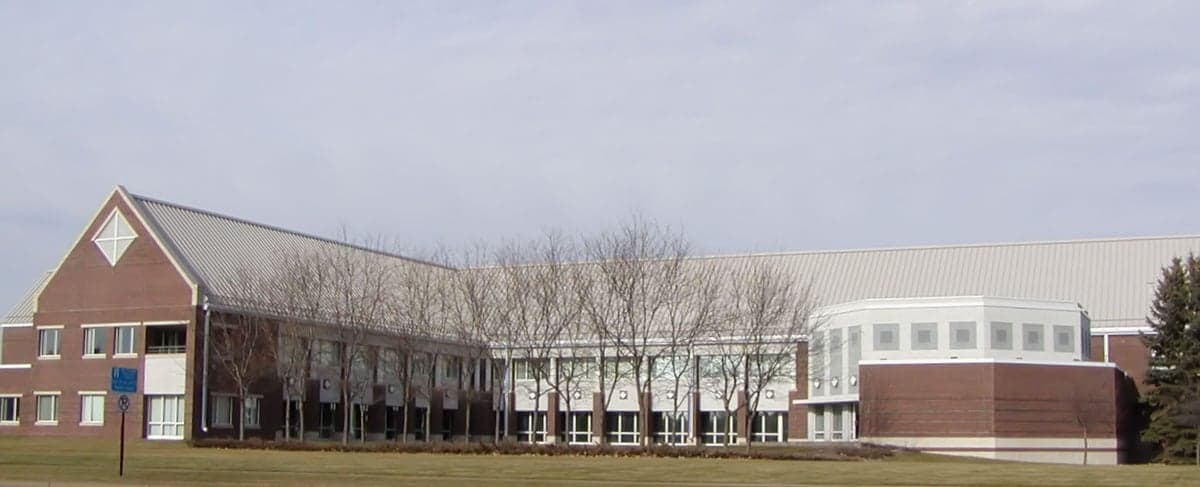
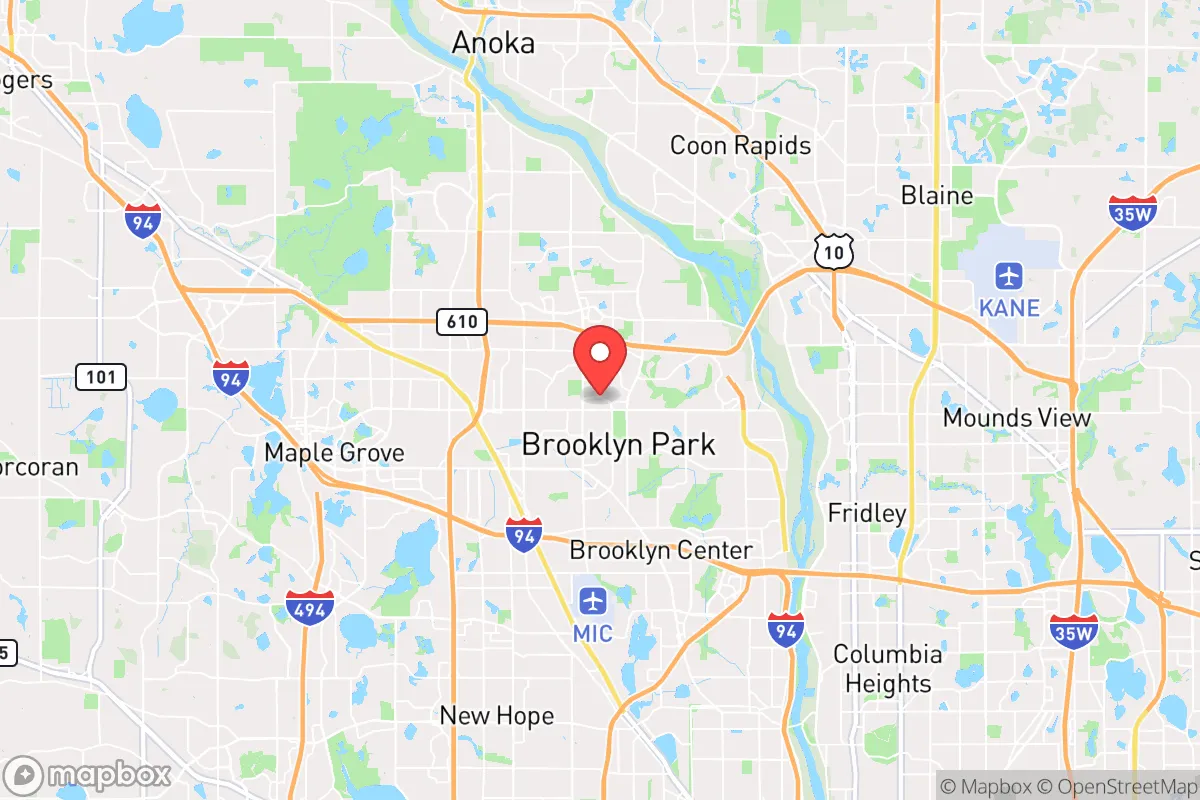
Photo: Wikipedia
Personal Sovereignty in Brooklyn Park, MN
Viable for self-reliance. Generally workable, though some barriers may limit total independence.
What does Personal Sovereignty tell us?
Personal Sovereignty measures your capacity for self-reliance and independence with minimal government friction. Higher scores mean fewer barriers between you and the way you want to live... but it assumes you have the space you need and good neighbors.
What does this tell us?
Personal Sovereignty measures your capacity for self-reliance and independence with minimal government friction. Higher scores mean fewer barriers between you and the way you want to live... but it assumes you have the space you need and good neighbors.
State Policy
Energy independence: Importer (20% of energy produced in-state)
Personal Liberty
Homesteading

Personal Liberty Analysis
For a conservative-leaning individual or family prioritizing personal sovereignty, Brooklyn Park, Minnesota presents a complex and often frustrating picture. As a first-ring suburb of Minneapolis, it sits squarely within a state that has aggressively expanded government authority over personal decisions, from gun ownership to medical autonomy, while simultaneously imposing one of the highest tax burdens in the nation. The city itself operates under a progressive municipal framework that often mirrors state-level priorities, meaning that while you won't face the acute urban dysfunction of Minneapolis proper, you are still subject to a regulatory environment that systematically erodes individual agency. For those with a survivalist or prepper mindset, the core question isn't whether you can live here—it's whether you can live freely here, and the answer requires a sober, data-driven look at what sovereignty actually costs in this jurisdiction.
Tax burden and regulatory posture: what your autonomy actually costs
Your personal sovereignty in Brooklyn Park is directly constrained by one of the highest combined tax burdens in the Midwest. Minnesota's state income tax rates range from 5.35% to 9.85%, and the state's sales tax of 6.875% is supplemented by a local Hennepin County rate that pushes the total to roughly 8.025% in Brooklyn Park. Property taxes are the real gut punch: the effective property tax rate in Brooklyn Park hovers around 1.2% of assessed value, which on a median home value of roughly $290,000 translates to an annual bill of approximately $3,500—before any special assessments or school levies. This is not a low-tax haven. The regulatory posture mirrors the tax burden: Minnesota has some of the strictest environmental and land-use regulations in the Midwest, and Brooklyn Park's city code is dense with permitting requirements for everything from home businesses to fence heights. For a prepper looking to minimize government entanglement, every dollar sent to St. Paul or Hennepin County is a dollar not spent on supplies, land, or self-sufficiency. The state's regulatory appetite for controlling personal behavior—from vehicle modifications to backyard structures—means that even routine self-reliance projects can trigger inspections, fees, and bureaucratic delays.
Self-defense and gun law specifics: navigating a restrictive environment
If the right to keep and bear arms is central to your personal sovereignty, Brooklyn Park is a challenging place to exercise that right. Minnesota is a "shall-issue" state for permits to carry, but the process is not trivial: you must complete an approved firearms training course, submit to a background check, and pay a fee, with permits valid for five years. However, the state has no constitutional carry, and open carry is legal only with a permit. More concerning for preppers is the regulatory landscape: Minnesota has a "red flag" law (Extreme Risk Protection Order) that allows law enforcement or family members to petition a court to temporarily seize firearms from an individual deemed a risk—a law that has been used hundreds of times since its 2023 expansion. The state also requires background checks on all firearm transfers, including private sales, and has a 30-day waiting period for handgun purchases from dealers. Brooklyn Park itself has not enacted additional local gun ordinances beyond state law, but the city's police department has a history of proactive enforcement. For a survivalist, the practical takeaway is that building a meaningful firearms inventory requires navigating a system designed to slow and track every acquisition, and the legal risk of a "red flag" petition—even if baseless—is a real threat to your ability to defend yourself and your family.
Self-reliance and homesteading viability: lot sizes, zoning, and off-grid feasibility
Brooklyn Park is a fully suburbanized environment, and the prospects for genuine homesteading or off-grid living are extremely limited. The typical residential lot size ranges from one-quarter to one-third of an acre, with most homes built on standard suburban plots that leave little room for substantial food production or livestock. City zoning ordinances explicitly prohibit keeping chickens, goats, or other livestock on properties under two acres, and even then, strict setback requirements and noise ordinances apply. Gardening is permitted, but homeowners' associations in many neighborhoods impose additional restrictions on visible structures like greenhouses, rain barrels, or compost bins. Off-grid feasibility is essentially zero: the city requires connection to municipal water and sewer systems, and solar panel installations must comply with building codes and often require HOA approval. For a prepper seeking true self-reliance—raising animals, storing significant supplies, or generating independent power—Brooklyn Park is not the place. The regulatory environment is designed for a connected, grid-dependent lifestyle, and any attempt to deviate will invite code enforcement visits and potential fines. If self-sufficiency is your priority, you need to look at exurban or rural areas in neighboring counties like Sherburne or Wright, where lot sizes are larger and zoning is far more permissive.
Personal liberties: parental rights, medical autonomy, speech, and property
On the broader spectrum of personal liberties, Brooklyn Park reflects the progressive tilt of Hennepin County and Minnesota as a whole. Parental rights have been a flashpoint: Minnesota law does not require parental notification for a minor to obtain an abortion or gender-affirming care, and the state has passed laws shielding providers from out-of-state legal action. For parents who believe they should have primary authority over their children's medical decisions, this represents a significant erosion of sovereignty. Medical autonomy more broadly is constrained by state mandates: Minnesota has a vaccine registry and, during public health emergencies, has demonstrated a willingness to impose mandates and restrictions that override individual choice. Free speech is protected under the First Amendment, but the city has enacted "disorderly conduct" ordinances that have been used to limit public demonstrations, and the state's hate crime laws carry enhanced penalties for speech deemed to incite violence. Property rights are perhaps the most constrained area: Minnesota's "police power" allows for aggressive code enforcement, and the state's environmental regulations can restrict land use in ways that feel arbitrary to a property owner. The city's rental licensing and inspection programs also give the government significant leverage over landlords and tenants alike. For a conservative individual, the cumulative effect is a jurisdiction where the state and city presume authority over decisions that many believe belong to the individual or the family.
Overall, Brooklyn Park offers a moderate level of personal sovereignty when compared to the urban core of Minneapolis, but it falls far short of what a survivalist or prepper would consider acceptable. The tax burden is heavy, the regulatory environment is intrusive, and the legal framework for self-defense and medical autonomy is actively hostile to conservative values. If you are willing to navigate these constraints and prioritize proximity to employment over independence, it is possible to live here—but you will be constantly aware that your freedom to act is circumscribed by state and local government. For those who place a premium on personal sovereignty, the better bet is to look at smaller communities in Minnesota's more conservative rural counties, or to consider states like South Dakota or Iowa where the tax burden is lower, gun laws are more permissive, and the regulatory climate respects individual agency. Brooklyn Park is a place to live within the system, not to escape it.

* Values derived from national, state, county, city and local statistics and may differ in a specific area. Last updated: 2026-04-24T08:37:26.000Z
Narrative content on this page is AI-generated and may contain mistakes. Verify any details that matter before acting on them.
ReloMaps may earn a commission from affiliate links at no extra cost to you.

