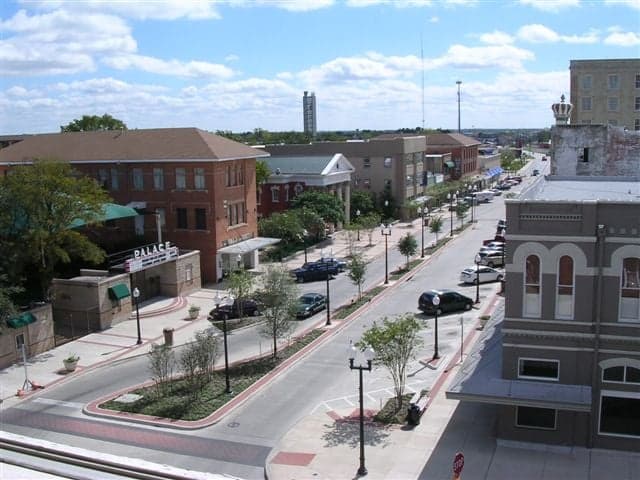
Photo: Wikipedia
Strategic Assessment of Bryan, TX
Meaningful friction. Expect exposure to either population pressure, blast zones, or natural disaster risk. Consider buying a retreat property.
What does the Strategic Assessment tell us?
Our Strategic Assessment grades tactical survivability of an area. Major population centers, military targets, fallout zones, natural disasters, and border exposure all drive risk — lower exposure means a more defensible position in a crisis.
This is heavily inspired by Joel Skousen's Strategic Relocation book. Highly recommended you checkout the book ($)What does this tell us?
Our Strategic Assessment grades tactical survivability of an area. Major population centers, military targets, fallout zones, natural disasters, and border exposure all drive risk — lower exposure means a more defensible position in a crisis.
This is heavily inspired by Joel Skousen's Strategic Relocation book. Highly recommended you checkout the book ($)Strategic Pillars

Key Distances
Regional Safe Places
Below is our recommended "safe zones" in Texas and the surrounding area based on our strategic heuristics. For most people, it's unrealistic to live in a “safe zone” full-time due to work, family or other personal reasons. They tend to be more rural. However, many of these areas are perfect for second homes and retreat properties that double as a vacation home or even a short-term rental.

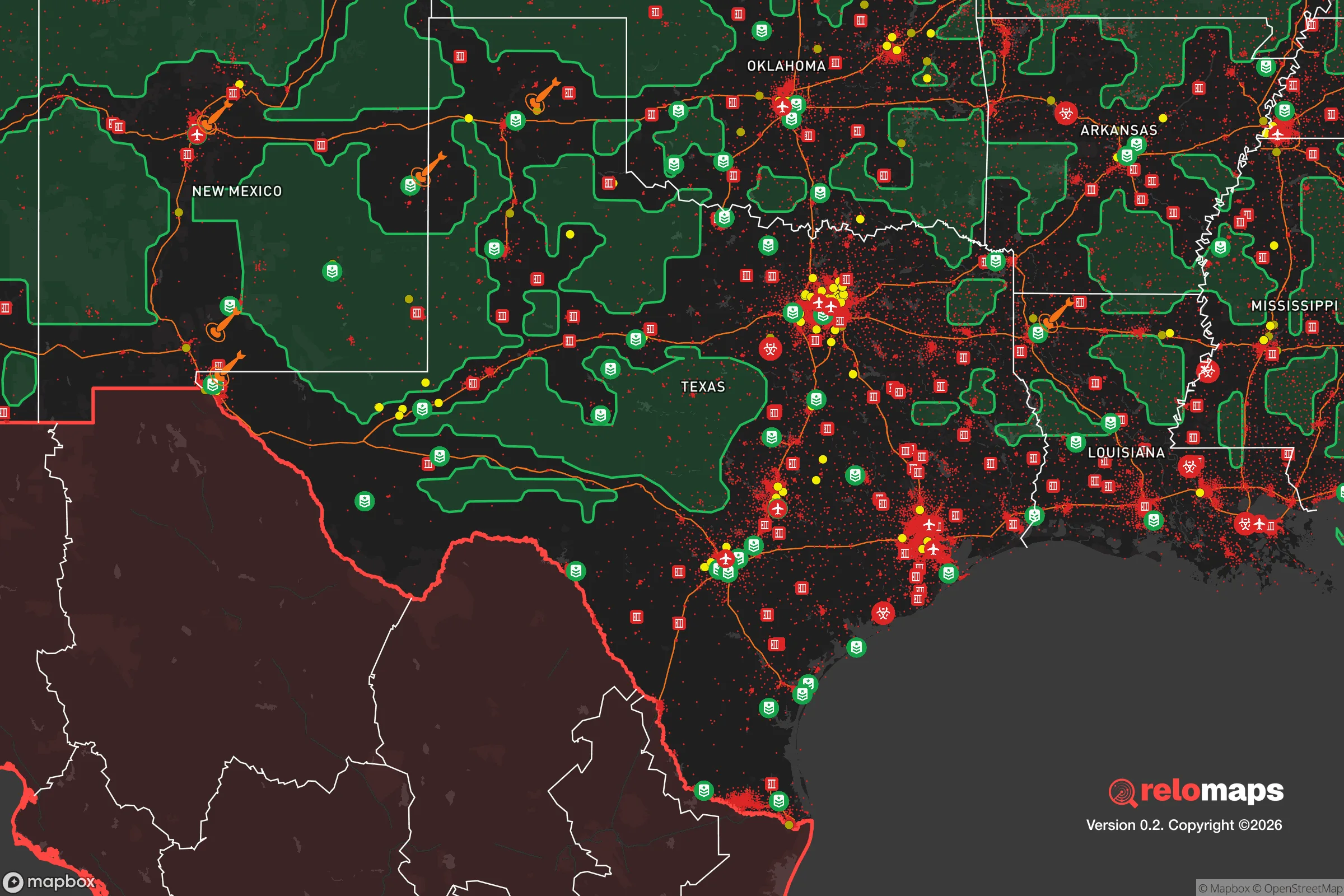


Important Note: For informational purposes only. This does not mean nothing bad ever happens in the green zones. Please use common sense. This is based on public data and modeled with AI. We tried to take a conservative approach but mistakes happen. We update this regularly as new information becomes available.
Solar Generator Recommendations
Backup power matters more here than in safer locations. We've picked three solar generators across budgets and capacity tiers — start with the budget unit if you only need a few essentials, or step up if you want to run a fridge and HVAC for days at a time.

Jackery Portable Power Station Explorer 300
Budget OptionPower on the Go: Weighing only 11 lbs, it's convenient to set up and store with book-sized foldable solar panels

BLUETTI Portable Power Station AC180
Designed for both indoor and outdoor scenarios, AC180 is highly capable as it has a robost capacity and continuous output power.

EF ECOFLOW DELTA Pro Ultra Power Station
Upgraded PickEcoFlow DELTA Pro Ultra is a whole-home energy system designed to grow with your family. Integrated with the Smart Home Panel 2, it scales to meet your evolving energy needs — keeping your home powered, intelligent, and secure through every stage of life.
We earn a commission, at no additional cost to you.
Strategic Assessment Analysis
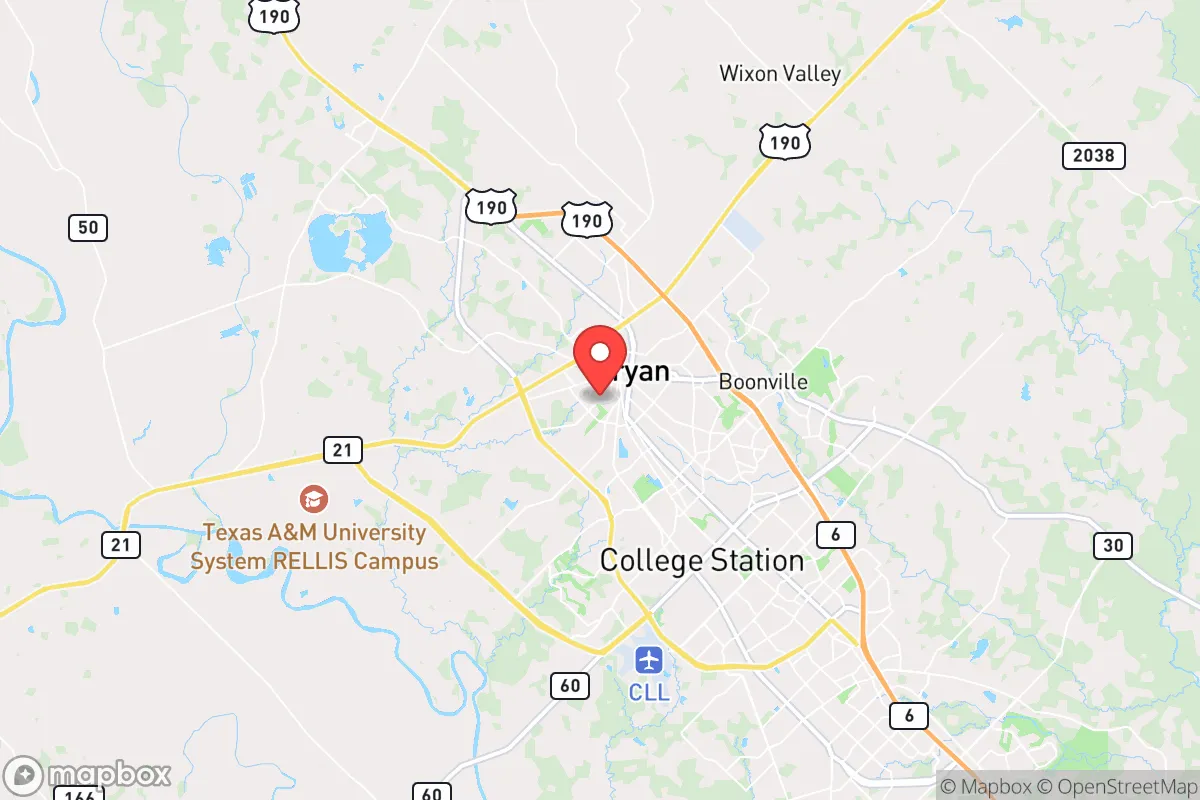
Bryan, Texas, offers a compelling strategic position for those prioritizing resilience and long-term preparedness, balancing proximity to essential resources with a deliberate buffer from the highest-risk urban and industrial zones. Located roughly 100 miles northwest of Houston and 90 miles east of Austin, the city sits at a geographic sweet spot—close enough to access major medical, logistical, and supply networks, yet far enough to avoid the immediate fallout of a major metropolitan collapse or disaster. The area’s flat, fertile terrain, stable groundwater, and relatively low population density (around 85,000 in Bryan proper, with College Station adding another 120,000) create a foundation for self-sufficiency that is rare in modern Texas. For a conservative-leaning relocator concerned with civic unrest, mass casualty events, or systemic breakdowns, Bryan represents a calculated hedge: not a remote bunker, but a defensible, resource-rich hub with a strong community ethos.
Geographic position and natural advantages for long-term security
Bryan’s location within the Brazos Valley provides distinct natural advantages that support a prepper or survivalist mindset. The area sits atop the Carrizo-Wilcox Aquifer, one of the largest and most reliable groundwater sources in Texas, ensuring a resilient water supply even during drought or grid failure. The region’s clay-loam soils are well-suited for small-scale agriculture, and the 200-day growing season allows for year-round food production with proper planning. Unlike the arid west or flood-prone coastal plains, Bryan experiences moderate rainfall (around 40 inches annually) and is not in a designated hurricane storm-surge zone, reducing the risk of catastrophic weather events. The flat terrain also simplifies defensive positioning and line-of-sight considerations, while the surrounding rural counties—Robertson, Burleson, and Grimes—offer additional buffer space and low land costs for those seeking a secondary retreat. Bryan’s elevation of roughly 370 feet above sea level places it above the floodplain of the Brazos River, which runs just west of the city, providing a natural barrier against both waterborne threats and unauthorized access from that direction.
Risks, exposures, and proximity to fallout-relevant landmarks
No strategic assessment is complete without acknowledging the liabilities. Bryan’s primary risk stems from its proximity to College Station, home to Texas A&M University—a massive institution with over 70,000 students and staff. In a scenario of civil unrest or mass casualty event, a university population of that size can become a liability: a concentration of people, limited local food reserves, and potential for panic-driven migration. Additionally, Bryan lies within 30 miles of the Texas A&M Nuclear Science Center, a research reactor that, while low-risk in normal operation, could become a target or source of concern during a broader breakdown. The city is also roughly 70 miles from the Hearne rail junction and 90 miles from the Houston Ship Channel, both of which are potential chokepoints for supply chains and could attract secondary disruptions. Bryan’s location on the Union Pacific rail line means that any major rail incident—hazardous material spill, derailment, or targeted attack—could directly impact the city’s infrastructure. For the survivalist, the key takeaway is that Bryan is not a remote hideout; it is a mid-sized node with clear exposure to the vulnerabilities of the Texas Triangle. However, its distance from the highest-density targets (Houston’s petrochemical complex, Austin’s government centers, Dallas-Fort Worth’s logistical hubs) provides a meaningful buffer that many other Texas cities lack.
Practical resilience for a relocator: food, water, energy, and defensibility
For the individual or family looking to establish a resilient household, Bryan offers several concrete advantages. The local food system is robust: the Brazos Valley is a major agricultural producer, with nearby farms supplying beef, poultry, dairy, and row crops like corn and sorghum. The city hosts a year-round farmers’ market and multiple co-ops, and the presence of Texas A&M’s AgriLife Extension means that expert knowledge on gardening, livestock, and food preservation is readily accessible. Water security is strong—the city draws from both the Carrizo-Wilcox Aquifer and the Brazos River, and most residential properties can install a well with reasonable effort. Bryan’s municipal water system has backup generators at key pump stations, a detail that matters when the grid goes down. Energy resilience is mixed: the local grid is part of ERCOT, which has shown vulnerability during winter storms (e.g., 2021’s Uri), but the city’s relatively low demand and proximity to natural gas infrastructure mean that outages are typically shorter than in more remote areas. Solar potential is good, with over 260 sunny days per year, and many homes already have space for battery storage. Defensibility is moderate: Bryan’s layout is a mix of older grid-pattern neighborhoods and newer suburban subdivisions, with several natural chokepoints (the Brazos River to the west, Highway 6 to the east, and rail lines cutting through the center). Neighborhoods like East Bryan and the historic district offer older, denser housing with brick construction and alley access, which can be easier to secure than sprawling suburban tracts. For those willing to invest, properties on the city’s northern and western edges provide better sightlines and fewer entry points.
Overall, Bryan, Texas, presents a strategic middle ground for the conservative relocator who wants to be prepared without disappearing into the wilderness. It is not a fortress, but it is a functional, resource-rich community with a strong agricultural base, reliable water, and a population that skews toward self-reliance and traditional values. The presence of Texas A&M brings both risk and reward—the university’s engineering and medical resources are invaluable during a crisis, but its size also creates a potential flashpoint. The key is to treat Bryan as a base of operations, not a final redoubt: establish a home with well, solar, and food storage, build relationships with local farmers and tradesmen, and maintain a vehicle capable of reaching more remote properties in Robertson or Burleson counties if needed. For those serious about long-term preparedness, Bryan offers a rare combination of accessibility, resources, and buffer that few other Texas cities can match.

* Values derived from national, state, county, city and local statistics and may differ in a specific area. Last updated: 2026-05-12T15:26:32.000Z
Narrative content on this page is AI-generated and may contain mistakes. Verify any details that matter before acting on them.
ReloMaps may earn a commission from affiliate links at no extra cost to you.

