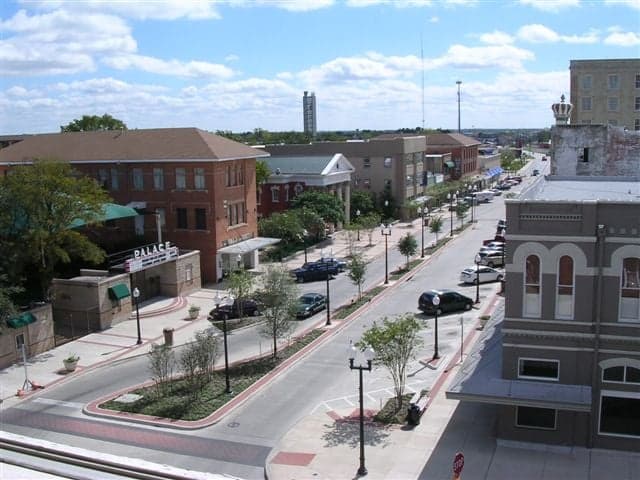
Photo: Wikipedia
Political ClimatePolitical Climate in Bryan, TX
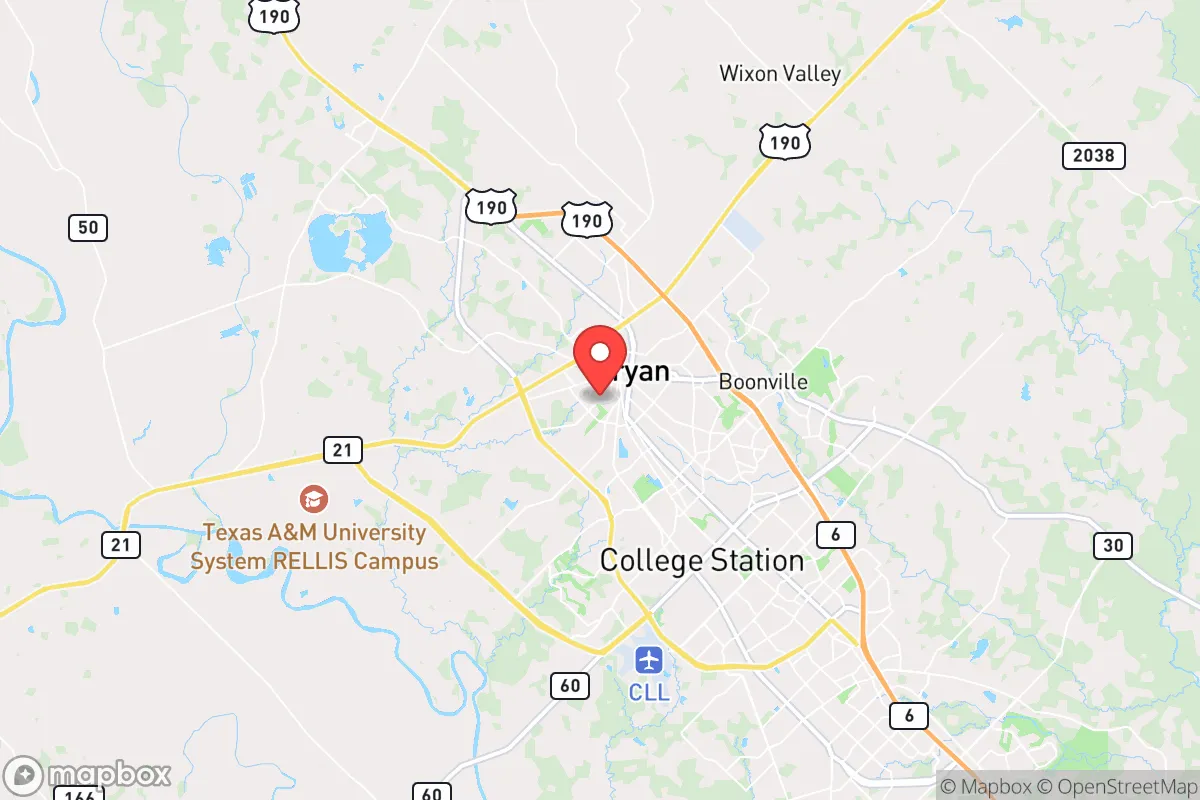
District shown is the primary district for this city’s centroid. Cities may span multiple districts.
Local Political AnalysisPolitical Analysis of Bryan, TX
Bryan, Texas, sits in a reliably conservative pocket of the state, with a Cook Partisan Voting Index (PVI) of R+12, meaning it votes about 12 points more Republican than the national average. That’s a solid red lean, and it’s held steady for years, even as the surrounding state of Texas has shifted to a PVI of R+4. Locally, you’ll find a community that values limited government, personal responsibility, and traditional Texas values—things like low taxes, gun rights, and local control over schools. But if you’ve been around here long, you’ve noticed the winds changing, especially as College Station, just across the highway, pulls in more progressive energy from the university crowd. Bryan’s still a conservative stronghold, but the pressure from the left is real, and it’s something folks keep an eye on.
How it compares
Compared to the rest of Texas, Bryan is noticeably more conservative. The state as a whole has a R+4 PVI, which is still Republican-leaning but includes major urban centers like Houston, Dallas, and Austin that drag the average leftward. Bryan, on the other hand, is part of Brazos County, which has voted Republican in every presidential election since 1980, often by double digits. The contrast with College Station is stark: while both cities share a county, College Station’s precincts near Texas A&M University often vote more moderately or even blue, especially in local races. Drive 15 minutes south to Snook or 20 minutes east to Iola, and you’re in deep-red rural territory where conservative values are the norm. The difference is that Bryan’s conservative base is older, more established, and less swayed by the transient student population, so it’s a steadier red than the state average suggests. But that doesn’t mean it’s immune—progressive policies on zoning, taxes, and social issues have crept into city council debates over the last decade, and that’s a trend worth watching.
What this means for residents
For the average Bryan resident, the political climate means a government that generally stays out of your business—at least for now. Property taxes are higher than in some rural counties, but the city keeps services lean, and there’s no city income tax. Gun rights are respected, with few local restrictions beyond state law. The school board, Bryan ISD, has held the line on parental rights and curriculum transparency, though recent elections have seen challengers pushing for more progressive policies like DEI initiatives and critical race theory. That’s the kind of government overreach that raises red flags here. If you’re a conservative, you’ll find a community that values personal freedom—whether it’s homeschooling, starting a small business, or carrying concealed without a permit. But the long-term concern is that as Bryan grows (and it is growing, with new subdivisions and retail popping up), the influx of people from blue states could shift the balance. Already, you see more “Bryan for All” signs in yards near downtown, and the local Democratic Party has been more active in recent cycles. It’s not a crisis yet, but it’s a slow creep that has longtime residents paying attention.
Culturally, Bryan holds onto its conservative roots more tightly than College Station. You’ll see more churches per capita, more “In God We Trust” signs in storefronts, and a general wariness of big-government solutions. The city’s annual “Bryan Christmas Parade” still uses the word “Christmas,” not “holiday,” and the local paper’s letters to the editor are full of folks pushing back on mask mandates and vaccine passports. Policy-wise, Bryan has resisted adopting sanctuary city status, and the police department cooperates with federal immigration enforcement. The biggest distinction from the state at large is that Bryan’s conservatism is more grassroots and less corporate—it’s not the Chamber of Commerce Republicanism you see in Dallas or Houston. It’s a “leave us alone” kind of place, and that’s exactly how most residents want it to stay. If the progressive trends in Austin or College Station ever fully take hold here, it’ll be a fight, not a surrender.

State Political ClimatePolitical Climate in Texas
State Political AnalysisPolitical Environment in the State
Texas has been a reliably Republican state for decades, with a Cook PVI of R+4 reflecting a solid but not overwhelming conservative lean. The dominant coalition is a mix of suburban moderates, rural conservatives, and a growing number of transplants from blue states who often bring their politics with them. Over the last 10-20 years, the state has shifted from deep red to a more contested battleground, with Democrats making gains in the suburbs while Republicans have consolidated power in rural areas and passed increasingly aggressive conservative legislation. The 2024 election saw Trump win Texas by about 9 points, down from 11 in 2020 and 16 in 2016, signaling a slow but real erosion of the GOP’s margin.
Urban vs. rural divide
The political map of Texas is a tale of two worlds. The major metros — Houston, Dallas-Fort Worth, Austin, San Antonio, and El Paso — are the Democratic strongholds. Harris County (Houston) and Dallas County are now reliably blue, while Travis County (Austin) is one of the most liberal counties in the South. El Paso is a Democratic fortress, with Biden winning it by 37 points in 2020. The suburbs around these cities are the real battlegrounds: Collin County (north of Dallas) and Fort Bend County (southwest of Houston) have flipped from red to purple, with Democrats winning local races there in recent cycles. Meanwhile, rural West Texas, the Panhandle, and East Texas are deep red. Lubbock, Midland, and Odessa vote Republican by 40-50 point margins. The divide is stark: you can drive 30 minutes from Austin and go from a city that defunded its police to a county where the sheriff openly carries a rifle and the local GOP is fighting to ban drag shows.
Policy environment
Texas has no state income tax, which is a huge draw for conservatives and businesses alike. Property taxes are high to compensate, but the state’s regulatory posture is famously business-friendly — no zoning in Houston, minimal environmental review for development, and a right-to-work law that keeps unions weak. On education, the state has pushed school choice hard, with Governor Greg Abbott making vouchers a top priority in 2023 and 2025, though rural Republicans have blocked full passage. Healthcare is a mixed bag: Texas has the highest uninsured rate in the nation, but also the most restrictive abortion laws in the country after the 2021 Heartbeat Act and the 2023 trigger ban. Election laws tightened after 2020 with SB 1, which limited mail-in voting and early voting hours, though turnout has remained high. The state also passed permitless carry in 2021, allowing anyone 21+ to carry a handgun without a license. For a conservative, the policy environment is largely friendly, but the property tax burden and the growing influence of blue-state transplants in the suburbs are real concerns.
Trajectory & freedom
Texas is becoming more free on some fronts and less free on others, depending on your priorities. On gun rights, the 2021 permitless carry law was a major expansion of personal liberty, and the state has resisted federal gun control efforts. On parental rights, the 2023 law banning gender transition procedures for minors was a landmark win for conservatives. On medical autonomy, the state’s abortion ban is the strictest in the nation, with no exceptions for rape or incest — a clear government restriction on personal choice, but one that aligns with the conservative view of protecting unborn life. On property rights, the 2023 law limiting annexation by cities was a win for rural landowners. However, the state has also expanded government power in ways that concern some conservatives: the 2023 law allowing the state to arrest and deport migrants (SB 4) was a massive assertion of state authority, and the 2021 law targeting social media platforms (HB 20) was a government mandate on private companies. The trend is toward a more assertive, interventionist state government, which is a double-edged sword for freedom-minded residents.
Civil unrest & political movements
Texas has seen its share of political flashpoints. The 2020 protests in Austin were among the largest in the country, with the city council later cutting the police budget by $150 million — a move that was partially reversed after crime spiked. The border crisis has been a constant source of tension, with Governor Abbott’s Operation Lone Star deploying state troopers and National Guard to the border, and busing migrants to New York, Chicago, and Denver. This has created a visible political divide: in El Paso, local officials have clashed with the state over immigration enforcement, while in Eagle Pass, the state has taken over a city park for border operations. Election integrity remains a hot-button issue, with the 2020 audit in Harris County finding no widespread fraud but fueling ongoing distrust. Secession rhetoric is mostly fringe, but the Texas Nationalist Movement has a small but vocal following. For a new resident, the most visible sign of political tension is the constant presence of political ads and the stark difference between city and county governments — you can live in a blue city like Austin but be governed by a red state, and the friction is real.
Projection
Over the next 5-10 years, Texas will likely continue its slow shift toward purple, driven by in-migration from California and other blue states. The suburbs of Dallas, Houston, and San Antonio will become more competitive, while rural areas will stay deep red. The state’s Republican leadership will likely double down on conservative legislation to hold the line, meaning more fights over abortion, school vouchers, and immigration. The demographic trends are clear: the state is becoming more diverse, more urban, and more educated, all of which favor Democrats. But the GOP has a strong structural advantage through gerrymandering and voter ID laws. For a conservative moving in now, expect to see a state that is still red but fighting to stay that way. The next decade will be defined by the battle between the state’s conservative instincts and the liberalizing influence of its new residents. If you’re moving to Lubbock or Midland, you’ll feel the red deeply. If you’re moving to Austin or Dallas, you’ll see the blue tide rising.
For a new resident, the bottom line is this: Texas offers a low-tax, business-friendly environment with strong gun rights and a government that is willing to push back against federal overreach. But the state is not a libertarian paradise — property taxes are high, the government is increasingly assertive on social issues, and the political climate is becoming more polarized. If you’re a conservative looking for a place where your values are reflected in state law, Texas is still one of the best bets in the country. Just be prepared for the culture war to be a constant presence, and choose your county carefully — the difference between Travis County and Burnet County is the difference between two different Americas.
* Values derived from national, state, county, city and local statistics and may differ in a specific area. Last updated: 2026-05-12T15:26:32.000Z
Narrative content on this page is AI-generated and may contain mistakes. Verify any details that matter before acting on them.
ReloMaps may earn a commission from affiliate links at no extra cost to you.

