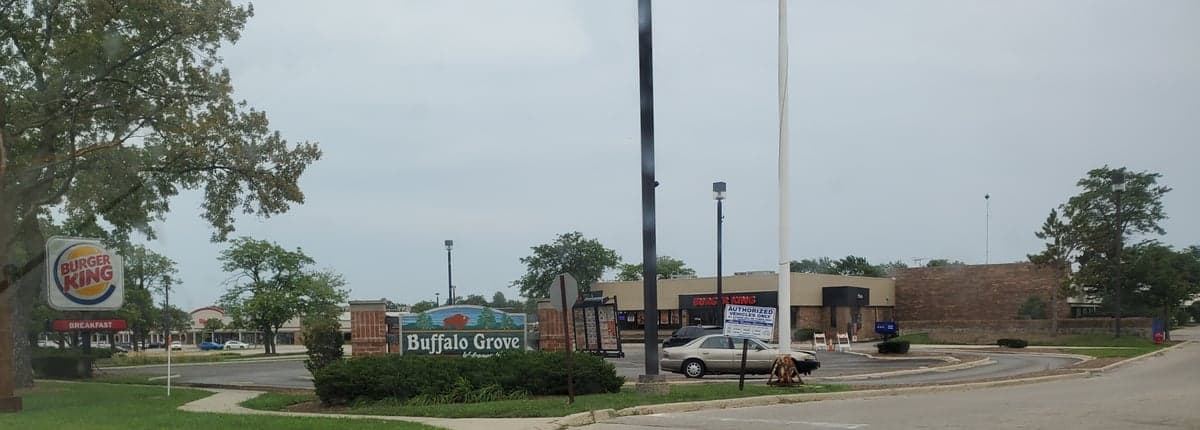
Photo: Wikipedia
Strategic Assessment of Buffalo Grove, IL
Multiple tactical vulnerabilities. Population density, target proximity, or disaster risk are likely compounding. A retreat property and exit planning is required.
What does the Strategic Assessment tell us?
Our Strategic Assessment grades tactical survivability of an area. Major population centers, military targets, fallout zones, natural disasters, and border exposure all drive risk — lower exposure means a more defensible position in a crisis.
This is heavily inspired by Joel Skousen's Strategic Relocation book. Highly recommended you checkout the book ($)What does this tell us?
Our Strategic Assessment grades tactical survivability of an area. Major population centers, military targets, fallout zones, natural disasters, and border exposure all drive risk — lower exposure means a more defensible position in a crisis.
This is heavily inspired by Joel Skousen's Strategic Relocation book. Highly recommended you checkout the book ($)Strategic Pillars

Key Distances
Regional Safe Places
Below is our recommended "safe zones" in Illinois and the surrounding area based on our strategic heuristics. For most people, it's unrealistic to live in a “safe zone” full-time due to work, family or other personal reasons. They tend to be more rural. However, many of these areas are perfect for second homes and retreat properties that double as a vacation home or even a short-term rental.
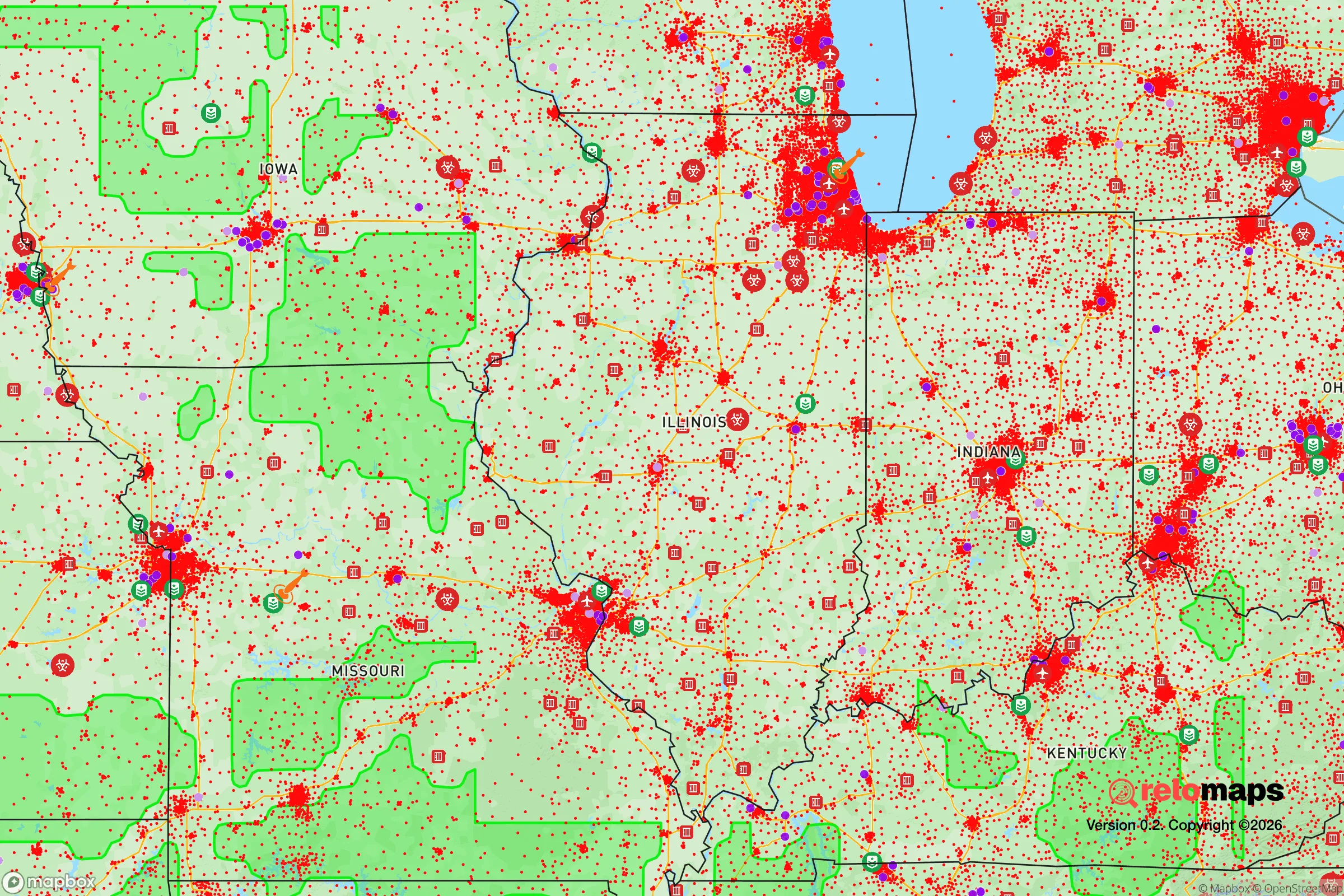
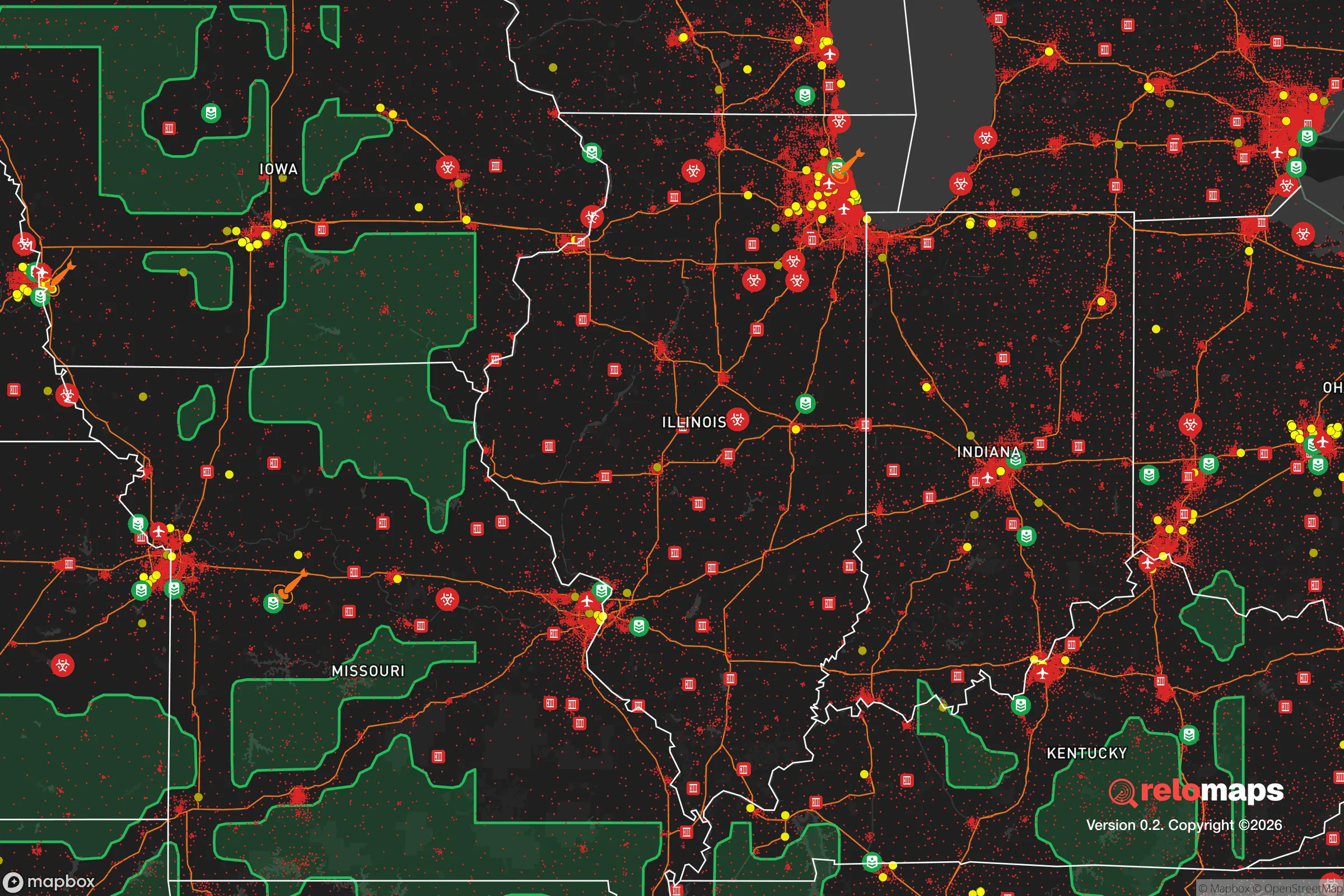


Important Note: For informational purposes only. This does not mean nothing bad ever happens in the green zones. Please use common sense. This is based on public data and modeled with AI. We tried to take a conservative approach but mistakes happen. We update this regularly as new information becomes available.
Solar Generator Recommendations
Backup power matters more here than in safer locations. We've picked three solar generators across budgets and capacity tiers — start with the budget unit if you only need a few essentials, or step up if you want to run a fridge and HVAC for days at a time.

Jackery Portable Power Station Explorer 300
Budget OptionPower on the Go: Weighing only 11 lbs, it's convenient to set up and store with book-sized foldable solar panels

BLUETTI Portable Power Station AC180
Designed for both indoor and outdoor scenarios, AC180 is highly capable as it has a robost capacity and continuous output power.

EF ECOFLOW DELTA Pro Ultra Power Station
Upgraded PickEcoFlow DELTA Pro Ultra is a whole-home energy system designed to grow with your family. Integrated with the Smart Home Panel 2, it scales to meet your evolving energy needs — keeping your home powered, intelligent, and secure through every stage of life.
We earn a commission, at no additional cost to you.
Strategic Assessment Analysis
Buffalo Grove, Illinois, presents a mixed strategic picture for the conservative prepper: its location in the northwest suburbs of Chicago offers a buffer from immediate urban chaos, but its proximity to a major metropolitan target and critical infrastructure nodes introduces significant risk. The village’s resilience is tied to its affluent, well-maintained infrastructure and a population that skews toward professional and managerial classes, which can mean better local governance and resources in a crisis. However, the fundamental challenge remains that you are within the blast radius—both literal and figurative—of one of the nation’s most politically volatile and infrastructure-dense regions, making this a location for those who want proximity to opportunity but are willing to accept elevated exposure to fallout scenarios.
Geographic position and natural advantages for a prepper
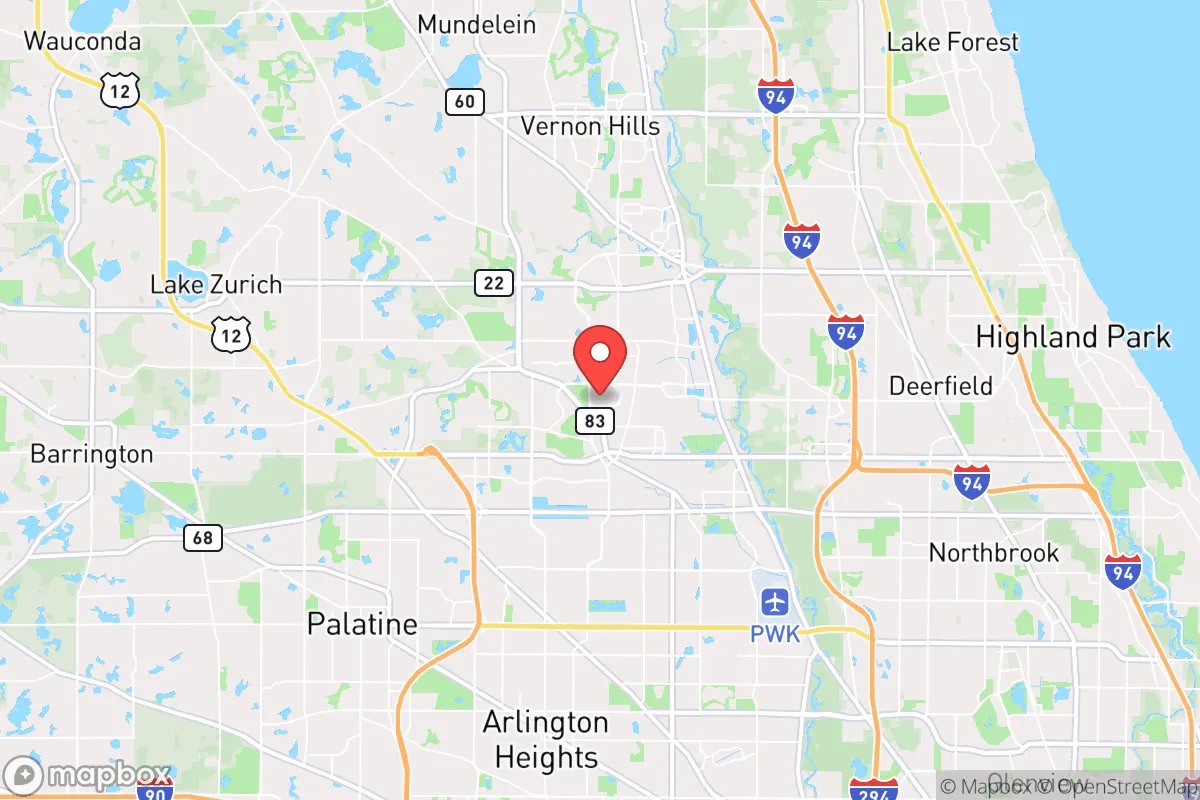
Buffalo Grove sits roughly 30 miles northwest of downtown Chicago, placing it in the suburban ring that offers a degree of separation from the immediate collapse zone of a major city. The area is part of the Lake Michigan watershed, with the Des Plaines River running a few miles to the west, providing a natural water source that could be tapped in a grid-down scenario. The terrain is flat to gently rolling, typical of the Chicago suburbs, which offers no natural defensive high ground but does allow for good line-of-sight and relatively easy movement if roads are clear. The village is surrounded by a patchwork of forest preserves—like Buffalo Creek Forest Preserve and Deer Grove Forest Preserve—which offer limited cover, foraging potential, and wildlife, though they are not vast wilderness areas. The climate is a double-edged sword: harsh winters can be a natural barrier to movement and a test of heating and food storage, but they also reduce the viability of prolonged outdoor survival for unprepared populations. The area’s natural advantages are modest—adequate water access and some green space—but they are heavily offset by the density of the surrounding suburban sprawl.
Risks, exposures, and proximity to fallout-relevant landmarks
The single greatest risk for Buffalo Grove is its proximity to Chicago, a Tier 1 target for any major geopolitical conflict, terrorist attack, or civil unrest scenario. The village lies within the fallout plume zone of any nuclear detonation in the city center, and its location along major transportation corridors—Interstate 94 and Route 53—makes it a likely route for mass evacuation or military movement. The area is also near critical infrastructure: the O'Hare International Airport is about 15 miles south, a prime target for disruption, and the Argonne National Laboratory (a nuclear research facility) is roughly 20 miles southwest, which could be a secondary target or a source of radiological contamination. The proximity to the Cook County line means you are under the jurisdiction of a county with a history of political dysfunction and high crime rates in its urban core, which could complicate law enforcement response during a crisis. Additionally, the village is within 50 miles of the Zion Nuclear Power Station (now decommissioned but still a spent fuel storage site) and the Braidwood Generating Station, both of which are potential radiological hazards in a disaster. The concentration of population—over 40,000 residents in Buffalo Grove alone, with millions more in the surrounding suburbs—means that any major event will trigger a scramble for resources, and the local infrastructure (roads, hospitals, supply chains) will be overwhelmed quickly. For the prepper, this is a high-exposure zone that demands a robust bug-out plan or a hardened in-place survival strategy.
Practical resilience for a relocator: food, water, energy, and defensibility
For the relocator looking to set up a resilient household in Buffalo Grove, the practical challenges are significant but not insurmountable. Water is the first concern: the village draws from Lake Michigan via the Chicago water system, which is a centralized, vulnerable supply. A prolonged grid failure or contamination event would cut off municipal water, so a prepper must invest in a well (unlikely in this suburban setting) or a robust rainwater catchment and filtration system. The flat terrain and clay soils make septic systems and wells difficult, so most homes are on municipal sewer and water—a major vulnerability. Food storage is more feasible: the area has numerous grocery stores and big-box retailers (Costco, Sam's Club, Jewel-Osco) within a 10-minute drive, but these will be stripped in hours during a crisis. A serious prepper should plan for a minimum of three months of non-perishable food, stored in a cool, dry basement or garage. Energy resilience is mixed: the grid is reliable in normal times but is part of the PJM Interconnection, which has faced strain in recent years. Solar panels with battery backup are viable, though homeowners' associations (HOAs) in some subdivisions may restrict them—check local covenants. Natural gas is common for heating, but a prolonged grid outage could disrupt gas pumps, so a backup generator (propane or diesel) is essential. Defensibility is the weakest point: Buffalo Grove is a typical suburban grid of cul-de-sacs and arterial roads, with no natural chokepoints or defensible terrain. The village has a low crime rate (violent crime is about 1.5 per 1,000 residents, well below national averages), but during civil unrest, the open layout and large windows of most homes make them hard to secure. A prepper should prioritize a home on a corner lot with good sightlines, reinforced doors and windows, and a safe room. The local police department is well-funded and responsive, but in a widespread event, they will be stretched thin. The best strategy here is to blend in, maintain a low profile, and have a bug-out vehicle prepped for a secondary location—perhaps a rural property in Wisconsin or downstate Illinois—within a two-hour drive.
The overall strategic picture for Buffalo Grove is one of calculated risk: it offers a comfortable, low-crime baseline with access to Chicago’s economic opportunities, but it sits squarely in a high-risk zone for any major national or global disruption. For the conservative prepper, this is not a retreat location—it is a forward operating base that demands constant vigilance, a robust supply cache, and a clear exit plan. The village’s affluence and educated population can be an asset in community organization, but the density and proximity to targets mean that when things go sideways, you will be competing with millions of others for the same limited resources. If your goal is to ride out a localized event (a winter storm, a short-term grid outage), Buffalo Grove is well-equipped. If you are planning for a long-term collapse, a pandemic, or a major geopolitical shock, this is a place to pass through, not to dig in. The smart play is to use Buffalo Grove as a base for work and family life while quietly building your real resilience elsewhere—a rural property, a network of like-minded neighbors, and the skills to bug out when the sirens start.

* Values derived from national, state, county, city and local statistics and may differ in a specific area. Last updated: 2026-04-23T15:54:49.000Z
Narrative content on this page is AI-generated and may contain mistakes. Verify any details that matter before acting on them.
ReloMaps may earn a commission from affiliate links at no extra cost to you.

