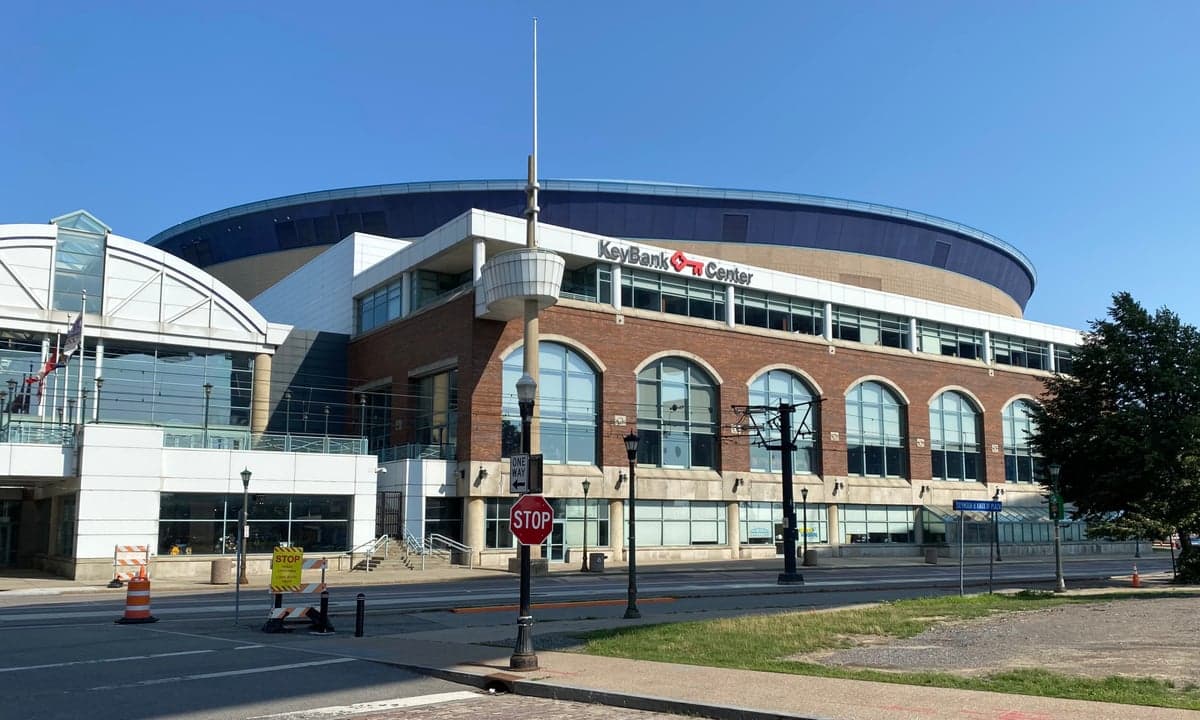
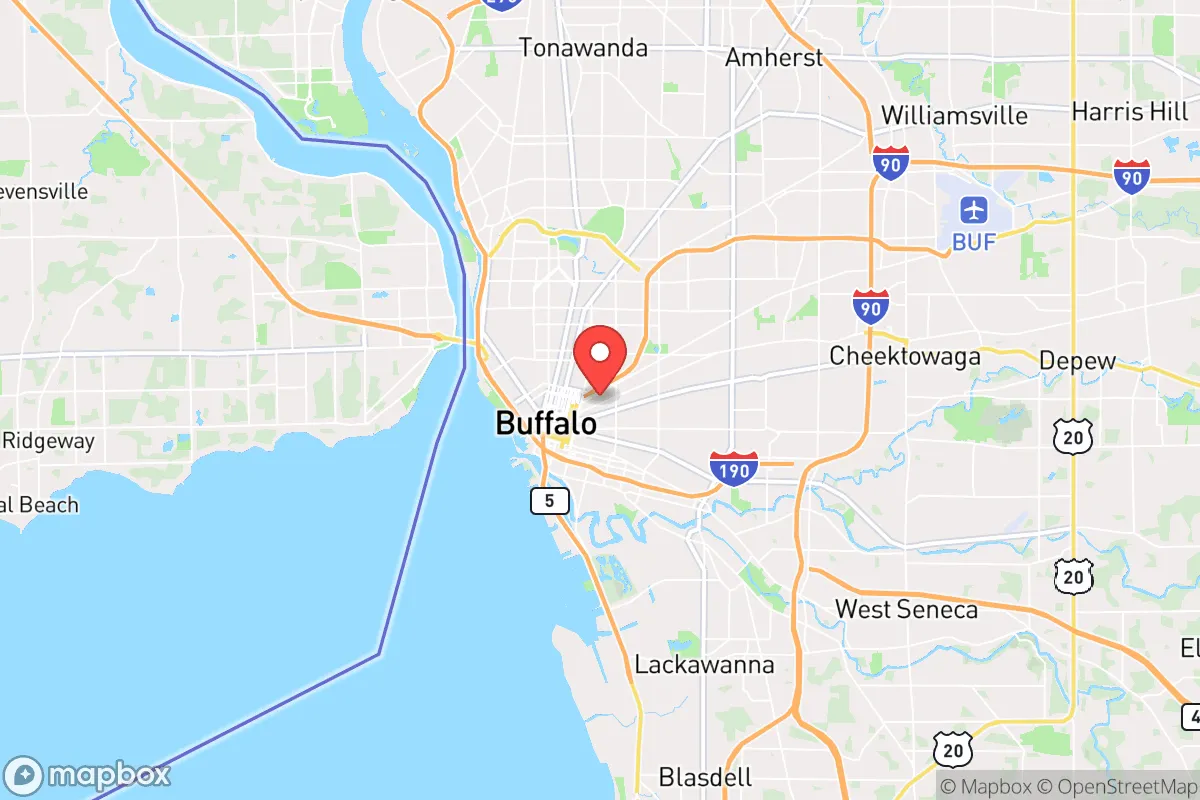
Photo: Wikipedia
Personal Sovereignty in Buffalo, NY
Moderate friction. Expect trade-offs in some aspect of personal liberty and independence.
What does Personal Sovereignty tell us?
Personal Sovereignty measures your capacity for self-reliance and independence with minimal government friction. Higher scores mean fewer barriers between you and the way you want to live... but it assumes you have the space you need and good neighbors.
What does this tell us?
Personal Sovereignty measures your capacity for self-reliance and independence with minimal government friction. Higher scores mean fewer barriers between you and the way you want to live... but it assumes you have the space you need and good neighbors.
State Policy
Energy independence: Importer (12% of energy produced in-state)
Personal Liberty
Homesteading

Personal Liberty Analysis
Buffalo, New York, presents a challenging environment for personal sovereignty, particularly for those with a survivalist or prepper mindset who prioritize autonomy from government overreach. While the city offers affordable land and a resilient, blue-collar culture, it sits squarely under the thumb of New York State’s aggressively progressive regulatory apparatus, which consistently ranks among the most restrictive in the nation for individual freedoms. For a conservative-leaning individual or family seeking to maximize self-reliance, Buffalo requires a clear-eyed assessment of where the state’s heavy hand will constrain your choices—and where local conditions still allow you to carve out a degree of independence.
Tax burden and regulatory posture: How New York State constrains your autonomy
New York’s tax and regulatory climate is a primary obstacle to personal sovereignty in Buffalo. The state’s combined state and local tax burden is among the highest in the country, with property taxes in Erie County averaging around 2.5% of assessed home value—a significant annual cost that funds a sprawling public sector. Income taxes are steep, with a top marginal rate of 10.9% on high earners, and the state’s estate tax kicks in at a relatively low threshold, making generational wealth transfer difficult. For a prepper, this means a substantial portion of your income is siphoned away before you can invest in land, supplies, or off-grid infrastructure. Beyond taxes, New York’s regulatory posture is pervasive. The state’s building codes, environmental regulations, and energy mandates (like the push to ban natural gas in new construction) limit your ability to build or modify property without bureaucratic approval. The New York State Department of Environmental Conservation (DEC) has broad authority over land use, wetlands, and water rights, which can complicate anything from drilling a well to clearing brush. In short, the state treats your property as a resource to be managed, not a domain you fully control.
Self-defense and gun law specifics: Navigating New York’s restrictive firearms environment
For anyone serious about self-defense, Buffalo is a difficult place to maintain full sovereignty over your means of protection. New York’s gun laws are among the most restrictive in the nation, and the city of Buffalo adds its own layer of regulation. The state’s Concealed Carry Improvement Act (CCIA), passed in 2022, requires a pistol permit for any concealed carry, and the application process is lengthy, expensive, and subject to local sheriff discretion. In Erie County, permits can take six months or more to process. The CCIA also bans firearms from a long list of "sensitive locations," including public parks, government buildings, and even private property unless the owner explicitly allows them. Magazine capacity is capped at 10 rounds, and the state maintains a strict assault weapons ban that covers many common semi-automatic rifles. For a prepper, this means your ability to stockpile and carry defensive firearms is heavily curtailed. Open carry is effectively illegal for handguns, and even long guns are subject to transport restrictions. While Buffalo’s crime rates—particularly property crime—are above national averages, your legal options for responding are limited. The state’s "duty to retreat" law (no stand-your-ground) further complicates self-defense scenarios. If personal protection is a priority, Buffalo’s legal landscape is a significant liability.
Self-reliance and homesteading viability: Lot sizes, zoning, and off-grid feasibility
Buffalo’s urban core offers limited homesteading potential, but the surrounding suburbs and rural areas of Erie County provide more room for self-reliance. Within the city, typical lot sizes are small—often 40x100 feet or less—and zoning is dense, with strict rules on livestock, outbuildings, and even gardening structures. The city’s zoning code prohibits chickens in most residential districts, and keeping bees or goats requires special permits. However, move just 20 minutes south to towns like Orchard Park or East Aurora, and you’ll find larger lots (half-acre to several acres) with more permissive agricultural zoning. Off-grid feasibility is mixed. New York’s building codes require connection to municipal water and sewer in most developed areas, and the state’s energy code mandates grid-tied solar if you want to sell power back. Going fully off-grid—with a septic system, well, and solar battery bank—is possible on rural parcels, but you’ll face DEC oversight on well water quality and septic design. The climate is a factor: Buffalo’s heavy snow and lake-effect weather make solar less reliable in winter, and heating a home with wood or propane requires significant storage space. For a serious homesteader, the best bet is a rural parcel in southern Erie County or neighboring Wyoming County, where lot sizes of 5-10 acres are common and zoning is minimal. But even there, the state’s tax burden and regulatory reach will follow you.
Personal liberties: Parental rights, medical autonomy, speech, and property
New York State’s approach to personal liberties is generally hostile to conservative values. On parental rights, the state has mandated that schools cannot notify parents if a child changes their gender identity or pronouns, a policy that directly undermines family sovereignty. The state’s vaccine mandates for schoolchildren are among the strictest in the nation, with no religious exemption for school attendance. Medical autonomy is similarly constrained: New York has a "right-to-health" framework that prioritizes government-mandated insurance coverage and public health orders over individual choice. During the COVID-19 pandemic, the state imposed some of the longest-lasting mask and vaccine mandates in the country, and the governor retains broad emergency powers. Free speech is protected under the First Amendment, but New York’s hate speech laws and social media regulations (like the SAFE Act’s reporting requirements) create a chilling effect. Property rights are the most compromised area. The state’s rent stabilization laws in Buffalo limit what landlords can charge and how they can evict, and the state’s "good cause" eviction law (passed in 2024) makes it difficult to remove tenants even for non-payment. Eminent domain is aggressively used for economic development projects, and the DEC’s authority over wetlands and waterways can restrict what you do on your own land. For a prepper, this means your property is never truly yours—the state retains significant control over its use and disposition.
Overall, Buffalo offers a mixed picture for personal sovereignty. The city’s affordable real estate and resilient community culture provide a foundation for self-reliance, but New York State’s heavy tax burden, restrictive gun laws, and pervasive regulatory oversight make it a difficult environment for those seeking maximum autonomy. Compared to states like Texas, Florida, or Idaho, where property rights, gun laws, and parental control are far stronger, Buffalo falls short. For a conservative-leaning individual or family, the best strategy is to target rural parcels in southern Erie County or neighboring counties, where local zoning is lighter and you can build a degree of independence. But be prepared to navigate a state government that views your land, your income, and your family as resources to be managed—not sovereign domains to be protected. If you value low taxes, strong self-defense laws, and minimal government interference, Buffalo is likely not your first choice. If you’re willing to fight for every inch of freedom within a restrictive system, it can work—but only with careful planning and a clear-eyed acceptance of the trade-offs.

* Values derived from national, state, county, city and local statistics and may differ in a specific area. Last updated: 2026-04-23T02:46:01.000Z
Narrative content on this page is AI-generated and may contain mistakes. Verify any details that matter before acting on them.
ReloMaps may earn a commission from affiliate links at no extra cost to you.

