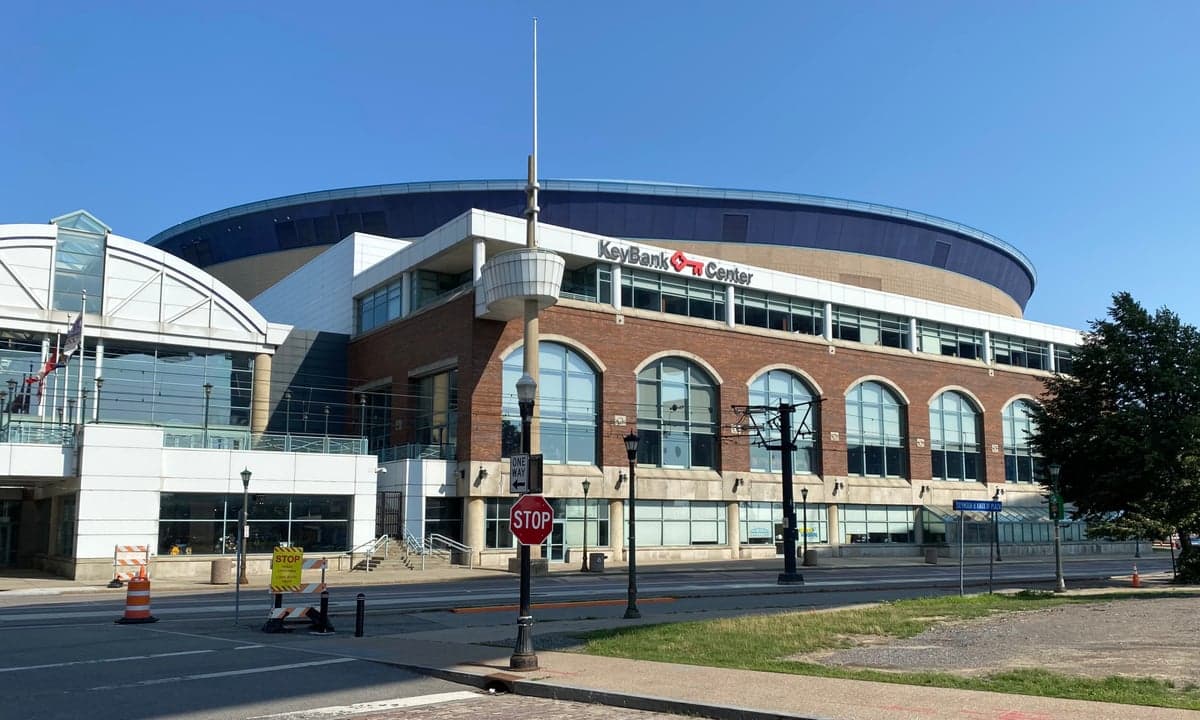
Photo: Wikipedia
Quality of Life in Buffalo, NY
A high quality of life with strong walkability, manageable living costs, healthy neighborhood signals, and solid amenity access.
What does Quality of Life tell us?
Quality of Life blends cost of living, nearby amenities, socioeconomic signals, and neighborhood character. City-level scores represent the whole municipality; individual neighborhoods can differ.
What does this tell us?
Quality of Life blends cost of living, nearby amenities, socioeconomic signals, and neighborhood character. City-level scores represent the whole municipality; individual neighborhoods can differ.
Cost of Living
27% below national average
The Real Cost of Living in Buffalo, NY for 2026
| Tier | Individual | Family (4) |
|---|---|---|
| Survival | $16k | $30k |
| Comfortable | $30k | $43k |
| Luxury | $87k+ | $135k+ |
| Elite (Top 5%) | $119k+ | $185k+ |
110%
The Area Signal
A metric tracking the socioeconomic signals of the area.
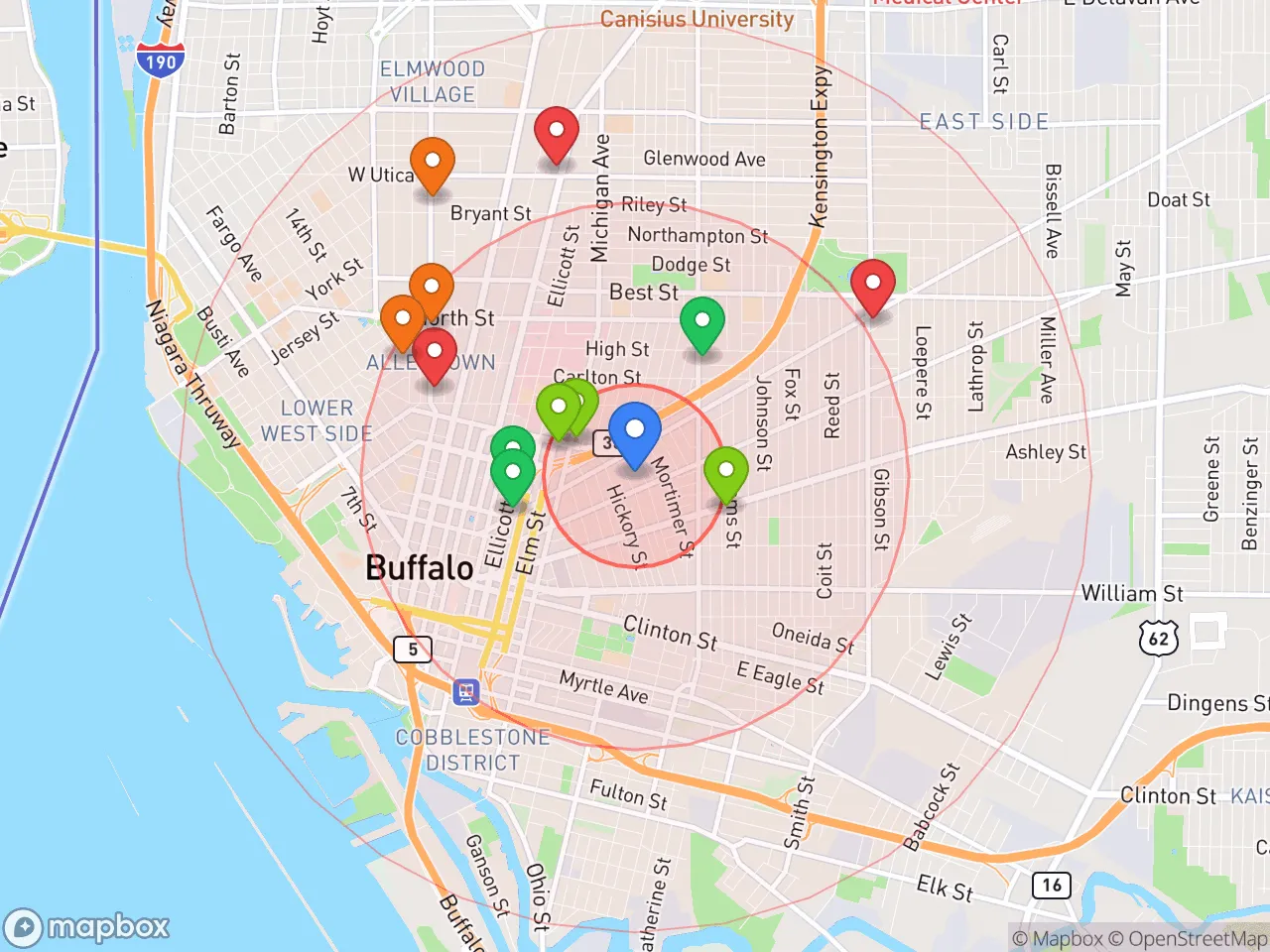
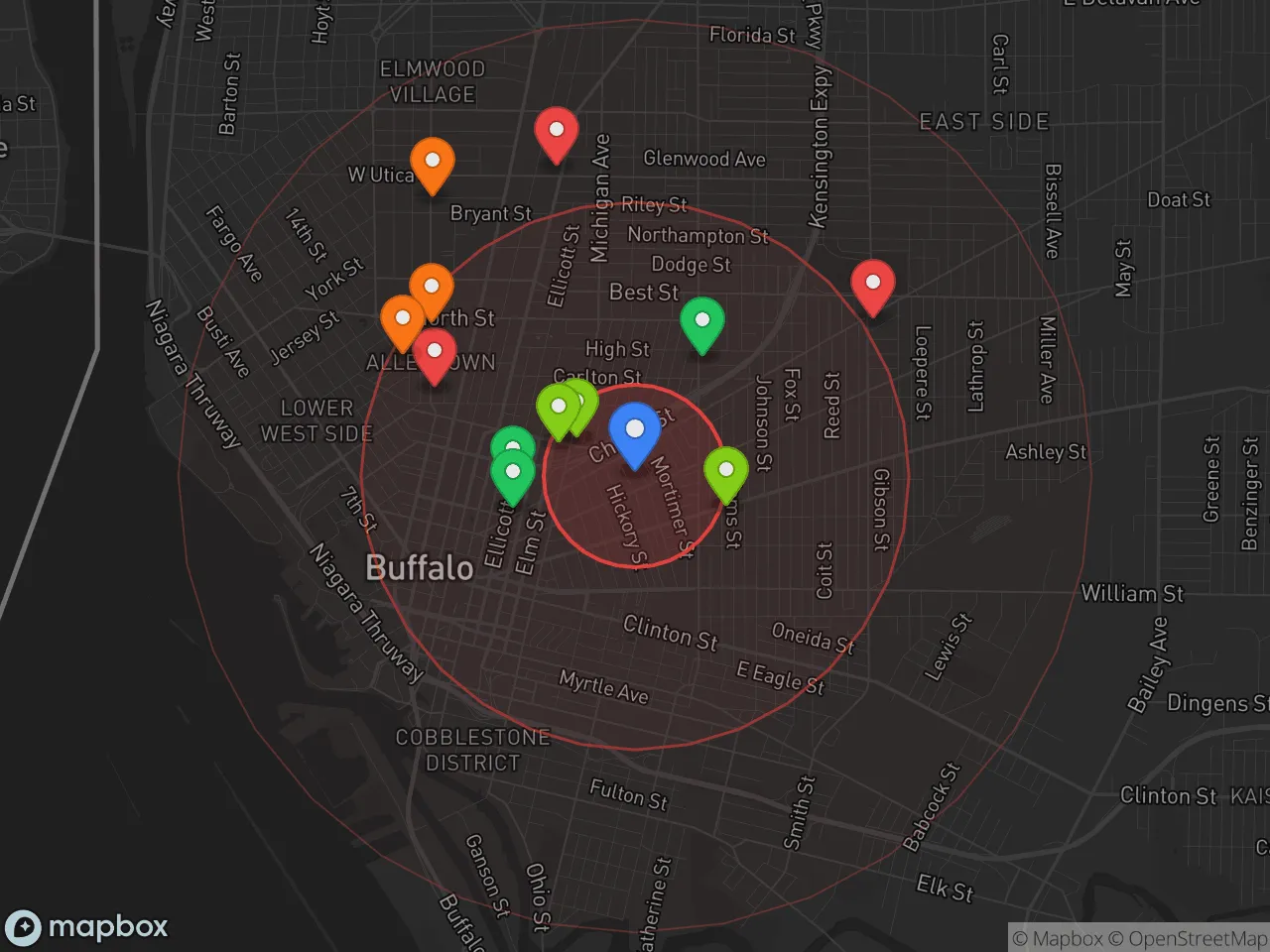
Hobbies
Explore the areaGroceries
4 within 10 miles
Gas
20 within 10 miles
Hospital
20 within 20 miles
Airport
Pittsburgh International Airport
Post Office
USPS — Buffalo, NY
Critical Amenities
Quality-of-Life Analysis
Buffalo, New York, presents a distinctive quality-of-life profile defined by its exceptional affordability and a population that blends long-established working-class roots with a growing influx of young professionals, artists, and families drawn by its low cost of living and revitalized urban core. With a cost-of-living index of 73 (27% below the national average), the city offers a financial reprieve rare among major Northeastern metros, attracting residents who prioritize economic stability and space over high-priced coastal amenities. The median household income, while below the national figure, supports a comfortable lifestyle here, and the city’s population of roughly 275,000 includes a significant number of renters, first-time homebuyers, and those employed in healthcare, education, and manufacturing sectors.
How housing costs and everyday expenses compare to nearby areas
Buffalo’s housing market is a standout feature, with a median home value of $152,300 and a median rent of $989—figures that are roughly half of what one would find in Rochester or Syracuse, and less than a third of the costs in New York City or Boston suburbs. This affordability extends to utilities, groceries, and transportation, making the city one of the most budget-friendly urban centers in the state. The average commute time of 19.9 minutes is notably short for a city of its size, reducing daily stress and transportation costs. Compared to the Buffalo-Niagara Falls metro area, city living is slightly cheaper, though suburban towns like Amherst or Williamsville offer higher home prices and better school ratings. For renters, the $989 median rent is well below the national average of $1,200, allowing many households to allocate more income to savings or leisure.
What daily life is like for families, professionals, and outdoor enthusiasts
Daily life in Buffalo is shaped by a strong sense of community, a robust park system designed by Frederick Law Olmsted, and a calendar packed with festivals, sports, and cultural events. The Buffalo Public Schools system has faced challenges, but the city is home to several highly regarded magnet schools and charter options, while suburban districts like Kenmore-Town of Tonawanda and Clarence consistently rank among the state’s best. Amenities include the Albright-Knox Art Gallery, the Buffalo Zoo, and the Canalside district, which offers ice skating, concerts, and kayaking on the Buffalo River. The city’s four distinct seasons mean residents enjoy snowy winters ideal for skiing at nearby Holiday Valley and warm summers perfect for exploring the Niagara River Greenway. The food scene is anchored by the iconic chicken wing, but also features a growing number of farm-to-table restaurants, craft breweries, and ethnic eateries reflecting the city’s Polish, Italian, and African American heritage. For professionals, the job market is anchored by major employers like Kaleida Health, M&T Bank, and the University at Buffalo, with growing sectors in clean energy and tech.
Buffalo is best suited for individuals and families who value affordability, community, and access to outdoor recreation over high salaries or a fast-paced, luxury-oriented lifestyle. Young professionals and remote workers will find a low-stress commute and a vibrant, walkable downtown, while families can leverage the low housing costs to buy a home with yard space that would be unattainable in pricier metros. Retirees on fixed incomes also benefit from the low cost of living and access to world-class medical care at the Buffalo Niagara Medical Campus. However, those seeking year-round warm weather, top-tier public schools within the city limits, or a booming tech job market may find Buffalo’s slower pace and harsh winters less appealing. Overall, the city offers a high quality of life for those who prioritize financial breathing room and a strong sense of place.

Crime in Buffalo, NY
WARNING: The crime statistics are unreliable for this jurisdiction. Local authorities have either not reported or under reported their data to the FBI. This could be due to bad intentions, incompetence or technical issues. Regardless, we suggest skepticism.
Significantly higher crime rates than 87% of comparable U.S. locations.
Violent CrimeViolent Crime Analysis
Property CrimeProperty Crime Analysis
Crime Analysis
Buffalo, New York, faces a serious public safety challenge, with violent crime rates significantly exceeding both state and national averages. The city's overall crime picture is heavily influenced by its status as a large metro area where progressive judicial policies have created an environment that prioritizes offender rehabilitation over public protection, leading to higher recidivism and more criminals on the street. In 2024, Buffalo reported a violent crime rate of 683.1 incidents per 100,000 residents, while property crime stood at 3,154.7 per 100,000.
Crime in context
Buffalo's violent crime rate is roughly 85% higher than the national average and nearly double the New York State average, which is suppressed by low-crime upstate suburbs and downstate commuter towns. Property crime also runs well above state norms. These figures place Buffalo among the more dangerous mid-sized cities in the Northeast. A key driver of this disparity is the Erie County District Attorney's office and local judiciary, which have adopted progressive charging and sentencing guidelines. These policies, while sympathetic to offenders, result in reduced bail requirements, shorter sentences, and fewer pretrial detentions, directly contributing to a revolving door for repeat offenders and undermining justice for victims and the broader public.
What residents experience
For those living in Buffalo, the high crime rate translates into tangible daily risks. Violent offenses—including aggravated assault, robbery, and homicide—are concentrated in specific corridors, but the city's overall rate means residents in many neighborhoods face a heightened chance of victimization. Property crimes like burglary, larceny, and motor vehicle theft are pervasive, often driven by the same cycle of lenient prosecution that fails to deter repeat property offenders. Residents report that the progressive approach to criminal justice has eroded trust in the system's ability to hold perpetrators accountable, leaving many to rely on private security measures and neighborhood watch groups for protection.
Neighborhood-level variation
Safety in Buffalo is not uniform. The city's east side, including neighborhoods like Masten Park and Cold Springs, experiences violent crime rates that can be two to three times the city average, while areas like North Buffalo and Elmwood Village see lower, though still elevated, rates. Suburban communities such as Amherst, Clarence, and Williamsville, which operate under more traditional law enforcement and judicial philosophies, report crime rates far below Buffalo's citywide figures. This stark contrast underscores how progressive policies within the city limits directly impact resident safety, whereas neighboring jurisdictions that prioritize public protection achieve markedly better outcomes for their communities.
* Values derived from national, state, county, city and local statistics and may differ in a specific area. Last updated: 2026-04-23T02:46:01.000Z
Narrative content on this page is AI-generated and may contain mistakes. Verify any details that matter before acting on them.
ReloMaps may earn a commission from affiliate links at no extra cost to you.

