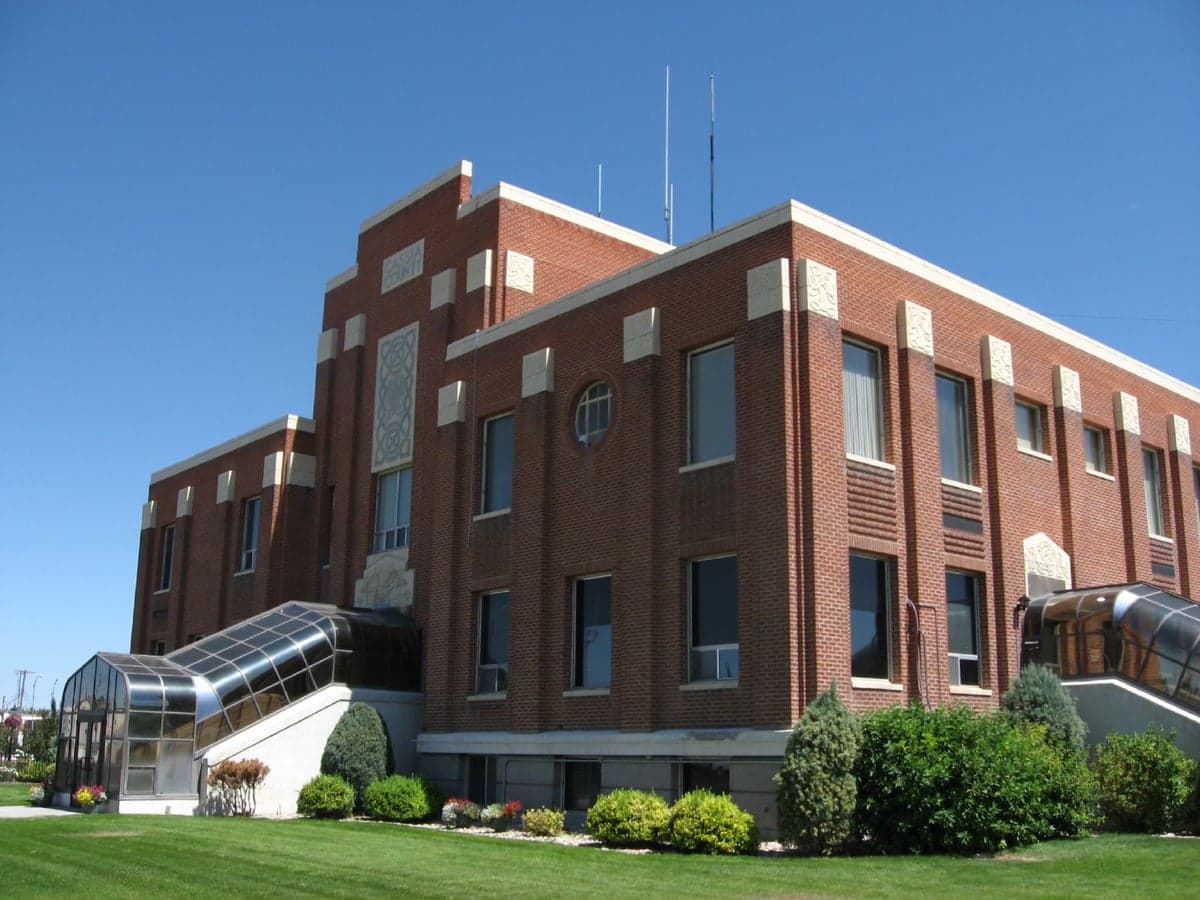
Photo: Wikipedia
Personal Sovereignty in Burley, ID
Moderate friction. Expect trade-offs in some aspect of personal liberty and independence.
What does Personal Sovereignty tell us?
Personal Sovereignty measures your capacity for self-reliance and independence with minimal government friction. Higher scores mean fewer barriers between you and the way you want to live... but it assumes you have the space you need and good neighbors.
What does this tell us?
Personal Sovereignty measures your capacity for self-reliance and independence with minimal government friction. Higher scores mean fewer barriers between you and the way you want to live... but it assumes you have the space you need and good neighbors.
State Policy
Energy independence: Importer (25% of energy produced in-state)
Personal Liberty
Homesteading

Personal Liberty Analysis
For the individual or family prioritizing maximum personal sovereignty, Burley, Idaho offers a legal and cultural environment that is markedly more permissive than most of the United States, though it is not a lawless frontier. The city sits in a state that has consciously resisted federal overreach on multiple fronts, from gun rights to medical mandates, creating a baseline of autonomy that is increasingly rare. While Burley itself is a small agricultural hub in Minidoka County, its proximity to the Snake River and the broader Magic Valley region means residents benefit from Idaho’s strong preemption laws and a local culture that values self-reliance over government dependency. The trade-off is that this freedom comes with limited local services and a need for personal preparedness, as the state’s philosophy is to let individuals manage their own affairs rather than providing a safety net.
Tax burden and regulatory posture for individuals and small operations
Idaho’s tax structure is designed to leave more money in your pocket relative to high-tax states, which directly supports a sovereignty-minded lifestyle. The state levies a flat income tax of 5.8% as of 2025, with no progressive brackets, meaning your tax rate does not increase as your income grows. Property taxes in Minidoka County are among the lowest in the state, with an average effective rate around 0.6% of assessed value, compared to the national average of roughly 1.1%. This is critical for a prepper or survivalist because it reduces the financial pressure to maintain a high income, freeing up capital for land, supplies, and infrastructure. The regulatory posture in Burley is similarly light: there is no county-wide zoning in many unincorporated areas, and the city itself has minimal business licensing requirements. For someone looking to run a small-scale operation—say, a machine shop, a food preservation business, or a firearms training facility—the lack of red tape is a significant advantage. However, note that Idaho still collects sales tax (6% state, plus local options that can add up to 8.5% in some areas), so bulk purchasing of gear or supplies should be planned accordingly.
Self-defense and gun law specifics in Burley and Minidoka County
Idaho is a constitutional carry state, meaning no permit is required to carry a concealed firearm for anyone legally allowed to possess one. Burley and Minidoka County fully adhere to this, with no additional local restrictions beyond state law. This is a bedrock of personal sovereignty: the ability to defend yourself without asking permission from the government. The state also has strong castle doctrine and stand-your-ground laws, with no duty to retreat in any place you are lawfully present. For the survivalist mindset, this means your home, vehicle, and even your campsite are legally defensible spaces. Magazine capacity is not restricted, and there are no state-level bans on specific firearm types, including AR-15s or suppressors (though the latter require federal NFA paperwork). One practical consideration: Minidoka County has a sheriff’s office that is generally supportive of Second Amendment rights, but the county is not as densely populated as Ada County, so response times in rural areas can be 20-30 minutes. This reinforces the need for personal armament and training, as you cannot rely on law enforcement for immediate protection. The state also allows firearm possession in vehicles on school property (with some restrictions), which is a nuance that matters for parents who want to maintain access to their tools while dropping kids off.
Self-reliance and homesteading viability: lot sizes, zoning, and off-grid feasibility
Burley’s surrounding area is one of the most viable locations in the lower 48 for a self-reliant homestead, largely due to permissive zoning and water access. In Minidoka County, agricultural zoning allows for parcels as small as 5 acres to be used for livestock, crop production, and even small-scale aquaculture. Many properties in the county have irrigation rights from the Snake River or the Minidoka Dam system, which is a massive advantage for food security. Off-grid living is legally feasible: Idaho has no state-level ban on rainwater collection, and solar panel installation is not subject to the kind of HOA or municipal restrictions found in more urbanized states. However, you must be aware of county building codes—Minidoka County requires permits for new structures, but enforcement is lax compared to places like California or Colorado. Septic systems and well drilling are regulated by the Idaho Department of Environmental Quality, but the process is straightforward and relatively inexpensive (a well can cost $5,000-$10,000, versus $20,000+ in some states). For the prepper, the key limitation is the growing season: Burley sits at about 4,200 feet elevation, with a frost-free period of roughly 120-140 days. This means you need cold-hardy crops, a greenhouse, or a root cellar to achieve year-round food independence. The soil is volcanic loam in many areas, which is fertile but requires amendment for sustained yields.
Personal liberties: parental rights, medical autonomy, speech, and property
Idaho has been a battleground for parental rights in education, and the state’s laws reflect a strong presumption that parents—not the government—have primary authority over their children. In 2024, Idaho passed legislation requiring school districts to notify parents of any curriculum changes related to sexuality or gender identity, and parents have the right to opt their children out of any instruction they find objectionable. This is a concrete example of sovereignty in action: you are not forced to have your child exposed to material you disagree with. Medical autonomy is similarly robust. Idaho has no state-level vaccine mandate for adults or children, and during the COVID-19 pandemic, the state legislature passed laws prohibiting vaccine passports and discrimination based on vaccination status. For the survivalist, this means you can choose your own medical path—whether that involves alternative treatments, herbal medicine, or simply refusing pharmaceutical interventions—without fear of government coercion. Free speech is protected under the Idaho Constitution, which has its own free speech clause that courts have interpreted broadly. Property rights are also strong: Idaho has a right-to-farm law that protects agricultural operations from nuisance lawsuits, and there is no state-level estate tax or inheritance tax, meaning you can pass your land and gear to your children without the government taking a cut. The only notable limitation is that Idaho does not have a state-level right to try law for terminally ill patients (though federal law applies), and medical marijuana remains illegal, which may be a consideration for those who view cannabis as a medicinal tool.
When stacked against other relocation destinations for the sovereignty-minded, Burley offers a balance that is hard to beat. It lacks the extreme isolation of Alaska or the legal gray areas of New Hampshire’s Free State Project, but it provides a stable, legally codified framework for personal autonomy that is backed by a state government actively pushing back against federal overreach. The cost of land is still reasonable—you can find 5-10 acre parcels for $50,000-$100,000—and the community is small enough that you can know your neighbors and build a mutual aid network. The downsides are real: limited healthcare infrastructure, harsh winters, and a local economy that is heavily dependent on agriculture and food processing. But for someone who values the ability to live by their own rules, raise their family without state interference, and prepare for whatever comes next, Burley represents a solid, defensible position in the American West.

* Values derived from national, state, county, city and local statistics and may differ in a specific area. Last updated: 2026-04-21T09:15:47.000Z
Narrative content on this page is AI-generated and may contain mistakes. Verify any details that matter before acting on them.
ReloMaps may earn a commission from affiliate links at no extra cost to you.

