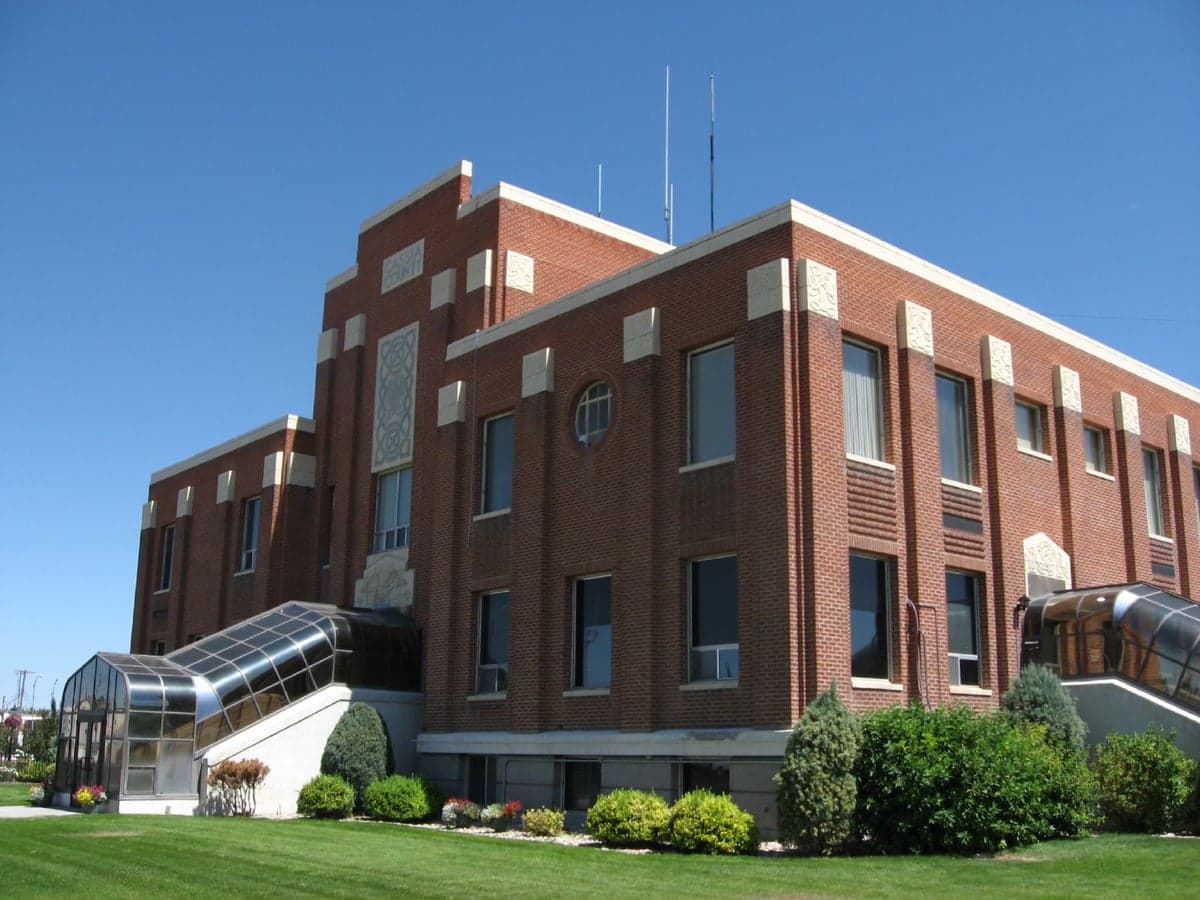
Photo: Wikipedia
Political ClimatePolitical Climate in Burley, ID
District shown is the primary district for this city’s centroid. Cities may span multiple districts.
Inherited from parent state — no local data available.
Local Political AnalysisPolitical Analysis of Burley, ID
Burley, Idaho, sits solidly in conservative territory, with a Cook PVI of R+13 that reflects decades of consistent Republican voting in Cassia County. The area has long been a stronghold for traditional values, limited government, and personal responsibility, and while the political lean hasn't flipped, there's been a noticeable shift in the last five to ten years. More folks are moving in from blue states, and while most come here for the same freedoms we value, you can feel a subtle pressure creeping in—more chatter about "equity" programs in schools and local government meetings that used to be straightforward now dragging on with debates over things that never used to be questioned. It's still a red area, no doubt, but the trajectory gives you pause if you're paying attention.
How it compares
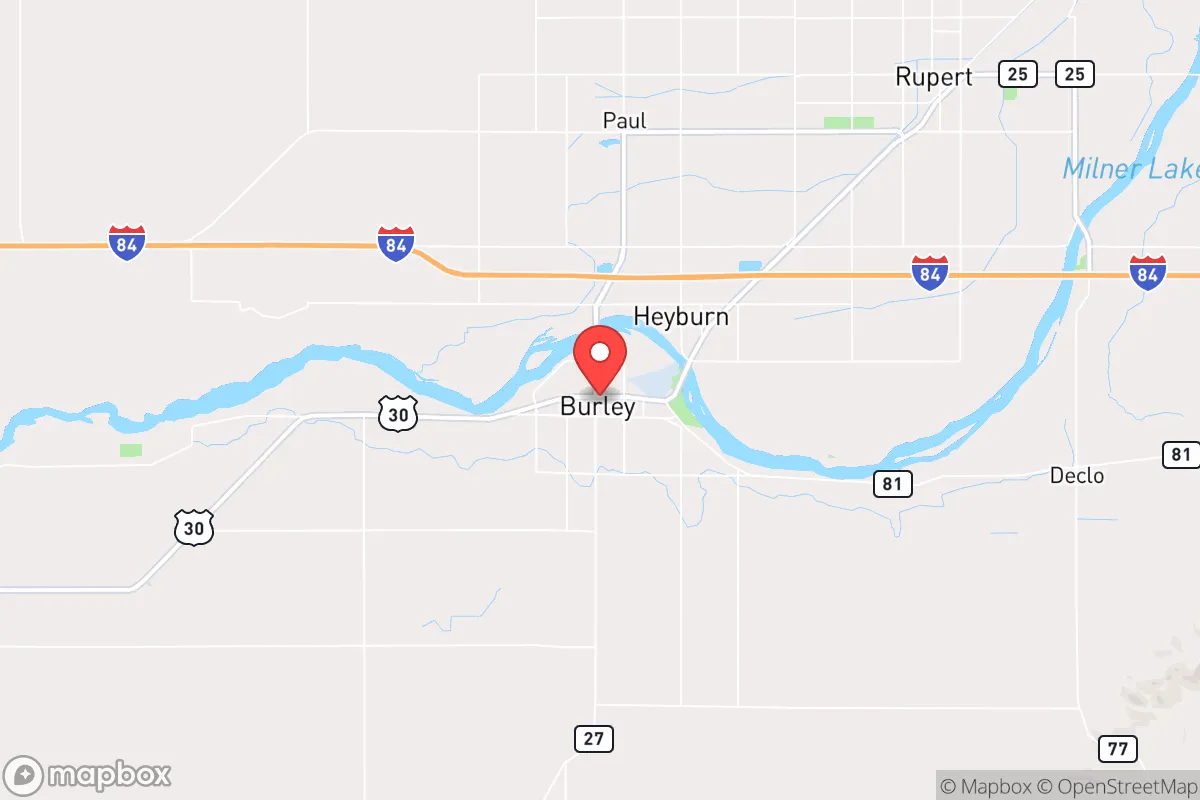
Compared to nearby towns, Burley is actually a bit of a bellwether for the region. Twin Falls, about 30 minutes west, has a similar R+13 rating but feels more moderate in practice—more chain stores, more transplants, and a younger crowd that's brought a slightly more progressive vibe to local politics. Rupert, just north, is even more conservative, with a stronger agricultural base and less outside influence. Pocatello, an hour east, leans R+11 but has a university presence that makes it noticeably more liberal on social issues. The real contrast is with places like Boise or Sun Valley, where the politics are outright hostile to the kind of live-and-let-live mindset we have here. In Burley, you still see folks flying Gadsden flags and talking about property rights without getting sideways looks, but the edge is dulling—more zoning restrictions, more state mandates trickling down, and a growing sense that the government is getting its nose into things that used to be handled by families and churches.
What this means for residents
For someone living here, the political climate directly affects daily life in ways that are easy to overlook until they aren't. Property taxes have crept up as the county grows, and there's more pressure to adopt state-level building codes that raise costs for new homes. School board meetings have become a battleground over curriculum and library books, with a vocal minority pushing for "inclusive" materials that many of us see as indoctrination. On the plus side, the Second Amendment is still respected—no waiting periods, no permit needed for concealed carry—and the local sheriff's office is known for pushing back on federal overreach. But the long-term trend is concerning: as more people move in from states like California and Oregon, they bring voting habits and expectations that slowly shift the Overton window. If you value personal freedom and minimal government interference, Burley is still a good bet, but you'll want to keep an eye on local elections and get involved before the changes become permanent.
Culturally, Burley remains a place where church potlucks and high school football games are the social anchors, and the local paper still runs editorials defending limited government. There's a strong agricultural heritage—dairy, potatoes, sugar beets—that keeps folks grounded in practical, hands-on values. But the policy distinctions are worth noting: the city has resisted adopting a formal non-discrimination ordinance that would create protected classes beyond state law, and the county commission has been vocal about opposing any "sanctuary" policies for illegal immigration. These stances reflect a community that still believes in rule of law and personal accountability, not government handouts or identity politics. If that sounds like your kind of place, you'll fit right in—just be ready to defend it, because the winds are shifting, and complacency is the fastest way to lose what you've got.

State Political ClimatePolitical Climate in Idaho
State Political AnalysisPolitical Environment in the State
Idaho is one of the most reliably Republican states in the nation, with a deep-red partisan lean that has only intensified over the last two decades. The state hasn’t voted for a Democratic presidential candidate since 1964, and in 2024, Donald Trump carried Idaho by over 30 points. The dominant coalition is a mix of rural conservatives, Mormon cultural conservatives in the southeast, and a growing wave of out-of-state transplants fleeing blue states—many of whom are pushing the state even further right. Over the past 10-20 years, Idaho has shifted from a moderate, libertarian-leaning Western state to a hardline conservative stronghold, driven by rapid population growth in the Treasure Valley and a backlash against federal overreach.
Urban vs. rural divide
The political map of Idaho is starkly divided between a few growing urban centers and the vast, deeply conservative rural expanse. The Treasure Valley—anchored by Boise, Meridian, and Nampa—is the state’s population engine and its only real political battleground. Ada County (Boise) has trended purple in recent cycles, with Boise proper electing a Democratic mayor and sending a few Democrats to the legislature, but the surrounding suburbs like Meridian and Eagle remain solidly red. The real conservative firepower comes from the rural counties: Canyon County (Nampa, Caldwell) voted +37 for Trump in 2024, while Bonneville County (Idaho Falls) and Madison County (Rexburg) are among the most Republican counties in America, often exceeding 80% GOP vote shares. The Panhandle region, including Coeur d’Alene and Post Falls, has seen an influx of conservative Californians and Washingtonians, flipping Kootenai County even redder. The only notable blue dot is Blaine County (Sun Valley), a wealthy ski resort area that votes Democratic, but it’s an island in a sea of red.
Policy environment
Idaho’s policy environment is aggressively conservative, with a focus on low taxes, limited regulation, and cultural traditionalism. The state has a flat income tax rate of 5.8% (down from 6.5% in 2023), no corporate income tax on pass-through entities, and a sales tax of 6% that exempts groceries. Property taxes are relatively low, though they vary by county. The legislature, dominated by the Idaho Freedom Caucus, has passed some of the nation’s strictest abortion laws—a near-total ban with no exceptions for rape or incest—and a 2024 law requiring parental consent for any medical procedure on a minor, including mental health care. Education policy is a flashpoint: the state expanded school choice through a $50 million education savings account program in 2024, but also passed a law banning “divisive concepts” like critical race theory in public schools. Election laws are tight—voter ID is required, same-day registration is not allowed, and the state purged over 80,000 inactive voters in 2023. Idaho has no sanctuary cities; in fact, a 2024 law prohibits any local government from adopting sanctuary policies, with penalties for noncompliance.
Trajectory & freedom
Idaho is becoming more free in many respects, particularly on gun rights, parental rights, and economic liberty, but some residents worry about creeping government overreach in social matters. In 2023, the legislature passed a constitutional carry law, allowing any adult to carry a concealed firearm without a permit—a major win for Second Amendment advocates. The same year, the “Parental Rights in Education” law (HB 93) gave parents the right to opt their children out of any curriculum they find objectionable and required schools to notify parents of any changes to a student’s health or well-being. On medical freedom, Idaho banned COVID-19 vaccine mandates for private employers and government workers in 2022, and a 2024 law prohibits any public health emergency order from lasting more than 30 days without legislative approval. However, the state has also expanded surveillance: a 2023 law requires all state agencies to report any “suspicious activity” to law enforcement, and the Idaho State Police now run a fusion center that monitors social media for “extremism.” Property rights are strong—Idaho has no statewide zoning mandates, and counties like Kootenai and Bonner have fought off federal land grabs—but the influx of new residents is driving up housing costs, which some see as a threat to the state’s libertarian character.
Civil unrest & political movements
Idaho has a history of anti-government activism, but large-scale civil unrest is rare. The most visible flashpoint in recent years was the 2020-2021 protests in Boise over COVID-19 restrictions, where armed demonstrators gathered at the Statehouse to oppose mask mandates and business closures. These protests were largely peaceful but drew national attention. The state has a small but vocal militia movement, particularly in the Panhandle and around Sandpoint, where groups like the Idaho Light Foot Militia train openly. In 2023, a standoff between a property rights activist and federal agents in Owyhee County over grazing rights made headlines, but it ended without violence. Immigration politics are tense: the state has no sanctuary cities, and the legislature passed a 2024 law requiring local law enforcement to cooperate with ICE. There have been no major election integrity controversies in Idaho—the state uses paper ballots and audits regularly—but the legislature has considered bills to ban ballot drop boxes and limit mail-in voting. A new resident would notice the prevalence of “Don’t Tread on Me” flags and “Let’s Go Brandon” signs in rural areas, but actual political violence is virtually nonexistent.
Projection
Over the next 5-10 years, Idaho will likely become even more conservative, but the nature of that conservatism is shifting. The influx of out-of-state transplants—many from California, Washington, and Oregon—is accelerating growth in the Treasure Valley and the Panhandle, and these newcomers tend to be more culturally conservative and anti-government than the old-guard Idahoans. This is already pushing the legislature to take harder stances on issues like school choice, gun rights, and immigration. However, the rapid growth is also creating tensions: housing affordability is worsening, traffic is clogging Boise’s suburbs, and water rights are becoming a flashpoint. The state’s population is projected to grow by 20% by 2035, and most of that growth will be in Ada and Canyon counties, which could eventually turn the Treasure Valley into a swing region. But for now, the rural counties and the Mormon-dominated southeast ensure that Idaho will remain a deep-red state for the foreseeable future. A new resident moving in now should expect to find a state that is fiercely independent, increasingly crowded, and unapologetically conservative—but also one where the government is more likely to stay out of your personal business than in most other places.
For a conservative individual or family considering relocation, Idaho offers a policy environment that aligns with traditional values: low taxes, strong gun rights, parental control over education, and a government that generally respects personal liberty. The trade-offs are real—rapid growth is straining infrastructure, and the state’s social conservatism can feel restrictive to those who value personal autonomy in areas like healthcare and lifestyle choices. But if you’re looking for a place where the government is more likely to leave you alone than to tell you what to do, Idaho is one of the best bets in the country. Just be prepared for the winters and the traffic in Boise.
* Values derived from national, state, county, city and local statistics and may differ in a specific area. Last updated: 2026-04-21T09:15:47.000Z
Narrative content on this page is AI-generated and may contain mistakes. Verify any details that matter before acting on them.
ReloMaps may earn a commission from affiliate links at no extra cost to you.

