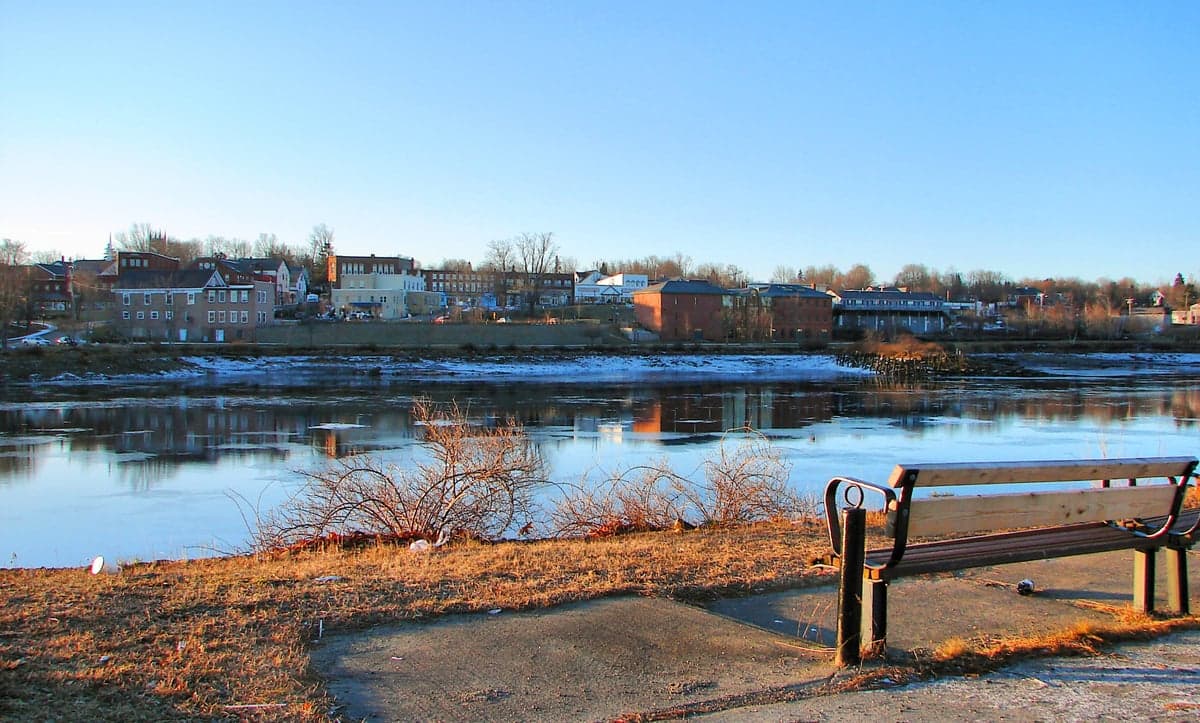
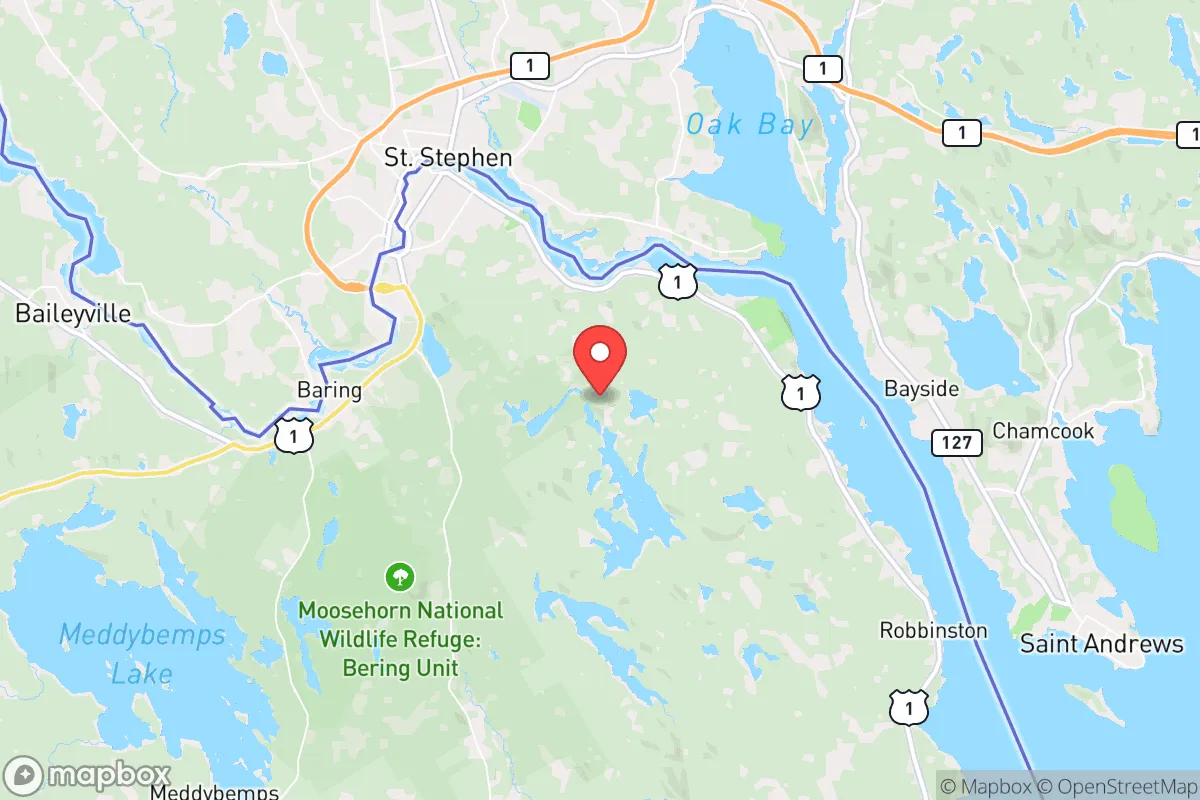
Photo: Wikipedia
Personal Sovereignty in Calais, ME
Viable for self-reliance. Generally workable, though some barriers may limit total independence.
What does Personal Sovereignty tell us?
Personal Sovereignty measures your capacity for self-reliance and independence with minimal government friction. Higher scores mean fewer barriers between you and the way you want to live... but it assumes you have the space you need and good neighbors.
What does this tell us?
Personal Sovereignty measures your capacity for self-reliance and independence with minimal government friction. Higher scores mean fewer barriers between you and the way you want to live... but it assumes you have the space you need and good neighbors.
State Policy
Energy independence: Importer (30% of energy produced in-state)
Personal Liberty
Homesteading

Personal Liberty Analysis
For the individualist or prepper evaluating Calais, Maine, as a redoubt for personal sovereignty, the environment presents a complex picture: the city itself offers a quiet, low-regulation frontier atmosphere, but it operates under the broader thumb of a state government that has increasingly flexed its authority in ways that should give any liberty-minded person pause. Calais sits in Washington County, one of the most rural and economically challenged corners of the state, where the practical reality of self-reliance is not a lifestyle choice but a daily necessity. The key tension here is between the hands-off, live-and-let-live culture of the local population and the progressive policy apparatus emanating from Augusta and Portland. For a strategic relocation, you are weighing the benefits of cheap land and minimal local interference against the risk of state-level overreach on taxes, mandates, and personal freedoms.
Tax burden and regulatory posture in Washington County
Maine’s overall tax burden is among the highest in the nation, and that reality hits hard even in a low-cost area like Calais. Property taxes in Washington County are moderate by Maine standards—expect around 1.2% to 1.5% of assessed value annually—but the state’s income tax is a flat 5.8% on most income, with a top marginal rate of 7.15% on high earners. Sales tax is 5.5%, but it applies to many items a prepper would consider essentials, like certain tools and building materials. The regulatory posture from the state is the bigger concern: Maine has a stringent building code for new construction, even in unorganized territories, and the Department of Environmental Protection (DEP) has broad authority over land use, wetlands, and water rights. For someone looking to build a remote cabin or develop a homestead, expect permitting delays and potential friction if you plan to alter drainage or clear significant acreage. The local county government in Calais is more laissez-faire, but state-level agencies can still reach in and impose costly compliance requirements, especially if you are near a waterway or wetland.
Self-defense and gun law specifics in a border town
Maine has historically been a shall-issue state for concealed carry, and it remains one of the more firearm-friendly states in New England, but the legislative trend is concerning. As of 2026, Maine does not require a permit to carry a concealed firearm for residents over 21, and there is no state-level registry or assault weapons ban. However, the state passed a "yellow flag" law in recent years that allows law enforcement to temporarily seize firearms from individuals deemed a threat by a mental health professional—a provision that critics argue is ripe for abuse. Calais’s location on the Canadian border adds a unique wrinkle: you must be extremely careful transporting firearms across the border, as Canadian laws are draconian, and even a legal US firearm can land you in serious trouble if you accidentally cross. For the prepper, the practical reality is that you can own and carry most standard firearms without state harassment, but you should monitor the legislature closely. The local sheriff in Washington County is generally pro-Second Amendment, but the state police and attorney general’s office in Augusta are not reliable allies. Magazine capacity restrictions have been proposed but not yet passed; this is a live issue to watch.
Self-reliance and homesteading viability: lot sizes, zoning, and off-grid feasibility
This is where Calais shines for the survivalist mindset. Land is cheap—you can find undeveloped lots for under $1,000 per acre, and improved parcels with a small house often go for $50,000 to $80,000. Zoning in Calais and surrounding Washington County is minimal; most rural land is zoned for residential and agricultural use with few restrictions on outbuildings, livestock, or gardening. Off-grid living is entirely feasible: many properties lack municipal water and sewer, so well and septic are the norm. Solar panels, wood stoves, and rainwater collection systems are common and generally not regulated at the local level. The state does have a "minimum lot size" law for subdivisions (typically 2 acres for a septic system), but for a single-family homestead on a large parcel, you have wide latitude. The growing season is short—about 100 to 120 days—so food self-sufficiency requires careful planning, but hunting, fishing, and foraging are abundant. The biggest regulatory hurdle for off-grid living is the state’s requirement that any dwelling have a "sanitary" wastewater system; composting toilets are technically allowed but must meet DEP standards, which can be a bureaucratic headache. For the serious prepper, Calais offers the land and the legal space to build a self-sufficient compound, provided you navigate state environmental rules carefully.
Personal liberties: parental rights, medical autonomy, speech, and property
Maine’s record on parental rights is mixed and trending in a direction that should concern conservative families. The state has a universal school mask and vaccine mandate for school attendance (with limited religious exemptions), and the Department of Education has pushed progressive curriculum standards that include comprehensive sex education and LGBTQ+ inclusivity, which may conflict with traditional values. Homeschooling is legal but requires annual notification and submission of an "instructional plan" to the local superintendent—a level of state oversight that many preppers find intrusive. Medical autonomy is similarly constrained: Maine expanded Medicaid under the ACA, and the state government has a strong public health apparatus that did not hesitate to impose lockdowns and vaccine mandates during the pandemic. For the individualist, this means you have limited ability to opt out of state-directed health policies. Free speech is protected under the First Amendment, and Calais’s small-town culture is generally tolerant of dissenting views, but the state has no specific protections for political speech on private property beyond federal law. Property rights are relatively strong: Maine does not have a statewide rent control or inclusionary zoning mandate, and eminent domain is rarely used in rural areas. However, the state’s "right to farm" law protects agricultural operations from nuisance lawsuits, which is a plus for homesteaders.
In the final analysis, Calais offers a high degree of personal sovereignty at the local level—cheap land, minimal zoning, a gun-friendly culture, and a community that values self-reliance—but it sits within a state government that is actively expanding its reach into education, health mandates, and environmental regulation. Compared to a place like rural Texas or Idaho, where state-level protections for individual liberty are stronger, Calais is a compromise: you get the space and the low cost to build your own life, but you must remain vigilant against Augusta’s encroachments. For the prepper who values physical isolation and land affordability over legal guarantees of freedom, Calais is a viable option. For those who want a state constitution that explicitly defends parental rights, medical choice, and property from government overreach, you may find the trade-offs frustrating. The bottom line: Calais gives you the canvas, but you will have to paint your own picture of liberty while keeping one eye on the statehouse.

* Values derived from national, state, county, city and local statistics and may differ in a specific area. Last updated: 2026-05-01T10:35:45.000Z
Narrative content on this page is AI-generated and may contain mistakes. Verify any details that matter before acting on them.
ReloMaps may earn a commission from affiliate links at no extra cost to you.

