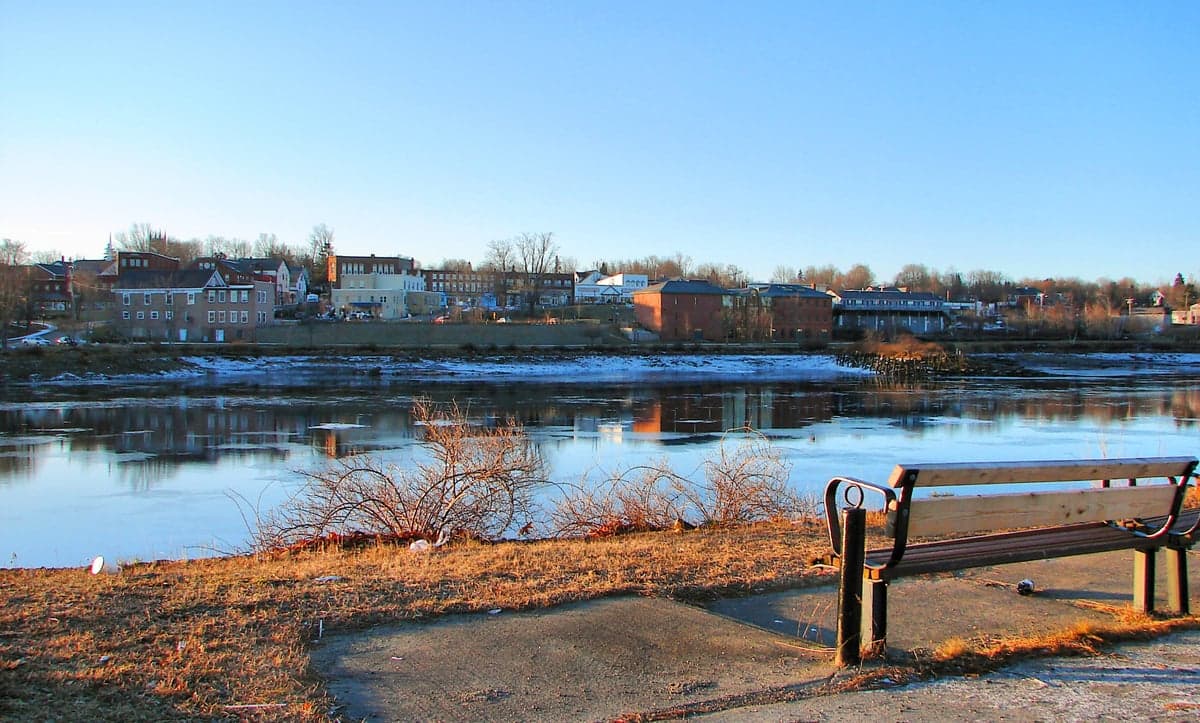
Photo: Wikipedia
Strategic Assessment of Calais, ME
Meaningful friction. Expect exposure to either population pressure, blast zones, or natural disaster risk. Consider buying a retreat property.
What does the Strategic Assessment tell us?
Our Strategic Assessment grades tactical survivability of an area. Major population centers, military targets, fallout zones, natural disasters, and border exposure all drive risk — lower exposure means a more defensible position in a crisis.
This is heavily inspired by Joel Skousen's Strategic Relocation book. Highly recommended you checkout the book ($)What does this tell us?
Our Strategic Assessment grades tactical survivability of an area. Major population centers, military targets, fallout zones, natural disasters, and border exposure all drive risk — lower exposure means a more defensible position in a crisis.
This is heavily inspired by Joel Skousen's Strategic Relocation book. Highly recommended you checkout the book ($)Strategic Pillars

Key Distances
Regional Safe Places
Below is our recommended "safe zones" in Maine and the surrounding area based on our strategic heuristics. For most people, it's unrealistic to live in a “safe zone” full-time due to work, family or other personal reasons. They tend to be more rural. However, many of these areas are perfect for second homes and retreat properties that double as a vacation home or even a short-term rental.
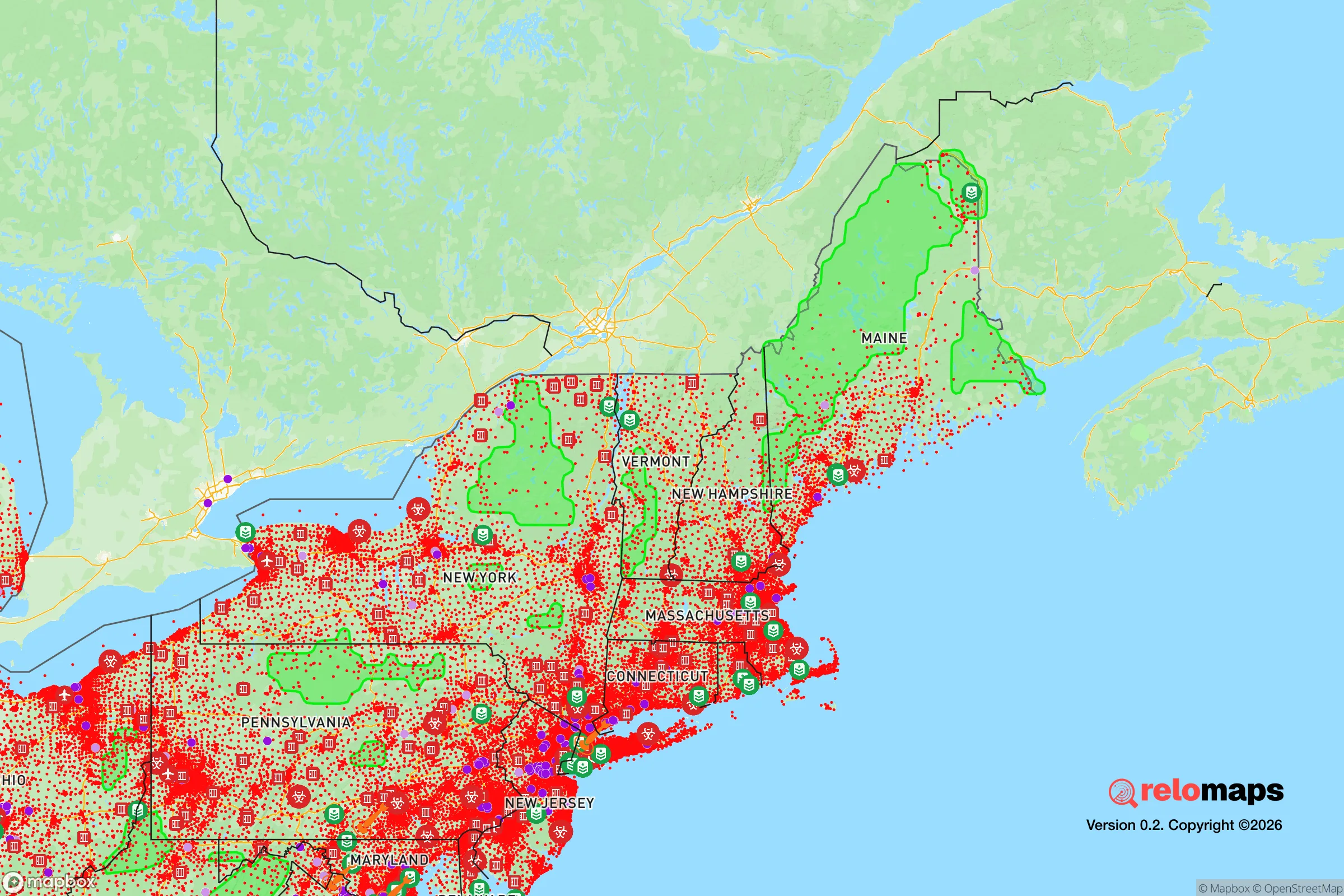
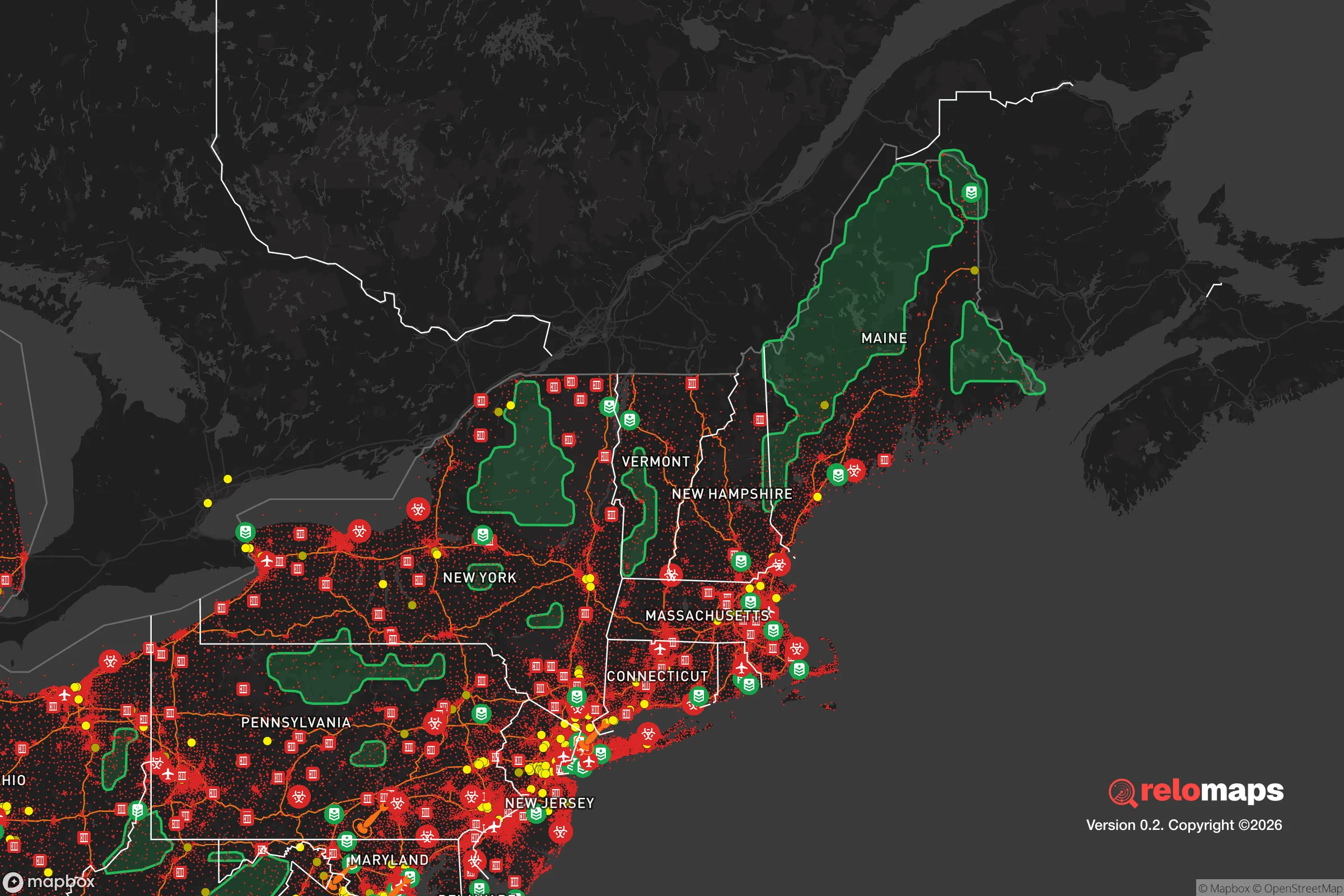


Important Note: For informational purposes only. This does not mean nothing bad ever happens in the green zones. Please use common sense. This is based on public data and modeled with AI. We tried to take a conservative approach but mistakes happen. We update this regularly as new information becomes available.
Solar Generator Recommendations
Backup power matters more here than in safer locations. We've picked three solar generators across budgets and capacity tiers — start with the budget unit if you only need a few essentials, or step up if you want to run a fridge and HVAC for days at a time.

Jackery Portable Power Station Explorer 300
Budget OptionPower on the Go: Weighing only 11 lbs, it's convenient to set up and store with book-sized foldable solar panels

BLUETTI Portable Power Station AC180
Designed for both indoor and outdoor scenarios, AC180 is highly capable as it has a robost capacity and continuous output power.

EF ECOFLOW DELTA Pro Ultra Power Station
Upgraded PickEcoFlow DELTA Pro Ultra is a whole-home energy system designed to grow with your family. Integrated with the Smart Home Panel 2, it scales to meet your evolving energy needs — keeping your home powered, intelligent, and secure through every stage of life.
We earn a commission, at no additional cost to you.
Strategic Assessment Analysis
Calais, Maine, sits as a hardscrabble outpost on the Canadian border, offering a resilience profile that is both strategically promising and operationally complex for the conservative prepper. Its primary advantage is extreme geographic isolation from the major population corridors of the Eastern Seaboard, combined with a direct land link to a stable, resource-rich neighbor. However, this same isolation creates logistical vulnerabilities, and the town’s proximity to a major international border crossing introduces unique security and fallout considerations that demand careful, sober assessment.
Geographic isolation and the Canadian buffer: natural advantages for strategic relocation
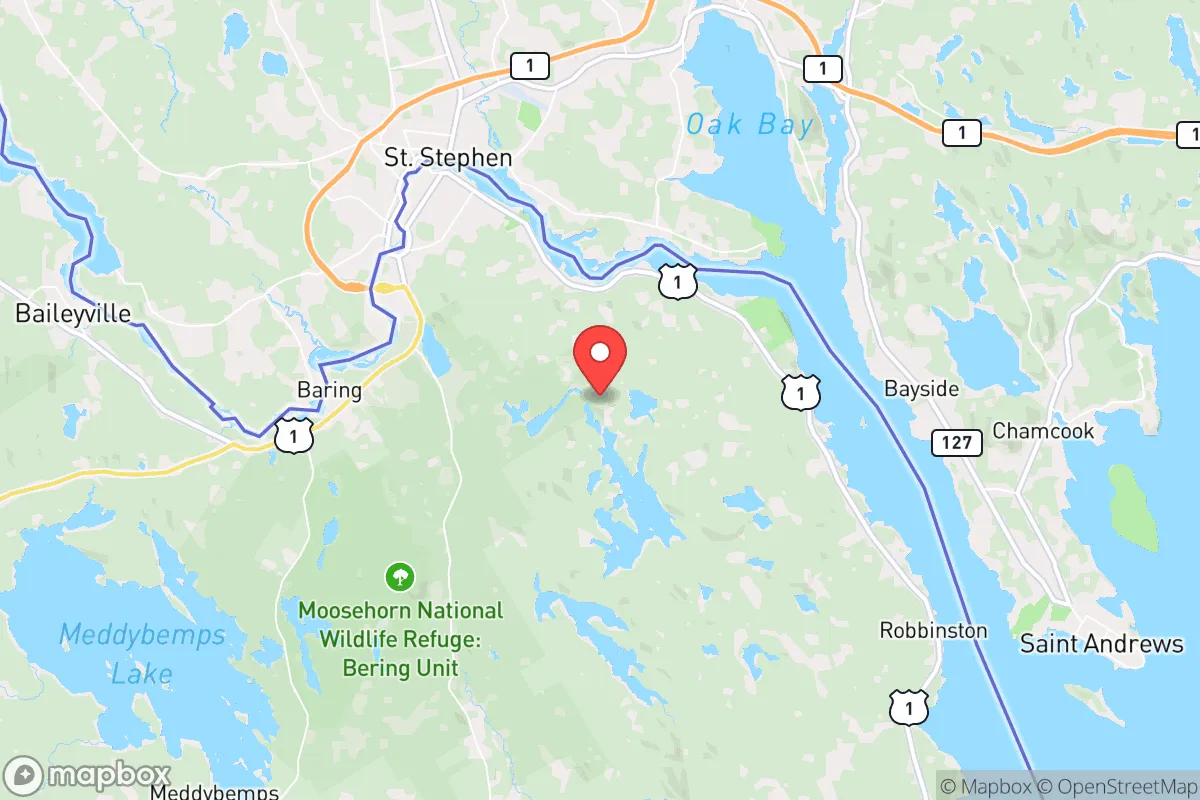
Calais occupies a unique position at the head of the St. Croix River, directly across from St. Stephen, New Brunswick. This is not a remote mountain redoubt, but it is about as far from the Boston-Washington megalopolis as one can get while still being in the continental United States. The nearest significant American city, Bangor, is roughly 90 miles west, and Portland is over 150 miles south. This distance from primary population centers is a major positive for those concerned with civil unrest, supply chain collapse, or pandemic spread. The area’s population density is extremely low—Washington County, where Calais sits, has roughly 31,000 people spread over 3,000 square miles. You are not going to be dealing with urban mobs or refugee flows in any meaningful numbers here.
The Canadian border is a double-edged sword, but for the prepper, it leans positive. New Brunswick is a politically stable, low-population province with its own resource base. In a severe crisis, the border could become a chokepoint, but in a slow-burn scenario, it provides a potential secondary supply line or even a fallback zone. The St. Croix River itself offers a natural defensive barrier to the east, and the surrounding terrain is a mix of dense boreal forest, bogs, and low hills—difficult ground for any large-scale movement. The local economy has historically been tied to timber, fishing, and border services, meaning the population is accustomed to self-reliance and hard work. This is not a place of soft suburbanites; it’s a community that still understands winter, isolation, and making do with what’s on hand.
Fallout proximity, border risks, and exposure to infrastructure targets
The most significant risk in Calais is its proximity to the Point Lepreau Nuclear Generating Station, located roughly 40 miles southeast in New Brunswick. This is a CANDU reactor, and while it has a solid safety record, any nuclear facility within 50 miles is a fallout concern in a major event—whether from accident, sabotage, or wartime targeting. Prevailing winds in the region are from the west and northwest, which would carry fallout from Lepreau toward the Bay of Fundy and out to sea, but a shift could put Calais in a downwind plume. This is not a dealbreaker, but it demands that any prepper have a solid shelter plan and potassium iodide stockpiles. The same winds that protect Calais from Lepreau also mean that fallout from a strike on the Maine Yankee site (decommissioned but still a spent-fuel storage location) or from a major event in the Boston corridor would likely not reach here in lethal concentrations.
The border crossing itself is a risk vector. Calais is a port of entry for Highway 1, a major route connecting the Maritimes to the U.S. In a crisis, this crossing could be shut down, become a target for smuggling or human trafficking, or be overwhelmed by refugees from both directions. The town’s infrastructure is also thin: a single hospital (Calais Regional Hospital) with limited capacity, one major grocery store, and a power grid that is vulnerable to winter storms and ice damage. The nearby Woodland pulp mill is an industrial site that could be a target for sabotage or an environmental hazard if mismanaged during a breakdown. For the survivalist, the key takeaway is that Calais is not a fortress; it is a small, exposed node on a critical border. Defensibility here relies on low profile and distance from major targets, not on terrain or fortifications.
Practical resilience: food, water, energy, and defensibility for the relocator
For a relocator serious about self-sufficiency, Calais offers a mixed bag. Water is abundant—the St. Croix River and numerous lakes and streams provide year-round fresh water, though treatment will be necessary in a grid-down scenario. The growing season is short (roughly 120 days) and the soil is rocky and acidic, typical of Downeast Maine. Large-scale gardening is possible but requires serious effort: raised beds, cold frames, and a greenhouse are almost mandatory for meaningful food production. Hunting and fishing are excellent—deer, moose, waterfowl, and Atlantic salmon are all available with proper licensing, and in a collapse scenario, the woods and waters can sustain a knowledgeable family. Foraging for mushrooms, berries, and sea vegetables along the coast is also viable.
Energy is a vulnerability. The grid is served by Emera Maine, and outages are common in winter storms. Any prepper here needs a robust off-grid power setup: solar with battery storage is viable (though winter sun is limited), and a wood stove is non-negotiable for both heat and cooking. Heating oil is the standard, but in a crisis, supply lines could be cut. Wood is the only reliable local fuel source, and property with standing timber is a must. Defensibility is not about walls and guns; it’s about obscurity and community. Calais is small enough that strangers are noticed immediately. Building relationships with neighbors—especially those with logging, mechanical, or medical skills—is the real security strategy. The town has a police department and a county sheriff, but response times in rural areas can be long. A prepper should plan to be their own first responder for at least the first 24-48 hours of any event.
The overall strategic picture for Calais is one of high potential paired with specific, manageable risks. It is not a bug-out location for a weekend warrior; it is a long-term relocation site for someone willing to invest in infrastructure, community ties, and a serious winter survival skill set. The Canadian border provides a buffer and a potential lifeline, but the proximity to a nuclear plant and the thin local resources mean that complacency is not an option. For the conservative prepper who values distance from the chaos of the cities, a climate that discourages the unprepared, and a population that still remembers how to work with their hands, Calais is a strong candidate. Just bring a good chainsaw, a solid radio, and a plan for the day the wind shifts from the southeast.

* Values derived from national, state, county, city and local statistics and may differ in a specific area. Last updated: 2026-05-01T10:35:45.000Z
Narrative content on this page is AI-generated and may contain mistakes. Verify any details that matter before acting on them.
ReloMaps may earn a commission from affiliate links at no extra cost to you.

