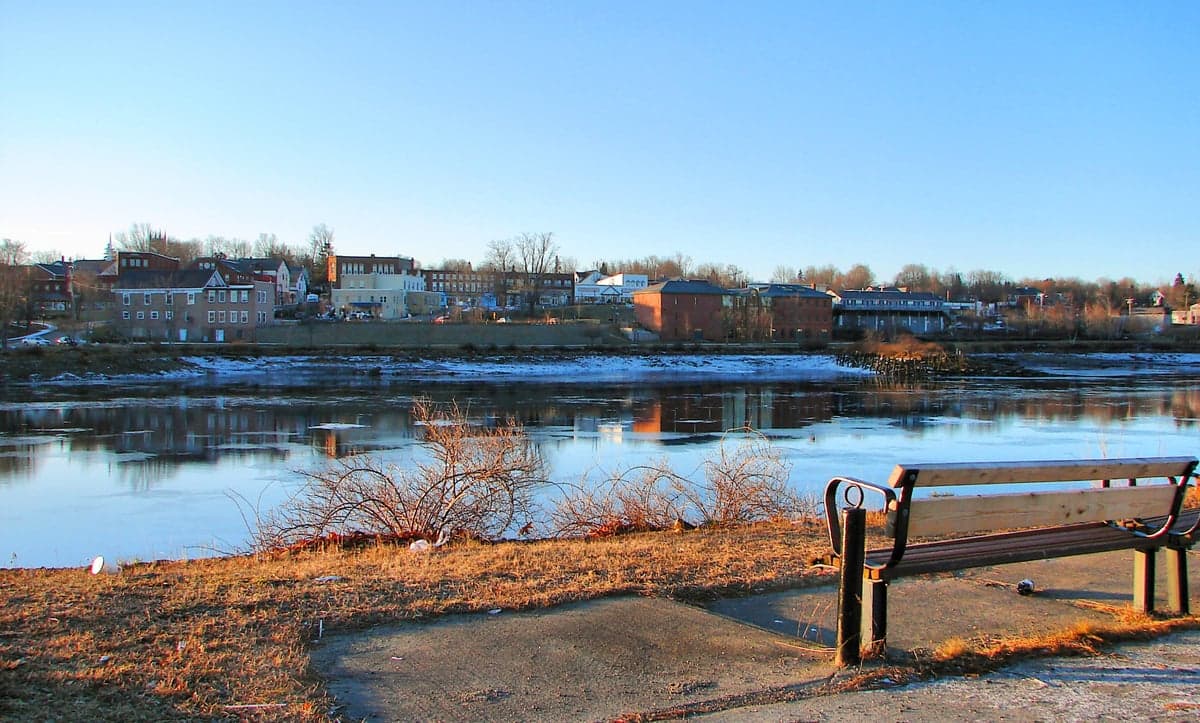
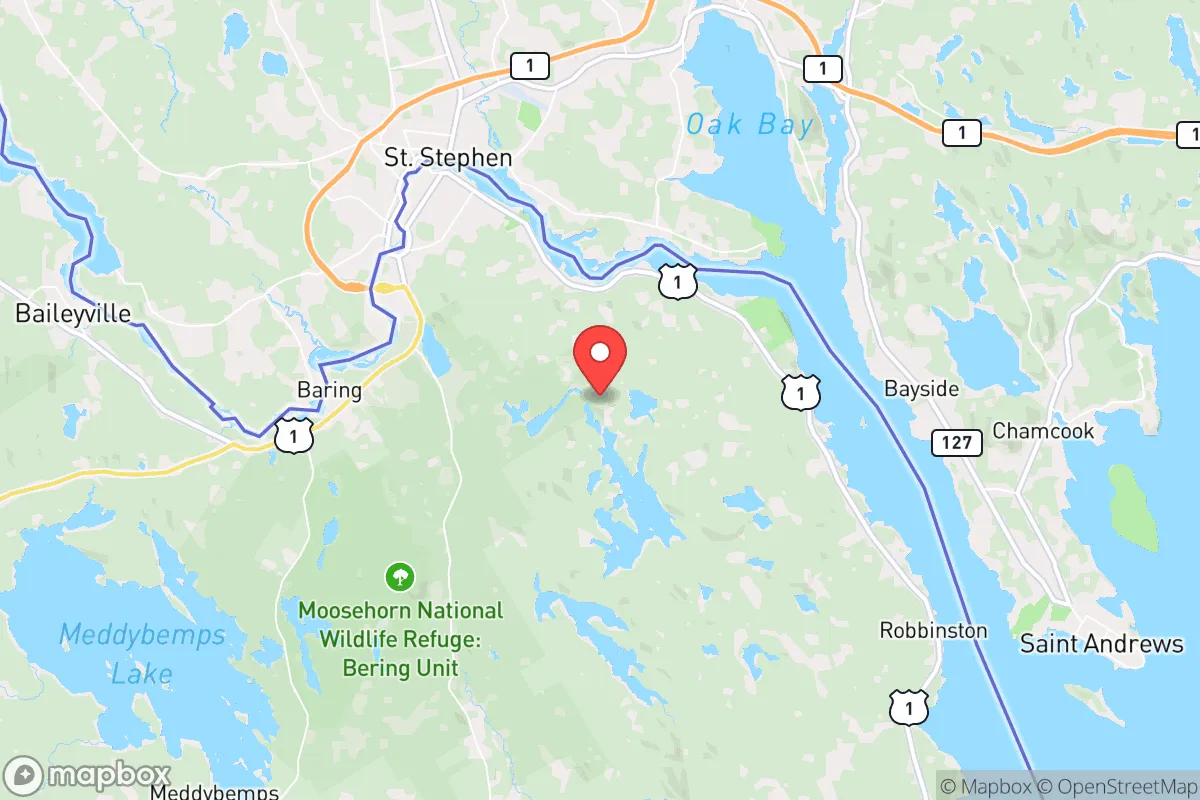
Photo: Wikipedia
Political ClimatePolitical Climate in Calais, ME
District shown is the primary district for this city’s centroid. Cities may span multiple districts.
Local Political AnalysisPolitical Analysis of Calais, ME
Calais, Maine, has long been a place where folks value their independence and don’t take kindly to being told how to live their lives. The area leans solidly conservative, with a Cook PVI of R+4, meaning it votes about four points more Republican than the national average in presidential elections. That’s not a fluke—it’s a reflection of a community that’s watched government creep into everything from land use to small business regulations, and they’ve had enough. While the national trend has been toward progressive policies, Calais has held the line, and if anything, the local sentiment is getting more skeptical of outside interference.
How it compares
Drive just 30 miles west to Bangor, and you’ll feel the shift—Bangor leans more moderate to liberal, with a stronger Democratic base and a younger, more transient population. Head south to Machias, and it’s a mixed bag, but Calais stands out as the most reliably conservative town in Washington County. The contrast is stark: in Calais, you’ll hear folks talking about property rights and Second Amendment protections at the diner, while in Portland or even Ellsworth, the conversation is more about climate mandates and social programs. The R+4 rating puts Calais in the same ballpark as rural towns in northern New England that have resisted the blue wave, but it’s worth noting that even within Washington County, places like Eastport or Lubec have a slightly more libertarian streak—less party-line, more “leave me alone.”
What this means for residents
For the people living here, the political climate means a lower likelihood of seeing heavy-handed zoning laws or business mandates that choke off the local economy. You won’t find the kind of progressive tax hikes or energy regulations that have driven up costs in places like Portland. That’s a big deal for a town that relies on small-scale logging, fishing, and tourism—industries that can’t absorb a lot of red tape. The downside? State-level policies from Augusta still trickle down, like the push for electric vehicle mandates or stricter environmental rules on the St. Croix River, which feel like a direct attack on the way of life here. Long-term, if the state keeps leaning left, Calais could see more friction between local values and state law, especially around gun rights and land use. But for now, the community stays tight-knit and wary of any politician who talks about “transformation” or “equity” without asking the locals first.
One thing that sets Calais apart culturally is its proximity to Canada—just across the border is St. Stephen, New Brunswick, which has a more liberal, Canadian-style approach to governance. That contrast is a daily reminder for residents of how different things are on the other side of the line. You’ll hear folks say, “Look at what they’ve got up there—higher taxes, more rules, less freedom—and be glad we’re here.” The local paper, the Calais Advertiser, still runs letters to the editor that sound like they’re from the 1980s, defending the right to hunt, fish, and run a business without a permit for every little thing. There’s a quiet but firm resistance to any progressive shift, and the near future looks like more of the same: a conservative stronghold in a state that’s slowly turning blue, but one that won’t go down without a fight.

State Political ClimatePolitical Climate in Maine
State Political AnalysisPolitical Environment in the State
Maine has long been a political paradox — a state that votes blue in presidential elections but elects centrist and even conservative governors, with a deep libertarian streak running through its rural communities. Over the past 20 years, the state has shifted from a reliably moderate Democratic stronghold to a more polarized battleground, with the southern coastal counties and Portland metro area pulling hard left while the northern and eastern counties have grown increasingly Republican. The 2024 election saw Maine split its electoral votes for the third time under its district-based system, with the 2nd Congressional District going to Trump by roughly 6 points while the 1st District went to Biden by a wide margin, reflecting a state that is culturally and politically two different places under one flag.
Urban vs. rural divide
The political map of Maine is essentially a story of two corridors. The southern coast — from Kittery up through Portland, Brunswick, and into Augusta — is the engine of Democratic power. Portland itself is the most liberal city in the state, with a city council that has pushed rent control, sanctuary city policies, and a $15 minimum wage. The surrounding suburbs like South Portland, Falmouth, and Scarborough lean reliably blue, driven by an influx of out-of-state professionals and remote workers from Massachusetts and New York. In contrast, the vast interior and northern reaches — places like Bangor, Presque Isle, Caribou, and the rural towns of Aroostook County — vote heavily Republican. Washington County, the poorest in the state, flipped from Obama to Trump in 2016 and has stayed red, while Oxford County and Franklin County have become reliably conservative. The divide is stark: the 1st Congressional District (southern coast) is one of the most Democratic districts in New England, while the 2nd District (everything else) is one of the most rural and Republican-leaning districts east of the Mississippi. The city of Lewiston, once a Democratic stronghold, has become a swing area as its Franco-American working-class base has shifted rightward over cultural and immigration issues.
Policy environment
Maine’s state-level policy is a mixed bag that reflects its divided government. The state has a progressive income tax structure with a top marginal rate of 7.15%, one of the higher rates in the nation, and property taxes are notoriously high — the effective rate is around 1.2%, among the top ten in the country. Maine has no sales tax on most services, but the 5.5% sales tax on goods is moderate. The regulatory environment is generally business-friendly for small enterprises, but the state has aggressively expanded Medicaid under the Affordable Care Act and mandates paid family leave, which took effect in 2025. Education policy is dominated by the state teachers union, and Maine has one of the highest per-pupil spending levels in the country, yet student outcomes remain middling. On election law, Maine is a national outlier: it uses ranked-choice voting for federal and state primaries and general elections, a system that conservatives argue disenfranchises voters who want a simple straight-ticket vote. Maine also allows same-day voter registration and no-excuse absentee voting, which critics say opens the door to fraud, though no major scandals have emerged. The state has a strong "right to know" law for public records, but property rights are under constant pressure from environmental regulations, particularly around shoreland zoning and the Land Use Planning Commission’s control over unorganized territories.
Trajectory & freedom
On the freedom front, Maine is a state of contradictions. Gun rights are relatively strong — Maine is a "shall issue" state for concealed carry, with no permit required for open carry, and it has a strong preemption law that prevents local governments from enacting their own gun bans. However, in 2023, following the Lewiston mass shooting, the legislature passed a 72-hour waiting period for firearm purchases and expanded background checks to private sales, a significant erosion of the state’s historically permissive gun culture. Parental rights have been under assault: in 2024, the state passed a law allowing minors as young as 14 to access gender-affirming care without parental consent, and the Department of Education has pushed LGBTQ+ curriculum mandates that have sparked school board battles in conservative towns like Sanford and Skowhegan. Medical freedom took a hit with the reimposition of vaccine mandates for healthcare workers in 2024, though the state did not renew its COVID-era emergency powers. Property rights are increasingly constrained by the Maine Climate Council’s aggressive net-zero mandates, which include restrictions on new home construction in flood zones and mandates for heat pumps and electric vehicle infrastructure. The state’s tax burden remains high, and there is no right-to-work law, meaning union membership is effectively mandatory in many sectors. On the plus side, Maine has no statewide mask or vaccine mandates as of 2026, and the libertarian streak in rural areas means many towns simply ignore state overreach.
Civil unrest & political movements
Maine has seen its share of political flashpoints. The 2023 Lewiston mass shooting, which killed 18 people, triggered massive protests in Portland and Augusta demanding stricter gun laws, while counter-protests in rural areas like Oxford and Norway defended the Second Amendment. The "Yellow Vests" movement, a loose coalition of anti-lockdown and anti-vaccine mandate activists, remains active in northern Maine, holding regular rallies in Bangor and Presque Isle. Immigration politics have become a hot-button issue: Portland’s sanctuary city status has drawn thousands of asylum seekers from Africa and the Middle East, straining the city’s housing and school systems and sparking backlash in working-class suburbs like Westbrook and Biddeford. In 2024, a proposal to limit Portland’s sanctuary policies was defeated, but the issue is far from settled. Election integrity concerns have been a persistent undercurrent, with conservative groups challenging the ranked-choice voting system and the state’s use of drop boxes, though no major irregularities have been proven. The "Maine Independence" movement, which advocates for secession from the United States, has a small but vocal following in Aroostook County, but it remains a fringe idea. The most visible civil unrest in recent years has been around school board meetings in towns like Gorham and Windham, where parents have clashed with administrators over library books and curriculum content.
Projection
Over the next 5-10 years, Maine is likely to become more politically divided, not less. The southern coast will continue to blue-shift as remote workers from blue states flood in, driving up housing prices and pushing progressive policies in Portland and its suburbs. Meanwhile, the rural north and east will grow more Republican, driven by an aging population and a backlash against coastal liberalism. The 2nd Congressional District is likely to remain competitive but lean Republican, while the 1st District will stay solidly Democratic. The state’s demographic trends are concerning for conservatives: Maine is the oldest state in the nation by median age, and the influx of younger, liberal-leaning migrants to the coast is reshaping the electorate. The state’s tax burden and regulatory creep will likely accelerate, as the Democratic-controlled legislature continues to push paid leave, green energy mandates, and expanded social programs. However, the libertarian and conservative rural base is not going anywhere, and the state’s strong tradition of local control means that many towns will resist state overreach. A new resident moving to Maine in 2026 should expect a state where your quality of life depends heavily on which town you choose — coastal towns will feel increasingly like Massachusetts, while inland towns will remain more independent and freedom-oriented.
For a conservative-leaning individual or family considering a move to Maine, the bottom line is this: choose your location carefully. The rural towns of Aroostook, Washington, and Oxford counties offer a lower cost of living, strong gun rights, and a community that values self-reliance, but you’ll face high property taxes and limited job opportunities. The southern coast offers economic opportunity but at the cost of progressive governance and high housing prices. Maine is not a lost cause for conservatives — the state’s independent streak runs deep, and the 2nd District remains a Republican stronghold — but the trajectory is concerning. If you value personal freedom, low taxes, and minimal government interference, you’ll want to look at towns like Caribou, Houlton, or Dover-Foxcroft, and be prepared to fight to keep them that way. The state is at a crossroads, and the next decade will determine whether Maine remains a place of rugged individualism or becomes another New England liberal enclave.
* Values derived from national, state, county, city and local statistics and may differ in a specific area. Last updated: 2026-05-01T10:35:45.000Z
Narrative content on this page is AI-generated and may contain mistakes. Verify any details that matter before acting on them.
ReloMaps may earn a commission from affiliate links at no extra cost to you.

