Photo: Wikipedia
Political ClimatePolitical Climate in Fresno County
Showing district-level results — no local-only data available.
Local Political AnalysisPolitical Analysis of Fresno County
Fresno County is a solidly conservative stronghold in California, with a Cook PVI of R+15, meaning it votes about 15 points more Republican than the national average. That’s a stark contrast to the state as a whole, which leans D+12, and it’s a gap that’s only widened in recent years. While the county has historically been a mix of farming communities and working-class towns, the political shift toward the right has accelerated since 2020, driven by frustration with state-level mandates on everything from water rights to housing regulations. If you’re looking for a place where your vote actually counts against the Sacramento machine, this is it.
How it compares
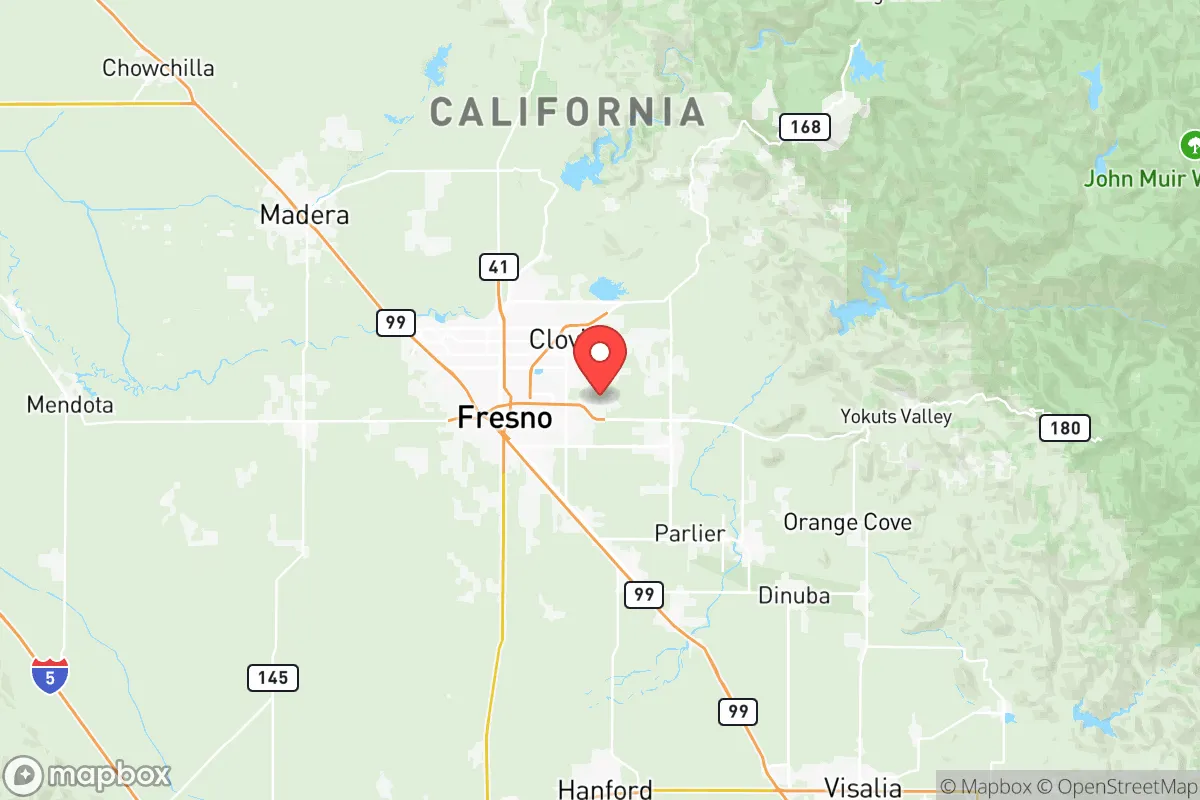
The difference between Fresno County and California’s overall lean is a massive 27 points—one of the biggest gaps in the state. In the 2024 election, the county went for the Republican candidate by a double-digit margin, while California as a whole swung blue by a similar spread. But it’s not a monolith. The city of Fresno itself is a battleground: neighborhoods like the Tower District and areas near Fresno State lean blue, while the northern suburbs—think Clovis and Fig Garden—are reliably red. Out in the rural towns, it’s even more pronounced. Coalinga and Firebaugh are deep red, with precincts often voting 70%+ Republican, while Kerman and Mendota show more mixed results, often swinging with agricultural economic concerns. The swing precincts are in the unincorporated areas along Highway 99, where independent voters decide races based on water policy and property taxes, not party labels.
What this means for residents
For those of us living here, the political climate means a constant tug-of-war with state government. You’ll see it in everyday life: local schools pushing back against curriculum mandates, sheriffs refusing to enforce certain gun laws, and city councils fighting state housing quotas. The county’s conservative lean gives residents a sense of autonomy—your voice matters more in local elections than it does in statewide ones. But it also means you’re often on the defensive. When Sacramento passes a new environmental regulation that hurts farmers or a labor law that squeezes small businesses, Fresno County feels the sting first. The recent push for high-density housing near downtown Fresno has sparked heated debates, with many longtime residents worried about government overreach into property rights and neighborhood character.
Cultural and policy distinctions
One thing that sets Fresno County apart is its fierce independence on water policy. While coastal California pushes for conservation and environmental restrictions, locals here see water as a life-or-death resource for agriculture. The county’s Board of Supervisors has repeatedly sued the state over water allocations, and it’s a unifying issue across party lines. Culturally, you’ll find a strong sense of community in places like Sanger and Reedley, where church potlucks and 4-H fairs are still the norm. The progressive shift in places like San Francisco or Los Angeles feels like a different world—and that’s exactly how most folks here want it. Looking ahead, I see the county staying red, maybe even redder, as more people move here from blue areas seeking lower taxes and fewer mandates. But the state’s grip on funding and regulations means the fight isn’t going away anytime soon.

State Political ClimatePolitical Climate in California
State Political AnalysisPolitical Environment in the State
California is a deep blue state with a Cook PVI of D+12, meaning it leans 12 points more Democratic than the national average in presidential elections. Over the last 10-20 years, the state has shifted decisively leftward, driven by massive population growth in coastal metros and a steady exodus of moderate and conservative voters from rural and suburban areas. The dominant coalition is a progressive urban-suburban alliance centered in Los Angeles, the San Francisco Bay Area, and Sacramento, with organized labor, environmental groups, and tech money providing the muscle. While the state still has conservative pockets, the overall trajectory has been one of accelerating one-party rule, with Republicans holding no statewide office and superminority status in the legislature.
Urban vs. rural divide
The political map of California is a tale of two states. The coastal metros — Los Angeles, San Francisco, San Diego, and San Jose — are the engine of the Democratic machine, routinely delivering 70-80% of the vote for Democratic candidates. Inland, the Central Valley and far northern counties tell a different story. Bakersfield (Kern County) and Fresno are reliably red, with Kern County voting +16 Republican in 2024. Orange County, once a GOP stronghold, flipped blue in 2018 and has stayed there, driven by Asian American and Latino voters in cities like Irvine and Santa Ana. The Inland Empire — Riverside and San Bernardino — is a true battleground, trending purple but still leaning Democratic in statewide races. The rural north, from Redding to the Oregon border, is deeply conservative but has almost no population weight. The divide isn't just geographic; it's cultural. Coastal voters prioritize climate action, social justice, and tech regulation, while inland voters care about water rights, agriculture, and crime.
Policy environment
California's policy environment is a laboratory of progressive governance, with high taxes, heavy regulation, and expansive government programs. The state has the highest top marginal income tax rate in the nation at 13.3%, and a state sales tax that can exceed 10% in some cities. Property taxes are capped by Proposition 13, but recent ballot measures have chipped away at it, allowing for more reassessments. The regulatory posture is aggressive: California has its own environmental review process (CEQA) that can stall any development for years, and its own emissions standards that effectively set national policy for automakers. Education policy is dominated by the California Teachers Association, with per-pupil spending among the highest in the nation but middling outcomes. Healthcare is heavily regulated, with a state-run exchange (Covered California) and a push toward single-payer that has stalled. Election laws are among the most liberal: universal mail-in voting, same-day registration, and no voter ID requirement. For a conservative, the policy environment feels like a constant expansion of government into daily life — from gas car bans to plastic straw restrictions to mandates on corporate board diversity.
Trajectory & freedom
California is becoming less free by almost any measure of personal liberty, especially for conservatives. On gun rights, the state has passed some of the strictest laws in the nation, including an assault weapons ban, a 10-day waiting period, and a "may issue" concealed carry regime that was only loosened slightly after the Bruen Supreme Court decision. On parental rights, the state has moved aggressively to allow minors to access gender-transition care without parental consent, and school districts are required to keep a child's gender identity confidential from parents if the child requests it. On speech, the state has tried to regulate political speech on social media and has a law (AB 5) that reclassified independent contractors as employees, crushing gig workers and freelancers. On medical autonomy, California imposed one of the nation's strictest COVID-19 vaccine mandates for schoolchildren and healthcare workers. On property rights, rent control has been expanded statewide (AB 1482), and new construction is often subject to years of CEQA lawsuits. The trend is clear: every legislative session brings new restrictions on what you can own, say, or do with your body and property.
Civil unrest & political movements
California has been a flashpoint for civil unrest, particularly in the post-2020 era. The George Floyd protests in Los Angeles and San Francisco were among the largest and most destructive in the nation, with billions in property damage and a subsequent "defund the police" movement that led to actual budget cuts in cities like Oakland and San Francisco. Organized activist movements are powerful: the progressive "Squad" has members in the state legislature, and groups like the ACLU and the Sierra Club have outsized influence. Immigration politics are a constant flashpoint, with California's sanctuary state law (SB 54) limiting cooperation between local law enforcement and federal immigration authorities. Secession rhetoric is real but fringe — the "Calexit" movement has never gained serious traction. Election integrity is a growing concern among conservatives, given the state's universal mail-in voting system and lack of voter ID. Visible flashpoints a new resident would notice: homeless encampments in every major city, frequent protests on college campuses (especially over Gaza), and a visible police presence that is often criticized as either too aggressive or too passive, depending on the neighborhood.
Projection
Over the next 5-10 years, California is likely to become even more progressive, but with growing internal friction. Demographic trends are clear: the state's population has been declining since 2020, with net out-migration of over 500,000 people, mostly to Texas, Arizona, and Nevada. Those leaving tend to be moderate and conservative, while those arriving (mostly from abroad) lean Democratic. This self-selection will deepen the blue hue. However, the state's fiscal situation is precarious — a projected $68 billion deficit in 2024-25 — which may force some moderation on spending. The housing crisis will continue to drive political conflict, with YIMBY activists pushing for more density and conservatives fighting for local control. A new resident moving in now should expect to find a state where the government is deeply involved in every aspect of life, where taxes are high and rising, and where political dissent is increasingly marginalized. The one-party rule means that policy shifts happen fast and without much debate.
Bottom line for a new resident: If you value low taxes, gun rights, parental control over your children's education and medical decisions, and a government that stays out of your business, California will be a constant source of frustration. The natural beauty and economic opportunity are real, but they come with a political price tag that is only going up. You'll need to be prepared for a state where your vote in statewide elections is effectively meaningless, and where your local city council may be the only place you can make a difference. For conservatives, it's a beautiful place to visit but a tough place to call home.
* Values derived from national, state, county, city and local statistics and may differ in a specific area. Last updated: 2026-05-28T07:47:28.000Z
Narrative content on this page is AI-generated and may contain mistakes. Verify any details that matter before acting on them.
ReloMaps may earn a commission from affiliate links at no extra cost to you.

