Photo: Wikipedia
Demographics of Madera County
Affluence Level in Madera County
A below-average socioeconomic profile. Incomes, home values, and educational attainment trail the U.S., with higher poverty and unemployment.
People of Madera County
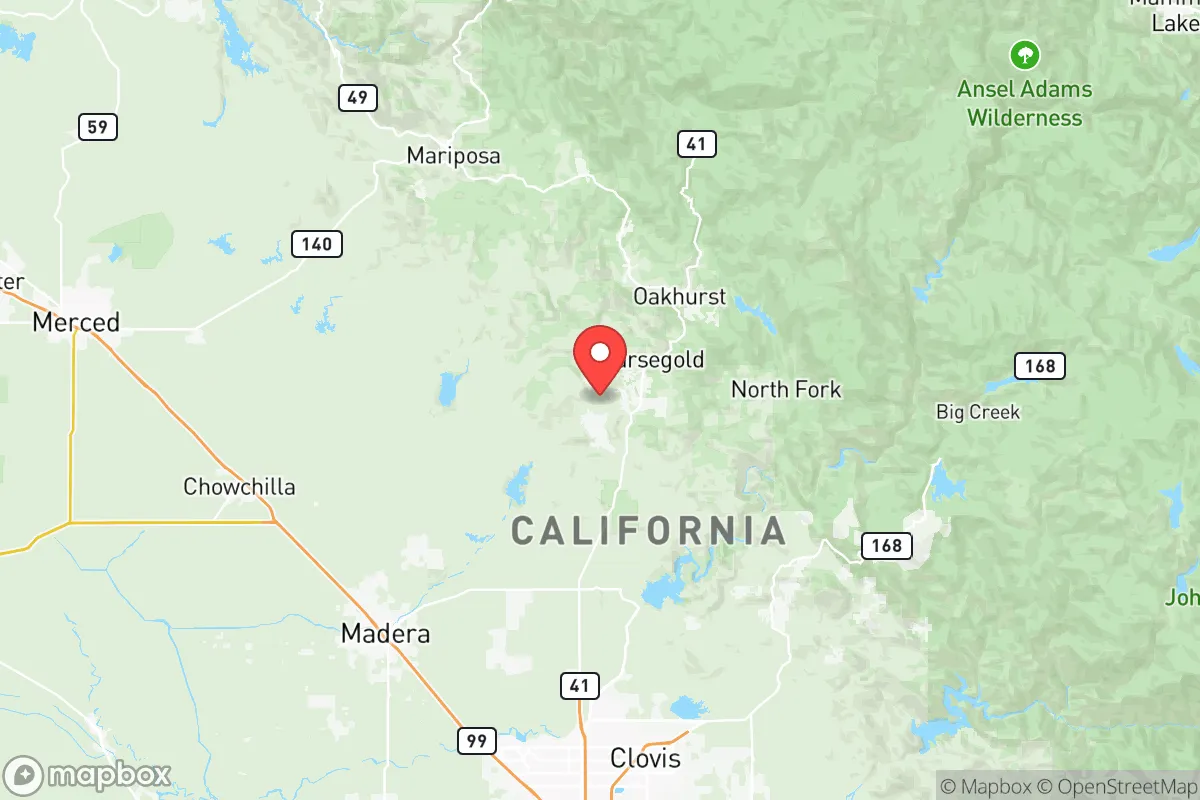
Madera County’s 158,790 residents form a predominantly Hispanic (60.4%) and working-class population, with a White non-Hispanic share of 30.9% and a foreign-born rate of 13.1%. The county is defined by its agricultural heartland—centered on the cities of Madera and Chowchilla—and a growing foothill and mountain presence in communities like Oakhurst and North Fork. With only 17.1% of adults holding a college degree, the population is less formally educated than the state average, reflecting an economy rooted in farming, food processing, and logistics rather than tech or professional services.
Settlement & growth (pre-1960)
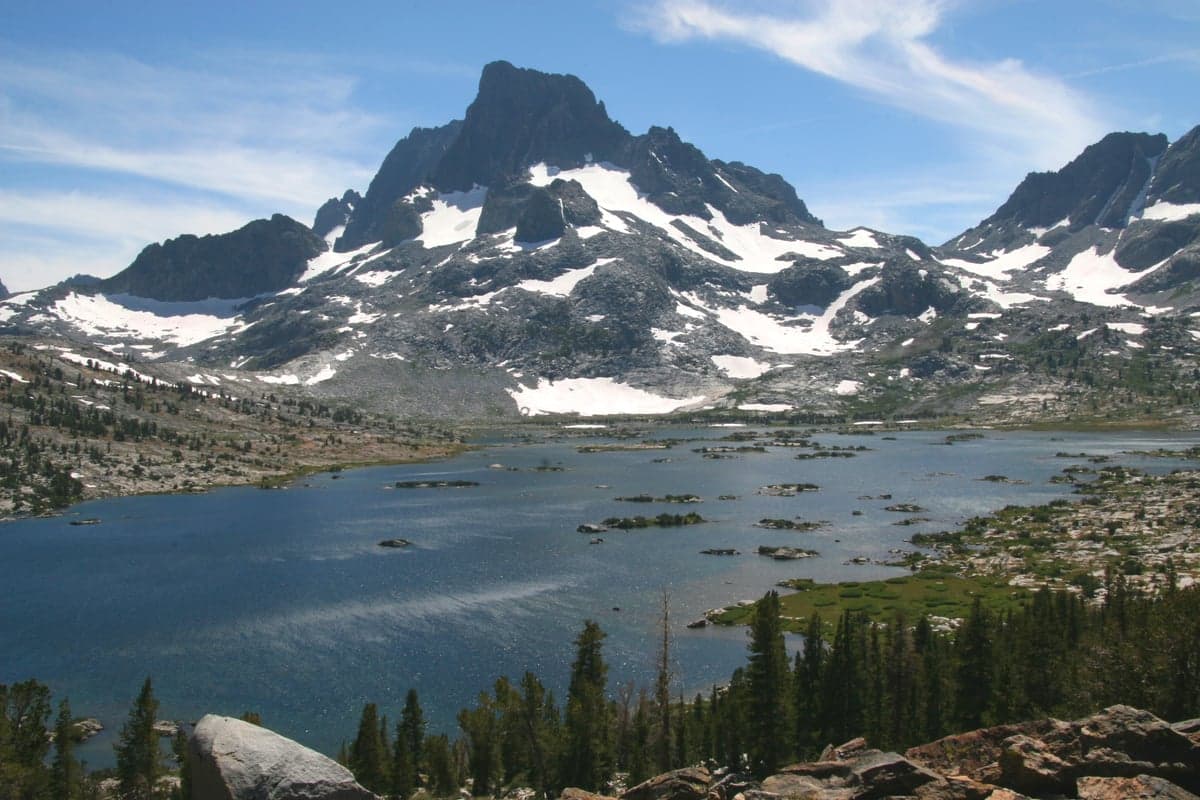
Long before European contact, the Sierra Nevada foothills and San Joaquin Valley floor of present-day Madera County were home to the Yokuts people in the western plains and the Mono (Nim) people in the eastern mountains. The Yokuts lived in small, decentralized villages along the San Joaquin River and its tributaries, while the Mono occupied the higher elevations around what is now Bass Lake and North Fork. Spanish colonization in the late 1700s and early 1800s brought mission influence to the valley, but the Sierra foothills remained largely outside direct mission control until after Mexican independence in 1821. Mexican land grants—such as the 1844 Rancho Sanjon de Santa Rita—began the shift toward cattle ranching, but the region’s population remained sparse.
The California Gold Rush of 1848–1855 transformed the area almost overnight. Prospectors flooded into the Sierra Nevada, establishing mining camps along the Fresno River and its forks. The town of Coarsegold (originally Coarse Gold Gulch) and Oakhurst (then Fresno Flats) sprang up as supply centers for miners. When surface gold played out by the 1860s, many miners stayed and turned to logging, farming, and ranching. The arrival of the Southern Pacific Railroad in the 1870s opened the valley floor to large-scale wheat and cattle operations, and the town of Madera—founded in 1876 as a railroad depot—became the county seat when Madera County was carved from Fresno County in 1893.
The early 1900s brought two major waves. First, the construction of the Madera Canal and other irrigation projects (1910s–1920s) turned the valley into prime agricultural land, attracting Dust Bowl migrants from Oklahoma, Arkansas, and Texas during the 1930s. These “Okies” and “Arkies” settled in unincorporated farming communities like Fairmead and Parksdale, working as cotton and fruit pickers. Second, the Bracero Program (1942–1964) brought Mexican laborers into the fields, many of whom later sponsored family members and established permanent roots. By 1960, Madera County’s population had reached roughly 40,000, with a White majority (including many Dust Bowl descendants) and a growing Mexican-American minority concentrated in Madera and Chowchilla.
Modern era (post-1965)
The 1965 Hart-Cellar Act ended the Bracero Program and shifted immigration toward family reunification, dramatically accelerating Hispanic growth. Mexican-American families who had worked the fields for decades began to settle permanently, and new arrivals from Mexico and Central America continued to arrive through the 1970s and 1980s. By 1990, the county’s Hispanic share had risen to roughly 40%, and by 2020 it had crossed 60%. Today, the Hispanic population is the demographic majority, with the highest concentrations in the valley-floor cities: Madera (where over 70% of residents are Hispanic) and Chowchilla (over 60%). These communities have strong ties to agriculture, with many families working in almond orchards, vineyards, and dairy operations.
Domestic migration has been more modest than in coastal California. The county has not experienced the same level of Rust Belt or coastal flight as the Bay Area or Southern California, though some retirees and second-home buyers have moved into the Sierra foothills. Oakhurst and Bass Lake have seen an influx of White, middle-class residents from the Central Valley and Los Angeles area, drawn by proximity to Yosemite National Park and lower housing costs. This has created a cultural divide: the valley floor is heavily Hispanic and working-class, while the mountain communities are predominantly White and more politically conservative.
Asian and Indian populations remain small. East/Southeast Asian residents (1.5%) are concentrated in Madera city, often working in healthcare or small business. Indian-subcontinent residents (0.9%) are a tiny but growing presence, with a few families in Madera and Oakhurst, largely in professional roles like medicine and engineering. The Black population (2.4%) is mostly in Madera and Chowchilla, with roots in the post-World War II agricultural labor force and some recent arrivals from the Bay Area seeking lower housing costs.
The future
Madera County is projected to become more Hispanic and more diverse in the coming decades. The Hispanic share is expected to approach 70% by 2040, driven by higher birth rates and continued immigration from Mexico and Central America. The White non-Hispanic population will continue to shrink as a share, though absolute numbers may hold steady in the foothills. The county’s overall growth rate is modest—about 0.5% annually—constrained by limited job opportunities outside agriculture and a low college attainment rate that discourages knowledge-economy migration.
New development is concentrating in the valley floor, particularly along the Highway 99 corridor in Madera and near the planned Madera Ranchos area, where suburban-style subdivisions are being built for commuters who work in Fresno (20 minutes south). The foothill communities of Oakhurst and Coarsegold are likely to see continued in-migration of retirees and remote workers, but strict environmental regulations and wildfire risk will limit large-scale growth. The county’s cultural identity will remain rooted in agriculture and Hispanic heritage, with English-Spanish bilingualism becoming the norm in the valley. For a newcomer, Madera County offers a slower, more affordable lifestyle than coastal California, but with fewer white-collar jobs and a population that is increasingly young, Hispanic, and family-oriented.
What Madera County is becoming is a classic inland California agricultural community—heavily Hispanic, working-class, and family-centered—with a small but distinct mountain enclave of White retirees and outdoor enthusiasts. For someone moving in now, the county offers low housing costs and a strong sense of community, but limited economic mobility and a cultural environment that is far more traditional and rural than the state’s coastal metros.

* Values derived from national, state, county, city and local statistics and may differ in a specific area. Last updated: 2026-09-27T21:33:47.000Z
Narrative content on this page is AI-generated and may contain mistakes. Verify any details that matter before acting on them.
ReloMaps may earn a commission from affiliate links at no extra cost to you.

