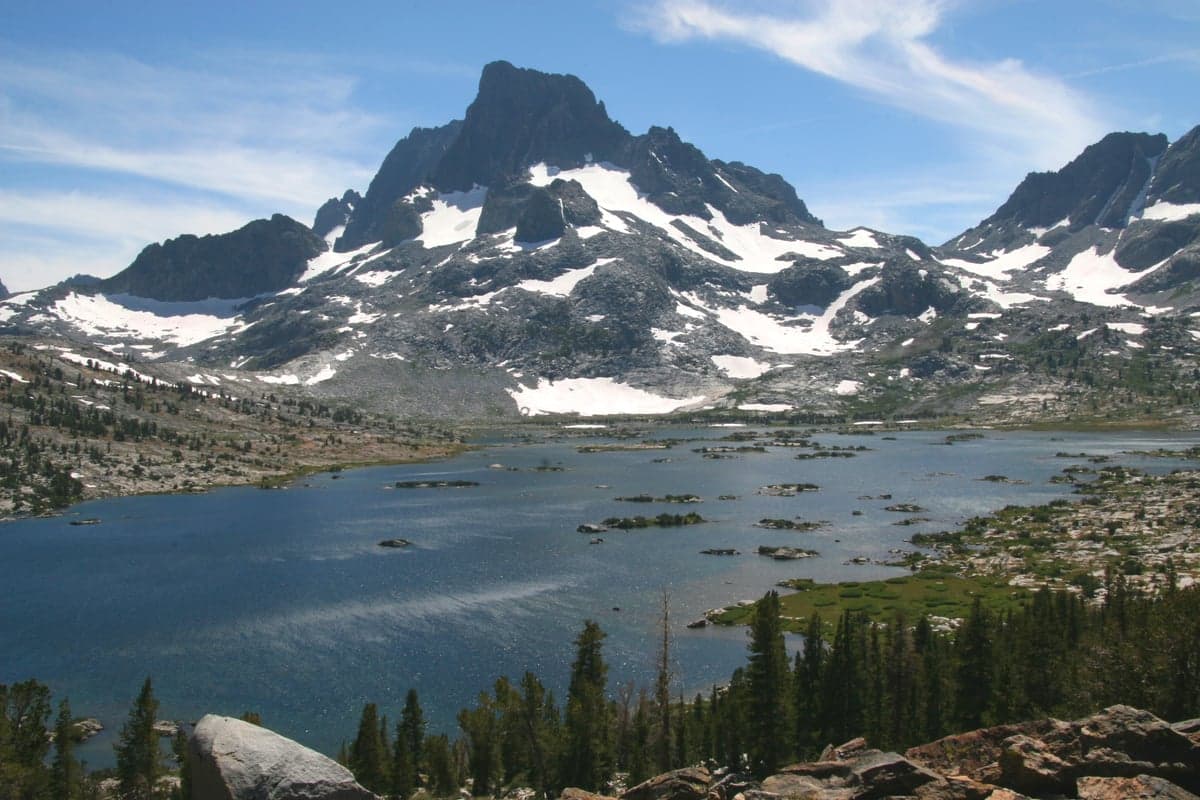
Photo: Wikipedia
Political ClimatePolitical Climate in Madera County
Showing district-level results — no local-only data available.
Local Political AnalysisPolitical Analysis of Madera County
Madera County leans reliably Republican with a Cook PVI of R+8, making it one of the more conservative pockets in California's Central Valley. The county has trended redder over the past decade, driven by population growth in its rural eastern reaches and a steady exodus of moderate voters from coastal areas. While statewide California votes solidly Democratic, Madera County has consistently voted for Republican presidential candidates by double-digit margins since 2008, with Donald Trump carrying the county by 16 points in 2020 and 12 points in 2024.
How it compares
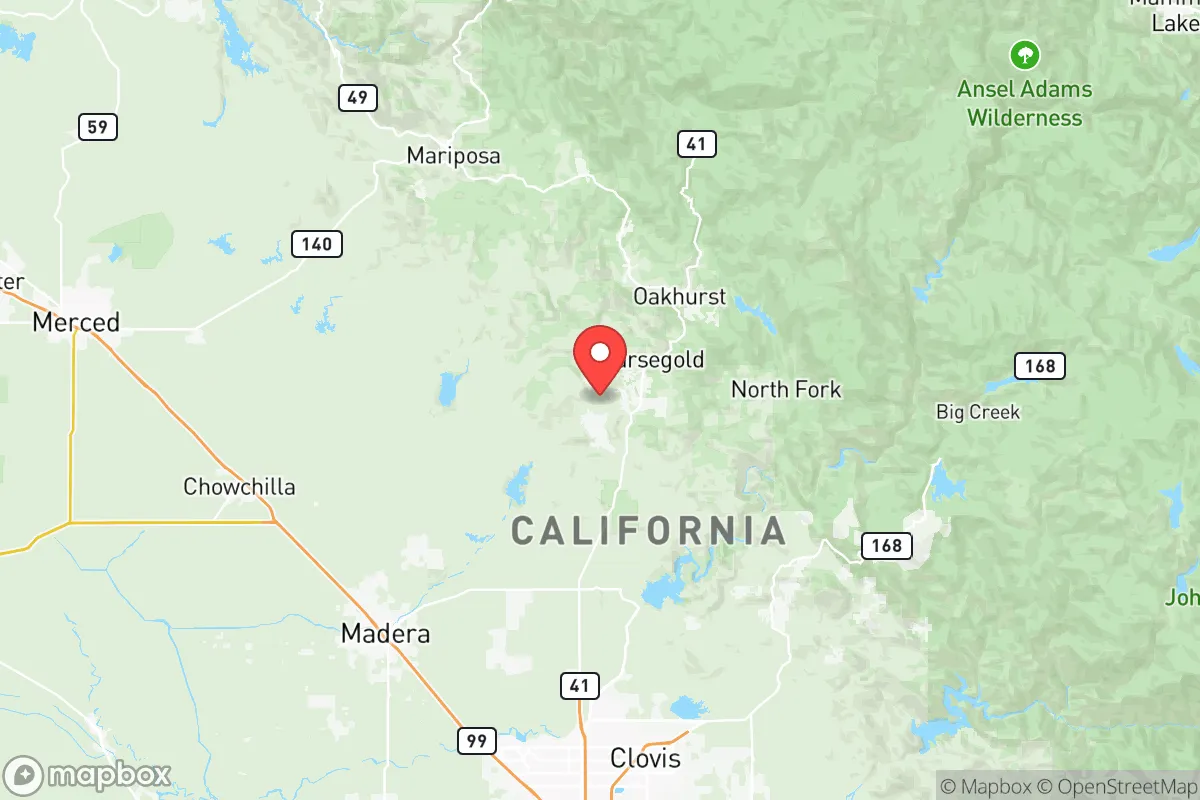
Madera County's R+8 rating places it roughly 20 points to the right of California as a whole, which has a Cook PVI of D+13. The county is more conservative than neighboring Fresno County (D+5) but slightly less so than Tulare County (R+10) to the south. Within Madera County itself, the political geography splits sharply: the city of Madera, the county seat, leans Democratic, with precincts near downtown and the southern neighborhoods voting blue by 5-10 points in recent elections. In contrast, the unincorporated communities of Oakhurst, Coarsegold, and North Fork in the Sierra Nevada foothills vote Republican by 20-30 points, driven by a mix of retirees, second-home owners, and rural conservatives. The town of Chowchilla, home to a large state prison, is a swing area—its precincts have flipped between parties in the last two cycles, reflecting a working-class electorate that responds to economic messaging over party loyalty.
What this means for residents
For conservative residents, Madera County offers a rare experience in California: local government that aligns with their values. The Board of Supervisors has been Republican-majority for decades, and the county sheriff, district attorney, and most school board members run as Republicans. Property taxes remain relatively low compared to coastal counties, and zoning laws in unincorporated areas are less restrictive, which appeals to ranchers and small-scale farmers. For liberal residents, the political climate can feel isolating, especially in the foothill communities where Democratic events are rare. However, the city of Madera itself has a growing Latino population—now over 55% of the county—that has slowly shifted local elections leftward. In 2022, a Democratic candidate for state assembly came within 3 points of winning the county, a sign that the blue vote is consolidating in the urban core. Practical impacts include limited public transit funding (the county has no bus system outside Madera city limits) and a heavy emphasis on agricultural water rights over environmental regulations.
Culturally, Madera County feels more like the rural West than coastal California. Gun rights are widely respected—open carry is common in the foothills—and the annual Madera Fair draws crowds for rodeo events, not tech conferences. The county's policy distinctions include a strong "right-to-farm" ordinance that protects agricultural operations from nuisance lawsuits, and a local sales tax rate of 8.5% that funds road maintenance rather than social programs. For newcomers, the biggest adjustment is the pace: things move slower here, and political conversations at the feed store or the Oakhurst coffee shop tend to be blunt but neighborly. Whether you're a conservative looking for a place where your vote counts or a liberal hoping to build a local movement, Madera County offers a clear-eyed picture of what life is like when one party holds the reins—and the other keeps showing up to the county board meetings anyway.

State Political ClimatePolitical Climate in California
State Political AnalysisPolitical Environment in the State
California is a deeply blue state where Democrats hold every statewide office and supermajorities in both legislative chambers, but that monolithic label hides a far more complex reality. The state hasn't voted Republican in a presidential race since 1988, and the partisan lean has only intensified over the last two decades — from a roughly 10-point Democratic margin in 2000 to a consistent 20-30 point advantage in recent cycles. For a conservative-leaning relocator, the practical takeaway is that you'll be living under one-party rule at the state level, but the degree to which that affects daily life varies enormously depending on where you land.
Urban vs. rural divide
California's political map is a textbook case of the urban-rural chasm. The coastal metros — Los Angeles, San Francisco, San Diego, and San Jose — are the engine of the state's Democratic dominance, with San Francisco County routinely delivering 85%+ of its vote to Democratic presidential candidates. The Central Valley and inland regions tell a different story. Bakersfield and its surrounding Kern County are reliably Republican strongholds, often voting +20 points or more for GOP candidates. Orange County, once a conservative bastion, flipped decisively blue starting in 2018 and now leans Democratic by about 5-10 points in most races. The most interesting political geography is in the exurbs and smaller cities: Redding in the north is deeply conservative, Fresno is a competitive swing area trending blue, and Riverside and San Bernardino in the Inland Empire are purple-to-light-blue, with pockets of strong GOP support in places like Temecula and Murrieta. The rural counties — think Modoc, Siskiyou, and Lassen — vote 70-80% Republican but have almost no population, so their influence is negligible in statewide races.
Policy environment
California's policy environment is defined by high taxes, heavy regulation, and expansive government services. The state has a progressive income tax with rates up to 13.3% (the highest in the nation), a state sales tax that averages 7.25% but can exceed 10% with local add-ons, and property taxes capped at 1% of assessed value under Proposition 13 — though reassessment on sale means newer homeowners often pay far more than long-term residents. The regulatory posture is aggressive: California has its own environmental standards (CARB), its own labor laws (including a $16/hour minimum wage as of 2024, rising to $16.50 in 2025), and its own healthcare mandates through Covered California. Education policy is centralized and progressive — the state funds schools through a complex formula that favors low-income districts, and it has banned charter school expansion in most forms. Election laws are among the most accessible in the country: universal mail-in voting, same-day registration, and automatic voter registration at the DMV. For a conservative relocator, the policy environment means higher costs and less local control, but also robust public services and strong worker protections.
Recent policy direction
The last five years have seen California accelerate its progressive agenda across nearly every dimension a relocator might weigh. On gun and self-defense law, the state passed SB 2 in 2023, which effectively bans carrying firearms in most public places and requires a "good cause" permit that is nearly impossible to obtain in many counties. Parental and education rights took a sharp turn with AB 1955 (2024), which prohibits school districts from requiring parental notification when a child changes their gender identity — a direct response to conservative school boards in places like Temecula and Chino Hills that had passed parental notification policies. On speech and privacy, the state has expanded anti-SLAPP protections and passed the California Consumer Privacy Act (CCPA), one of the nation's strongest data privacy laws. Medical and bodily autonomy is fully protected: abortion is codified as a fundamental right under Proposition 1 (2022), and the state has become a sanctuary for transgender youth from other states. Property rights have been constrained by rent control expansion (AB 1482, 2019) and a 2024 ballot measure that allows local governments to impose rent control on single-family homes. Taxation has not increased at the top rate since 2012, but a 2024 proposal to raise corporate taxes failed narrowly. Voting and ballot access has been made easier, but the state also passed a law requiring all counties to use paper ballots with mandatory audits — a response to election integrity concerns from both parties.
Civil unrest & political movements
California has been a flashpoint for political activism on both sides. The 2020 George Floyd protests in Los Angeles and Oakland were among the largest and most destructive in the nation, with billions in property damage and a lasting impact on policing policy — the state passed SB 2 (2021) to decertify problem officers and AB 1506 to limit police use of force. On the right, the "Recall Newsom" movement in 2021 gathered 1.7 million signatures and forced a special election, though Newsom survived with 62% of the vote. The state's sanctuary policy — SB 54 (2017) — prohibits state and local law enforcement from cooperating with federal immigration authorities, making California a de facto safe haven for undocumented immigrants. Secession rhetoric, particularly the "Calexit" movement, has faded since 2020 but still has a small but vocal following. Election integrity controversies have been minimal compared to swing states — California's universal mail-in system ran smoothly in 2020 and 2024, though conservative activists in Orange County and San Diego have raised concerns about ballot harvesting and voter roll maintenance. The most visible flashpoint for a new resident is likely to be homelessness and public drug use, which has become a political battleground between progressive "housing first" advocates and more conservative "law and order" factions.
Projection
Over the next 5-10 years, California's political trajectory is likely to remain solidly blue, but the margins may narrow slightly due to demographic shifts and out-migration. The state lost a congressional seat after the 2020 census for the first time in its history, and population trends suggest continued slow growth or stagnation — particularly in high-cost coastal areas. The Central Valley and Inland Empire are growing faster than the coast, and these areas are more politically competitive. Bakersfield and Fresno could become more important swing areas as their populations increase. The biggest wildcard is housing: if the state's ambitious upzoning laws (SB 9 and SB 10) actually produce more supply, it could slow out-migration of moderate-income families who currently leave for Texas and Arizona. But if housing remains unaffordable, the state will continue to lose working-class and middle-class residents — many of whom lean conservative. A conservative moving to California now should expect to live under Democratic governance for the foreseeable future, but with a growing tension between the coastal progressive establishment and the inland pragmatic wing of the party.
For a new resident, the bottom line is that California offers a high-cost, high-regulation environment with strong protections for progressive values and individual liberties as defined by the left. If you're conservative, you'll find like-minded communities in the Central Valley, the far north, and parts of the Inland Empire, but you'll have little influence on state policy. If you're liberal, you'll find a government that largely aligns with your values, but you'll pay for it in taxes and cost of living. The practical choice is less about politics and more about geography — pick your county carefully, and you can find a political environment that suits you, even if the state as a whole doesn't.
* Values derived from national, state, county, city and local statistics and may differ in a specific area. Last updated: 2026-09-27T21:33:47.000Z
Narrative content on this page is AI-generated and may contain mistakes. Verify any details that matter before acting on them.
ReloMaps may earn a commission from affiliate links at no extra cost to you.

