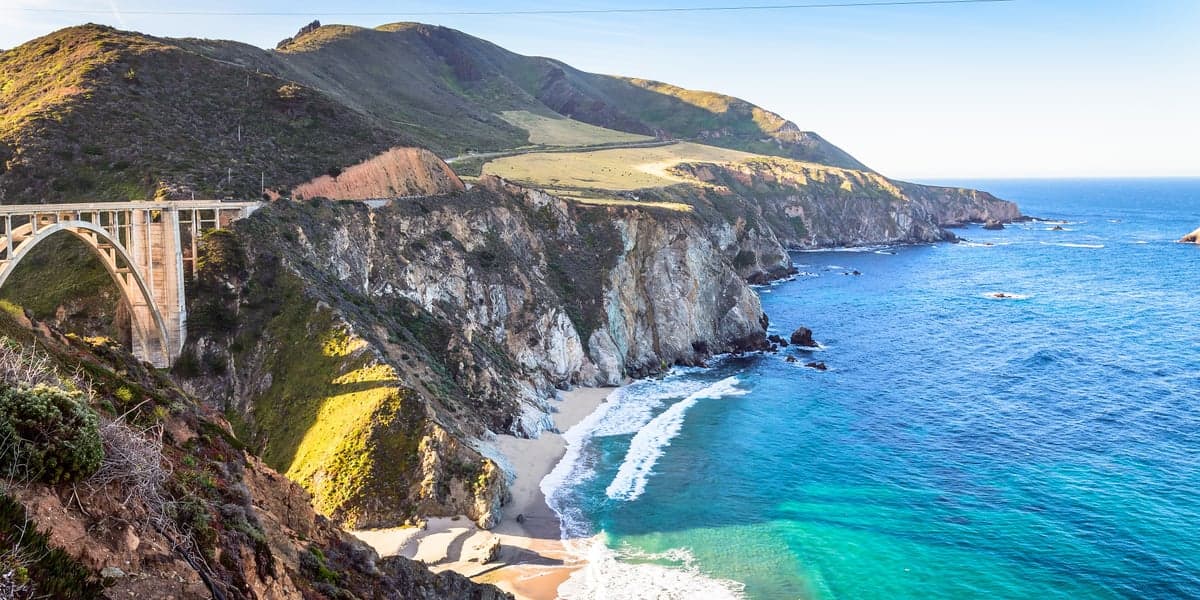
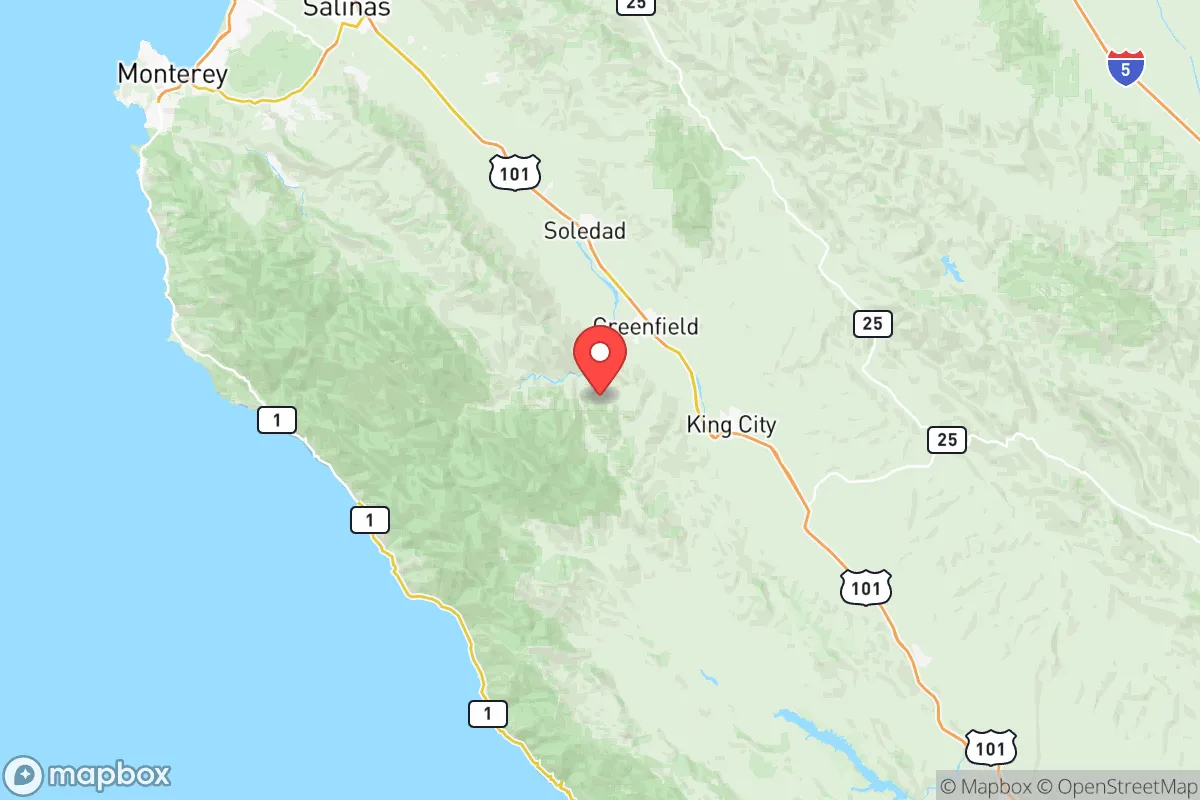
Photo: Wikipedia
Personal Sovereignty in Monterey County
Moderate friction. Expect trade-offs in some aspect of personal liberty and independence.
What does Personal Sovereignty tell us?
Personal Sovereignty measures your capacity for self-reliance and independence with minimal government friction. Higher scores mean fewer barriers between you and the way you want to live... but it assumes you have the space you need and good neighbors.
What does this tell us?
Personal Sovereignty measures your capacity for self-reliance and independence with minimal government friction. Higher scores mean fewer barriers between you and the way you want to live... but it assumes you have the space you need and good neighbors.
State Policy
Energy independence: Importer (33% of energy produced in-state)
Personal Liberty
Homesteading

Personal Liberty Analysis
Monterey County presents a paradoxical sovereignty landscape for those seeking personal autonomy in California. Coastal enclaves like Carmel-by-the-Sea and Pacific Grove operate under dense local control—think strict building codes, short-term rental bans, and progressive social governance—while inland communities such as King City, San Ardo, and the rural reaches of San Lucas and Bradley offer a far more hands-off environment where personal freedom enjoys greater breathing room. The county as a whole is constrained by California’s heavy state-level hand, but your actual autonomy in Monterey depends almost entirely on which zip code you choose.
Tax burden and regulatory climate across Monterey County’s cities
California’s statewide tax posture is aggressive: a progressive income tax that tops out at 13.3% for high earners, a 7.25% state sales tax base (plus local increments), and property taxes locked at roughly 1% of purchase price under Prop 13 but subject to reassessment on new purchases. Monterey County itself adds a local sales tax that pushes the combined rate to as high as 8.75% in Carmel and Monterey. Business regulation is dense, with California’s Environmental Quality Act (CEQA) giving residents and local governments broad power to block development projects—a double-edged sword for property owners seeking to build a workshop, guest house, or off-grid shelter. Permit fees and timelines are notoriously high in coastal cities; Carmel-by-the-Sea requires planning commission approval for any exterior modification, including window changes. In contrast, unincorporated areas like the rural Salinas Valley and South County communities (San Ardo, San Lucas) operate under county-level regulation that is comparatively lighter, though still subject to state building codes and septic system requirements. For the survivalist or prepper, the inland corridor from King City south to the Kern County line represents the lowest regulatory resistance within Monterey, but you are still paying California income and sales taxes no matter where you live.
Self-defense realities and gun law enforcement from King City to Carmel
California is a May-issue state for concealed carry permits, meaning local sheriffs have discretion. Monterey County Sheriff Tina Nieto has historically issued CCWs at a moderate pace, though the process remains burdensome—expect live-fire qualification, background checks, and interviews as of 2025-2026. The southern part of the county, including King City and Greenfield, tends to have a more permissive gun culture and less aggressive local enforcement of state-level magazine bans and assault weapon restrictions, but state law is still enforced by the California Department of Justice. Safe storage laws, the roster of approved handguns, and the state’s 10-day waiting period apply uniformly. In coastal towns like Pacific Grove and Carmel, local police are more likely to engage proactively with firearms in public places; open carry is functionally illegal statewide, and even transporting firearms in a vehicle requires them to be locked and unloaded. For the prepper household, the practical reality is that Monterey County offers a spectrum: rural South County residents can keep a defensive rifle for property protection without drawing attention, while in Carmel, a neighbor calling the authorities over a visible safe or firearm is a credible risk.
Self-reliance and homesteading viability in the Salinas Valley and beyond
The viability of self-reliant living in Monterey County varies dramatically with location. Rural parcels in the San Ardo and Bradley areas can be acquired for $10,000–$20,000 per acre, with zoning that permits agriculture, livestock, and on-site water wells. The county does allow owner-built dwellings under certain conditions, but California’s strict building codes—including Title 24 energy requirements, septic regulations, and fire safety clearances—apply in the unincorporated county as well. Off-grid solar is feasible and common in areas without PG&E hookups, but you must still have a permitted septic system and meet state water rights requirements for well drilling. The Salinas Valley floor is heavily agricultural zoned, which restricts residential density and outbuildings; the ranching country west of King City and east of the coastal range offers looser restrictions. Lot sizes of 20–40 acres are found in southern Monterey County, supporting hunting, small-scale permaculture, and water catchment. However, anyone planning a true off-grid existence should know that California’s public health code requires a potable water source and approved sewage disposal—there is no legal loophole for simply roughing it on raw land.
Personal liberties: parental rights, medical choice, and property control
Parental rights in Monterey County operate under California’s state-level framework, which grants significant authority to county child protective services and public health departments. School districts in the coastal cities (Carmel Unified, Pacific Grove Unified) have comprehensive LGBTQ+ inclusive curriculum mandates and sexual health education opt-outs that require active parental action to exempt a child. In South County school districts—King City Joint Union High School District and San Antonio Union Elementary—parental involvement tends to be higher and the cultural environment more conservative, but state law still overrides local discretion on curriculum and vaccination requirements. Medical autonomy is constrained: California has mandated vaccinations for school attendance with limited medical exemption options, and the state’s public health authority during declared emergencies is broad. Property rights face heavy zoning restrictions, especially in coastal zones where California Coastal Commission rules supersede local authority. Any construction within 1,000 feet of the coast requires a Coastal Development Permit, a process that routinely takes 6–12 months and can be denied without compensation. Speech is protected by the First Amendment, but local ordinances in Carmel and Monterey prohibit camping in public spaces and limit commercial speech on private property signs. For the freedom-oriented individual, the inland southern corridor from King City to the San Luis Obispo County line offers the strongest property control and lowest cultural friction, but you are still operating within a state that asserts authority over vaccine status, firearm ownership, and land use at levels far beyond what you would find in Texas or Arizona.
Overall, personal sovereignty in Monterey County is a strategic compromise. The state-level apparatus in Sacramento imposes a high and constant burden—income taxes, firearm restrictions, vaccine mandates, and CEQA review—that no local jurisdiction can fully escape. However, the county’s diversity of regulatory posture means a prepper or survivalist household can find a pocket of relative autonomy in the South County interior, where neighbors are sparse, culture is conservative, and county government is less intrusive. Monterey County ranks well behind rural Nevada, Idaho, or Montana for all-out personal sovereignty, but for those tied to California by career, family, or landscape, the King City–San Ardo axis is the most freedom-friendly zip code within a two-hour drive of Silicon Valley.

* Values derived from national, state, county, city and local statistics and may differ in a specific area. Last updated: 2026-06-01T14:04:16.000Z
Narrative content on this page is AI-generated and may contain mistakes. Verify any details that matter before acting on them.
ReloMaps may earn a commission from affiliate links at no extra cost to you.

