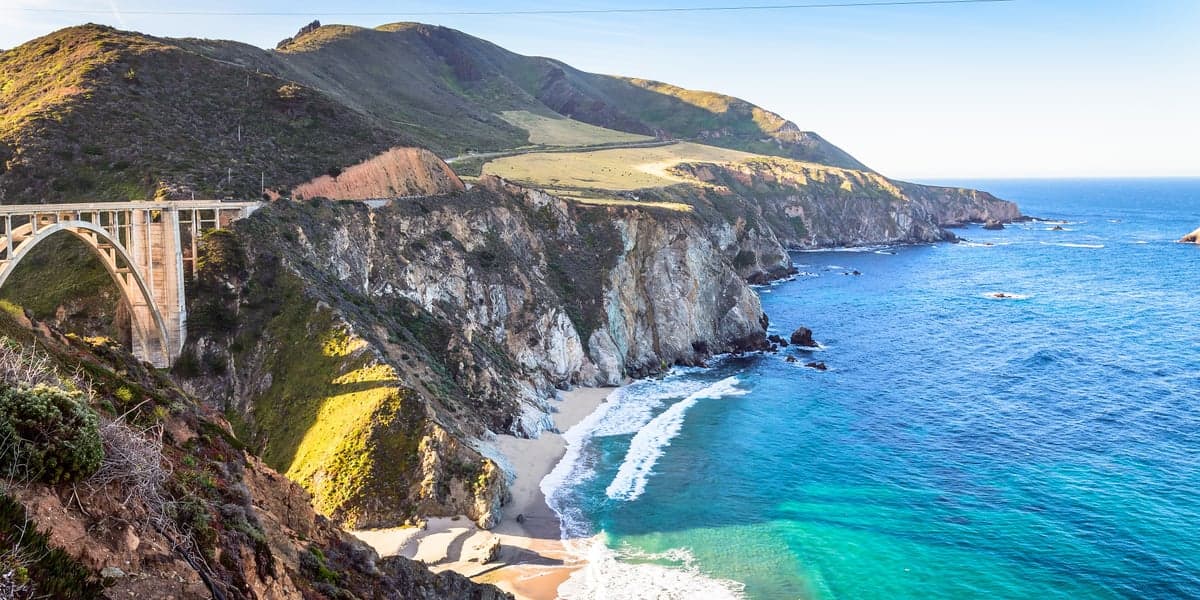
Photo: Wikipedia
Political ClimatePolitical Climate in Monterey County
Showing district-level results — no local-only data available.
Local Political AnalysisPolitical Analysis of Monterey County
Monterey County leans heavily Democratic with a Cook PVI of D+17, making it significantly more liberal than California as a whole (D+12). But if you've lived here as long as I have, you know that number doesn't tell the whole story. The county has shifted leftward over the past decade, driven largely by the growing influence of the Salinas Valley's agricultural workforce and the coastal enclaves like Carmel-by-the-Sea and Monterey proper. It wasn't always this way — there used to be a healthier balance, with more folks willing to push back on Sacramento's one-size-fits-all mandates. Now, you see that progressive machine tightening its grip, and it's getting harder to find candidates who even question the party line.
How it compares
The D+17 PVI puts Monterey County about five points to the left of the state average, which is already deep blue. That gap matters. In practice, it means local elections here are often decided in the Democratic primary, and the general election is a formality. Compare that to California's D+12 rating — the state itself already leans hard left, but Monterey County is even more insulated from conservative voices. The real contrast, though, is inside the county. Carmel Valley and parts of rural South County (around King City and Greenfield) still vote reliably red, with precincts that break 60-40 for Republicans in down-ballot races. Meanwhile, Seaside and Marina have swung hard blue in recent cycles, driven by younger transplants and government-sector workers. The swing precincts are in places like Prunedale and Aromas — unincorporated areas where independent voters used to tip the scales. Those folks are getting squeezed out by registration drives and ballot harvesting, and the old balance is gone.
What this means for residents
For those of us who value personal freedoms and limited government, the trend is concerning. Monterey County's Board of Supervisors has increasingly embraced state-level progressive policies — think rent control expansions, stricter land-use regulations that make it harder to build or remodel, and a general willingness to let Sacramento dictate local affairs. The county's housing crisis is real, but the response has been more red tape, not less. If you're a small business owner or a property owner, you feel it every time you pull a permit or file a tax return. Property taxes here are already among the highest in the state, and the local sales tax base keeps getting tapped for social programs that sound good on paper but rarely deliver results. The cultural shift is palpable too: public schools in Salinas and Monterey are doubling down on DEI initiatives and critical theory, while parents who object are labeled as troublemakers.
What daily life is like for families
Day-to-day, the political climate means you pick your battles. If you live in a red pocket like San Ardo or Bradley, you can still find neighbors who share your values — church potlucks, 4-H meetings, and a general distrust of government overreach. But drive 20 minutes north to Salinas city limits, and you're in a different world: street banners for progressive causes, city council meetings that run late into the night over symbolic resolutions, and a police department that's been defunded in spirit if not in name. The county's sheriff's office remains a conservative stronghold, thank goodness, but they're constantly fighting budget cuts from the Board of Supervisors. Looking ahead, I expect the gap between the coastal liberal towns and the inland conservative communities to widen. The state's high-speed rail boondoggle and the push for single-payer healthcare will keep draining resources, and Monterey County will likely follow along — unless enough of us start showing up to those council meetings and voting in the primaries.

State Political ClimatePolitical Climate in California
State Political AnalysisPolitical Environment in the State
No way around it: California is a deep blue state, with a Cook PVI of D+12 that reflects two decades of Democratic dominance at every level of government. The coalition running the show is a mix of coastal progressives, Silicon Valley technocrats, and union-aligned moderates, while the GOP has been squeezed into the Central Valley, Inland Empire, and far northern counties. Twenty years ago, you could still call the state competitive in statewide races—today, that feels like ancient history, and the trajectory has been a steady, unmistakable march leftward.
Urban vs. rural divide
The political map is a stark study in geographic sorting. Coastal metros like Los Angeles, San Francisco, and Oakland are the Democratic engine rooms, generating huge vote margins from dense, diverse, and overwhelmingly liberal populations. San Diego is purplish by comparison but still trends blue, especially in the city proper. The real GOP strongholds are inland: Bakersfield, Fresno, and the far north around Redding are where conservative voters hold the line. Orange County, once the national conservative bastion, flipped hard in the Trump era and now sends a mostly Democratic delegation to Congress—though places like Yorba Linda and Huntington Beach still fly the flag. What you're left with is a state where a Republican can get 60% of the vote in their county but still lose the statewide race by 20 points. The rural vote simply can't overcome the sheer weight of LA and the Bay Area.
Policy environment
If you value low taxes and light regulation, prepare for sticker shock. California has the highest state income tax rate in the nation (13.3% top bracket), a state sales tax that can exceed 10% with local add-ons, and some of the priciest gas taxes around. Proposition 13, which once capped property tax increases, has been chipped away at by ballot measures and legislation over the years. On the regulatory side, the California Environmental Quality Act (CEQA) is a favorite tool for slowing development and even opposing projects—it's weaponized by both NIMBYs and unions. Education policy tilts heavily progressive: the state mandates Ethnic Studies for high school graduation, and school choice is limited by powerful teachers unions. Healthcare operates under an individual mandate (yes, California has its own version), and the state runs a massive Medicaid program. Election laws are among the most liberal: universal mail-in ballots, automatic voter registration, and same-day registration make it very easy to vote—but also raise the kinds of integrity concerns that have become a conservative flashpoint. Sanctuary state status (SB 54) limits cooperation with federal immigration enforcement.
Trajectory & freedom
The trend line on personal freedom is, from a conservative perspective, concerning. On guns, California already has some of the strictest laws in the country, and they keep tightening—SB 2 (2023) severely restricted concealed carry in public places, and new rules on "ghost guns" and ammunition purchases multiply every session. On parental rights, the recently passed AB 1955 bans school districts from requiring staff to notify parents if a child changes their gender identity—a direct blow to family transparency. On speech, the state's AB 587 law forces social media platforms to disclose their content moderation policies, which critics say is a backdoor way to pressure them into suppressing conservative viewpoints. Medical autonomy took a hit during the pandemic, with some of the nation's longest-lasting vaccine mandates for schoolchildren and health workers. Property rights remain constrained by rent control expansion (AB 1482 caps annual rent increases at 5% plus inflation) and a difficult permitting environment for new housing. The state's high court has also moved aggressively on criminal justice reform, with Prop 47 and Prop 57 reducing penalties for theft and drug offenses. The overall trajectory is one of expanding state power into more areas of daily life.
Civil unrest & political movements
California has been a hotspot for visible political conflict. The 2020 George Floyd protests in Los Angeles, San Francisco, and Oakland were some of the largest and most destructive in the nation, with widespread looting and property damage that many felt law enforcement was slow to address. Homeless encampments have become a near-constant visual in major cities, sparking ongoing battles in state courts over the right to sleep on public property. The sanctuary movement is real and affects daily life: SB 54 limits local police cooperation with ICE, creating tensions with the federal government. On the right, the recoil has been noticeable. The "Calexit" secession talk flares up every few years, and rural counties like El Dorado and Siskiyou have passed a stream of symbolic resolutions asserting local control or "Second Amendment sanctuary" status. Election integrity remains a live issue: universal mail-in voting, which became permanent after COVID, has energized GOP activists who question the system, though no major fraud has been proven. You'll see competing rallies in Sacramento and at local city council meetings on everything from school curriculum to mask mandates.
Projection
Realistically, California isn't flipping red anytime soon. Demographic trends—continued in-migration from Asia and Latin America, plus the aging out of the state's historically more conservative white population—only reinforce the Democratic coalition. That said, there are real cross-currents. The cost of living is driving an unprecedented out-migration to Texas, Idaho, and Arizona, and the people leaving tend to be middle-income families and conservatives. Those who move in, especially to tech hubs like Palo Alto or parts of Los Angeles, are overwhelmingly progressive. What you'll likely see in the next 5-10 years is the state doubling down on its current trajectory: more public spending, higher taxes, stricter regulation, and a continued expansion of the social safety net. The rural areas get redder, the urban centers get bluer, and the middle—places like Riverside and Bakersfield—may shift slightly toward purple but won't flip the statewide balance. A move here now means accepting that the political culture will almost certainly become more, not less, progressive over the coming decade.
Bottom-line for a new resident: if your priority is low taxes, broad gun rights, parental control in schools, and limited government, California is likely a hard place to live and will only get harder. But if you're in a high-income specialty or have a career that demands being in a coastal hub, the professional and cultural opportunities are unmatched—just be prepared to pay for them with your wallet and your values. The best strategy is to know what you're walking into and choose your county carefully.
* Values derived from national, state, county, city and local statistics and may differ in a specific area. Last updated: 2026-06-01T14:04:16.000Z
Narrative content on this page is AI-generated and may contain mistakes. Verify any details that matter before acting on them.
ReloMaps may earn a commission from affiliate links at no extra cost to you.

