Photo: Wikipedia
Demographics of Nevada County
Affluence Level in Nevada County
An upper-middle-class area. Household wealth, education levels, and homeownership run ahead of national benchmarks.
People of Nevada County
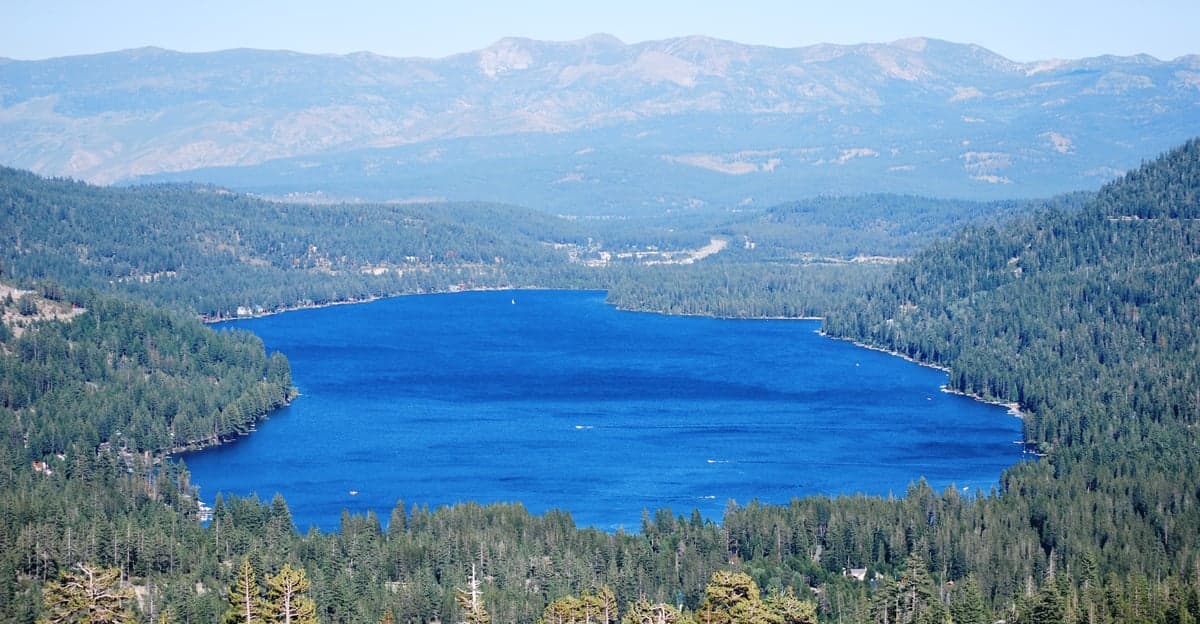
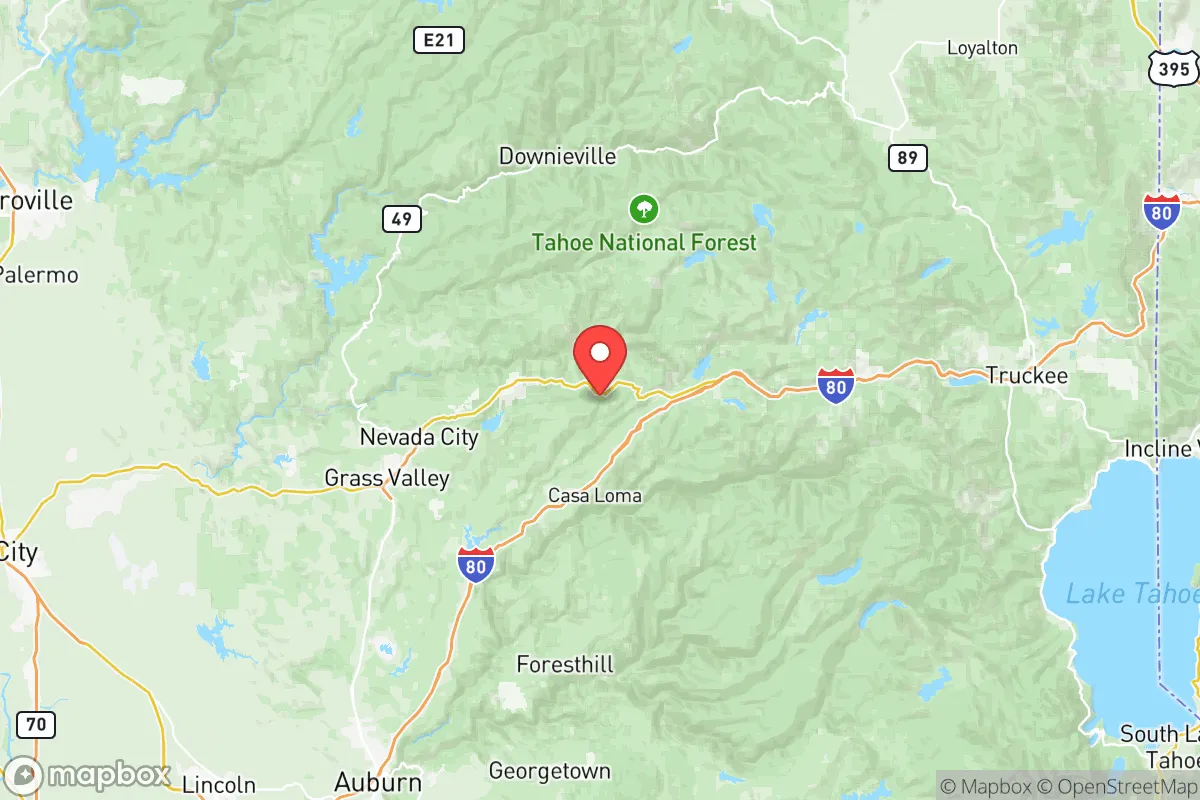
Today, Nevada County’s 102,452 residents form one of California’s most distinctive inland populations: overwhelmingly white (81.7%), older than the state average, and notably well-educated, with 39.5% holding a college degree. The county is a study in contrasts — politically divided between the historic Gold Country hub of Nevada City and the more conservative, family-oriented Grass Valley, with a growing Hispanic minority (10.5%) reshaping the cultural landscape of smaller communities like Penn Valley and Lake Wildwood. Despite its proximity to the Sacramento metro, the county retains a fiercely independent, small-town character rooted in its 19th-century mining and timber heritage.
Settlement & growth (pre-1960)
Long before European contact, the Nisenan people — a branch of the Maidu — inhabited the western slope of the Sierra Nevada, including what is now Nevada County. Their seasonal villages dotted the Yuba and Bear River drainages, with permanent settlements near present-day Nevada City, Grass Valley, and Washington. The Nisenan population, estimated at several thousand at contact, was devastated by disease and displacement after 1848; survivors were forcibly removed to rancherias, with the Nevada City Rancheria remaining as a small Nisenan community today.
The California Gold Rush of 1848-1855 transformed the region overnight. The discovery of gold at Deer Creek in 1849 drew a flood of Anglo-American miners from the eastern states, particularly New England and the Mid-Atlantic, who founded Nevada City (originally "Deer Creek Dry Diggings") and Grass Valley. These early settlers were overwhelmingly young, male, and transient — but a significant minority stayed, establishing the county's first permanent white communities. By 1851, Nevada County had become one of California's most populous and wealthy counties, with a population exceeding 20,000.
Hard-rock quartz mining, which began in earnest in the 1850s, attracted a more settled workforce. Cornish miners — "Cousin Jacks" — arrived in large numbers from the 1860s through the 1880s, bringing deep-shaft mining expertise that made the Empire Mine near Grass Valley one of the richest gold mines in North America. The Cornish concentrated in Grass Valley's "Boston Ravine" neighborhood, where their Methodist chapels and pasty-baking traditions persisted for generations. Smaller numbers of Irish, German, and Italian immigrants followed, working the mines and establishing businesses in Nevada City, North San Juan, and Rough and Ready.
Chinese immigrants formed a substantial minority during the Gold Rush era, peaking at perhaps 3,000 in the 1860s. They worked placer claims abandoned by white miners, operated laundries and restaurants in Nevada City and Grass Valley, and built the county's early roads. Anti-Chinese violence and the 1882 Chinese Exclusion Act drove most out by 1900; today, the county's East/Southeast Asian population stands at just 1.3%, a fraction of its 19th-century peak.
After the gold mines declined in the 1910s and 1920s, the county's population stagnated at roughly 20,000-25,000 for decades. The timber industry — centered on Washington, Alleghany, and the San Juan Ridge — provided a modest economic base, drawing a small influx of Scandinavian and Finnish loggers. The Dust Bowl migration of the 1930s brought a few hundred Okie and Arkie families to the county's foothill homesteads, but Nevada County remained a backwater compared to California's booming coastal cities.
Modern era (post-1965)
The 1965 Hart-Cellar Act had little direct effect on Nevada County — the foreign-born share remains just 3.4%, far below the California average. Instead, the county's modern demographic transformation has been driven overwhelmingly by domestic migration: the "back-to-the-land" movement of the 1960s and 1970s, followed by suburban spillover from the Sacramento metro area.
Beginning in the late 1960s, counterculture dropouts — many from the San Francisco Bay Area — purchased cheap land in the San Juan Ridge, North Columbia, and North Bloomfield areas. These newcomers, often college-educated and politically liberal, established intentional communities, organic farms, and alternative schools. Their arrival created a lasting cultural divide: the "hippie" enclaves of the San Juan Ridge and Nevada City proper versus the more traditional, working-class communities of Grass Valley and the county's southern reaches.
The 1980s and 1990s brought a second wave: retirees and telecommuters from the Bay Area and Sacramento, drawn by lower housing costs, forested scenery, and the absence of urban crime. This group — predominantly white, affluent, and older — settled in master-planned retirement communities like Lake Wildwood and Penn Valley, as well as in custom homes along the Highway 49 corridor. Their arrival pushed the county's population from 51,645 in 1970 to 98,764 by 2010, and raised the median age from 32 to 47.
Hispanic population growth has been the most significant ethnic shift of the modern era. The Hispanic share rose from roughly 3% in 1990 to 10.5% today, driven by Mexican-origin families working in construction, landscaping, hospitality, and agriculture. The largest concentrations are in Grass Valley's southwestern neighborhoods, Penn Valley, and the unincorporated area around Lake Wildwood. Unlike the county's earlier immigrant groups, this population is younger, more family-oriented, and increasingly permanent — reflected in the growth of Spanish-language church services and bilingual school programs.
Black and Indian-subcontinent populations remain negligible (0.3% and 0.2%, respectively), reflecting the county's limited economic diversity and lack of the professional job base that attracts these groups to larger metros. The county's small Asian population (1.3%) is concentrated in Nevada City and Grass Valley, primarily in healthcare and higher education.
The future
Nevada County's population is projected to grow slowly — perhaps 5-8% over the next decade — constrained by limited housing supply, wildfire risk, and the county's aging demographic. The white share will continue to decline gradually, from 81.7% toward the mid-70% range, as the Hispanic population grows through both natural increase and continued migration. The county's Hispanic community, now concentrated in Penn Valley and southern Grass Valley, is likely to disperse into Nevada City and the San Juan Ridge as second-generation families seek better schools and housing.
The most significant demographic wild card is remote work. The COVID-19 pandemic accelerated an influx of Bay Area and Sacramento professionals, many of whom purchased homes in Nevada City, Grass Valley, and Lake Wildwood without changing jobs. If this trend persists, the county will become more educated, more affluent, and more politically mixed — but also more expensive, potentially displacing the working-class and Hispanic families who have anchored the county's service economy.
Culturally, Nevada County is likely to remain a place of sharp internal contrasts: the liberal, arts-oriented Nevada City versus the conservative, churchgoing Grass Valley; the counterculture homesteaders of the San Juan Ridge versus the retirees of Penn Valley; the growing Hispanic community versus the aging white majority. These divisions are not new — they have defined the county since the 1960s — but they may deepen as the county becomes more economically stratified.
For someone moving in now, Nevada County offers a rare combination: a small-town, low-crime environment with a highly educated population and genuine natural beauty, but also a place where cultural and political differences are lived daily, not just debated online. The county's future depends on whether its diverse communities can find common ground — or whether the forces of displacement and polarization will pull them further apart.

* Values derived from national, state, county, city and local statistics and may differ in a specific area. Last updated: 2026-09-28T15:44:59.000Z
Narrative content on this page is AI-generated and may contain mistakes. Verify any details that matter before acting on them.
ReloMaps may earn a commission from affiliate links at no extra cost to you.

