Photo: Wikipedia
Political ClimatePolitical Climate in Nevada County
Showing district-level results — no local-only data available.
Local Political AnalysisPolitical Analysis of Nevada County
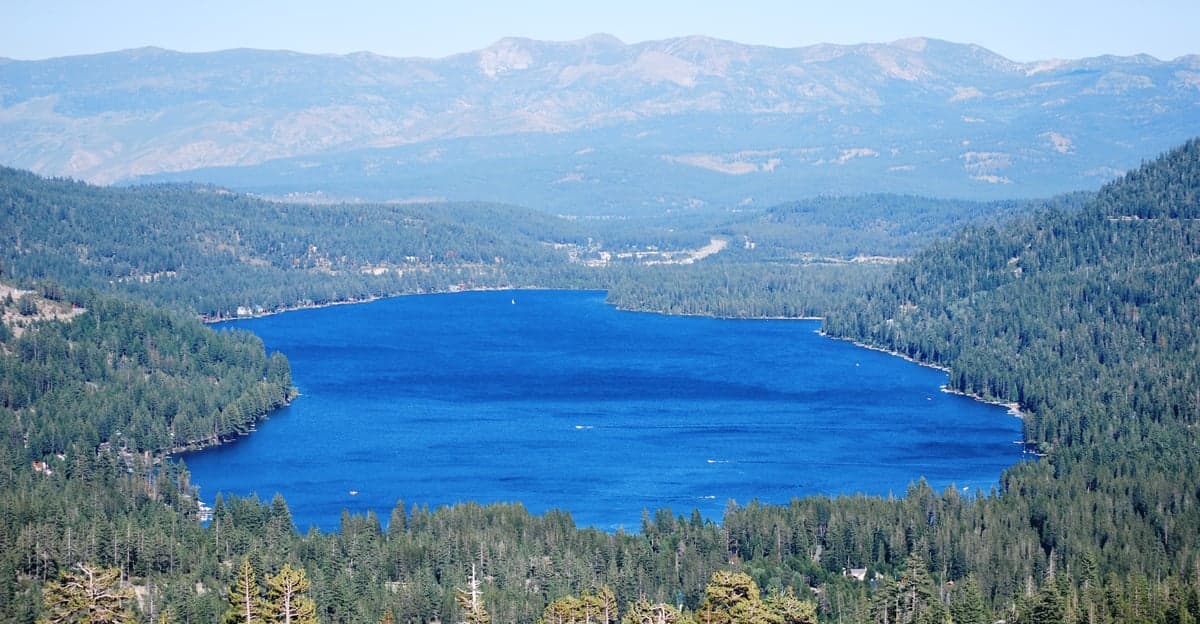
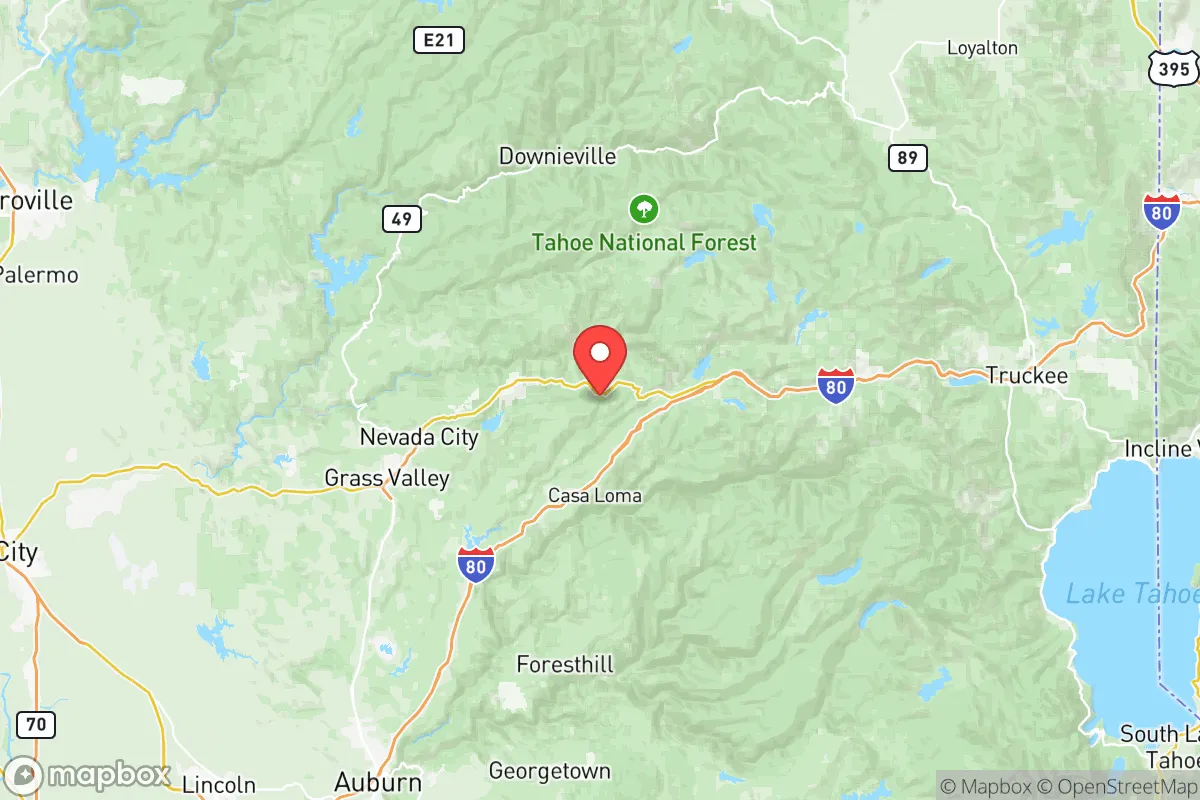
Nevada County, California, is a classic example of a politically divided rural county that has been slowly shifting leftward, but still retains a Republican lean at the ballot box. The Cook Partisan Voting Index (PVI) of R+2 tells the real story: this is a true swing county, not a deep-red stronghold. In the 2024 presidential election, the county voted for Donald Trump by a margin of roughly 49% to 48%, a razor-thin result that reflects a decade-long trend of Democrats gaining ground, especially in the western half of the county. The county's political center of gravity is split between the conservative, more rural eastern towns and the increasingly liberal, artsy western communities, making it a fascinating place to watch.
How it compares
Compared to California as a whole, Nevada County is significantly more conservative. The state's Cook PVI is D+13, meaning Nevada County is a full 15 points more Republican than the state average. This gap is most visible in the county's eastern towns like Grass Valley and Nevada City, which are the political battlegrounds. Grass Valley, the larger of the two, is a genuine swing town—its precincts often flip between parties, with the downtown core leaning blue and the surrounding foothills leaning red. Nevada City, with its historic downtown and strong arts scene, has become a liberal stronghold, often voting 60%+ Democratic. In contrast, the more remote towns like Penn Valley and Rough and Ready are reliably Republican, often voting 65-70% for GOP candidates. The county's political trajectory mirrors that of many Sierra Nevada foothill counties: a slow but steady influx of retirees and remote workers from the Bay Area is pushing the western edge leftward, while the eastern, more agricultural areas hold firm.
What this means for residents
For conservative residents, the R+2 PVI means their votes still carry weight in local races, but they are living in a county where the margin for error is shrinking. School board and city council elections in Grass Valley are often decided by a few hundred votes, and the county's Board of Supervisors has a narrow Republican majority. For liberal residents, the trend is encouraging—they can realistically win countywide offices, but they must contend with a deeply entrenched rural conservative base that turns out reliably for local elections. The practical effect is a constant push-pull on policy: the county has a strong environmentalist streak (thanks to Nevada City's influence) but also a powerful gun rights and property rights contingent. You'll see both a "Keep Nevada County Green" initiative and a "Second Amendment Sanctuary" resolution passed in the same year. It's a place where you can have a neighbor with a Trump flag and another with a Pride flag, and both will wave at you on the road.
Culturally, this split creates a unique dynamic. The county's politics are less about national culture wars and more about local land use, water rights, and fire safety—issues that unite and divide residents across party lines. The biggest policy distinction from the rest of California is the county's fierce independence on land-use planning; Nevada County has resisted state mandates on housing density and environmental review more aggressively than coastal counties. For anyone moving here, the key takeaway is that your vote truly matters, and your daily life will be shaped by a community that argues passionately but generally avoids the toxic polarization seen in larger metro areas. It's a place where you can disagree with your neighbor over dinner, and still help them clear brush from their property the next morning.

State Political ClimatePolitical Climate in California
State Political AnalysisPolitical Environment in the State
California is a deeply blue state where Democrats hold every statewide office and supermajorities in both legislative chambers, but the reality on the ground is far more nuanced than the national headlines suggest. Over the past 20 years, the state has shifted from a competitive purple battleground—George W. Bush lost it by just 10 points in 2004—to a solidly Democratic stronghold where Joe Biden won by 29 points in 2020 and Kamala Harris carried it by 20 points in 2024. That trajectory masks a growing internal fracture: the coastal metros are pulling left at warp speed while the inland and rural areas are hardening into deep red territory, creating a state that feels like two different countries sharing a border.
Urban vs. rural divide
The political map of California is a study in extremes. The San Francisco Bay Area and Los Angeles County are the engine rooms of the state’s Democratic dominance, producing massive vote margins that swamp the rest of the state. San Francisco itself votes about 85% Democratic, and Los Angeles County—home to 10 million people—delivers a net margin of roughly 2 million votes for Democrats every cycle. But drive two hours east of LA into Bakersfield or Fresno, and you’re in country that votes 60-65% Republican. The Central Valley is the state’s most politically competitive region, with places like Kern County (Bakersfield) and Tulare County reliably red, while Sacramento and Stockton lean blue. The real story is in the exurbs and inland suburbs: Orange County, once the heart of California conservatism, flipped from red to purple to light blue over the past decade, with Biden winning it in 2020 and Harris narrowly carrying it in 2024. Meanwhile, San Diego County has shifted from a swing county to a solidly Democratic one, while Riverside and San Bernardino counties in the Inland Empire remain competitive but are trending blue as LA transplants move east. The rural north—places like Redding and Yreka—votes 70-75% Republican, but those areas have so few people that they barely register in statewide totals.
Policy environment
California’s policy environment is defined by high taxes, heavy regulation, and a progressive social agenda that touches nearly every aspect of daily life. The state has a progressive income tax with a top marginal rate of 13.3%—the highest in the nation—and a state sales tax that averages around 8.5% when local add-ons are included. Property taxes are capped at 1% of assessed value under Proposition 13, but reassessment upon sale means new buyers often face much higher bills than long-term owners. The regulatory posture is aggressive: California has its own environmental review process (CEQA) that can delay or kill development projects for years, and the California Air Resources Board (CARB) sets emissions standards that effectively dictate what cars can be sold nationwide. On education, the state spends about $15,000 per student, above the national average, but ranks near the bottom in reading and math proficiency. Healthcare is heavily regulated, with a state-run insurance exchange (Covered California) and a recent push toward single-payer that has stalled in the legislature. Election laws are among the most liberal in the country: same-day voter registration, universal mail-in ballots sent to every active voter, and no-excuse absentee voting are all standard. The state also has a top-two primary system, meaning the two highest vote-getters advance regardless of party, which has occasionally shut out third-party candidates but also produced some competitive general elections in safe districts.
Recent policy direction
The last five years have seen California accelerate its progressive agenda across multiple fronts. On gun and self-defense law, the state passed a 2023 law requiring microstamping technology on all new handgun models—effectively banning most new semi-automatic handgun sales—and a 2024 law allowing private citizens to sue gun manufacturers under a public nuisance theory. Parental and education rights have been a flashpoint: a 2023 law prohibits school districts from requiring teachers to notify parents if a child changes their gender identity, and the state has aggressively defended its ban on conversion therapy for minors. Speech and privacy laws are a mixed bag: California has some of the strongest digital privacy protections in the country (the CCPA and its 2023 expansion, the CPRA), but also passed a 2024 law requiring social media platforms to verify the age of users under 18, which critics say chills anonymous speech. Medical and bodily autonomy is broadly protected: abortion is legal up to viability, and a 2022 constitutional amendment enshrined reproductive freedom. Property rights are weak by national standards: rent control was expanded in 2020 under the Tenant Protection Act, and a 2024 law allows local governments to impose rent caps on single-family homes. On taxation, the state passed a 2024 law closing the "carried interest" loophole for investment managers, and a 2025 ballot measure to raise the corporate tax rate from 8.84% to 10.99% is expected to pass. Voting and ballot access remain expansive, though a 2024 law requiring voter ID for in-person voting was defeated in the legislature.
Civil unrest & political movements
California has been a hotbed of political activism on both sides, with visible flashpoints that a new resident would notice. The 2020 George Floyd protests in Los Angeles and San Francisco were among the largest and most destructive in the country, with billions in property damage and a subsequent debate over police reform that led to a 2021 law banning carotid holds and requiring body cameras. The "Recall Newsom" movement in 2021 gathered 1.7 million signatures and forced a special election, though the governor survived with 61% of the vote. Immigration politics are front and center: California is a "sanctuary state" under SB 54, which prohibits state and local law enforcement from cooperating with federal immigration authorities in most circumstances, and the state has spent millions on legal defense against Trump-era policies. Secession rhetoric flares up periodically—the "Calexit" movement has never gotten on the ballot—but is more of a fringe talking point than a serious political force. Election integrity controversies have been relatively muted compared to other states, though the 2020 and 2024 elections saw scattered protests outside county registrar offices in Orange County and San Diego. The most visible political flashpoint for a new resident is likely the homelessness crisis: encampments in downtown Los Angeles, San Francisco, and Oakland have become symbols of the state’s policy struggles, with a 2024 law allowing forced removal of encampments only after offering shelter beds—a compromise that satisfies neither side.
Projection
Over the next 5-10 years, California’s political trajectory points toward continued Democratic dominance at the state level, but with growing internal friction as the coastal-left and inland-right drift further apart. Demographic trends are working against Republicans: the state’s white population is shrinking, while Latino and Asian populations—both of which lean Democratic, though not as heavily as Black voters—are growing. In-migration from other states is net negative (about 300,000 people left annually between 2020 and 2024), but those leaving tend to be older, wealthier, and more conservative, while those arriving from abroad are younger and more liberal. The Central Valley will remain the state’s only competitive region, with places like Fresno and Bakersfield likely to stay red but not red enough to flip statewide races. The biggest wild card is housing: if the state’s recent push to upzone single-family neighborhoods and streamline development actually produces results, it could slow the exodus of moderate voters and keep California more competitive than current trends suggest. But if housing costs continue to rise, the state will keep bleeding middle-class families to Texas, Arizona, and Nevada, further concentrating Democratic power in the coastal metros. A new resident moving in now should expect to find a state where the political debate is increasingly about managing scarcity—water, housing, energy—rather than about growth, and where the cultural divide between the coast and the interior will only widen.
For a conservative-leaning relocator, the bottom line is that California offers a high-cost, high-regulation environment where your political views will be in the minority in most population centers, but where you can find like-minded communities in the Central Valley, the Inland Empire, and the rural north. The state’s tax burden is real and will hit higher earners hard, but the climate, economy, and natural beauty are unmatched. For a liberal relocator, California is a place where your values are reflected in state law, but where the cost of living and quality-of-life issues—homelessness, traffic, wildfire risk—may test your patience. Either way, the state is not going to flip red anytime soon, and the political trajectory is set: more regulation, higher taxes, and a deepening urban-rural divide that makes California a fascinating, frustrating, and uniquely American experiment in one-party governance.
* Values derived from national, state, county, city and local statistics and may differ in a specific area. Last updated: 2026-09-28T15:44:59.000Z
Narrative content on this page is AI-generated and may contain mistakes. Verify any details that matter before acting on them.
ReloMaps may earn a commission from affiliate links at no extra cost to you.

