Photo: Wikipedia
Demographics of Tulare County
Affluence Level in Tulare County
A middle-class area roughly in line with national averages across income, home values, education, and employment.
People of Tulare County
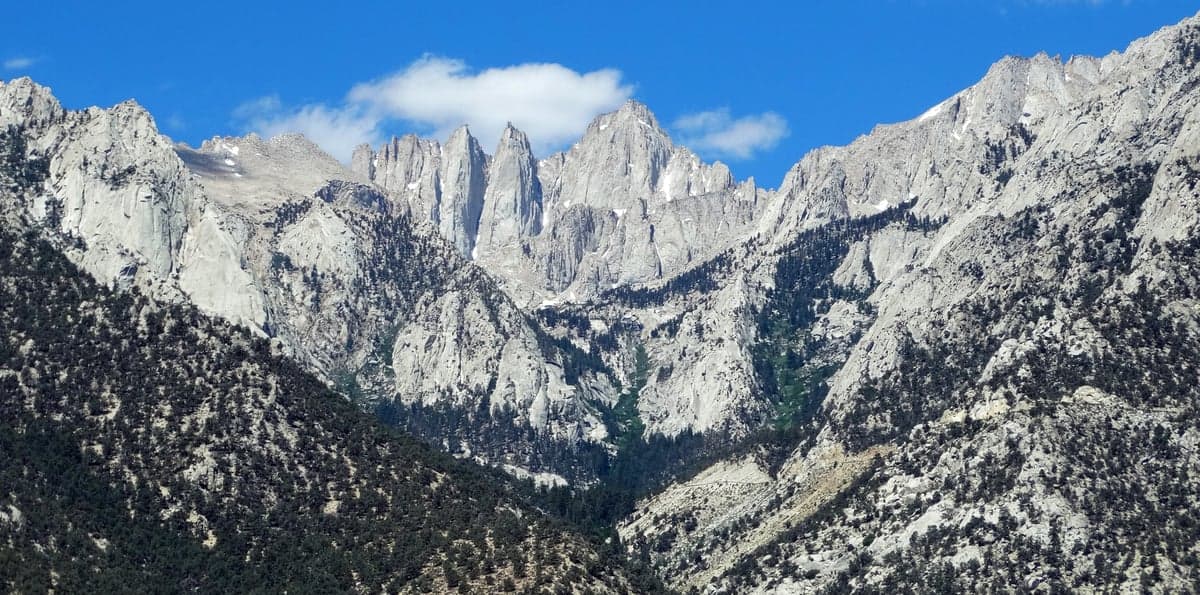
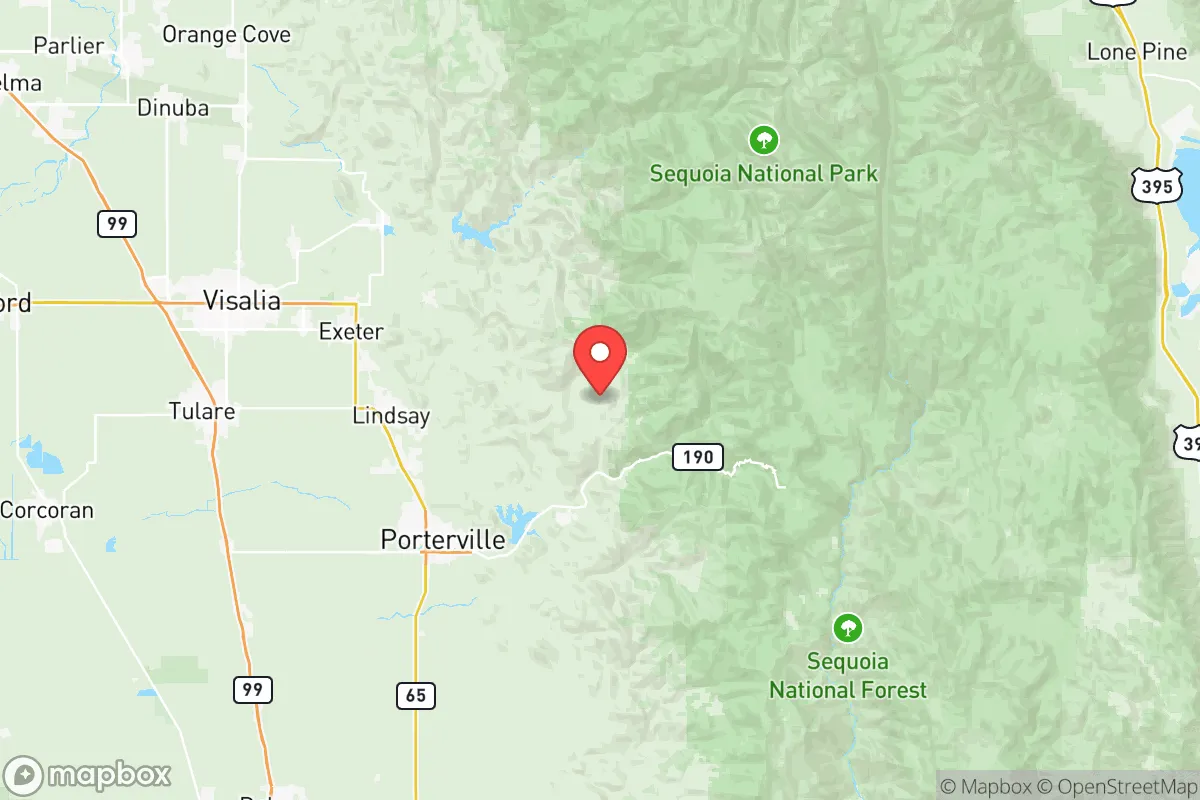
Tulare County today is a predominantly Hispanic and working-class region of 475,774 residents, anchored by the agricultural cities of Visalia, Tulare, and Porterville. With a population that is 66.1% Hispanic and only 26.3% White, the county’s identity is deeply shaped by its role as a powerhouse of California’s Central Valley agriculture, where family farms, dairy operations, and food processing plants employ a largely immigrant and migrant workforce. The county is notably less educated than the state average—just 15.8% of adults hold a bachelor’s degree—and its foreign-born population of 13.5% reflects a steady, decades-long influx of laborers from Mexico and Central America, creating a distinct cultural landscape that is both rural and binational.
Settlement & growth (pre-1960)
Before European contact, the Tulare County region was home to the Yokuts people, who lived in numerous tribelets along the rivers and around the vast Tulare Lake—once the largest freshwater lake west of the Mississippi. Spanish explorers and missionaries passed through in the late 1700s, but permanent non-Native settlement did not begin until after the Mexican-American War and the California Gold Rush of 1849. The first American settlers were Anglo ranchers and farmers drawn by the fertile valley soil and the promise of land grants; they established the towns of Visalia (founded 1852) and Woodlake (1870s) as supply centers for cattle and grain operations.
The real population boom came with the expansion of irrigation systems in the late 19th and early 20th centuries, which transformed the region into a year-round agricultural powerhouse. Between 1880 and 1920, waves of European immigrants—primarily Portuguese, Italian, and Basque—arrived to work the fields and later own small farms, settling in communities like Lindsay, Exeter, and Farmersville. The Dust Bowl of the 1930s drove tens of thousands of white “Okies” and “Arkies” from Oklahoma, Arkansas, and Texas into the Central Valley, where they found work as migrant farm laborers; many settled permanently in Tulare County, especially in the unincorporated communities of Pixley and Earlimart, and their descendants remain a visible part of the county’s white population today.
During World War II, the Bracero Program (1942–1964) brought hundreds of thousands of Mexican men to work California’s fields, and Tulare County was a primary destination. Many braceros stayed after the program ended, establishing the first large Mexican-American communities in Visalia, Tulare, and Porterville. By 1960, the county’s population was roughly 70% white and 25% Hispanic, with small pockets of Japanese and Filipino farmworkers who had arrived earlier in the century.
Modern era (post-1965)
The 1965 Hart-Cellar Act abolished national-origin quotas and dramatically increased immigration from Latin America and Asia. In Tulare County, this accelerated the already-existing flow of Mexican immigrants, who were joined by growing numbers of Central Americans—especially from Guatemala and El Salvador—fleeing civil wars in the 1980s and 1990s. These new arrivals concentrated in the agricultural labor force, settling in the older farmworker neighborhoods of Visalia’s south side, Porterville’s east side, and the small town of Cutler-Orosi, where the population today is over 90% Hispanic.
The county’s white population has steadily declined in both absolute numbers and share, from roughly 70% in 1960 to 26.3% today, as older white families have aged out or moved to coastal cities and retirement destinations. Meanwhile, the Hispanic share has risen from 25% in 1960 to 66.1% today, driven by both immigration and higher birth rates. The East/Southeast Asian population (3.1%) is small but concentrated in Visalia and Tulare, where a community of Hmong refugees—resettled from Laos after the Vietnam War—has established itself since the 1980s, alongside smaller numbers of Filipino and Vietnamese families. The Indian subcontinent population (0.3%) is negligible, mostly professionals in healthcare and agriculture. The Black population (1.3%) remains tiny, with no historic Great Migration presence; most Black residents are military or professional transplants drawn to the region’s low cost of living.
Domestic migration has been modest compared to coastal California. Tulare County has not experienced the explosive Sun Belt growth of Texas or Arizona; instead, it has seen a slow outflow of college-educated whites and Asians to larger metro areas, offset by continued immigration and natural increase among the Hispanic population. Suburbanization has been limited—Visalia has expanded with new subdivisions on its north and west sides, but the county remains overwhelmingly rural and agricultural in character.
The future
Tulare County is projected to become even more Hispanic and less white over the next 10–20 years. The white population is aging and declining, while the Hispanic population is younger and has higher fertility rates. Immigration from Mexico has slowed since the 2000s, but Central American arrivals—particularly from Guatemala—continue, and the county’s agricultural economy ensures a steady demand for labor. The East/Southeast Asian population is likely to grow slowly, primarily through Hmong family reunification and a small number of Filipino healthcare workers. The Indian and Black populations will remain very small, as the county lacks the professional job base or urban amenities that attract those groups.
Politically, the county’s shift from a conservative white stronghold to a heavily Hispanic, working-class electorate has made it more competitive, though it still leans Republican in most elections. Culturally, the county is becoming more distinctly Mexican-American and Central American, with Spanish widely spoken in public life, quinceañeras and soccer leagues as community staples, and a growing number of bilingual schools and services. The white population, while shrinking, remains influential in agriculture, local government, and the older towns like Exeter and Lindsay.
For someone moving in now, Tulare County is a place where the future is already visible: a younger, more Hispanic, and more binational population that is deeply tied to the land and its labor. The county offers low housing costs and a slower pace of life compared to coastal California, but it also has limited economic diversity, low educational attainment, and a social fabric that is increasingly defined by the rhythms of farm work and family. It is not a place of rapid transformation, but of steady demographic consolidation—a rural, agricultural community becoming more itself with each passing decade.

* Values derived from national, state, county, city and local statistics and may differ in a specific area. Last updated: 2026-09-30T14:13:48.000Z
Narrative content on this page is AI-generated and may contain mistakes. Verify any details that matter before acting on them.
ReloMaps may earn a commission from affiliate links at no extra cost to you.

