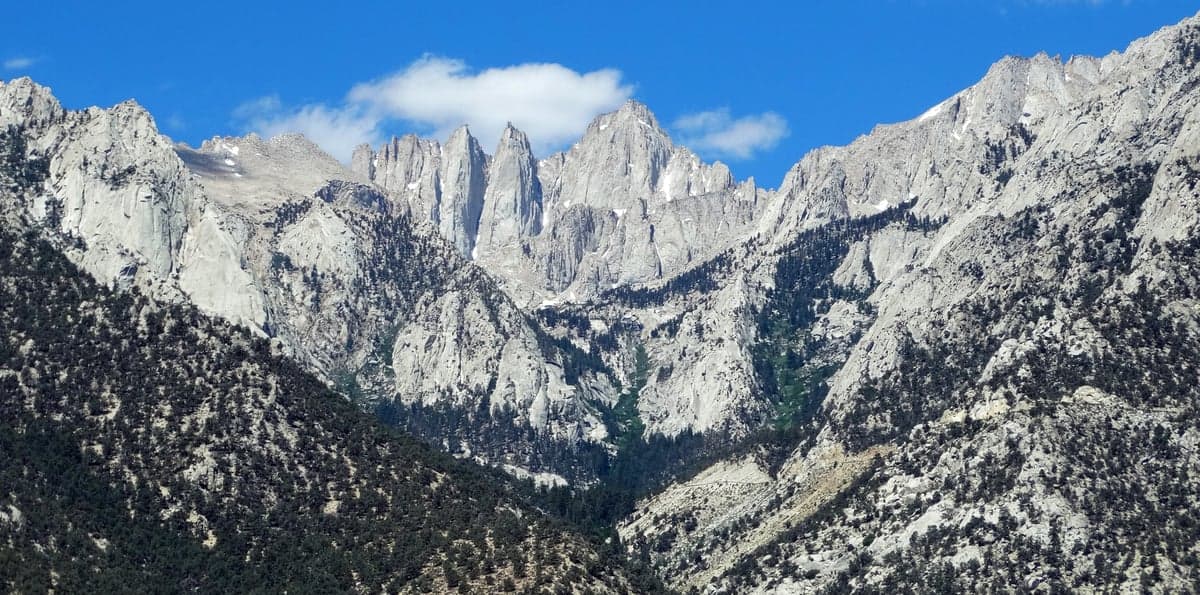
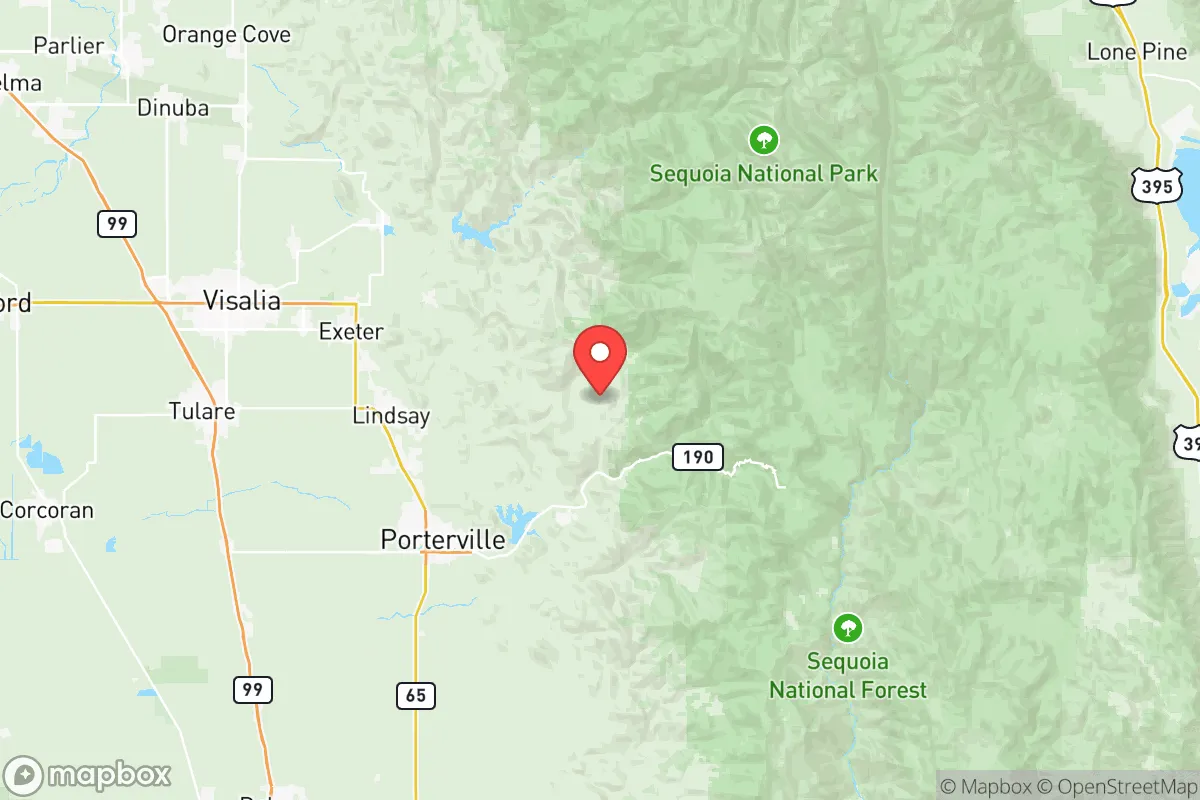
Photo: Wikipedia
Political ClimatePolitical Climate in Tulare County
Showing district-level results — no local-only data available.
Local Political AnalysisPolitical Analysis of Tulare County
Tulare County is one of California’s most reliably Republican strongholds, with a Cook Partisan Voting Index of R+15 — meaning it votes about 15 points more Republican than the national average. In the 2024 presidential election, the county backed Donald Trump by a 58% to 40% margin over Kamala Harris, a gap that has widened slightly from 2020. This isn’t a recent shift; the county has voted Republican in every presidential election since 1996, and the GOP holds every countywide elected office. But the political reality here is more nuanced than the raw numbers suggest, with a growing Democratic base in the county’s largest city and a deep rural-conservative tilt everywhere else.
How it compares
Compared to California as a whole, Tulare County is an outlier. The state’s Cook PVI is D+13, meaning the average California district is 13 points more Democratic than the nation — a 28-point swing from Tulare’s R+15. That gap is among the widest in the state. Within the county, the political geography breaks down sharply. Visalia, the county seat and largest city, is a purple battleground: its central precincts near downtown and the College of the Sequoias campus lean blue, while the outer suburban tracts — especially around Mooney Boulevard and the newer developments west of Highway 99 — vote solidly red. Tulare city is more conservative overall, but its east-side neighborhoods near the hospital and the Tulare Outlet Center show Democratic leanings, driven by a growing Latino electorate. Porterville is the most reliably Republican of the three main cities, with Trump winning some precincts there by 30 points or more. The unincorporated towns tell the rest of the story: Lindsay and Exeter are competitive swing areas, while Woodlake, Farmersville, and Dinuba lean Democratic, reflecting their majority-Latino populations. The mountain communities of Springville and Three Rivers are deep red, often voting 70%+ Republican.
What this means for residents
For conservative residents, Tulare County feels like a political refuge within a blue state. Local government, from the Board of Supervisors to the sheriff’s office, is firmly in GOP hands, and policy debates — on water rights, land use, and public safety — tend to reflect rural conservative priorities. The county has declared itself a “Second Amendment sanctuary,” and the sheriff has publicly stated he will not enforce certain state gun laws. For liberal residents, the political climate can feel isolating, especially in the smaller towns. But there are active Democratic clubs in Visalia and Porterville, and the county’s growing Latino population — now over 60% of residents — is slowly shifting the electorate. In practice, this means local elections are often decided in the primaries, and general elections in most districts are not competitive. The real political friction happens between the county and the state, particularly over housing mandates, environmental regulations, and agricultural labor laws.
Culturally, Tulare County’s politics are inseparable from its economy. Agriculture is the dominant industry, and water policy — how much the state allocates to farms versus environmental flows — is the single most polarizing issue. The county’s Republican leaders consistently push back against state water restrictions, while Democratic-leaning environmental groups and some Latino farmworker advocates argue for more sustainable practices. This tension plays out in local elections, where the divide is less about national culture wars and more about the practical question of who controls the water. Looking ahead, the county’s political trajectory is a slow drift toward purple, driven by demographic change in Visalia and the smaller towns, but it will likely remain R+10 or more for the next decade. For anyone moving here, the takeaway is simple: if you’re conservative, you’ll feel at home in county government; if you’re liberal, you’ll find your people in Visalia’s downtown or Porterville’s east side, but you’ll need to get used to being the minority voice in most local debates.

State Political ClimatePolitical Climate in California
State Political AnalysisPolitical Environment in the State
California is a deeply blue state where Democrats hold every statewide office and supermajorities in both legislative chambers, but the reality on the ground is far more nuanced than the national headlines suggest. Over the past 20 years, the state has shifted from a competitive purple battleground—George W. Bush won it in 1988, and Arnold Schwarzenegger governed as a moderate Republican—to a solidly Democratic stronghold, driven largely by the massive population and cultural weight of the coastal metros. However, that dominance masks a growing urban-rural chasm and a quiet but significant conservative presence in the Central Valley, the Inland Empire, and the far north, meaning a relocator’s experience of California’s politics will depend almost entirely on which specific city or county they choose to call home.
Urban vs. rural divide
The political map of California is a study in extremes. The state’s Democratic majority is overwhelmingly concentrated in the coastal urban corridors: Los Angeles, San Francisco, Oakland, San Jose, and San Diego produce the lion’s share of Democratic votes, with precincts in these cities routinely delivering 70-85% margins for the party. The Bay Area and Los Angeles County alone account for roughly half the state’s population, making it nearly impossible for Republicans to win statewide without cutting deeply into those margins. In contrast, the vast interior—the Central Valley, the Sierra Nevada foothills, and the far north—is reliably Republican. Counties like Kern (Bakersfield), Tulare, Shasta (Redding), and Sutter vote +20 to +40 points Republican. The Inland Empire, anchored by Riverside and San Bernardino, has become a key swing region; it voted for Obama twice but has trended rightward since 2016, with several suburban precincts flipping to Trump in 2020 and 2024. The Central Coast, including Santa Barbara and San Luis Obispo, leans blue but with significant conservative pockets in the agricultural and military communities. The net result is a state where a conservative living in Bakersfield or Redding will find a political environment similar to Texas or Arizona, while a liberal in San Francisco or Berkeley will experience one of the most progressive jurisdictions in the country.
Policy environment
California’s policy environment is defined by high taxes, heavy regulation, and a progressive social agenda that has been codified over decades. The state has a progressive income tax with a top marginal rate of 13.3% (the highest in the nation), a state sales tax that averages 8.85% with local add-ons, and property taxes capped at 1% of assessed value under Proposition 13, though reassessment upon sale can still sting. The regulatory posture is among the most stringent in the country, particularly in housing, environmental review (CEQA), and labor law—California mandates paid sick leave, family leave, and a $16 minimum wage that will rise to $18 by 2026. Education policy is centralized and heavily union-influenced; the state spends roughly $24,000 per pupil, but outcomes vary wildly by district, with wealthy coastal suburbs like Palo Alto and San Marino posting top-tier scores while inland districts struggle. Healthcare is dominated by the state’s expansion of Medi-Cal and the individual mandate under the Affordable Care Act. Election laws are among the most accessible in the nation: universal mail-in ballots, same-day registration, and automatic voter registration at the DMV. For a conservative relocator, the tax and regulatory burden is the most immediate practical concern, while the social policies—including strong LGBTQ+ protections, sanctuary state status, and strict gun laws—will shape daily life depending on the community.
Recent policy direction
California’s recent legislative direction has accelerated its progressive identity across nearly every dimension a relocator might weigh. On gun and self-defense law, the state has passed some of the nation’s strictest measures: SB 2 (2023) bans carrying firearms in most public places, including parks, hospitals, and public transit, and AB 1598 (2024) requires microstamping technology on all new handguns, effectively banning many popular models. Parental and education rights have been a flashpoint: AB 1955 (2024) prohibits school districts from requiring parental notification when a child changes their gender identity or pronouns, overriding local policies in conservative districts like Chino Valley and Rocklin. On speech and privacy, the state has expanded data privacy protections under the CCPA and CPRA, but also passed AB 587 (2023) requiring social media platforms to report their content moderation policies, which critics argue chills free expression. Medical and bodily autonomy is broadly protected: California has codified abortion access as a constitutional right (Prop 1, 2022), expanded gender-affirming care for minors, and established a state-run health insurance option. Property rights remain contentious—rent control was expanded under AB 1482 (2019), and a 2024 ballot measure (Prop 33) to allow local rent control on single-family homes failed narrowly, but the trend is toward tenant protections. Taxation continues to climb: a 2024 wealth tax proposal (Prop 19) was defeated, but the legislature is considering a new tax on high-income earners to fund climate programs. Voting and ballot access has been expanded with same-day registration and automatic mail ballots, but election integrity concerns persist among conservatives, particularly after the 2020 and 2022 cycles saw isolated issues with ballot harvesting and signature verification in counties like Los Angeles and Alameda.
Civil unrest & political movements
California has a long history of political activism, and recent years have seen both left- and right-wing movements flare up visibly. The 2020 George Floyd protests were among the largest and most destructive in the state, with significant property damage in Los Angeles, San Francisco, and Oakland, leading to ongoing debates about police funding and public safety. On the right, the “Recall Newsom” movement in 2021 gathered over 1.7 million signatures and forced a special election, though Newsom survived with 62% of the vote. Immigration politics remain a central flashpoint: California is a “sanctuary state” under SB 54 (2017), which limits local law enforcement cooperation with federal immigration authorities, and cities like San Francisco and Los Angeles have gone further with “safe haven” ordinances. Secession rhetoric—the “Calexit” movement—has faded since its peak in 2016-2017, but a parallel “State of Jefferson” movement in the far north, encompassing counties like Shasta and Siskiyou, continues to push for a separate, more conservative state. Election integrity controversies have been less explosive than in some states, but conservative groups have raised concerns about ballot harvesting and the state’s universal mail-in system, particularly in close legislative races in the Central Valley. A new resident will notice the political divide most acutely in the form of competing yard signs, bumper stickers, and local news coverage that varies dramatically between coastal and inland markets.
Projection
Over the next 5-10 years, California’s political trajectory points toward a deepening of the existing urban-rural divide, with the coastal metros becoming even more progressive while inland areas continue to drift rightward. Demographic shifts are the key driver: the state’s population has been flat or declining since 2020, with net out-migration of roughly 500,000 residents, disproportionately from the coastal counties to lower-cost states like Texas and Arizona. Those leaving tend to be moderate and conservative-leaning, while the state’s growth is concentrated among immigrant communities and young progressives moving to Los Angeles and the Bay Area. This self-selection will likely make the state’s Democratic majority more ideologically cohesive and less willing to compromise on tax and regulatory policy. At the same time, the inland regions—the Central Valley, the Inland Empire, and the far north—are growing faster than the coast, and their political influence may increase if the state’s legislative maps are redrawn after the 2030 census. A conservative moving to Bakersfield or Redding today should expect to find a political environment that remains reliably red but increasingly isolated from state power, while a liberal moving to San Francisco or Oakland will see continued progressive governance with potential pushback on housing and public safety. The wildcard is the state’s fiscal health: a recession or major budget crisis could force painful trade-offs that fracture the Democratic coalition.
For a new resident, the bottom line is that California’s political climate is not monolithic—it is a collection of distinct regions with vastly different lived experiences. A conservative family will find a welcoming community in Bakersfield, Redding, or Murrieta, but they will pay high taxes and live under state laws that often conflict with their values. A liberal individual will feel at home in San Francisco or Berkeley, but they will face a high cost of living and a housing crisis that shapes every aspect of daily life. The practical takeaway is to choose your city carefully, understand the local county government’s posture, and budget for the state’s tax burden regardless of where you land. California rewards those who know exactly what they’re getting into.
* Values derived from national, state, county, city and local statistics and may differ in a specific area. Last updated: 2026-09-30T14:13:48.000Z
Narrative content on this page is AI-generated and may contain mistakes. Verify any details that matter before acting on them.
ReloMaps may earn a commission from affiliate links at no extra cost to you.

