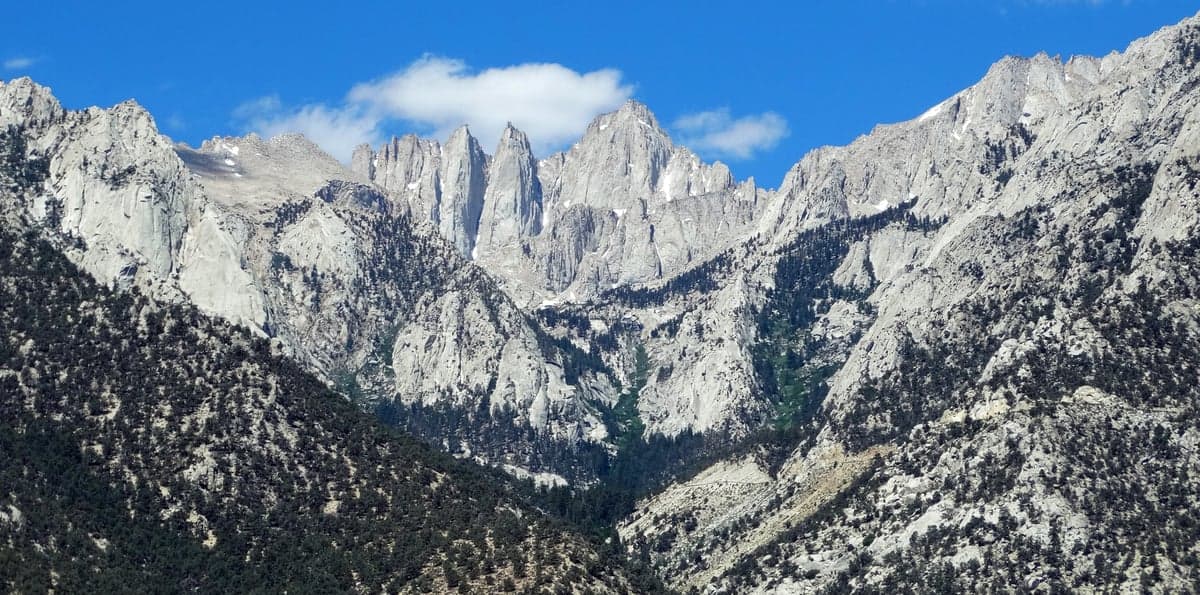
Photo: Wikipedia
Personal Sovereignty in Tulare County
Viable for self-reliance. Generally workable, though some barriers may limit total independence.
What does Personal Sovereignty tell us?
Personal Sovereignty measures your capacity for self-reliance and independence with minimal government friction. Higher scores mean fewer barriers between you and the way you want to live... but it assumes you have the space you need and good neighbors.
What does this tell us?
Personal Sovereignty measures your capacity for self-reliance and independence with minimal government friction. Higher scores mean fewer barriers between you and the way you want to live... but it assumes you have the space you need and good neighbors.
State Policy
Energy independence: Importer (33% of energy produced in-state)
Personal Liberty
Homesteading

Personal Liberty Analysis
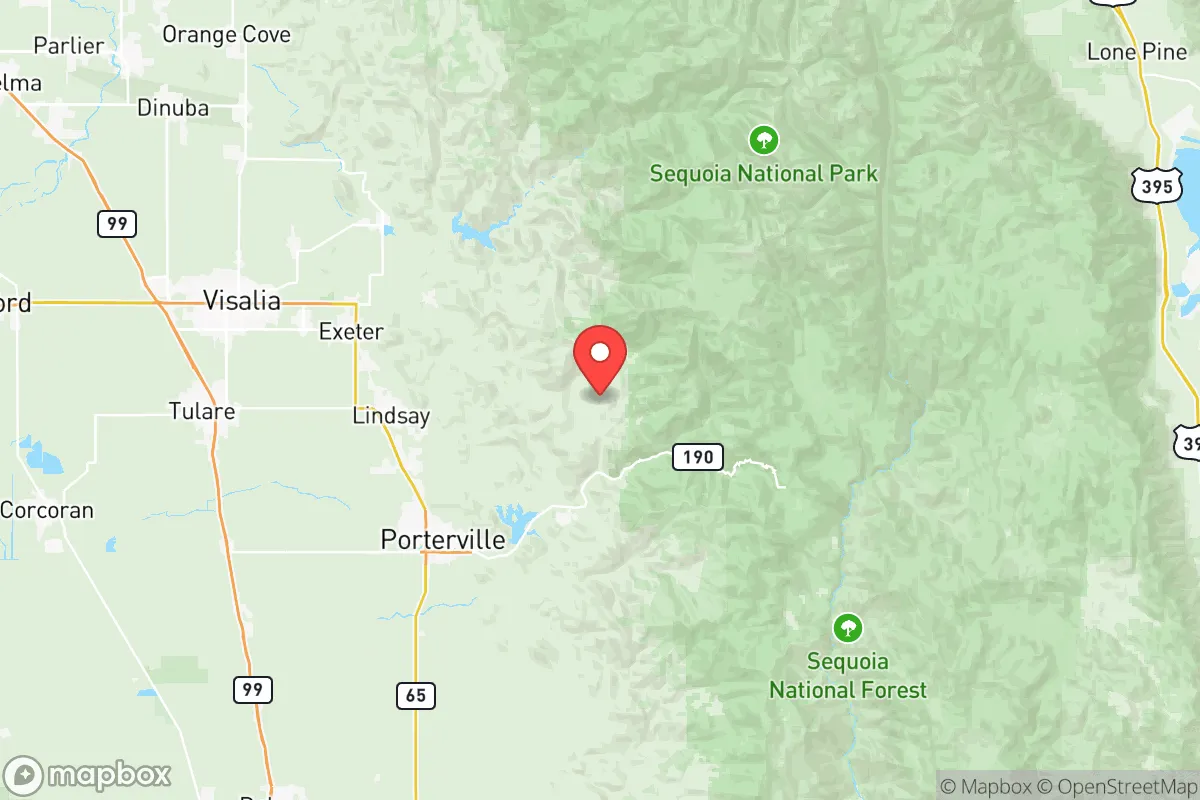
Tulare County offers a notably higher degree of personal sovereignty than California’s coastal urban centers, but it operates within the constraints of a state with some of the nation’s most extensive regulatory and tax structures. For single individuals and families prioritizing autonomy, the county presents a mixed environment: a deeply conservative local culture that champions self-reliance, paired with state-level mandates on taxes, energy, and land use that limit how far that independence can go. The key is understanding where local control—through county supervisors, sheriff’s policies, and zoning boards—actually buffers state overreach, and where it does not. Visalia, the county seat, leans moderately conservative, while smaller towns like Porterville, Lindsay, and Exeter are more libertarian-leaning in practice, with fewer code enforcement resources and a live-and-let-live ethos.
Tax burden and regulatory posture in Tulare County vs. state averages
California’s state income tax—ranging from 1% to 13.3%—applies fully here, and sales tax in Tulare County is 7.75%, slightly below the state maximum of 10.25% found in some Bay Area cities. Property taxes are capped at 1% of assessed value under Proposition 13, with annual increases limited to 2%, which provides predictability for long-term homeowners. However, the county’s regulatory posture is lighter than coastal California’s. Tulare County has no local rent control, no city-level minimum wage above the state’s $16.00/hour, and a planning department that processes agricultural and residential permits faster than counties like Sonoma or Santa Cruz. For example, building a single-family home on unincorporated land near Springville or Three Rivers typically takes 4-6 months for permit approval, compared to 12-18 months in Los Angeles County. The county’s general plan explicitly supports “right-to-farm” protections, limiting nuisance lawsuits against agricultural operations—a concrete advantage for anyone wanting to keep livestock or run a small farm. Still, the California Environmental Quality Act (CEQA) applies to any project requiring discretionary permits, adding cost and delay for larger developments.
Self-defense and gun law specifics in Tulare County
California’s firearm laws are among the strictest in the nation, and Tulare County operates within that framework. The state requires a 10-day waiting period, a Firearm Safety Certificate, and a background check for all purchases. Assault weapons and magazines over 10 rounds are banned. However, local enforcement and culture differ sharply from the Bay Area or Los Angeles. The Tulare County Sheriff’s Office is a “Second Amendment Sanctuary” jurisdiction—the Board of Supervisors passed a resolution in 2023 affirming that county resources will not be used to enforce certain state gun laws deemed unconstitutional. In practice, this means sheriff’s deputies do not proactively enforce the state’s “sensitive places” restrictions (e.g., carrying in parks or public buildings) unless a specific complaint is filed. Open carry of unloaded firearms is legal with a permit, and concealed carry permits (CCWs) are issued on a “shall-issue” basis. In 2024, the sheriff’s office processed CCW applications in an average of 45 days, compared to 6-12 months in San Francisco County. For self-defense at home, no permit is needed for a handgun, shotgun, or rifle. Towns like Porterville and Lindsay have a visible gun culture—local gun shops, shooting ranges, and regular firearm safety classes—while Visalia is more suburban but still permissive. The state’s red-flag law (Gun Violence Restraining Order) is used sparingly here; in 2024, Tulare County issued fewer than 15 such orders, versus over 200 in Alameda County.
Self-reliance and homesteading viability: lot sizes, zoning, and off-grid feasibility
Tulare County is one of California’s most viable areas for homesteading and off-grid living, thanks to its agricultural zoning and relatively affordable land. Minimum lot sizes in unincorporated areas vary: agricultural zones (A-1) require 20 acres, while rural residential zones (R-A) allow 1-5 acre parcels. Near Springville and Three Rivers, 5-10 acre lots with well and septic are common, and prices range from $10,000 to $30,000 per acre—far cheaper than coastal counties. Off-grid feasibility is high in the Sierra Nevada foothills. The county allows solar panels, rainwater catchment, and composting toilets without special permits, provided they meet state health codes. Propane and wood stoves are standard for heating. Internet access is limited in remote areas; Starlink is the primary option. Zoning for livestock is straightforward: chickens, goats, and up to two horses are allowed on 1-acre parcels in R-A zones; larger animals require A-1 zoning. The county’s “Right to Farm” ordinance protects against nuisance complaints from new neighbors. However, state building codes still apply—all dwellings must have a foundation and meet Title 24 energy standards, which adds cost. For those wanting to build a tiny home or yurt, the county requires a permit and inspection, but enforcement is lax in remote areas. Exeter and Lindsay have more restrictive city limits (minimum lot sizes of 6,000-8,000 sq ft), so homesteaders should focus on unincorporated land. Water rights are a key consideration: groundwater is unregulated in most of the county, but the Sustainable Groundwater Management Act (SGMA) may impose pumping limits by 2030 in critically overdrafted basins.
Personal liberties: parental rights, medical autonomy, speech, and property
Parental rights are broadly respected in Tulare County. The local school boards in Visalia Unified and Porterville Unified have adopted policies requiring parental notification for any changes to a student’s mental, emotional, or physical health, including gender identity—a stance that aligns with the county’s conservative majority. Homeschooling is straightforward: file a private school affidavit with the state, and no curriculum approval is needed. Medical autonomy is more constrained by state law. California mandates COVID-19 and other childhood vaccinations for school attendance, though medical and personal belief exemptions are available (the latter for kindergarten entry only). The county has a higher rate of vaccine exemptions than the state average—about 5% of kindergartners in 2024, versus 3% statewide. Alternative medicine practitioners (naturopaths, acupuncturists) are licensed by the state and available in Visalia and Porterville. Free speech is protected under the First Amendment, and local government meetings in Tulare County are notably open—the Board of Supervisors allows public comment on any agenda item, and meetings are streamed live. Property rights are strong: the county has no inclusionary zoning or rent control, and eminent domain is rarely used. However, the California Coastal Commission has no jurisdiction here, so coastal development restrictions do not apply. The main property-rights friction comes from the state’s housing mandates—SB 9 (duplexes on single-family lots) and SB 35 (streamlined approval for multi-family projects)—which override local zoning in some cases, but Tulare County has resisted these by designating most land as agricultural or rural residential, limiting their impact.
Overall, Tulare County offers a level of personal sovereignty that is high by California standards but moderate nationally. Compared to states like Texas or Idaho, the tax burden is heavier and gun laws are stricter. But within California, it is a standout for self-reliance: affordable land, permissive homesteading rules, a sheriff’s office that respects the Second Amendment, and a local government that pushes back against state mandates where it can. For a family or individual who values autonomy but is tied to California for work or family reasons, Tulare County—especially the unincorporated areas around Springville, Three Rivers, and Porterville—provides a realistic middle ground between coastal regulation and rural freedom.

* Values derived from national, state, county, city and local statistics and may differ in a specific area. Last updated: 2026-09-30T14:13:48.000Z
Narrative content on this page is AI-generated and may contain mistakes. Verify any details that matter before acting on them.
ReloMaps may earn a commission from affiliate links at no extra cost to you.

