
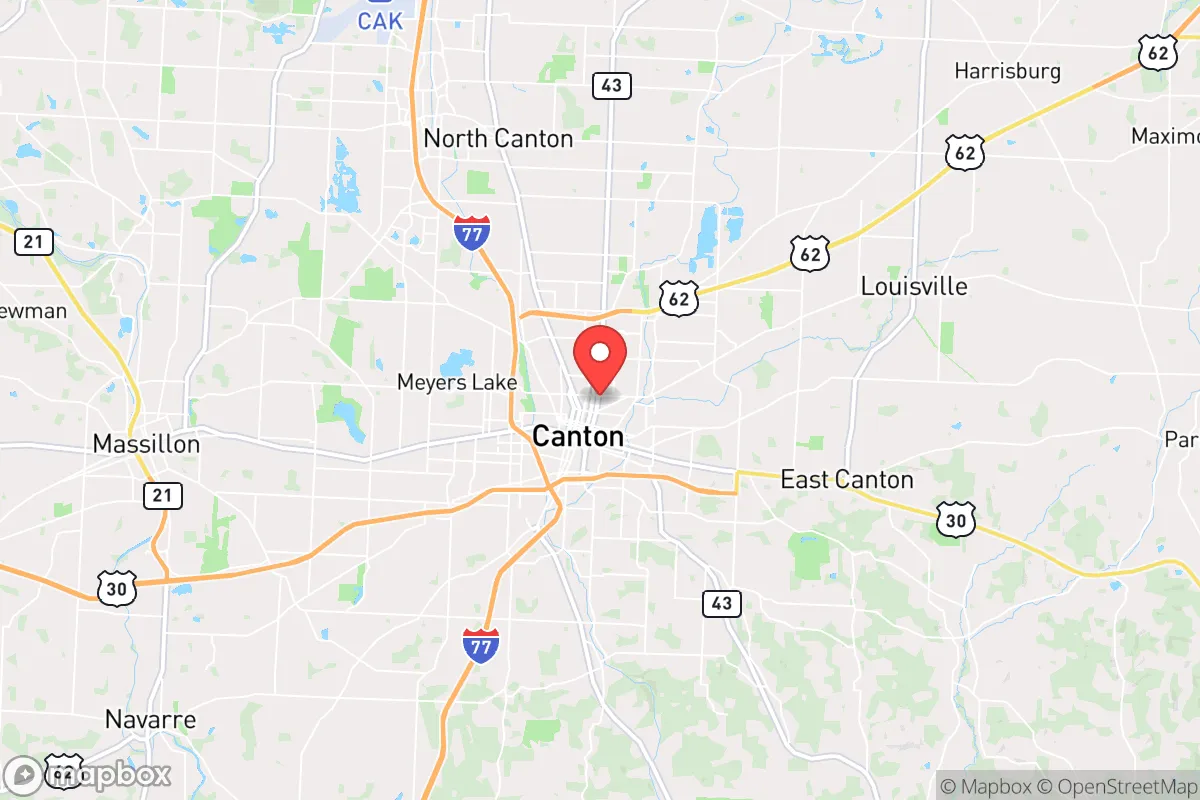
Photo: Wikipedia
Quality of Life in Canton, OH
A high quality of life with strong walkability, manageable living costs, healthy neighborhood signals, and solid amenity access.
What does Quality of Life tell us?
Quality of Life blends cost of living, nearby amenities, socioeconomic signals, and neighborhood character. City-level scores represent the whole municipality; individual neighborhoods can differ.
What does this tell us?
Quality of Life blends cost of living, nearby amenities, socioeconomic signals, and neighborhood character. City-level scores represent the whole municipality; individual neighborhoods can differ.
Cost of Living
44% below national average
The Real Cost of Living in Canton, OH for 2026
| Tier | Individual | Family (4) |
|---|---|---|
| Survival | $13k | $25k |
| Comfortable | $21k | $31k |
| Luxury | $71k+ | $110k+ |
| Elite (Top 5%) | $83k+ | $129k+ |
127%
The Area Signal
A metric tracking the socioeconomic signals of the area.
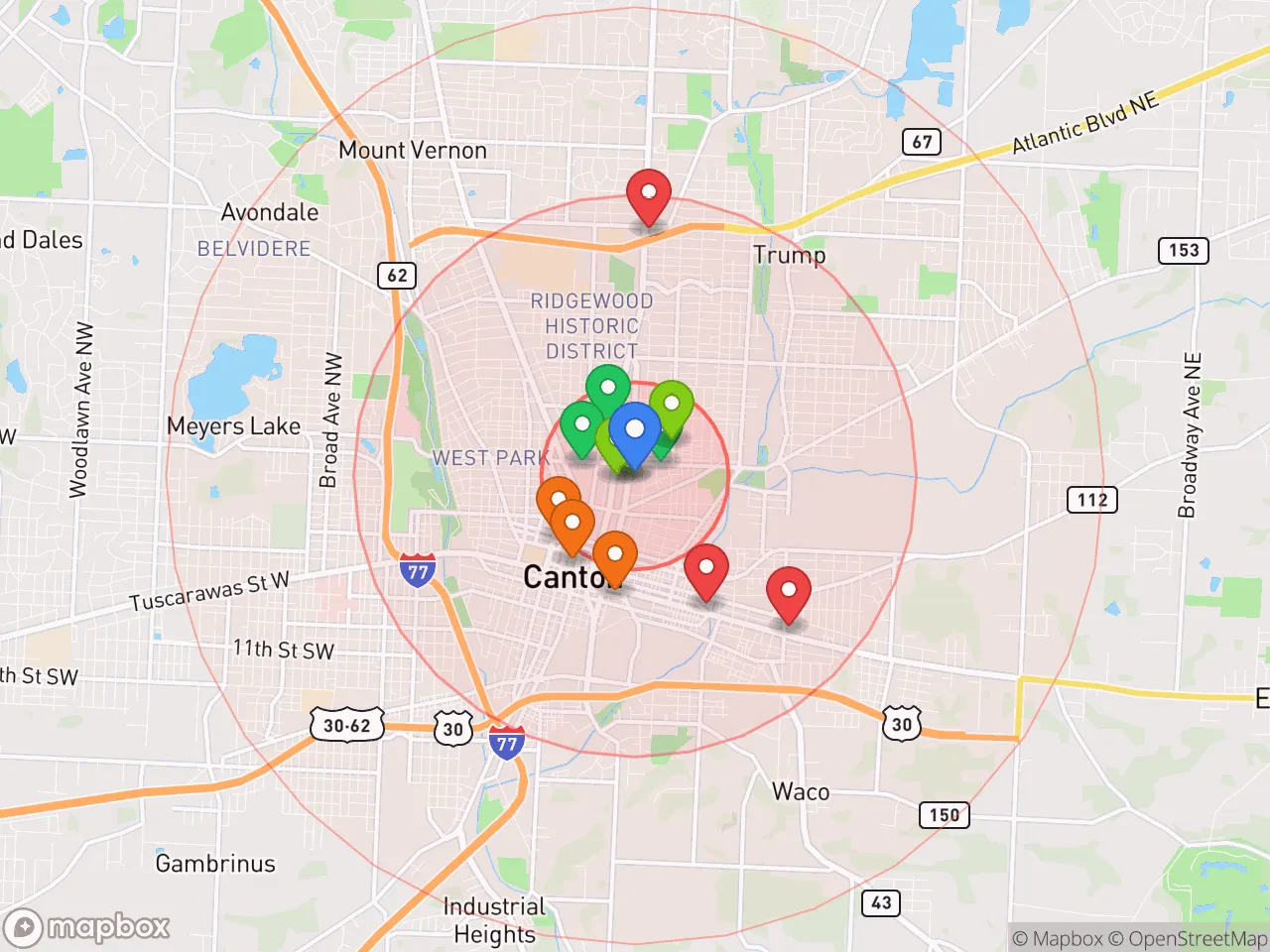
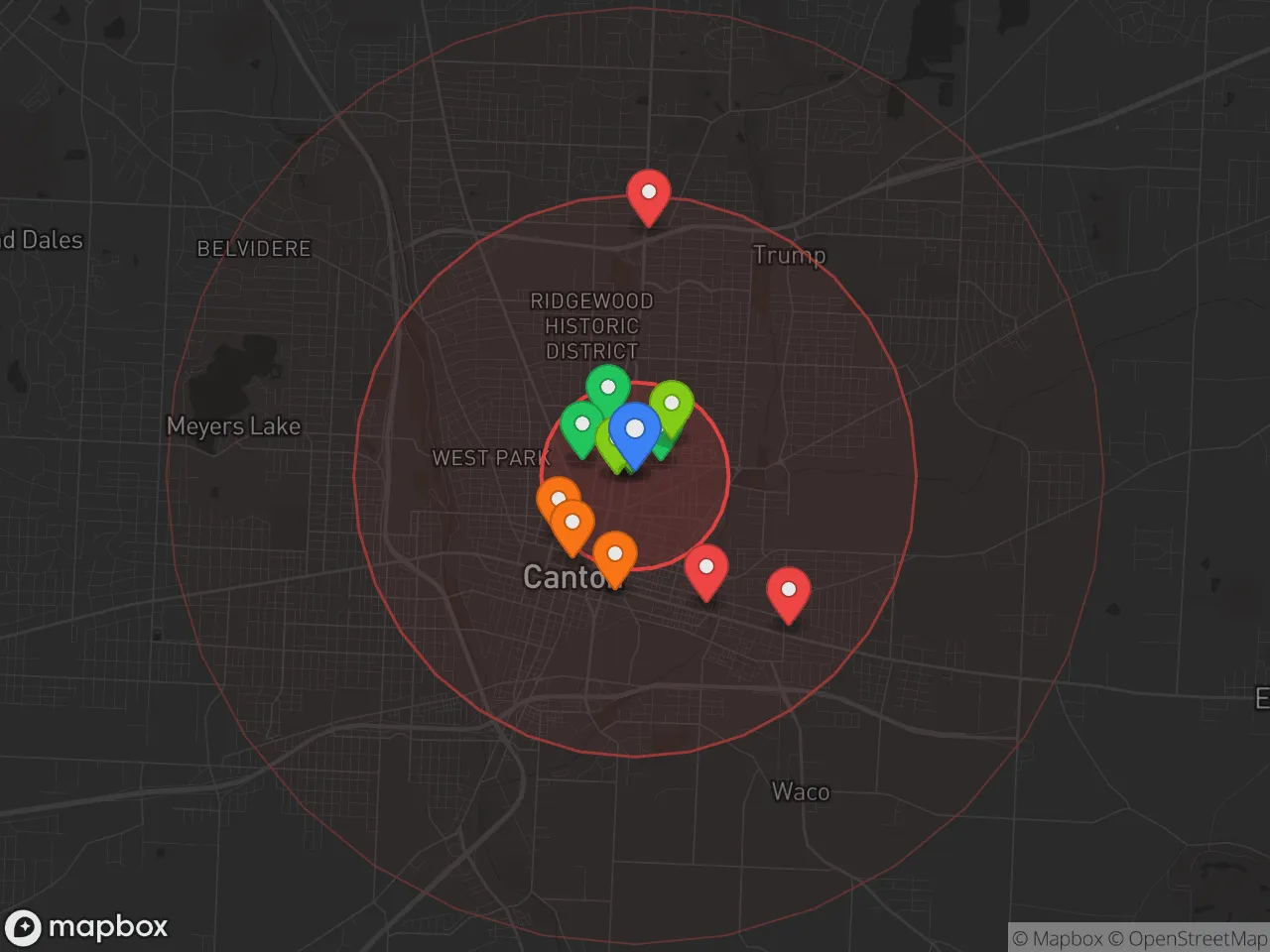
Hobbies
Explore the areaGroceries
6 within 10 miles
Gas
20 within 10 miles
Hospital
10 within 20 miles
Airport
Pittsburgh International Airport
Post Office
USPS — Canton, OH
Critical Amenities
Quality-of-Life Analysis
Canton, Ohio, presents a notably affordable quality of life, with a cost of living index of 56—well below the national average of 100—making it one of the most budget-friendly mid-sized cities in the Midwest. The population skews toward working-class families, long-term residents, and retirees who value stability over rapid growth, with a median age of roughly 38. While the city itself faces economic challenges, its low housing costs and short commutes attract those seeking a slower, more financially manageable lifestyle compared to pricier Ohio metros like Columbus or Cleveland.
Cost of living, housing affordability, and how Canton compares to nearby cities
Canton’s cost of living is dramatically lower than the U.S. average, driven primarily by housing. The median home value sits at $94,400—roughly one-third of the national median—while median rent is $826 per month, well under the $1,200+ typical in many Ohio suburbs. This affordability extends to utilities and groceries, which also run below national norms. Compared to nearby Akron (COL index ~70) or Cleveland (COL index ~75), Canton offers a significant discount, though it also has fewer high-paying job opportunities. The average commute of 19.3 minutes is notably short, reflecting the city’s manageable size and limited traffic congestion, a practical advantage for daily life. Property taxes in Stark County are moderate, averaging around 1.5% of assessed value, which keeps homeownership costs low even for entry-level buyers.
Amenities, schools, and what daily life feels like in Canton
Daily life in Canton centers on a mix of historic neighborhoods, local parks, and a modest downtown core. The city is home to the Pro Football Hall of Fame, which draws visitors and supports a small tourism economy, but the broader retail and dining scene is limited compared to larger metros. Residents often drive to nearby Belden Village for shopping or to Akron for more diverse entertainment. The Canton City School District serves the urban core, with a graduation rate around 75%, while suburban districts like Jackson Local and North Canton City Schools—just outside city limits—consistently rank higher, with graduation rates above 90%. Healthcare access is solid, anchored by Aultman Hospital and Mercy Medical Center, both major employers. For outdoor recreation, the 2,800-acre Stark County Park District offers hiking, fishing, and golf, though the city itself lacks a robust bike lane network or extensive greenway system. The rhythm of life is unhurried, with most errands achievable within a 10-minute drive, and community events like the Canton First Friday art walks provide periodic social anchors.
Who thrives in Canton? The city best suits budget-conscious families, retirees on fixed incomes, and first-time homebuyers who prioritize low housing costs over urban amenities. Remote workers or those employed in manufacturing, healthcare, or education will find the short commute and low expenses especially appealing. However, professionals seeking high salaries, vibrant nightlife, or top-tier public schools within city limits may find Canton limiting. For those willing to trade some convenience for deep affordability and a slower pace, Canton offers a stable, low-stress base in Northeast Ohio.

Crime in Canton, OH
Significantly higher crime rates than 85% of comparable U.S. locations.
Violent CrimeViolent Crime Analysis
Property CrimeProperty Crime Analysis
Crime Analysis
Canton, Ohio, reports a violent crime rate of 1,090.5 per 100,000 residents and a property crime rate of 3,395 per 100,000, figures that place the city well above both state and national averages. These statistics reflect a challenging safety environment, particularly concerning for those considering relocation. The city's proximity to the larger Akron and Cleveland metro areas, combined with the influence of progressive judicial policies in Stark County, contributes to a public safety landscape that demands careful consideration.
Crime in context
Canton's violent crime rate is more than double the national average of roughly 380 per 100,000 and significantly exceeds the Ohio state average of approximately 300 per 100,000. Property crime in Canton also runs high, outpacing the national average of about 1,950 per 100,000 by over 70%. These numbers place Canton among the higher-crime cities in Ohio, comparable in scale to Youngstown and Dayton. The elevated rates are not an anomaly but a persistent trend, driven in part by the broader regional challenges of economic transition and population decline.
What residents experience
Residents report that property crimes—including theft, burglary, and motor vehicle theft—are the most common safety concerns, affecting daily life through break-ins and stolen packages. Violent incidents, while less frequent, are concentrated in specific areas and often involve individuals known to one another. The local justice system, influenced by progressive district attorneys and judges in Stark County, has adopted policies that prioritize diversion and reduced sentencing for non-violent offenders. While intended to reduce incarceration rates, these policies have a direct negative impact on public safety: repeat offenders are returned to the streets more quickly, eroding deterrence and increasing the likelihood of victimization for law-abiding residents. This approach, sympathetic as it may be to offenders, undermines justice for victims and the broader community.
Neighborhood-level variation is significant. Areas west of I-77, such as the Ridgewood and Perry Township border neighborhoods, generally report lower crime rates and are considered safer. In contrast, the downtown core and neighborhoods east of Market Avenue North, including the historic but struggling areas near the Pro Football Hall of Fame, experience higher concentrations of both violent and property crime. Prospective residents should research specific blocks and talk to local police precincts rather than relying on citywide averages, as safety can change dramatically within a few streets. Suburban communities like North Canton and Jackson Township offer markedly lower crime rates and are popular alternatives for those who work in Canton but seek a safer residential environment.
* Values derived from national, state, county, city and local statistics and may differ in a specific area. Last updated: 2026-04-21T19:35:24.000Z
Narrative content on this page is AI-generated and may contain mistakes. Verify any details that matter before acting on them.
ReloMaps may earn a commission from affiliate links at no extra cost to you.

