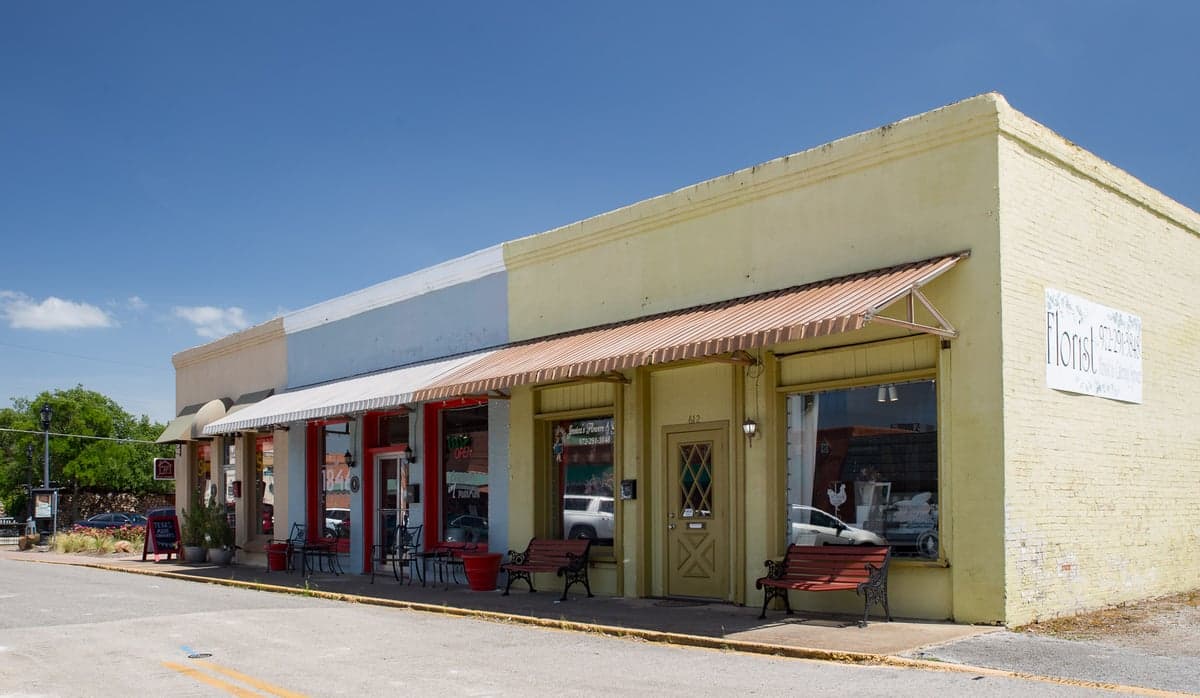
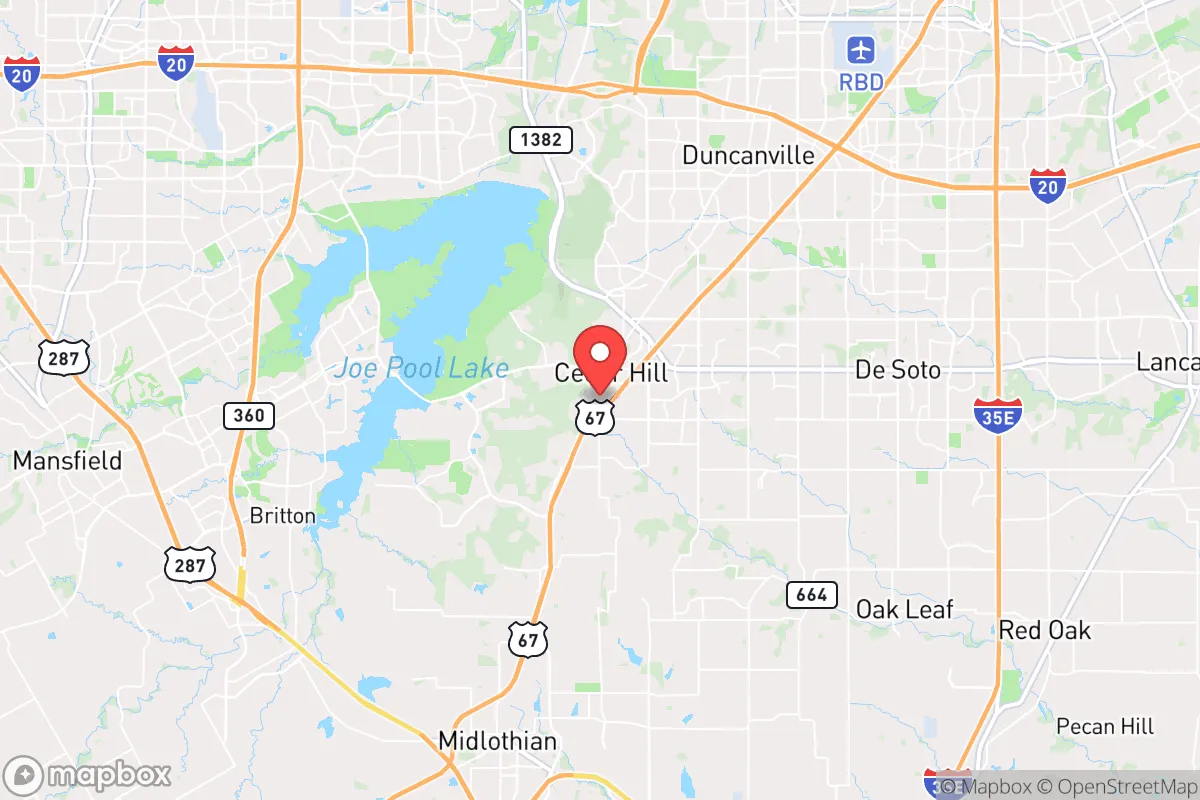
Photo: Wikipedia
Quality of Life in Cedar Hill, TX
A high quality of life with strong walkability, manageable living costs, healthy neighborhood signals, and solid amenity access.
What does Quality of Life tell us?
Quality of Life blends cost of living, nearby amenities, socioeconomic signals, and neighborhood character. City-level scores represent the whole municipality; individual neighborhoods can differ.
What does this tell us?
Quality of Life blends cost of living, nearby amenities, socioeconomic signals, and neighborhood character. City-level scores represent the whole municipality; individual neighborhoods can differ.
Cost of Living
36% above national average
The Real Cost of Living in Cedar Hill, TX for 2026
| Tier | Individual | Family (4) |
|---|---|---|
| Survival | $30k | $56k |
| Comfortable | $53k | $78k |
| Luxury | $145k+ | $226k+ |
| Elite (Top 5%) | $171k+ | $265k+ |
116%
The Area Signal
A metric tracking the socioeconomic signals of the area.
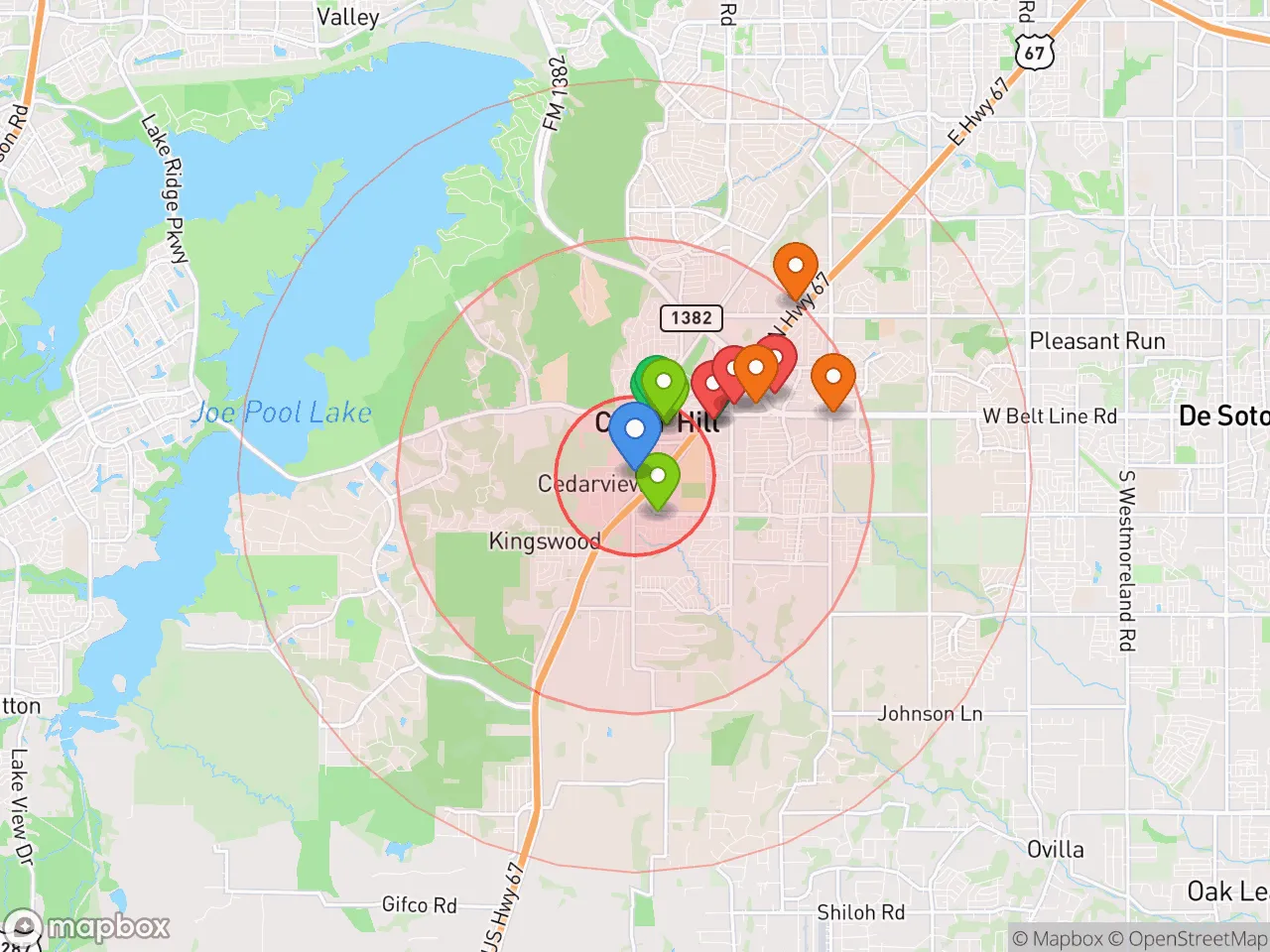
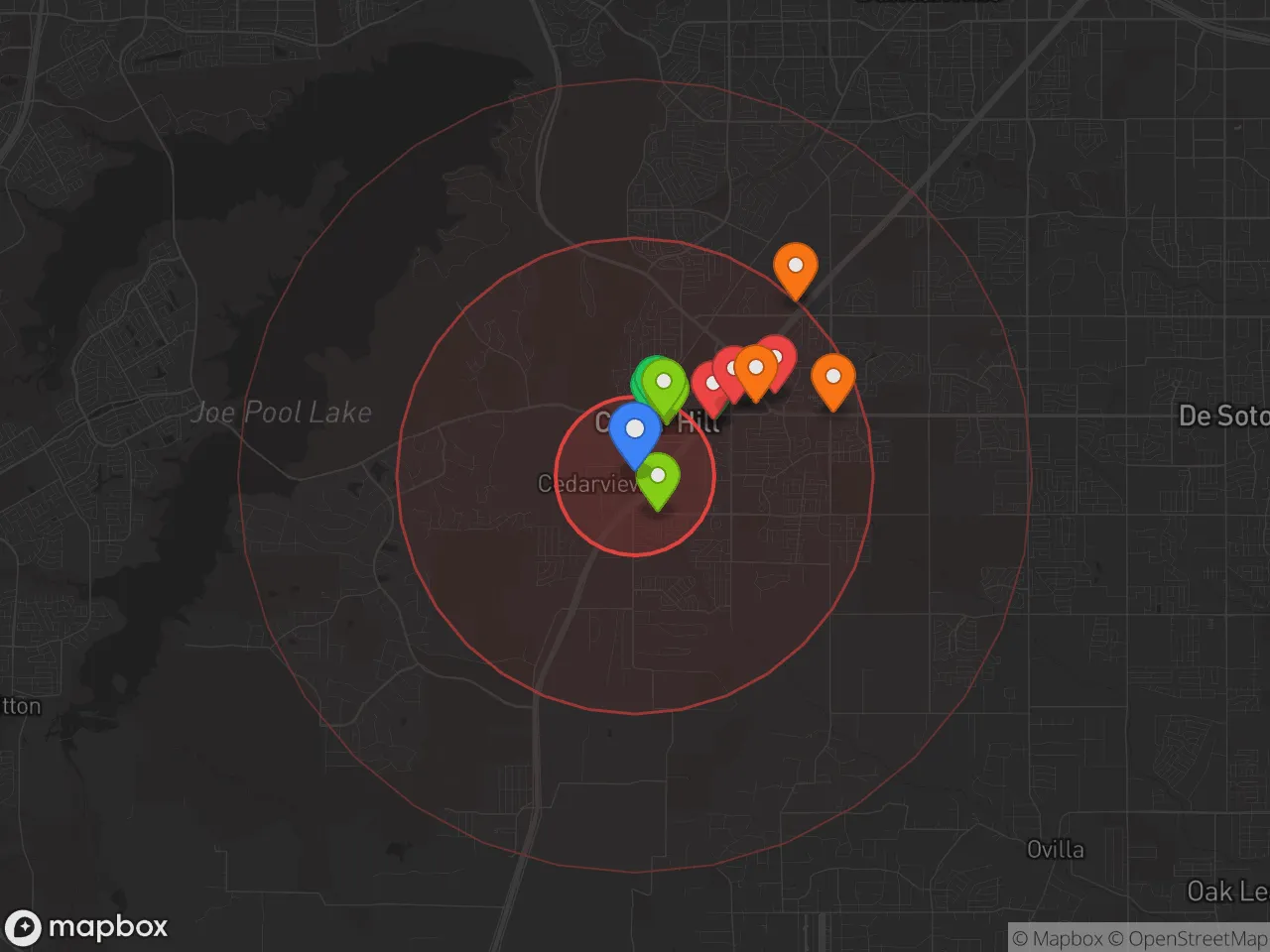
Hobbies
Explore the areaGroceries
7 within 10 miles
Gas
20 within 10 miles
Hospital
20 within 20 miles
Airport
DFW — Dallas/Fort Worth International
Post Office
USPS — Cedar Hill, TX
Critical Amenities
Quality-of-Life Analysis
Cedar Hill, Texas, presents a quality of life defined by suburban affluence and a strong sense of community, attracting a mix of upwardly mobile families, established professionals, and long-term residents who value space and stability. With a cost of living index of 136 (36% above the U.S. average), the city sits in a distinct middle ground—more expensive than neighboring Duncanville or DeSoto, yet notably more affordable than the Dallas and Fort Worth urban cores. The median home value of $273,200 and median rent of $1,878 reflect a market where single-family homes on generous lots remain attainable for dual-income households, a contrast to the soaring prices in nearby Southlake or Frisco.
Cost of living, housing, and affordability compared to Dallas-Fort Worth
Cedar Hill’s cost of living is driven primarily by housing, which is the most significant factor separating it from pricier DFW suburbs. The median home value of $273,200 is roughly 15% below the Dallas-Fort Worth metro average of $320,000, making it a relative bargain for buyers seeking newer construction and larger lots. Renters face a median of $1,878, which is competitive with nearby Mansfield ($1,950) but higher than Lancaster ($1,650). Property taxes in Dallas County average around 2.3% of assessed value, a key consideration for budget-conscious movers. The average commute of 31.9 minutes—longer than the national average of 26 minutes—is a trade-off for the space and lower home prices, with many residents commuting to jobs in downtown Dallas (25 miles north) or the telecom corridor in Richardson.
Local amenities, schools, and what daily life is like for families
Daily life in Cedar Hill revolves around its well-regarded Cedar Hill Independent School District (CHISD), which serves over 8,000 students and includes the highly rated Cedar Hill High School (rated B+ by Niche). The city’s 1,500-acre Cedar Hill State Park on Joe Pool Lake provides year-round hiking, fishing, and camping, a rare natural amenity within a 30-minute drive of downtown Dallas. Retail and dining cluster around the Uptown Village shopping center, anchored by a Target and a Cinemark theater, while local staples like the Cedar Hill Farmers Market and the historic Penn Farm Agricultural History Center offer weekend activities. The rhythm is distinctly suburban: families fill the parks on weekends, school sports dominate fall evenings, and the city’s low violent crime rate (2.5 per 1,000 residents, below the Texas average of 4.6) reinforces a sense of safety.
This quality of life best suits families and professionals who prioritize space, good schools, and recreational access over urban nightlife or ultra-short commutes. The city’s demographic profile—roughly 55% Black or African American, 30% White, and 15% Hispanic—reflects a diverse, middle-class community that has grown steadily since the 1990s. Those who thrive here are typically willing to accept a 30-minute drive to work in exchange for a 2,000-square-foot home with a yard, a strong school system, and a state park at their doorstep. Singles or young professionals seeking walkable nightlife or rapid transit access would find better fits in Dallas’s Uptown or Oak Lawn neighborhoods, but for families seeking a stable, amenity-rich suburb with a lower price tag than many DFW alternatives, Cedar Hill delivers a compelling balance.

Crime in Cedar Hill, TX
Generally safer than 56% of comparable U.S. locations.
Violent CrimeViolent Crime Analysis
Property CrimeProperty Crime Analysis
Crime Analysis
Cedar Hill, Texas, reports a violent crime rate of 158.9 incidents per 100,000 residents and a property crime rate of 1,731.6 per 100,000, placing it below the national average for violent offenses but above the national average for property crime. As a suburban city within the Dallas-Fort Worth metroplex, Cedar Hill benefits from a relatively lower violent crime profile compared to the urban core of Dallas, yet residents should remain vigilant about theft and burglary. The overall safety picture is mixed: the city is statistically safer than many nearby inner-ring suburbs for violent crime, but property crime rates demand proactive prevention measures.
Crime in context
When compared to state and national benchmarks, Cedar Hill’s violent crime rate of 158.9 per 100,000 is roughly 55% lower than the U.S. average of 380 per 100,000 and significantly below the Texas state average of approximately 445 per 100,000. This positions Cedar Hill as a relatively safe choice for violent crime within the DFW region. However, the property crime rate of 1,731.6 per 100,000 is about 15% higher than the national average of 1,500 per 100,000, driven largely by larceny-theft and vehicle break-ins. The city’s proximity to major highways like US-67 and I-20 makes it a target for transient property crime, a pattern seen across many suburban Dallas-Fort Worth communities. Notably, the broader Dallas County justice system—which includes progressive district attorneys and judges—has been associated with reduced incarceration rates and softer sentencing guidelines, a factor that critics argue contributes to recidivism and emboldens property criminals in the metro area.
What residents experience
For daily life in Cedar Hill, the most common safety concerns revolve around property crime rather than personal violence. Residents frequently report package theft from porches, unlocked vehicle burglaries, and occasional catalytic converter thefts, particularly in apartment complexes and retail parking lots near the Cedar Hill Crossing shopping center. Violent incidents are rare and typically isolated to domestic disputes or targeted altercations, not random attacks on the public. The Cedar Hill Police Department maintains a visible presence through community policing programs and a dedicated crime prevention unit, which has helped keep violent crime low. However, the progressive criminal justice policies enacted in Dallas County—such as bail reform and diversion programs for non-violent offenders—have led to faster release cycles for repeat property offenders, a dynamic that frustrates many residents who see the same individuals cycling through the system.
Neighborhood-level variation is notable in Cedar Hill. The southwestern quadrant, including areas near the Joe Pool Lake and newer subdivisions like the Highlands, experiences the lowest crime rates, with violent crime nearly absent and property crime well below the city average. In contrast, the northeastern corridor along FM 1382 and the older apartment complexes near US-67 see higher concentrations of property crime, including vehicle break-ins and theft from storage units. Gated communities and HOAs with private security report significantly fewer incidents, while non-gated neighborhoods benefit from active Nextdoor groups and neighborhood watch programs. Prospective residents should prioritize properties with good lighting, secure parking, and proximity to police substations for optimal safety outcomes.
* Values derived from national, state, county, city and local statistics and may differ in a specific area. Last updated: 2026-05-16T22:40:44.000Z
Narrative content on this page is AI-generated and may contain mistakes. Verify any details that matter before acting on them.
ReloMaps may earn a commission from affiliate links at no extra cost to you.

