Photo: Wikipedia
Demographics of Cedar Hill, TX
Affluence Level in Cedar Hill, TX
A middle-class area roughly in line with national averages across income, home values, education, and employment.
People of Cedar Hill, TX
The people of Cedar Hill, Texas today form a predominantly Black and Hispanic community of 48,547 residents, with a notable 49.6% Black population and 27.9% Hispanic population, creating a distinctly multicultural suburban identity. The city is characterized by a relatively low foreign-born share of 5.4%, indicating a population rooted in domestic migration rather than recent international arrivals. With 30.9% of adults holding a college degree, Cedar Hill sits slightly above the national average for educational attainment, reflecting its evolution into a middle-class suburb with professional and managerial households. The city’s identity is shaped by its position as a southern Dallas County suburb that has transformed from a rural crossroads into a majority-minority community with strong family-oriented neighborhoods.
How the city was settled and grew
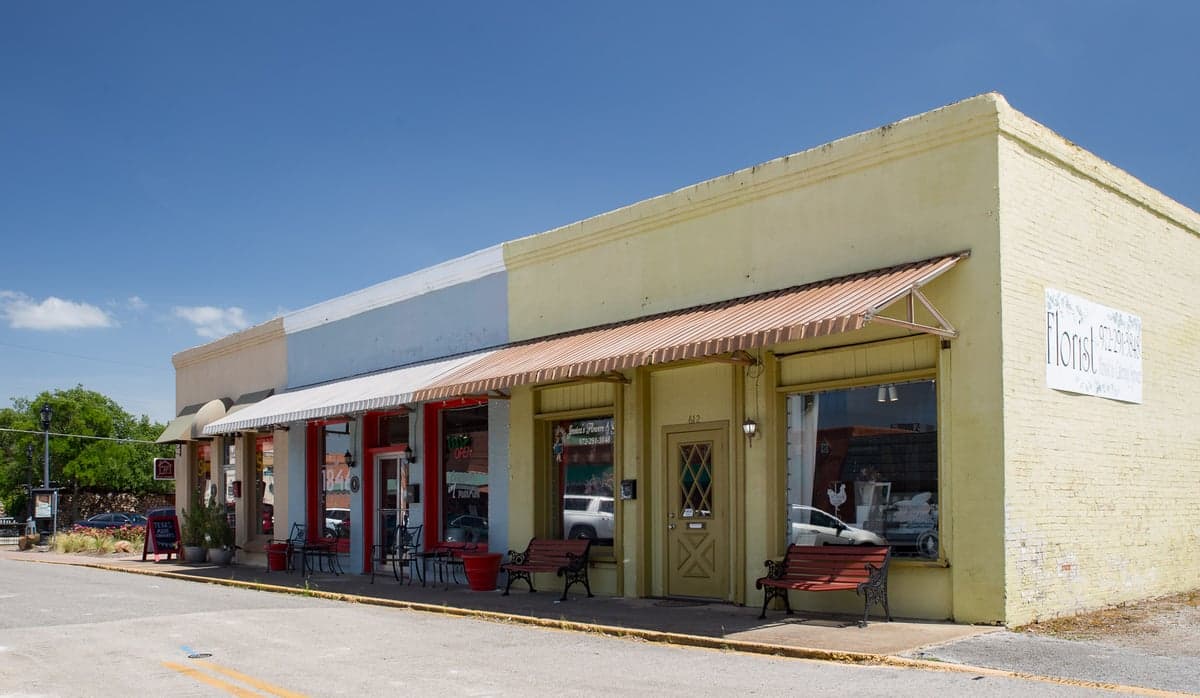
Cedar Hill’s original population arrived in the 1840s and 1850s as Anglo-American settlers from the Upper South, primarily Tennessee, Kentucky, and Missouri, drawn by cheap land grants in the Peters Colony. These early families established farms along the rolling hills near the Dallas-Tarrant county line, with the first permanent settlement clustering around what is now Old Town Cedar Hill, the historic core near the intersection of FM 1382 and Belt Line Road. The community remained a small agricultural hamlet through the late 19th century, with a population of a few hundred, mostly white farmers and a small number of Black families who worked as sharecroppers and laborers. The arrival of the St. Louis Southwestern Railway (Cotton Belt) in the 1880s spurred modest growth, but Cedar Hill remained a rural outpost until the mid-20th century, with its population never exceeding 1,500 before 1950. The Pleasant Run area, south of the historic core, became home to many of the early Black families, who established churches and schools that anchored the community through segregation.
Modern era (post-1965)
The post-1965 transformation of Cedar Hill began with the construction of U.S. Highway 67 (now a freeway) in the 1970s, which connected the city to downtown Dallas and opened the area to suburban development. The first major wave of new residents were white middle-class families moving from Dallas in the 1970s and 1980s, settling in subdivisions like Lake Ridge and Northwood Estates, which offered larger lots and newer homes. By the 1990s, a significant wave of Black middle-class families began moving from southern Dallas and Oak Cliff, drawn by affordable housing, good schools, and the growing reputation of Cedar Hill as a stable suburban alternative. This shift accelerated in the 2000s, with Black residents becoming the largest racial group by 2010, concentrated in neighborhoods like Highland Hills and Briarwood, where newer construction and larger homes attracted professional and dual-income households. The Hispanic population grew steadily from the 1990s onward, reaching 27.9% by 2024, with families settling in areas like Westmoreland Heights and the multifamily developments near the U.S. 67 corridor. The white population declined from a majority in 1980 to 16.2% today, with many older white residents aging in place in Lake Ridge while younger white families increasingly choose other suburbs. The East/Southeast Asian population remains small at 1.4%, with no single ethnic enclave, while the Indian subcontinent population is negligible at 0.3%.
The future
Cedar Hill’s population is likely to continue its trajectory toward a Black and Hispanic majority, with the white share projected to decline further as older residents pass away or move to retirement communities. The Hispanic population is the fastest-growing segment, driven by natural increase and continued domestic migration from other parts of Dallas County, and could approach 35% by 2040. The Black population is expected to remain the largest group but may plateau as younger Black families face rising home prices and consider more affordable suburbs further south like Midlothian or Waxahachie. The city is not tribalizing into distinct ethnic enclaves; rather, neighborhoods like Lake Ridge and Highland Hills are becoming more mixed, with Black and Hispanic families moving into areas once predominantly white. The foreign-born share is likely to remain low, as Cedar Hill attracts primarily U.S.-born families rather than immigrants, and the small East/Southeast Asian and Indian communities are not expected to grow significantly. The city’s demographic future points toward a stable, majority-minority suburb with a strong middle-class character, where racial and ethnic diversity is the norm rather than the exception.
For someone moving to Cedar Hill now, the city offers a predominantly Black and Hispanic community with a solid middle-class foundation, good schools, and a suburban lifestyle that remains more affordable than northern Dallas suburbs. The population is becoming more diverse internally, with less racial segregation between neighborhoods than in older suburbs, and the low foreign-born share means English is the dominant language in daily life. The city is not a transient or rapidly changing place; it is a settled, family-oriented suburb where most residents have deep roots in the Dallas-Fort Worth area. New arrivals will find a community that values stability, homeownership, and local schools, with a demographic character that is distinct from both the whiter suburbs to the north and the more heavily immigrant suburbs to the east.

* Values derived from national, state, county, city and local statistics and may differ in a specific area. Last updated: 2026-05-16T22:40:44.000Z
Narrative content on this page is AI-generated and may contain mistakes. Verify any details that matter before acting on them.
ReloMaps may earn a commission from affiliate links at no extra cost to you.

