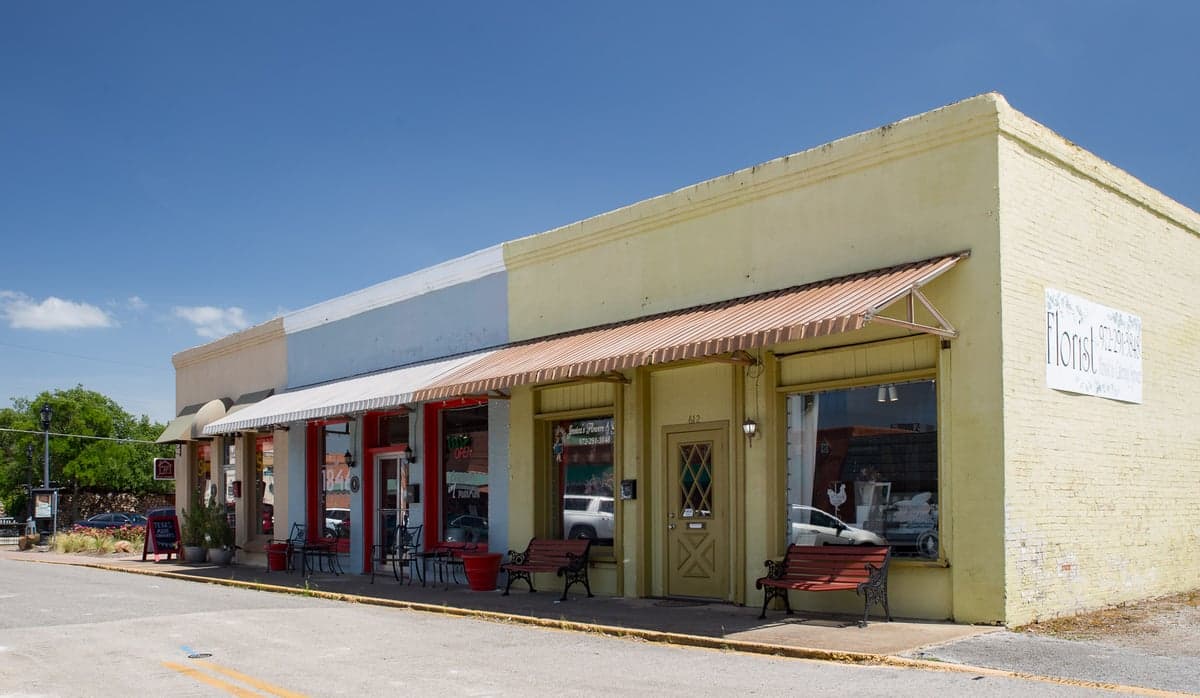
Photo: Wikipedia
Political ClimatePolitical Climate in Cedar Hill, TX
District shown is the primary district for this city’s centroid. Cities may span multiple districts.
Local Political AnalysisPolitical Analysis of Cedar Hill, TX
Cedar Hill, Texas, sits as a political island in the Dallas-Fort Worth metroplex, with a Cook Partisan Voting Index of D+25 that makes it one of the most reliably Democratic suburbs in the state. That wasn't always the case—I remember when this town was a quiet, conservative-leaning bedroom community where folks kept to themselves and the biggest political debate was about the school bond. Over the last decade, the shift has been dramatic, driven largely by an influx of new residents from blue states and a younger, more diverse population. The trajectory is clear: Cedar Hill is moving further left with every election cycle, while the surrounding state of Texas holds at R+4, creating a widening gap between local and state politics.
How it compares
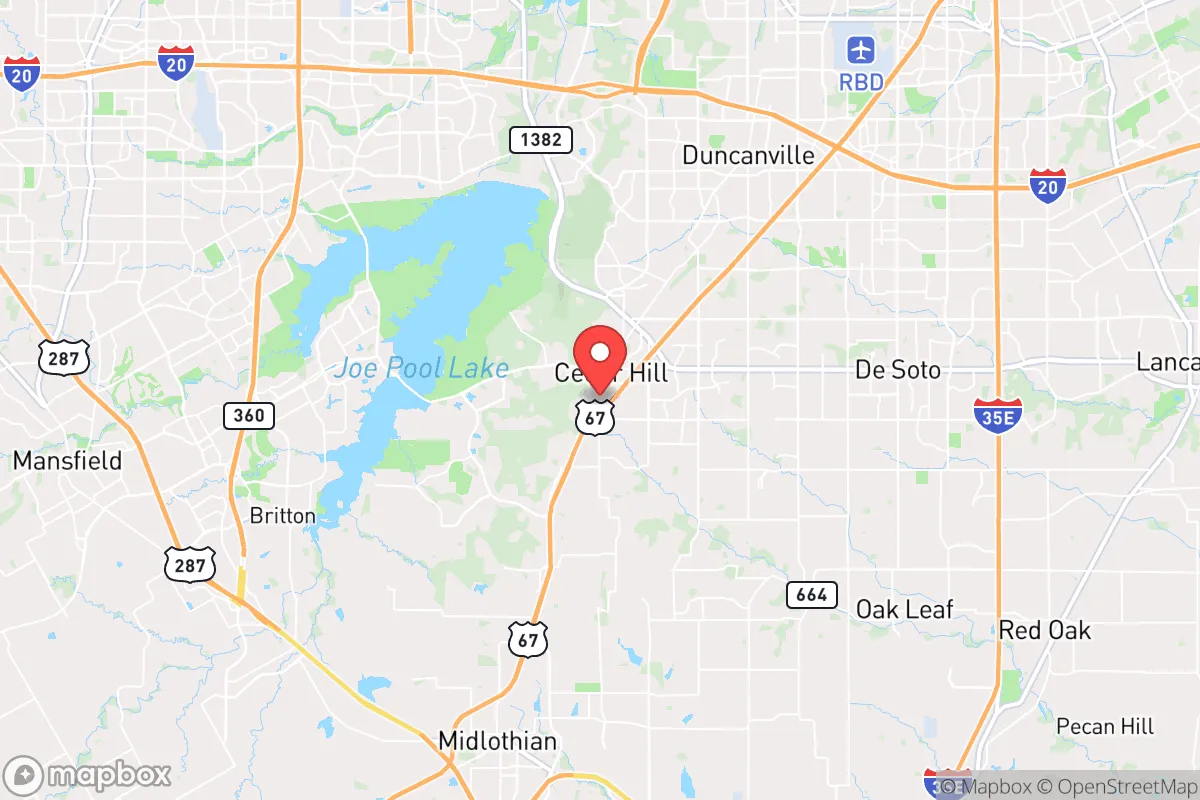
When you look at the broader picture, Cedar Hill is a stark outlier. The state of Texas as a whole leans Republican by a comfortable R+4 margin, but Cedar Hill votes more like a precinct in Chicago or Los Angeles. Drive ten miles north to DeSoto or Duncanville, and you'll find similar Democratic strongholds—but head west to Midlothian or south to Waxahachie, and you're back in deep-red territory where conservative values still hold sway. The contrast is jarring: in the 2024 election, Cedar Hill's precincts went heavily for the Democratic ticket, while Ellis County to the south voted +30 Republican. This isn't just a numbers game—it reflects a fundamental difference in how people here view government's role. In Cedar Hill, there's been a noticeable push for more progressive policies on everything from policing to school curriculum, which feels out of step with the rest of the region. The concern is that this local government overreach—whether through higher taxes, zoning restrictions, or mandates—is eroding the personal freedoms that made this area attractive in the first place.
What this means for residents
For someone living in Cedar Hill, the political climate means you're constantly navigating two different worlds. At the local level, you're dealing with a city council and school board that have increasingly embraced progressive priorities—things like diversity, equity, and inclusion initiatives in schools, or stricter environmental regulations on property development. These aren't just abstract policies; they affect your property taxes, your kids' education, and your ability to make decisions about your own home. Meanwhile, at the state level, you're under a conservative government that's pushing back on those very ideas. It creates a tension that's exhausting to live through. I've seen longtime neighbors sell up and move to Ellis County or Johnson County just to get away from the creeping sense that local government is getting too involved in their lives. The property tax burden here is already higher than in surrounding conservative areas, and there's little sign that will change as the city pursues more ambitious programs.
The cultural and policy distinctions are real. Cedar Hill has a vibrant, diverse community that many love, but the trade-off is a political environment that feels increasingly disconnected from the Texas most of us grew up in. If you value limited government and individual liberty, you'll find yourself swimming against the current here. The near-term outlook suggests this divide will only widen, as the city continues to attract residents who see government as a solution rather than a constraint. For those who prefer a lighter touch from their local officials, the surrounding counties offer a more familiar, conservative alternative—and that's exactly where many are heading.

State Political ClimatePolitical Climate in Texas
State Political AnalysisPolitical Environment in the State
Texas has been a reliably Republican state for decades, with a Cook PVI of R+4, but the coalition that keeps it red is shifting underfoot. The dominant political force remains a blend of fiscal conservatives, social traditionalists, and a growing libertarian-leaning population drawn by low taxes and light regulation. Over the last 10-20 years, the state has moved from a solidly red monolith to a more contested battleground, driven by explosive growth in the urban cores of Austin, Dallas, Houston, and San Antonio, which have become increasingly blue, while the exurbs and rural counties have hardened their Republican margins. The 2020 and 2022 cycles showed that while Republicans still win statewide races by 5-10 points, the margins are tightening, and the old "Texas is ruby red" assumption no longer holds.
Urban vs. rural divide
The political map of Texas is a story of two worlds. The major metros — Austin (Travis County), Dallas (Dallas County), Houston (Harris County), and San Antonio (Bexar County) — are now solidly Democratic, often voting blue by 15-25 points in presidential elections. El Paso and the Rio Grande Valley have also trended left, though the Valley showed a notable shift toward Republicans in 2020 and 2022, particularly in Zapata and Starr counties, driven by conservative Hispanic voters. Meanwhile, the rural and exurban areas — think Lubbock, Amarillo, Midland, Odessa, and the sprawling Hill Country counties like Kendall and Comal — vote Republican by 40-60 points. The real action is in the "collar counties" around the big cities: Collin, Denton, Fort Bend, and Montgomery counties are growing fast and are the key to statewide elections. These suburbs are still red, but they're becoming more purple, especially in Collin County (Plano, Frisco), where Democratic performance has crept up from the low 30s to the mid-40s in recent cycles.
Policy environment
Texas's policy environment is defined by a low-tax, low-regulation posture that has attracted massive in-migration. There is no state income tax, and property taxes are high but capped by the 2023 property tax reform (SB 2), which cut school property tax rates and raised the homestead exemption to $100,000. The regulatory climate is business-friendly, with minimal zoning in many areas and a right-to-work law that keeps union influence weak. On education, the state has expanded school choice through the 2023 creation of education savings accounts (HB 3), though the program is limited to students with disabilities and low-income families for now. Healthcare policy is a mixed bag: Texas did not expand Medicaid under the ACA, leaving roughly 1.5 million uninsured, but the state has invested in rural hospital funding and telehealth. Election laws tightened after 2020 with SB 1, which banned drive-through voting, added ID requirements for mail ballots, and restricted early voting hours — a move that drew national criticism but was defended as election integrity. On social issues, Texas passed the Heartbeat Act (SB 8) in 2021, effectively banning abortion after six weeks, and the 2023 trigger law (HB 1280) made it a felony. The state also passed the "Save Women's Sports Act" (SB 15) in 2023, barring biological males from female school sports.
Trajectory & freedom
On the freedom front, Texas has moved in two directions simultaneously. On economic and personal liberty, the state has expanded freedom: no income tax, constitutional carry (HB 1927 in 2021, allowing permitless carry of handguns), and strong property rights protections under the 2023 "Texas Property Rights Act" (SJR 17), which requires compensation for regulatory takings. Parental rights were strengthened with the 2023 "Parental Bill of Rights" (HB 900), which requires schools to notify parents of instructional materials and allows them to opt their kids out of lessons they find objectionable. However, on medical freedom, the state has contracted: the abortion bans are among the strictest in the nation, and the 2023 ban on gender-affirming care for minors (SB 14) removed medical autonomy for families. On speech, the 2021 "Social Media Censorship Law" (HB 20) tried to prevent platforms from deplatforming users based on viewpoint, but it was partially struck down in court. The overall trajectory is toward more freedom in economic and gun rights, but less in medical and bodily autonomy — a trade-off that conservative residents generally accept but libertarians find troubling.
Civil unrest & political movements
Texas has seen its share of political flashpoints. The 2020 Black Lives Matter protests in Austin and Dallas were large and occasionally violent, leading to property damage and a police funding debate in Austin that later reversed. The 2021 "People's March" in Austin drew tens of thousands against the abortion ban. On the right, the "Trump Train" convoys in 2020 and the "Take Our Border Back" rallies in 2024 have been visible, especially along the I-35 corridor. Immigration politics are the hottest button: Governor Abbott's Operation Lone Star has deployed state troopers and National Guard to the border, bused migrants to New York and Chicago, and installed razor wire and buoys in the Rio Grande — actions that have sparked federal lawsuits and a standoff with the Biden administration. The "sanctuary city" ban (SB 4) remains in effect, requiring local law enforcement to cooperate with federal immigration authorities. Secession rhetoric has flared among some GOP activists, with the Texas Nationalist Movement gaining some traction, but it remains a fringe position. Election integrity remains a live issue: the 2022 primary saw a few counties (like Harris) struggle with ballot paper shortages, fueling ongoing distrust.
Projection
Over the next 5-10 years, Texas will likely remain Republican at the state level, but the margins will continue to narrow. The in-migration from blue states — roughly 1,000 people per day — is a double-edged sword: many are conservatives fleeing high taxes and lockdowns, but a significant portion are moderates and liberals who will vote Democratic. The suburbs of Dallas, Houston, and Austin will continue to shift left, while the rural and exurban areas will hold firm or even grow redder as they fill up with conservative transplants. The Rio Grande Valley's rightward drift may accelerate if Democrats fail to address economic concerns there. The biggest wildcard is the state's growing Hispanic population, which is not monolithic — many are culturally conservative and could push Texas further right if Republicans continue to make inroads. Expect continued fights over school choice expansion, property tax reform, and border security. A Democratic statewide win (Senate or Governor) is possible by 2030 if turnout patterns shift, but it's not likely. For now, Texas remains a red state with a growing purple streak.
For a new resident, the bottom line is this: Texas offers a low-tax, high-freedom environment for economic and gun rights, with a government that generally stays out of your business on those fronts. But you'll also find strict social laws on abortion and gender issues, a heavy-handed approach to immigration enforcement, and a political culture that is increasingly polarized between the urban cores and everything else. If you're a conservative who values low taxes, school choice, and gun rights, you'll feel at home. If you're looking for a place where government leaves you alone on medical and social decisions, you'll need to pick your county carefully — Lubbock and Midland are very different from Austin and El Paso.
* Values derived from national, state, county, city and local statistics and may differ in a specific area. Last updated: 2026-05-16T22:40:44.000Z
Narrative content on this page is AI-generated and may contain mistakes. Verify any details that matter before acting on them.
ReloMaps may earn a commission from affiliate links at no extra cost to you.

