Photo: Wikipedia
Political ClimatePolitical Climate in Central Point, OR
District shown is the primary district for this city’s centroid. Cities may span multiple districts.
Local Political AnalysisPolitical Analysis of Central Point, OR
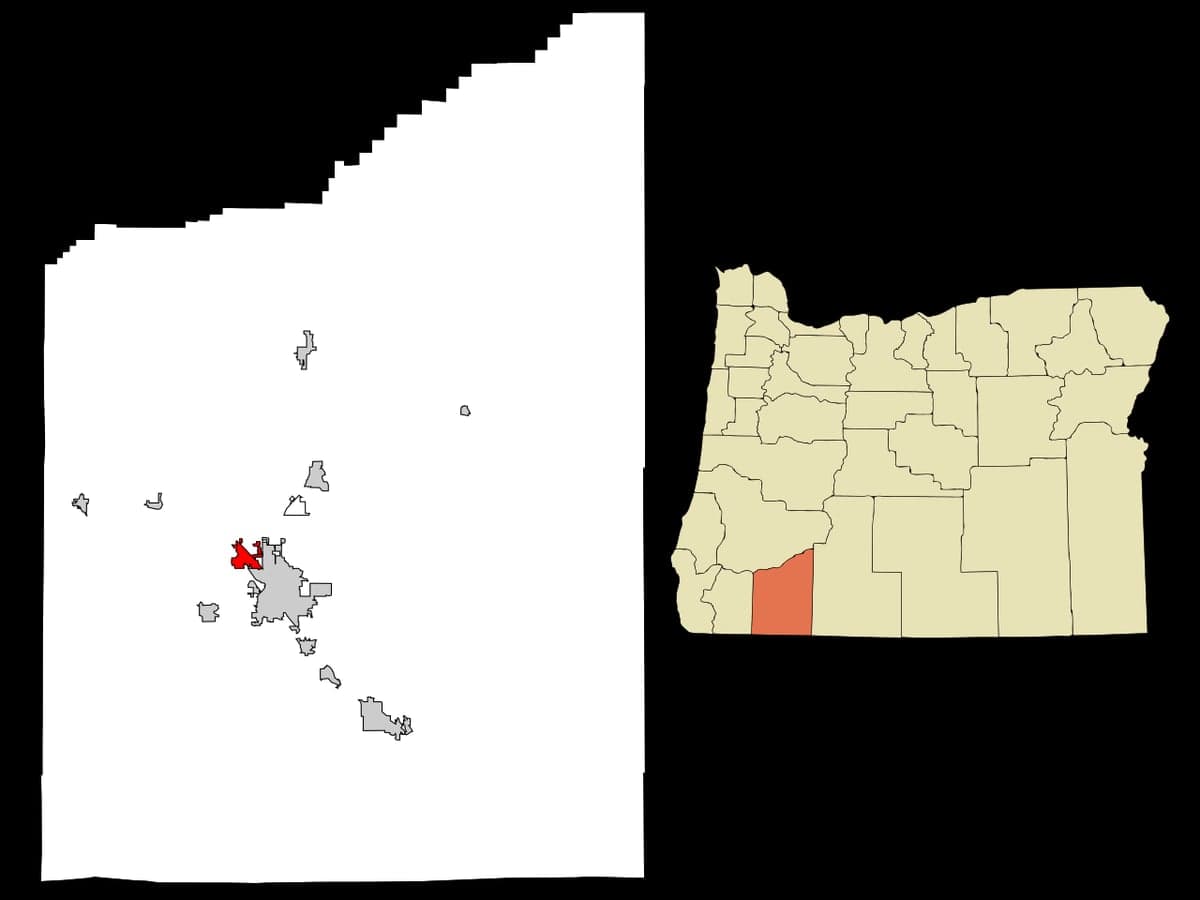
Central Point, Oregon, has long been a solidly conservative community, and that hasn't changed much. The Cook PVI of R+14 tells you the math: this is a place where Republican candidates routinely win by double digits, and the local culture reflects that. But if you've lived here as long as I have, you've noticed the political winds shifting, not in the voting booth so much, but in the conversations at the coffee shop and the local school board meetings. The trajectory is one of quiet tension—the old-guard conservative values are still the bedrock, but there's a growing undercurrent of progressive activism, especially from newcomers priced out of Ashland and Medford, that's starting to chafe against the area's traditional live-and-let-live, low-tax ethos.
How it compares
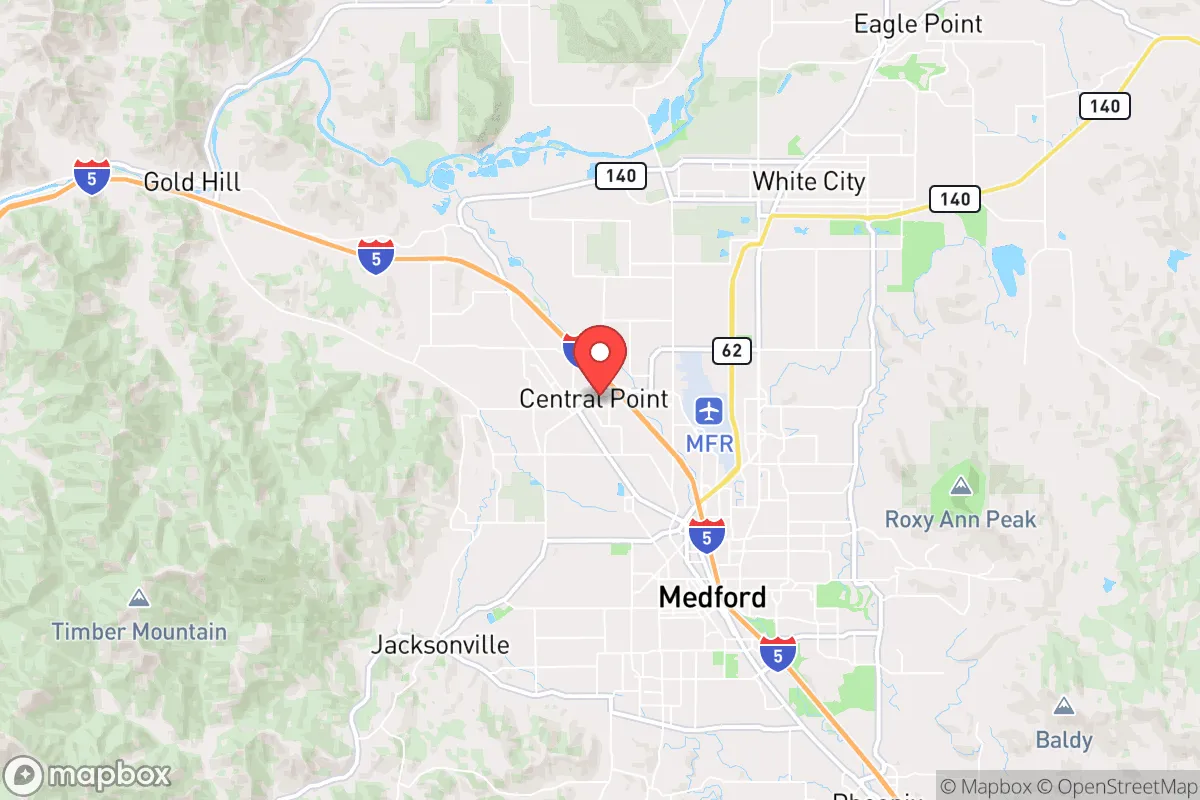
Drive ten minutes north to Medford, and you'll find a more mixed bag—still conservative overall, but with a noticeable liberal pocket near the downtown and the college. Head south to Ashland, and you're in a completely different world: a deep-blue college town where the city council debates things like sanctuary city policies and public art funding. Central Point sits right in the middle, geographically and politically. It's the place where people move to get away from the higher taxes and the "progressive experiments" of Ashland, but also where they worry that the same ideas are creeping in through the school district and county planning commissions. Compared to Jackson County as a whole, which is R+11, Central Point is a bit redder, a bit more resistant to the kind of zoning and environmental regulations that folks in Portland take for granted.
What this means for residents
For someone like me, the biggest concern is government overreach—whether it's the state mandating new energy codes on your home remodel or the county trying to restrict how you use your own land. The local city council is still reliably conservative, but the real fights are happening at the county and state level. Property rights are a constant battleground, with new land-use rules that feel like they're designed to make it harder to build a shop in your backyard or keep a few chickens. The school board has also become a flashpoint, with debates over curriculum transparency and parental rights that didn't exist a decade ago. If you value personal freedom—the kind where you don't need a permit to put up a fence or a sign—you'll find Central Point more aligned with that than most of the Rogue Valley, but you'll still need to keep an eye on Salem.
On the plus side, the tax burden here is lower than in Ashland or even parts of Medford. No city income tax, and property taxes are among the lowest in the state for a town this size. That's a big reason why families and small business owners stick around. The downside? Services are lean. Don't expect the kind of bike lanes, public transit, or social programs you'd get in a blue city. The trade-off is that your money stays in your pocket, and the local government mostly leaves you alone—for now.
Culturally, Central Point still feels like a small farming town at heart, with the Rogue Valley's agricultural roots showing in the annual Pear Blossom Festival and the local feed store. But the influx of remote workers and retirees from California is slowly changing the vibe. You'll see more electric cars in the grocery store parking lot than you did five years ago, and the local farmers market now has a kombucha stand. It's not a bad thing, but it's a sign that the political and cultural center of gravity is shifting. If the trend continues, the next decade could see Central Point become a battleground between the old conservative order and a new, more progressive wave. For now, though, it's still a place where a "Keep Your Government Hands Off My Medicare" bumper sticker gets a knowing nod, not a side-eye.

State Political ClimatePolitical Climate in Oregon
State Political AnalysisPolitical Environment in the State
Oregon has long been painted as a deep-blue state, but the reality is far more complicated—and the trend lines are concerning for anyone who values personal freedom. The state’s political center of gravity is overwhelmingly driven by the Portland metro area (Multnomah, Washington, and Clackamas counties), which alone accounts for nearly half the state’s population and reliably delivers 70-75% of its votes to Democrats. Over the past 20 years, the state has shifted from a purple-leaning-blue swing state to a solidly blue one at the statewide level, with Democrats controlling the governorship, both legislative chambers, and every statewide office since 2016. However, that top-line blue veneer masks a fierce urban-rural civil war, and recent ballot measures and local elections suggest the progressive coalition is starting to crack under its own weight.
Urban vs. rural divide
The political map of Oregon is a study in extremes. The Portland metro—including Portland, Beaverton, Gresham, and Hillsboro—votes like a mini San Francisco, with precincts routinely hitting 80-85% Democratic. The Willamette Valley cities of Eugene and Salem are also reliably blue, though Eugene’s anarchist-tinged politics make Portland look moderate. In stark contrast, the rest of the state is deeply red. Eastern Oregon counties like Malheur, Harney, and Lake vote 75-80% Republican, and even the more populated Bend (Deschutes County) has become a battleground: it voted for Biden in 2020 but flipped back to a Republican state house district in 2022 and elected a GOP county commissioner in 2024. The Rogue Valley (Medford, Ashland) is split—Ashland is a liberal enclave, but Medford and Grants Pass lean right. The real story is the growing suburban revolt: Clackamas County, once a reliable red suburb, has trended blue, but Yamhill County (McMinnville) and Marion County (Salem area) are now competitive, with Republicans winning local races there in 2024. The divide isn’t just geographic—it’s cultural, with rural residents feeling increasingly ignored by Salem and Portland.
Policy environment
Oregon’s policy environment is a mixed bag that leans heavily progressive, with some notable exceptions. The state has no sales tax—a rare bright spot—but makes up for it with the nation’s 6th highest personal income tax rate (top bracket 9.9%) and high property taxes (averaging 0.93% of assessed value). The regulatory climate is hostile to business: Portland’s strict land-use laws, the statewide Urban Growth Boundary, and a 2023 law banning new gas stations in some areas have driven up housing costs and stifled development. Education policy is a flashpoint: Oregon’s K-12 system ranks 42nd in the nation for reading and math proficiency, yet the state spends $14,000 per student—above the national average. The 2023 Student Success Act poured billions into schools with little measurable improvement. Healthcare is heavily regulated, with a state-run insurance exchange and Medicaid expansion under the Affordable Care Act. Election laws are among the most progressive: Oregon was the first state to vote entirely by mail (1998), and in 2021 it became the first to automatically register voters at 16. The 2023 HB 2002 expanded abortion access and gender-affirming care, but also mandated that insurance cover those procedures—a policy that has driven some religious employers out of the state.
Trajectory & freedom
On the freedom front, Oregon is moving in the wrong direction for conservatives. The 2023 HB 2005 banned the sale of new gas-powered cars by 2035, and the 2024 HB 4134 effectively banned new natural gas hookups in most residential buildings. Gun rights have been under sustained assault: the 2022 Measure 114 (passed by voters) requires a permit to purchase a firearm, bans magazines over 10 rounds, and mandates a waiting period—though it’s currently tied up in court. Parental rights took a hit with the 2023 HB 2395, which allows minors 15 and older to access gender-affirming care without parental consent. Medical autonomy is eroding: the 2023 HB 2002 also removed parental notification requirements for abortion. Property rights are under pressure from the Land Conservation and Development Commission (LCDC), which has expanded the Urban Growth Boundary in Portland but also imposed new restrictions on rural development. On the plus side, Oregon has no sales tax, and the 2024 Measure 112 (which would have removed the constitutional ban on non-unanimous juries) failed, preserving some criminal justice protections. But the overall trend is clear: the state is becoming less free for anyone who values traditional liberties.
Civil unrest & political movements
Oregon has a long history of political extremism, and recent years have only intensified it. The 2020 Portland protests were among the most sustained and violent in the nation, with 100+ consecutive nights of demonstrations, arson, and clashes with federal agents. The Pacific Northwest Youth Liberation Front and Rose City Antifa remain active, though less visible. On the right, the Oregon Citizens Alliance (anti-LGBTQ) and III%ers have a presence, but the most notable movement is the Greater Idaho movement, which seeks to secede 13 eastern Oregon counties to join Idaho. As of 2025, 11 counties have passed measures supporting the idea, though it’s a symbolic gesture. Immigration politics are a flashpoint: Portland is a sanctuary city (since 1987), and the 2023 HB 3264 further restricted local cooperation with ICE. Election integrity remains a concern: Oregon’s all-mail system has seen isolated fraud cases, but the 2022 HB 4141 actually made it harder to verify signatures. The 2024 election saw a surge in ballot drop box fires in Portland and Eugene, though no widespread fraud was proven. A new resident will notice the political graffiti and homeless encampments in Portland—both are visible symbols of the state’s deep divisions.
Projection
Over the next 5-10 years, Oregon is likely to become more polarized, not less. The Portland metro will continue to drive statewide elections blue, but the rural exodus is accelerating: Deschutes County (Bend) is growing fast with Californians and Texans, many of whom are moderate-to-conservative, and Clackamas County could flip back to purple if housing costs push out progressives. The Greater Idaho movement will remain a talking point but won’t succeed without a constitutional amendment. The real wildcard is demographics: Oregon’s population growth has slowed to near zero, and the state is losing native-born residents to Texas and Idaho. The 2024 election saw Republicans flip two state house seats and come within 2 points of winning the governor’s race—a sign that the progressive coalition is fraying. Expect more ballot measures on tax reform, parental rights, and gun rights as conservatives try to bypass the legislature. The housing crisis will likely force some deregulation, but don’t expect a libertarian revolution. A new resident moving in now should expect a state that is culturally blue but politically contested, with a government that is increasingly hostile to traditional values but too dysfunctional to fully enforce its agenda.
For a conservative-leaning individual or family, Oregon offers a beautiful landscape and no sales tax, but the trade-offs are steep. You’ll pay high income taxes, deal with a regulatory environment that stifles business and housing, and live in a state where your values are increasingly at odds with the ruling class. If you’re looking for a place where your vote actually counts and your rights are respected, eastern Oregon (Pendleton, La Grande, Baker City) or the Rogue Valley (Grants Pass, Medford) are your best bets—but even there, you’ll be fighting an uphill battle against Salem and Portland. Bottom line: Oregon is a beautiful state to visit, but a tough one to call home if you value freedom and traditional values. Do your homework, and don’t say you weren’t warned.
* Values derived from national, state, county, city and local statistics and may differ in a specific area. Last updated: 2026-05-03T16:58:06.000Z
Narrative content on this page is AI-generated and may contain mistakes. Verify any details that matter before acting on them.
ReloMaps may earn a commission from affiliate links at no extra cost to you.

