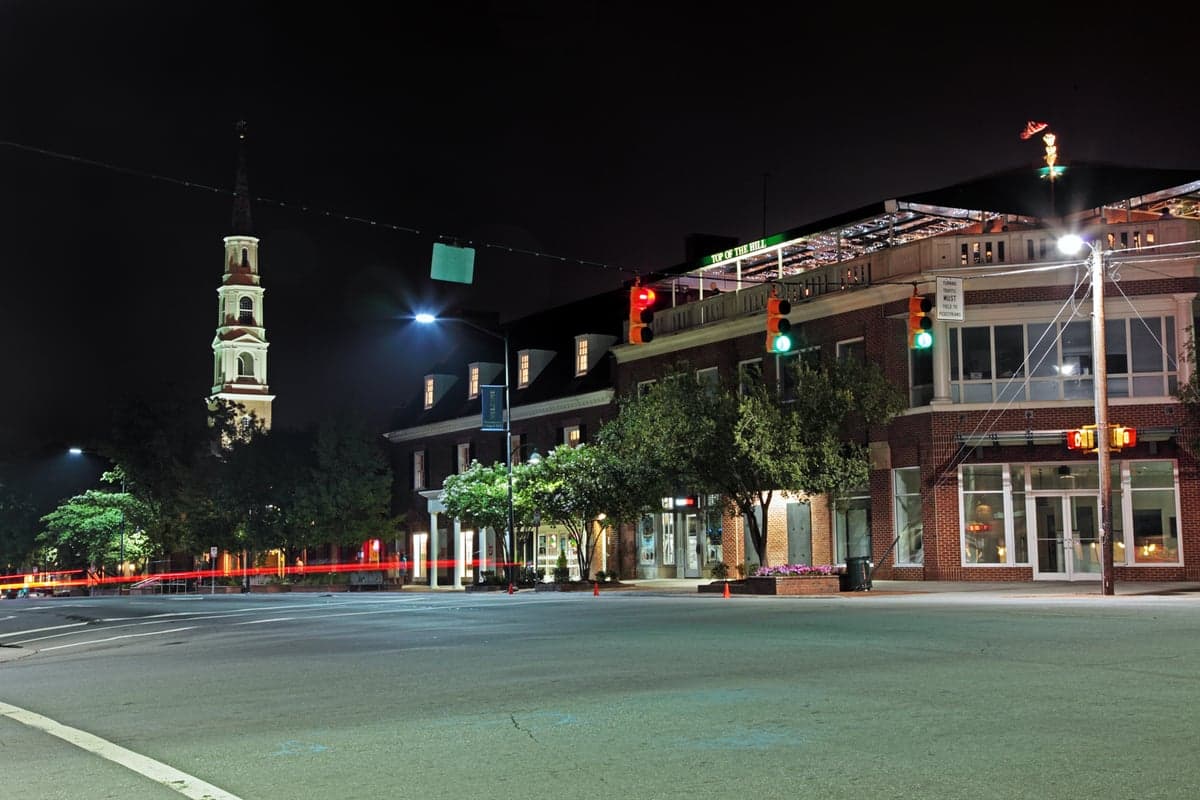
Photo: Wikipedia
Quality of Life in Chapel Hill, NC
A high quality of life with strong walkability, manageable living costs, healthy neighborhood signals, and solid amenity access.
What does Quality of Life tell us?
Quality of Life blends cost of living, nearby amenities, socioeconomic signals, and neighborhood character. City-level scores represent the whole municipality; individual neighborhoods can differ.
What does this tell us?
Quality of Life blends cost of living, nearby amenities, socioeconomic signals, and neighborhood character. City-level scores represent the whole municipality; individual neighborhoods can differ.
Cost of Living
58% above national average
The Real Cost of Living in Chapel Hill, NC for 2026
| Tier | Individual | Family (4) |
|---|---|---|
| Survival | $24k | $44k |
| Comfortable | $112k | $165k |
| Luxury | $155k+ | $240k+ |
| Elite (Top 5%) | $261k+ | $404k+ |
52%
The Area Signal
A metric tracking the socioeconomic signals of the area.
Hobbies
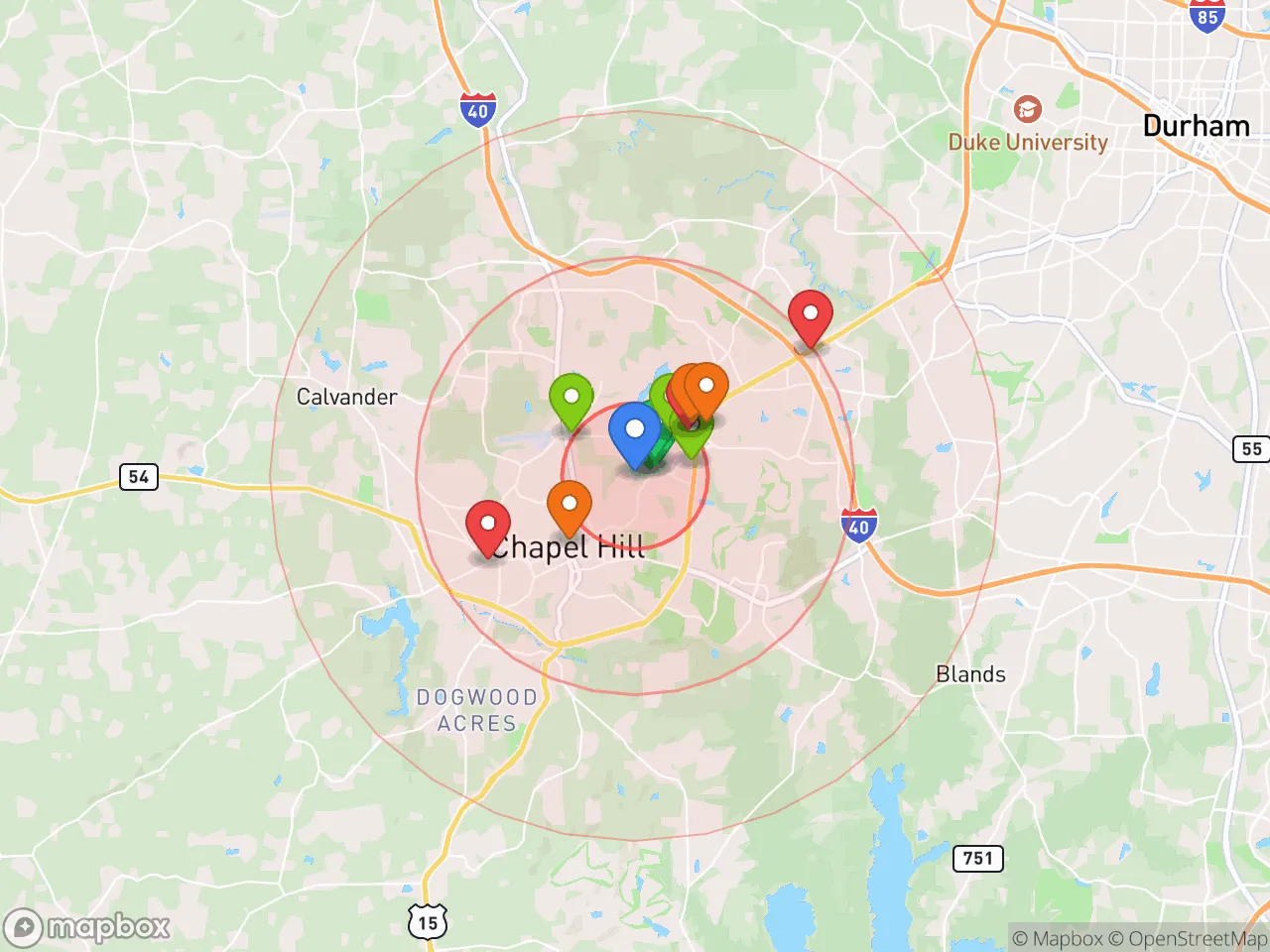
Explore the areaGroceries
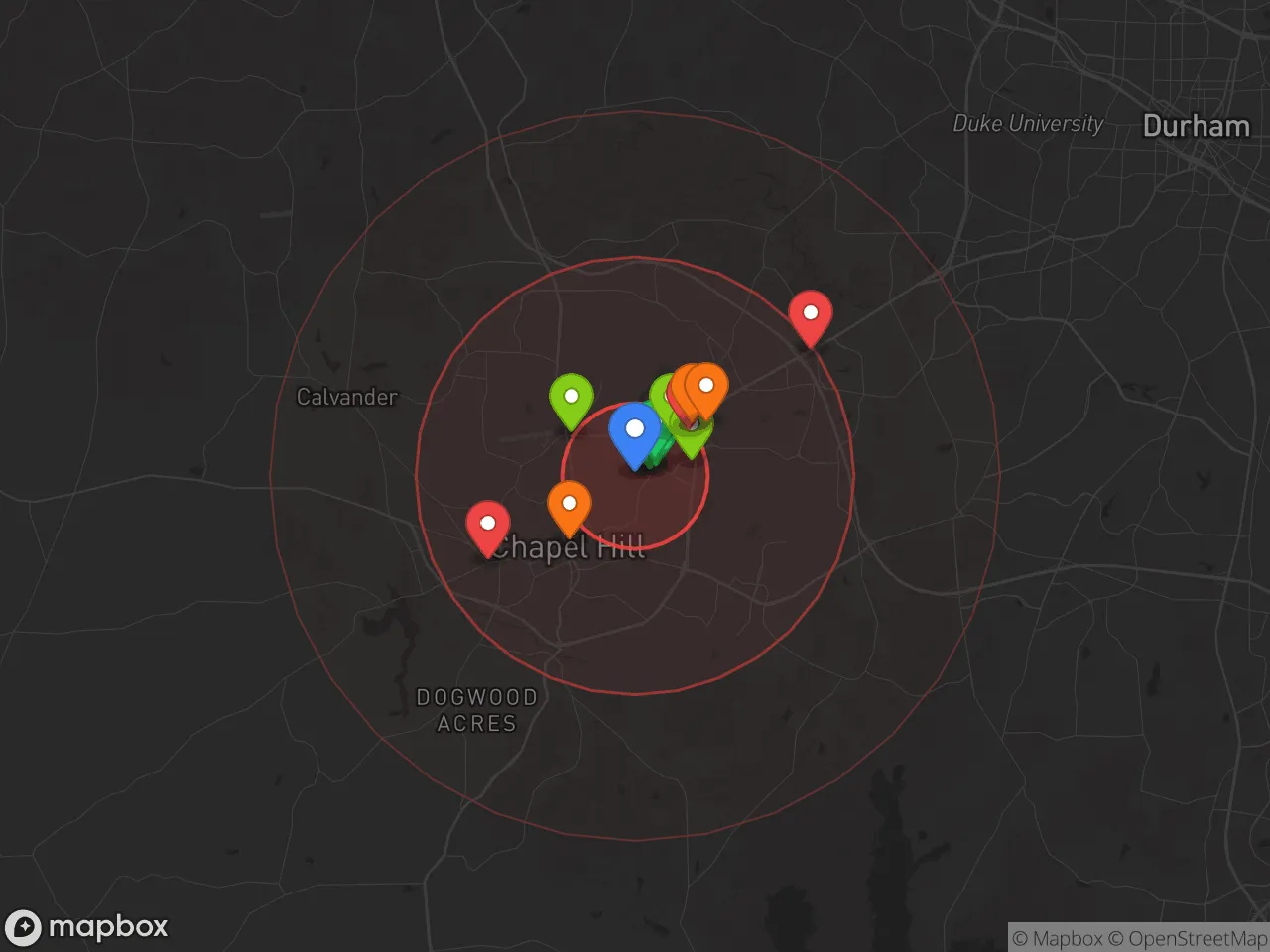
8 within 10 miles
Gas
20 within 10 miles
Hospital
18 within 20 miles
Airport
RDU — Raleigh–Durham International
Post Office
USPS — Chapel Hill, NC
Critical Amenities
Quality-of-Life Analysis
Chapel Hill, North Carolina, anchors a region defined by academic prestige, progressive values, and a notably high cost of living that shapes who can afford to live here. With a cost of living index of 158 (58% above the U.S. average), the town draws a mix of University of North Carolina faculty, medical professionals from UNC Health, graduate students, and affluent professionals who prioritize education and community engagement over low expenses. The population skews highly educated—over 70% of adults hold a bachelor's degree or higher—and politically liberal, creating an environment where intellectual discourse, environmental sustainability, and civic participation are everyday norms.
Cost of living, housing affordability, and how Chapel Hill compares to Durham and Raleigh
Chapel Hill's housing market is the primary driver of its elevated cost of living, with a median home value of $576,500—roughly 40% higher than the national median and significantly above nearby Durham ($420,000) and Raleigh ($450,000). For renters, the median rent of $1,483 is more manageable but still 15-20% higher than comparable units in Carrboro or southern Durham. The average commute of 19.6 minutes is remarkably short for a metro area of this size, largely because many residents work within the town's boundaries at UNC, the university's medical system, or local tech startups. However, first-time buyers often find themselves priced out of single-family homes in Chapel Hill proper, pushing them toward neighboring communities like Mebane, Hillsborough, or Chatham County, where home values drop by 30-50%. Property taxes in Orange County (where Chapel Hill sits) are moderate at roughly 0.85% of assessed value, but the lack of new housing construction keeps inventory tight and prices elevated.
What daily life is like: amenities, schools, and the town-gown rhythm
Daily life in Chapel Hill revolves around the University of North Carolina campus, Franklin Street's independent shops and restaurants, and a dense network of greenways and parks. The Chapel Hill-Carrboro City Schools system is consistently ranked among North Carolina's best, with East Chapel Hill High and Carrboro High both posting graduation rates above 95% and strong Advanced Placement participation. The town's walkable downtown core—anchored by the historic Carolina Inn and the Ackland Art Museum—hosts weekly farmers' markets, live music at Local 506, and the annual Festifall arts festival. For outdoor recreation, the 870-acre Carolina North Forest and the Bolin Creek Trail provide immediate access to hiking and mountain biking, while Jordan Lake (20 minutes south) offers boating and swimming. The town-gown dynamic is cooperative but distinct: UNC students dominate the social scene near campus, while families and retirees gravitate toward quieter neighborhoods like Southern Village or Meadowmont, where mixed-use development includes grocery stores, coffee shops, and playgrounds within walking distance.
Chapel Hill is best suited for professionals, academics, and families who value top-tier public schools, a walkable college-town atmosphere, and progressive community values—and who have the financial means to afford it. The high cost of housing and limited inventory make it a challenging market for young renters or lower-income households, who often find better value in adjacent Carrboro or Durham. For those who can absorb the premium, the trade-off is a small-city lifestyle with big-city amenities: nationally ranked healthcare at UNC Hospitals, a robust local food scene, and a community where political engagement and environmental stewardship are woven into daily life. Retirees and empty-nesters also thrive here, drawn by the Osher Lifelong Learning Institute at UNC and the proximity to Research Triangle Park's cultural and employment opportunities.

Crime in Chapel Hill, NC
Lower crime rates than 77% of comparable U.S. locations.
Violent CrimeViolent Crime Analysis
Property CrimeProperty Crime Analysis
Crime Analysis
Chapel Hill, North Carolina, presents a complex safety picture: its violent crime rate of 83.4 incidents per 100,000 residents is remarkably low—roughly one-fifth the national average—but its property crime rate of 1,768.3 per 100,000 sits notably higher than both state and national medians. This divergence means that while the risk of a violent confrontation is statistically minimal, residents face a significantly elevated chance of theft, burglary, or vehicle break-in. The town’s progressive political environment, including elected officials and district attorneys who prioritize rehabilitation and diversion programs over incarceration, is a factor that some residents cite as contributing to a permissive atmosphere for repeat property offenders.
Crime in context
Chapel Hill’s violent crime rate is roughly 80% lower than the national average of about 380 per 100,000 and well below North Carolina’s state rate of approximately 350 per 100,000. This places the town among the safest small cities in the Triangle region for violent offenses. However, the property crime rate of 1,768.3 per 100,000 exceeds the national average of roughly 1,950 but is still lower than many peer college towns. The gap between very low violent crime and elevated property crime is a hallmark of communities with large student populations and transient rental housing—conditions that also intersect with a justice system that, under progressive leadership, often issues low bonds and short sentences for non-violent theft, a pattern that can embolden repeat offenders.
What residents experience
For most Chapel Hill residents, daily life feels safe in public spaces, downtown areas, and on the University of North Carolina campus. Violent incidents are rare and typically involve known parties rather than random attacks. The primary safety concern is property crime: bicycle theft, car break-ins, and package theft are common complaints, particularly in neighborhoods near campus and along major corridors like Franklin Street and Martin Luther King Jr. Boulevard. Residents often report that police response to property crimes is thorough but that arrests rarely lead to meaningful consequences, as the local district attorney’s office frequently diverts low-level offenders into treatment or community service programs rather than prosecution. This approach, while intended to reduce recidivism through social services, can leave victims feeling that the system prioritizes offender rehabilitation over public deterrence.
Neighborhood-level variation is significant. Areas like Southern Village and Meadowmont report lower property crime rates due to tighter homeowner associations and less foot traffic, while rental-heavy zones near campus and along Elliott Road see higher theft and vandalism. The town’s overall safety profile is thus best understood as a trade-off: very low violent crime paired with persistent property crime, influenced by a justice philosophy that some residents view as lenient on repeat offenders. For families and long-term homeowners, choosing a neighborhood with active community watch programs and limited transient rental density can substantially reduce risk.
* Values derived from national, state, county, city and local statistics and may differ in a specific area. Last updated: 2026-04-29T23:22:12.000Z
Narrative content on this page is AI-generated and may contain mistakes. Verify any details that matter before acting on them.
ReloMaps may earn a commission from affiliate links at no extra cost to you.

