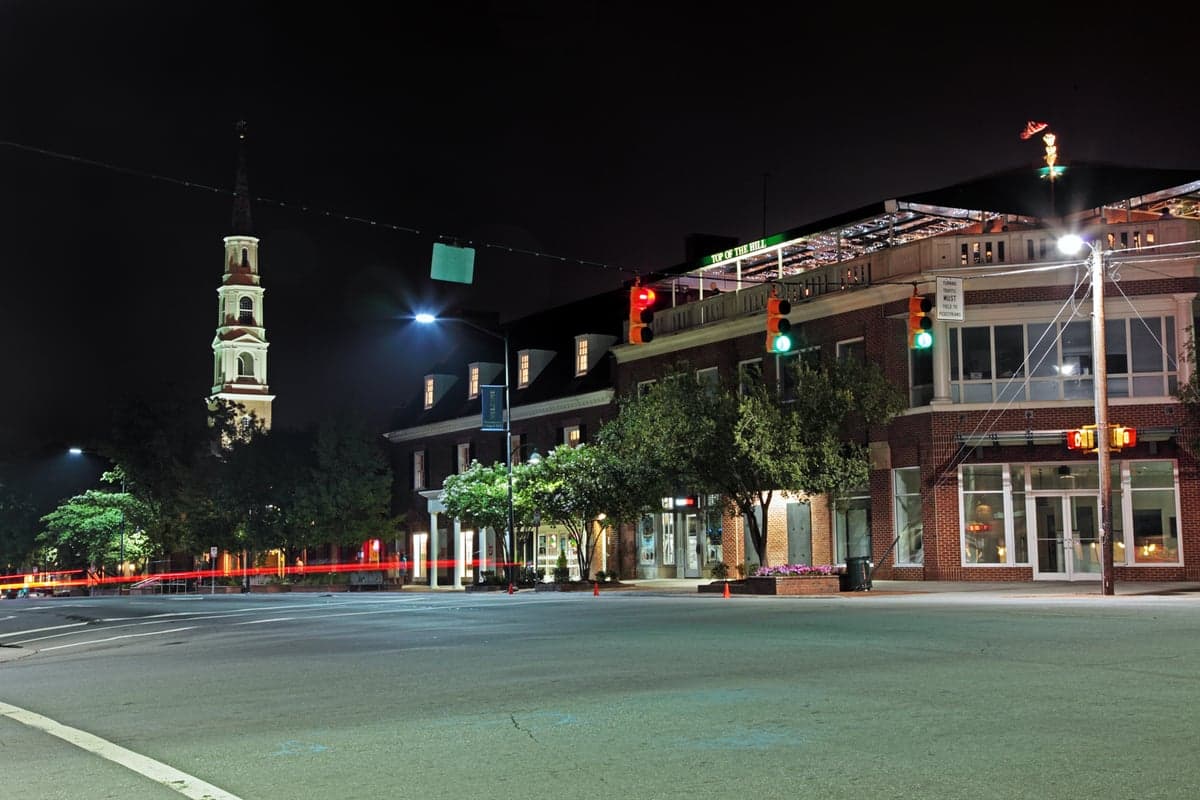
Photo: Wikipedia
Personal Sovereignty in Chapel Hill, NC
Viable for self-reliance. Generally workable, though some barriers may limit total independence.
What does Personal Sovereignty tell us?
Personal Sovereignty measures your capacity for self-reliance and independence with minimal government friction. Higher scores mean fewer barriers between you and the way you want to live... but it assumes you have the space you need and good neighbors.
What does this tell us?
Personal Sovereignty measures your capacity for self-reliance and independence with minimal government friction. Higher scores mean fewer barriers between you and the way you want to live... but it assumes you have the space you need and good neighbors.
State Policy
Energy independence: Importer (15% of energy produced in-state)
Personal Liberty
Homesteading

Personal Liberty Analysis
For a survivalist or prepper evaluating personal sovereignty, Chapel Hill presents a deeply conflicted picture. While North Carolina offers a relatively strong state-level preemption framework on firearms and a right-to-work environment, the town itself is a progressive enclave where local governance actively pursues policies that can feel like government overreach into personal freedoms. The autonomy environment here is best described as a tug-of-war: state law provides a floor of liberty, but the Orange County political machine constantly pushes to raise that floor into a ceiling, particularly on property use, taxation, and the pace of daily life. If you value being left alone to prepare, fortify, and live by your own rules, Chapel Hill requires constant vigilance against municipal overreach.
Tax burden and regulatory posture for self-reliant individuals
North Carolina’s flat income tax rate of 4.5% (as of 2026) is a genuine advantage, but it is immediately offset by Orange County’s property tax rate of roughly 0.87% of assessed value, which is among the highest in the state. For a $400,000 home, that’s about $3,480 annually before any special assessments. The county also levies a 0.5% local option sales tax, bringing the total to 7.25% in Chapel Hill. More concerning for the prepper mindset is the regulatory posture: the town’s Unified Development Ordinance is dense and actively enforced. Permitting for even minor structural changes—like adding a shed, a rainwater catchment system, or a privacy fence—can take months and requires multiple inspections. The town also has a strict stormwater management fee based on impervious surface area, which penalizes anyone who wants to pave a larger driveway for a truck or build a covered storage area. This is not a jurisdiction that tolerates "ask forgiveness, not permission" approaches; the code enforcement office is known for proactive patrolling via satellite imagery and neighbor complaints.
Self-defense rights and gun law specifics in Orange County
North Carolina is a shall-issue state for concealed carry, and as of 2023, permitless open carry is legal for anyone who can legally possess a firearm. Orange County’s sheriff, however, is known for a slower-than-average processing time for concealed carry permits—often 90 to 120 days versus the statutory 45-day window in more rural counties. The county also has a history of voluntary "gun safety" ordinances that, while not legally binding, signal a hostile attitude toward armed self-defense. Chapel Hill itself bans firearms in all town-owned buildings and parks, a restriction that is enforceable under state law but feels like a thumb on the scale against the Second Amendment. For the survivalist, the key takeaway is that while you can legally carry in most of the town, you will be doing so in a community where the police and local government view that right with suspicion. There are no local magazine capacity bans or "assault weapon" restrictions, but the political pressure to enact them is constant, and a change in the state legislature could remove preemption protections.
Self-reliance and homesteading viability: lot sizes, zoning, and off-grid feasibility
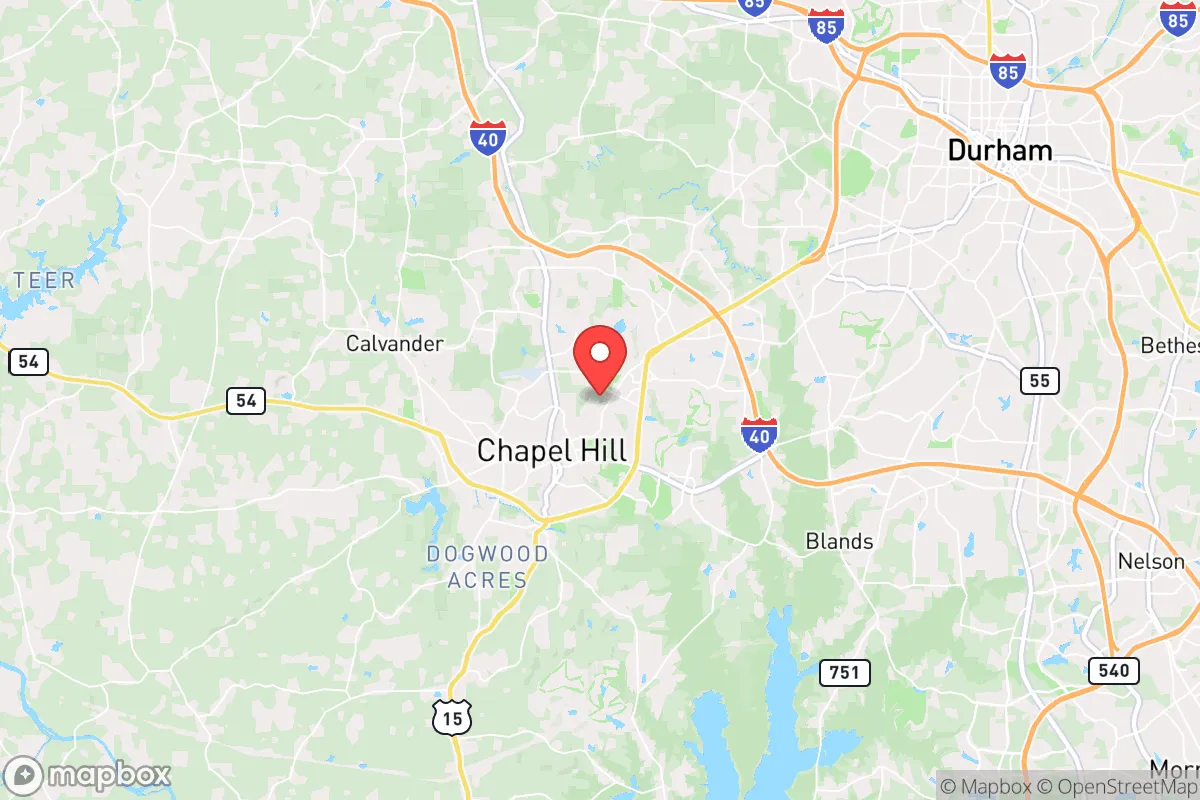
This is where Chapel Hill fails the prepper test most clearly. The minimum lot size within the town limits is typically 0.25 to 0.5 acres, and most residential zoning (R-1, R-2) explicitly prohibits keeping livestock, including chickens, within 100 feet of any dwelling—effectively banning them on standard lots. Backyard chickens are technically allowed with a permit, but only for hens, no roosters, and the coop must be 50 feet from any neighbor’s house. Goats, pigs, and bees are outright banned in most residential zones. Off-grid living is nearly impossible: the town requires connection to municipal water and sewer for any habitable structure, and solar panels must be approved through a lengthy architectural review process. Rainwater collection for potable use is legal but requires a permit and must meet strict health department standards. The only viable path for a self-reliant lifestyle is to buy land in the unincorporated parts of Orange County—north of I-40 or east toward Hillsborough—where lot sizes of 2-5 acres are common and agricultural zoning allows for gardens, small livestock, and even a private well. But even there, the county’s soil and water conservation district has the power to restrict land clearing and drainage projects.
Personal liberties: parental rights, medical autonomy, speech, and property
Parental rights in Chapel Hill are under constant pressure. The Chapel Hill-Carrboro City Schools system has a gender identity support policy that allows students to change their names and pronouns without parental notification, and the district has resisted state-level efforts to mandate transparency. Medical autonomy is similarly constrained: Orange County has a needle exchange program and a harm reduction approach to drug policy that many conservatives view as enabling rather than solving addiction. During the COVID-19 pandemic, the county imposed some of the longest-lasting mask mandates and business restrictions in the state, and the health department retains broad emergency powers that could be reactivated. Free speech is legally protected, but the social climate is heavily left-leaning; expressing dissenting views on public health, immigration, or election integrity in public forums or on Nextdoor can lead to social ostracism or even doxxing. Property rights are the most tangible concern: the town has an active rent control study committee (though state law prohibits actual rent control), and it aggressively uses inclusionary zoning to force developers to set aside units for low-income housing, which drives up costs for everyone else and reduces the supply of single-family homes. The town also has a tree protection ordinance that can fine homeowners for removing a tree over 6 inches in diameter without a permit, a clear example of government overreach onto private land.
Overall, personal sovereignty in Chapel Hill is a fragile, contested concept. The state of North Carolina provides a solid legal foundation—permitless carry, flat tax, right-to-work, and preemption on many local gun laws—but the town and county governments actively work to erode that foundation at every opportunity. For a survivalist or prepper, this is not a place to dig in and fortify; it is a place to live lightly, keep your head down, and maintain a bug-out location in a more rural county. Compared to areas like Wake County (Raleigh) or even Durham, Chapel Hill is the most restrictive in the Triangle for personal autonomy. If you value being the sovereign of your own property and life, you will find yourself constantly fighting the town council, the planning board, and the health department. The best strategy here is to treat Chapel Hill as a temporary base for work or education, not a permanent redoubt.

* Values derived from national, state, county, city and local statistics and may differ in a specific area. Last updated: 2026-04-29T23:22:12.000Z
Narrative content on this page is AI-generated and may contain mistakes. Verify any details that matter before acting on them.
ReloMaps may earn a commission from affiliate links at no extra cost to you.

