Photo: Wikipedia
Demographics of Charleston, WV
Affluence Level in Charleston, WV
A middle-class area roughly in line with national averages across income, home values, education, and employment.
People of Charleston, WV
The people of Charleston, WV today form a predominantly white (75.9%), college-educated (44.1%) population of 47,918, with a notably small foreign-born share of just 1.4%. The city’s character is shaped by its history as a state capital and industrial hub, producing a stable, family-oriented community with a strong sense of place. Distinctive markers include a significant Black minority (11.8%) and a small but growing Indian-subcontinent community (2.0%), while East/Southeast Asian (0.7%) and Hispanic (1.9%) populations remain minimal. This is a city where longtime residents anchor neighborhoods, and newcomers are drawn by government jobs, healthcare, and a lower cost of living.
How the city was settled and grew
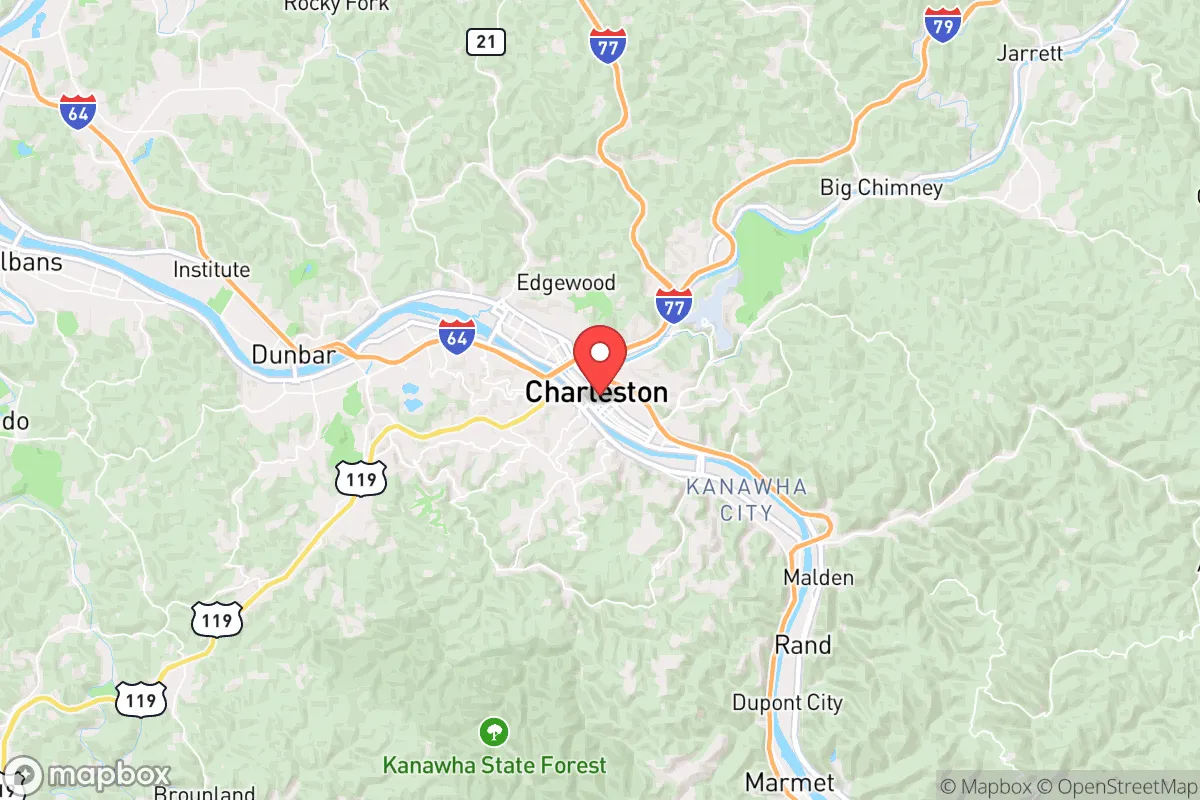
Charleston was founded in 1788 as Fort Lee at the confluence of the Elk and Kanawha Rivers, a strategic point for settlers moving west. The original population was overwhelmingly of English, Scots-Irish, and German stock, drawn by land grants and the promise of fertile river valleys. The discovery of salt in the Kanawha Valley in the early 1800s triggered the first major growth wave, attracting laborers and entrepreneurs. By the late 19th century, the arrival of the Chesapeake and Ohio Railway made Charleston a coal-shipping and manufacturing center, pulling in European immigrants—primarily Italians, Poles, and Greeks—who settled in working-class neighborhoods like East End and West Side. The early 20th century saw a significant Black migration from the rural South, drawn by jobs in the chemical plants and railroads; these families concentrated in Washington Heights and parts of the East End, forming the core of the city’s Black community. The state capital designation in 1885 added a layer of government employment that stabilized the population through the Great Depression and World War II.
Modern era (post-1965)
The post-1965 period brought demographic shifts that reshaped Charleston’s neighborhoods. The Immigration and Nationality Act of 1965 opened doors to new groups, but Charleston’s foreign-born population remained tiny—just 1.4% today—reflecting the city’s limited draw for international migrants compared to coastal metros. The most notable post-1965 change was suburbanization: white and middle-class families moved to newer developments in South Hills and Kanawha City, leaving older inner-city neighborhoods like the West Side and Washington Heights with higher poverty rates and a larger Black share. The Black population, which peaked at roughly 15% in the 1970s, has declined to 11.8% as some families followed the suburban exodus or left the state entirely. The Indian-subcontinent community (2.0%) is a recent, small-scale arrival, largely professionals in healthcare and engineering at Charleston Area Medical Center and local universities; they have no single concentrated neighborhood but are scattered across South Hills and Kanawha City. East/Southeast Asian residents (0.7%) are even fewer, mostly connected to West Virginia University’s Charleston campus. The Hispanic population (1.9%) is growing slowly, with a small cluster of service workers in the East End.
The future
Charleston’s population is heading toward continued slow decline—down from 53,421 in 2000—driven by outmigration of younger adults and a low birth rate. The city is not homogenizing into a single identity but rather tribalizing into distinct enclaves: the West Side remains predominantly Black and lower-income, South Hills is overwhelmingly white and affluent, and Kanawha City is a mixed middle-class area. The Indian-subcontinent community is likely to grow modestly as healthcare and tech jobs expand, but it will remain a small, dispersed group. The foreign-born share is unlikely to rise above 3-4% in the next decade, as West Virginia’s restrictive housing market and limited economic diversity deter large-scale immigration. The white population will continue to age in place, while the Black share may stabilize or decline slightly. For a newcomer, this means moving into a city where neighborhood choice strongly predicts social environment, and where the overall population is shrinking but stable—a place for those seeking a slower pace, lower costs, and a community where roots run deep.
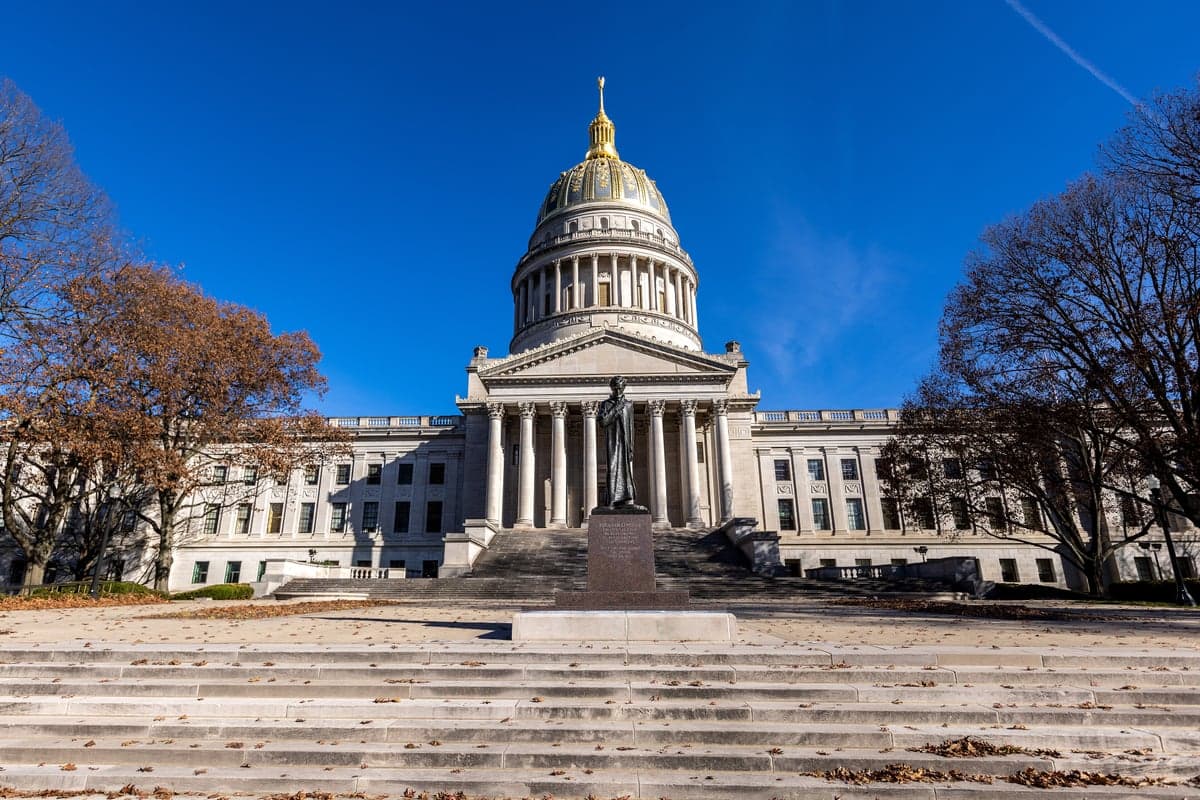
Charleston is becoming a smaller, older, and more residentially stratified city, where the historic industrial and government base has given way to a healthcare-and-services economy. For someone moving in now, the city offers a low-cost, low-crime environment with strong schools in the suburbs, but with limited ethnic diversity and a population that is not growing. The key decision is neighborhood: South Hills for families seeking top-rated schools and safety, Kanawha City for a balanced mix, or the East End for proximity to downtown and the state capitol.

* Values derived from national, state, county, city and local statistics and may differ in a specific area. Last updated: 2026-05-01T18:25:21.000Z
Narrative content on this page is AI-generated and may contain mistakes. Verify any details that matter before acting on them.
ReloMaps may earn a commission from affiliate links at no extra cost to you.

