
Photo: Wikipedia
Quality of Life in Charleston, WV
A high quality of life with strong walkability, manageable living costs, healthy neighborhood signals, and solid amenity access.
What does Quality of Life tell us?
Quality of Life blends cost of living, nearby amenities, socioeconomic signals, and neighborhood character. City-level scores represent the whole municipality; individual neighborhoods can differ.
What does this tell us?
Quality of Life blends cost of living, nearby amenities, socioeconomic signals, and neighborhood character. City-level scores represent the whole municipality; individual neighborhoods can differ.
Cost of Living
27% below national average
The Real Cost of Living in Charleston, WV for 2026
| Tier | Individual | Family (4) |
|---|---|---|
| Survival | $14k | $27k |
| Comfortable | $36k | $53k |
| Luxury | $117k+ | $181k+ |
| Elite (Top 5%) | $186k+ | $288k+ |
121%
The Area Signal
A metric tracking the socioeconomic signals of the area.
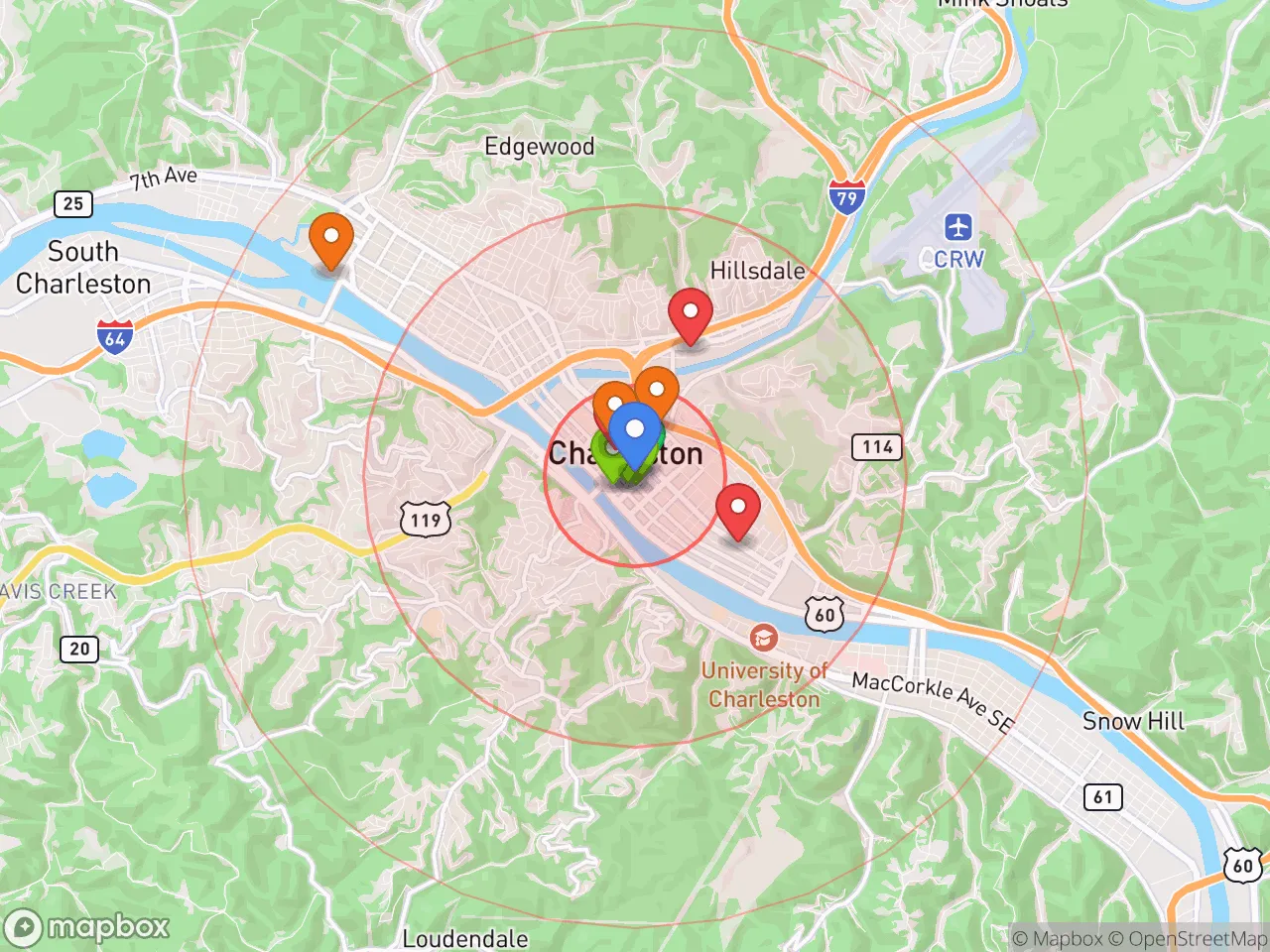
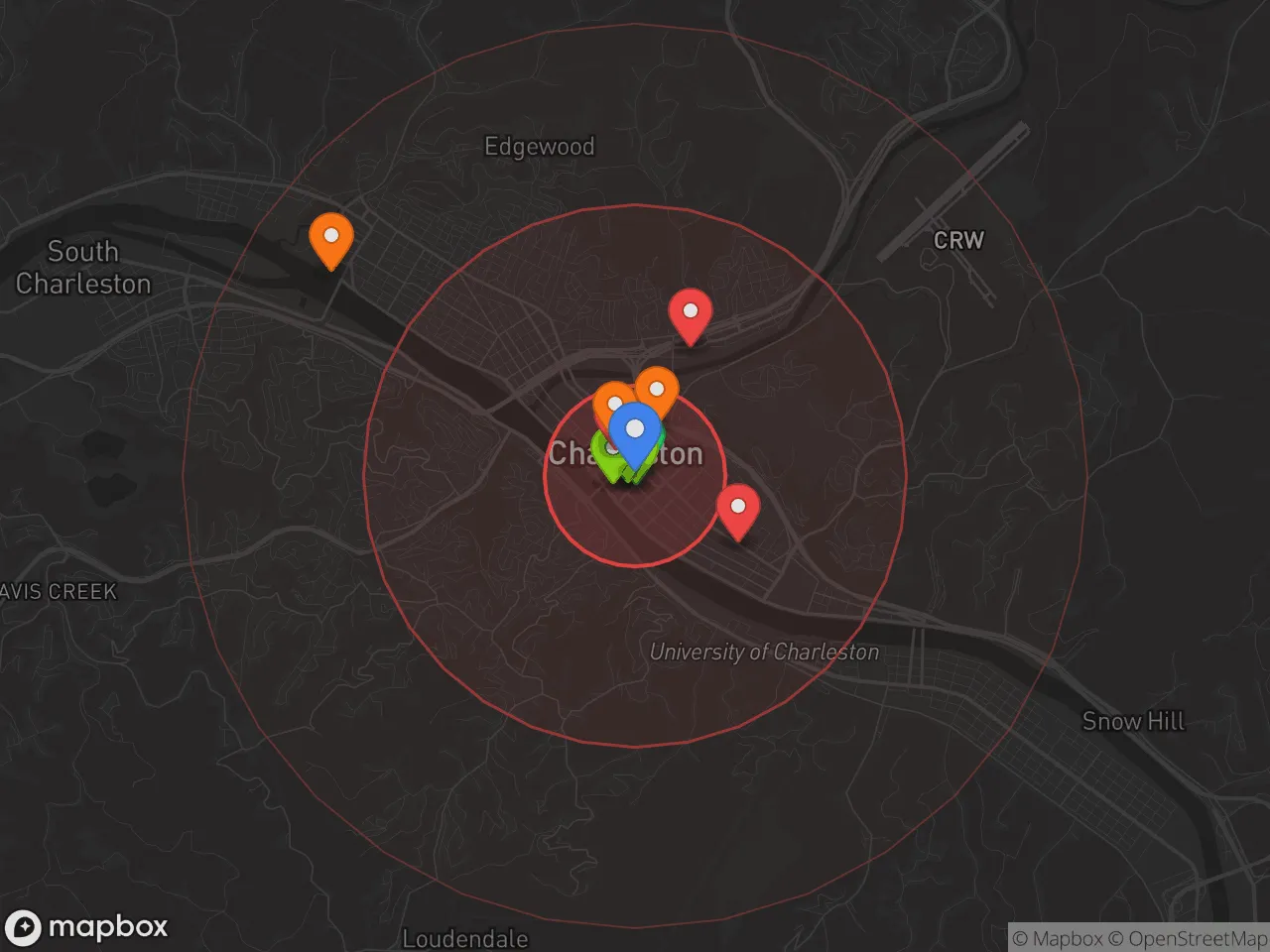
Hobbies
Explore the areaGroceries
6 within 10 miles
Gas
20 within 10 miles
Hospital
9 within 20 miles
Airport
John Glenn Columbus International Airport
Post Office
USPS — Charleston, WV
Critical Amenities
Quality-of-Life Analysis
Charleston, West Virginia, offers a quality of life defined by genuine affordability and a slower, community-oriented pace, attracting a mix of young professionals, remote workers, and families seeking financial breathing room. With a cost of living index of 73 (27% below the U.S. average), the capital city provides a tangible economic advantage that allows residents to own homes and save at rates uncommon in larger metros. The population skews slightly older and more settled, with a strong core of state government employees, healthcare workers at institutions like WVU Medicine, and a growing cohort of remote tech and creative workers drawn by the low overhead and access to outdoor recreation.
Cost of living, housing, and affordability compared to nearby areas
Charleston’s housing market is its most compelling feature for newcomers. The median home value sits at $187,300, and the median rent is $898—figures that are roughly half of what one would pay in comparable state capitals like Richmond, Virginia, or Columbus, Ohio. This affordability extends beyond housing: groceries, utilities, and transportation all track below national averages. Compared to nearby Huntington (COL index 76) or Morgantown (COL index 80), Charleston offers slightly lower home prices and a more stable job market anchored by state government and the CAMC health system. The average commute of 18 minutes is a standout quality-of-life metric, freeing up significant time for family, hobbies, or side projects. For a remote worker earning a national salary, the gap between income and expenses can be substantial, enabling a lifestyle that would be financially strained in pricier regions.
What daily life is like for families and professionals
Daily life in Charleston revolves around a compact, walkable downtown core and easy access to the Kanawha River and surrounding Appalachian foothills. The city’s public school system, Kanawha County Schools, includes magnet programs like George Washington High School and Capital High School, though many families also consider private options such as Charleston Catholic. Amenities are concentrated but solid: the Clay Center for the Arts & Sciences offers a performing arts venue and a hands-on museum, while the Capitol Market provides a year-round indoor farmers market. Outdoor enthusiasts can reach Kanawha State Forest for hiking and mountain biking within 15 minutes of downtown. The restaurant scene is modest but improving, with local staples like The Block and Pies & Pints anchoring the food culture. The overall rhythm is unhurried—weekends often involve riverfront walks, high school sports, or quick trips to nearby New River Gorge National Park. Traffic is negligible, and most errands can be completed in under 20 minutes.
Charleston is best suited for those who prioritize financial stability, outdoor access, and a low-stress daily routine over urban density or cutting-edge nightlife. Remote workers, early-career professionals in healthcare or government, and families seeking a safe, affordable place to raise children will find the city’s trade-offs worthwhile. It is less ideal for those seeking a vibrant 24-hour city or a diverse, fast-growing job market outside of the healthcare and public sectors. For the right person, the combination of a 73 COL index, an 18-minute commute, and immediate proximity to world-class whitewater rafting and hiking creates a quality of life that is both practical and unexpectedly rich.

Crime in Charleston, WV
Higher crime rates than 70% of comparable U.S. locations.
Violent CrimeViolent Crime Analysis
Property CrimeProperty Crime Analysis
Crime Analysis
Charleston, West Virginia, reports a violent crime rate of 548.3 incidents per 100,000 residents and a property crime rate of 3,498.8 per 100,000, placing it well above both state and national averages. These figures indicate that the capital city faces significant public safety challenges, with residents experiencing a notably higher risk of both violent and property offenses compared to the typical American city. The data suggests that safety conditions in Charleston require careful consideration for anyone evaluating relocation to the area.
Crime in context
Charleston's violent crime rate of 548.3 per 100,000 is nearly 50% higher than the national average of roughly 370 per 100,000 and substantially exceeds West Virginia's statewide rate of approximately 330 per 100,000. Property crime in Charleston, at 3,498.8 per 100,000, also significantly outpaces the national average of about 1,950 per 100,000 and the state average of roughly 1,800 per 100,000. These disparities place Charleston among the higher-crime cities in the Appalachian region, with theft, burglary, and motor vehicle theft being particularly prevalent. The elevated property crime rate is a consistent concern for local businesses and homeowners alike.
What residents experience
Residents frequently report that property crimes such as vehicle break-ins, package theft, and vandalism are common occurrences, particularly in areas with higher population density and commercial activity. Violent crime, while less frequent than property crime, includes aggravated assault and robbery as the most reported categories, with homicides occurring periodically but not at the extreme levels seen in much larger metropolitan areas. Local law enforcement agencies have noted that a significant portion of crime is linked to drug-related activity, particularly involving opioids and methamphetamine, which have deeply affected the region. The presence of progressive judicial philosophies in Kanawha County's court system has been cited by some observers as a factor contributing to repeat offenses, as lenient sentencing and diversion programs may reduce the deterrent effect for property and drug-related crimes. This approach, while intended to address root causes, can result in offenders cycling through the system without meaningful accountability, directly impacting public confidence in safety.
Neighborhood-level variation is substantial in Charleston. The East End and South Hills areas generally report lower crime rates and are considered safer, with more family-oriented environments and stronger community policing presence. Conversely, neighborhoods such as the West Side and parts of downtown experience higher concentrations of both property and violent crime, often correlating with areas of economic distress and higher population turnover. Prospective residents are advised to research specific block-level data through local police department crime maps or neighborhood association reports, as safety conditions can change dramatically within a few blocks. Gated communities and newer suburban developments on the city's outskirts typically offer the lowest crime exposure, while older, more transient urban corridors present the greatest risks.
* Values derived from national, state, county, city and local statistics and may differ in a specific area. Last updated: 2026-05-01T18:25:21.000Z
Narrative content on this page is AI-generated and may contain mistakes. Verify any details that matter before acting on them.
ReloMaps may earn a commission from affiliate links at no extra cost to you.

