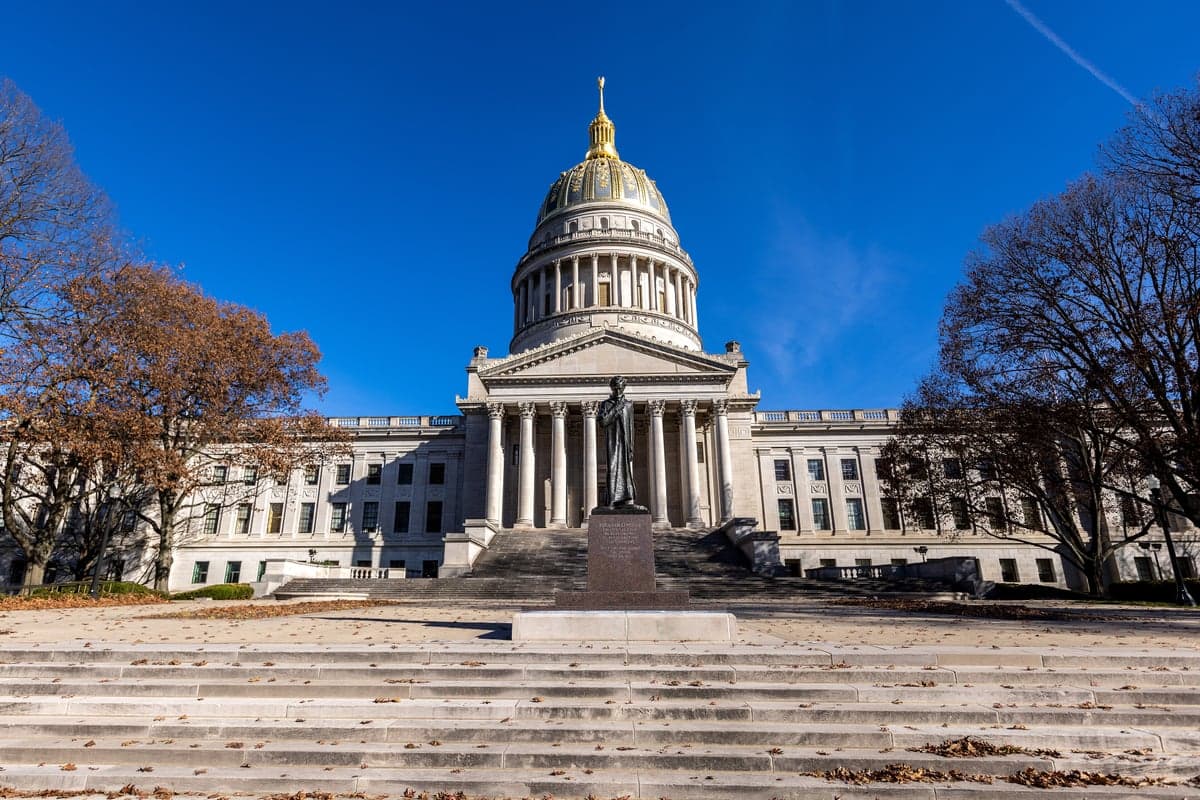
Photo: Wikipedia
Strategic Assessment of Charleston, WV
Meaningful friction. Expect exposure to either population pressure, blast zones, or natural disaster risk. Consider buying a retreat property.
What does the Strategic Assessment tell us?
Our Strategic Assessment grades tactical survivability of an area. Major population centers, military targets, fallout zones, natural disasters, and border exposure all drive risk — lower exposure means a more defensible position in a crisis.
This is heavily inspired by Joel Skousen's Strategic Relocation book. Highly recommended you checkout the book ($)What does this tell us?
Our Strategic Assessment grades tactical survivability of an area. Major population centers, military targets, fallout zones, natural disasters, and border exposure all drive risk — lower exposure means a more defensible position in a crisis.
This is heavily inspired by Joel Skousen's Strategic Relocation book. Highly recommended you checkout the book ($)Strategic Pillars

Key Distances
Regional Safe Places
Below is our recommended "safe zones" in West Virginia and the surrounding area based on our strategic heuristics. For most people, it's unrealistic to live in a “safe zone” full-time due to work, family or other personal reasons. They tend to be more rural. However, many of these areas are perfect for second homes and retreat properties that double as a vacation home or even a short-term rental.
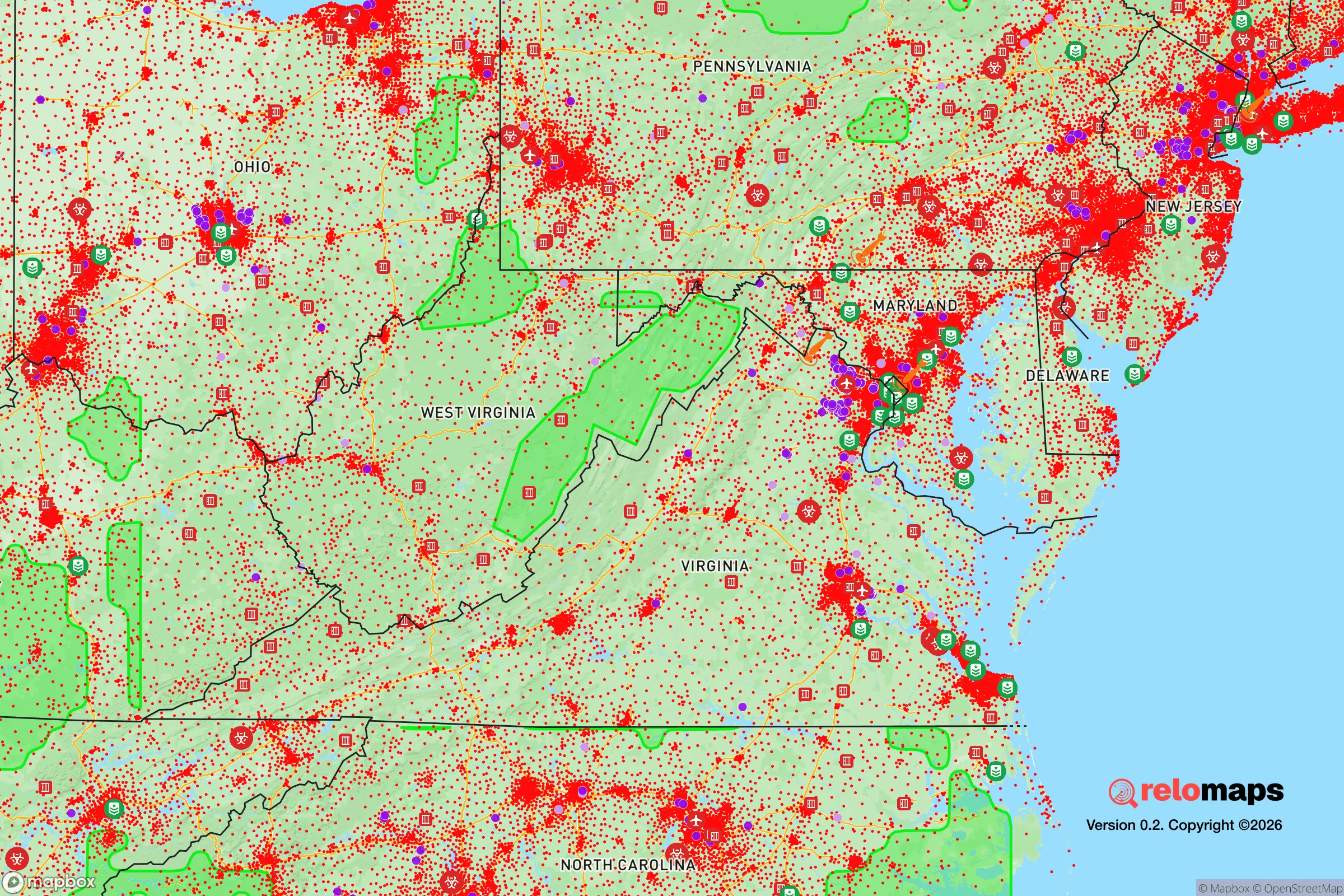
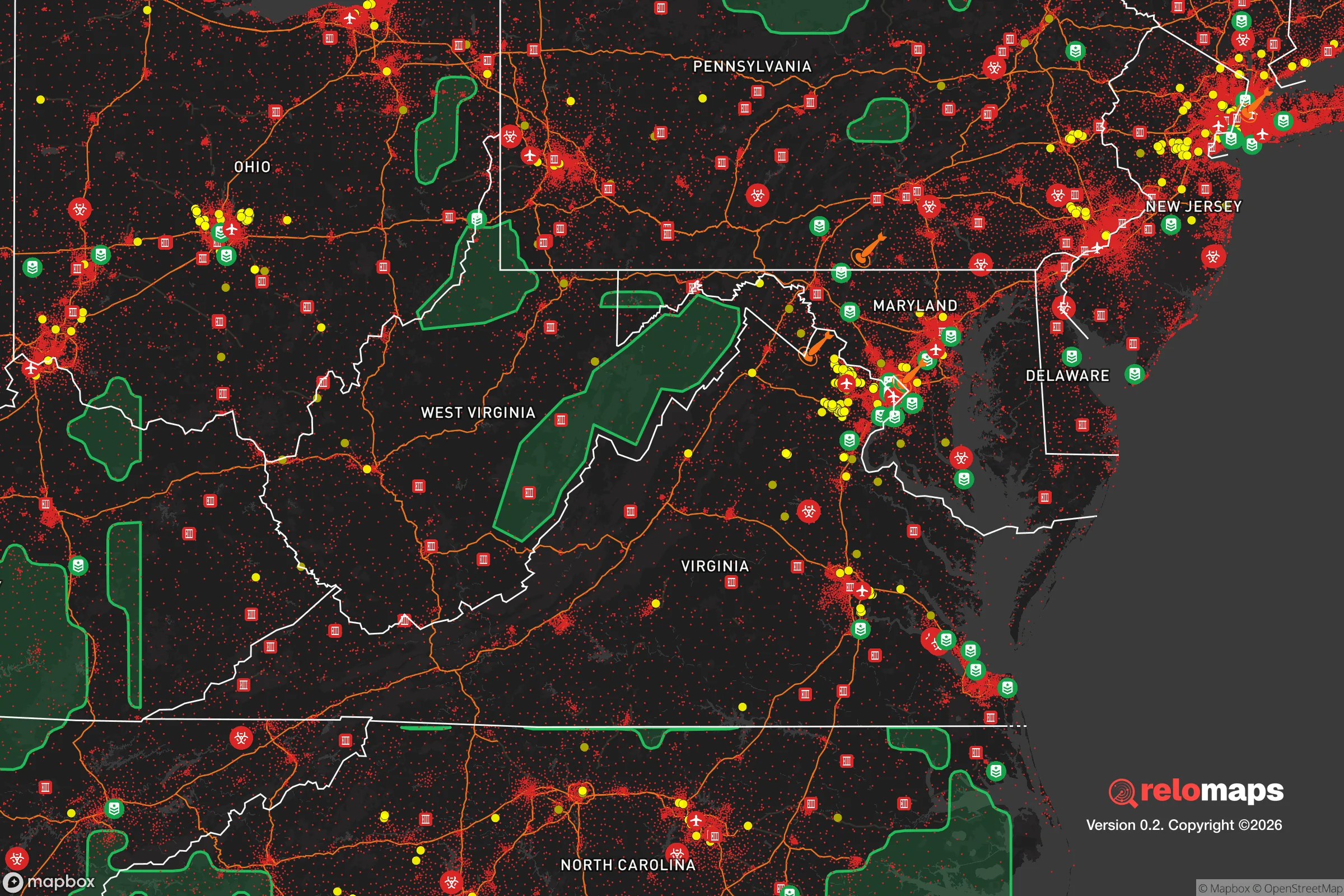


Important Note: For informational purposes only. This does not mean nothing bad ever happens in the green zones. Please use common sense. This is based on public data and modeled with AI. We tried to take a conservative approach but mistakes happen. We update this regularly as new information becomes available.
Solar Generator Recommendations
Backup power matters more here than in safer locations. We've picked three solar generators across budgets and capacity tiers — start with the budget unit if you only need a few essentials, or step up if you want to run a fridge and HVAC for days at a time.

Jackery Portable Power Station Explorer 300
Budget OptionPower on the Go: Weighing only 11 lbs, it's convenient to set up and store with book-sized foldable solar panels

BLUETTI Portable Power Station AC180
Designed for both indoor and outdoor scenarios, AC180 is highly capable as it has a robost capacity and continuous output power.

EF ECOFLOW DELTA Pro Ultra Power Station
Upgraded PickEcoFlow DELTA Pro Ultra is a whole-home energy system designed to grow with your family. Integrated with the Smart Home Panel 2, it scales to meet your evolving energy needs — keeping your home powered, intelligent, and secure through every stage of life.
We earn a commission, at no additional cost to you.
Strategic Assessment Analysis
Charleston, West Virginia, offers a strategic relocation option for those prioritizing resilience and self-sufficiency, particularly for individuals and families with a conservative, prepper-oriented mindset. The city’s position in the Appalachian foothills provides natural buffers against the cascading failures of coastal and urban centers, while its modest population—roughly 47,000 in the city and 250,000 in the metro area—means fewer targets for civil unrest and fewer dependencies on fragile supply chains. For a relocator seeking a base that balances access to essential services with a lower-risk profile, Charleston presents a compelling, if imperfect, case.
Geographic position and natural advantages for long-term security
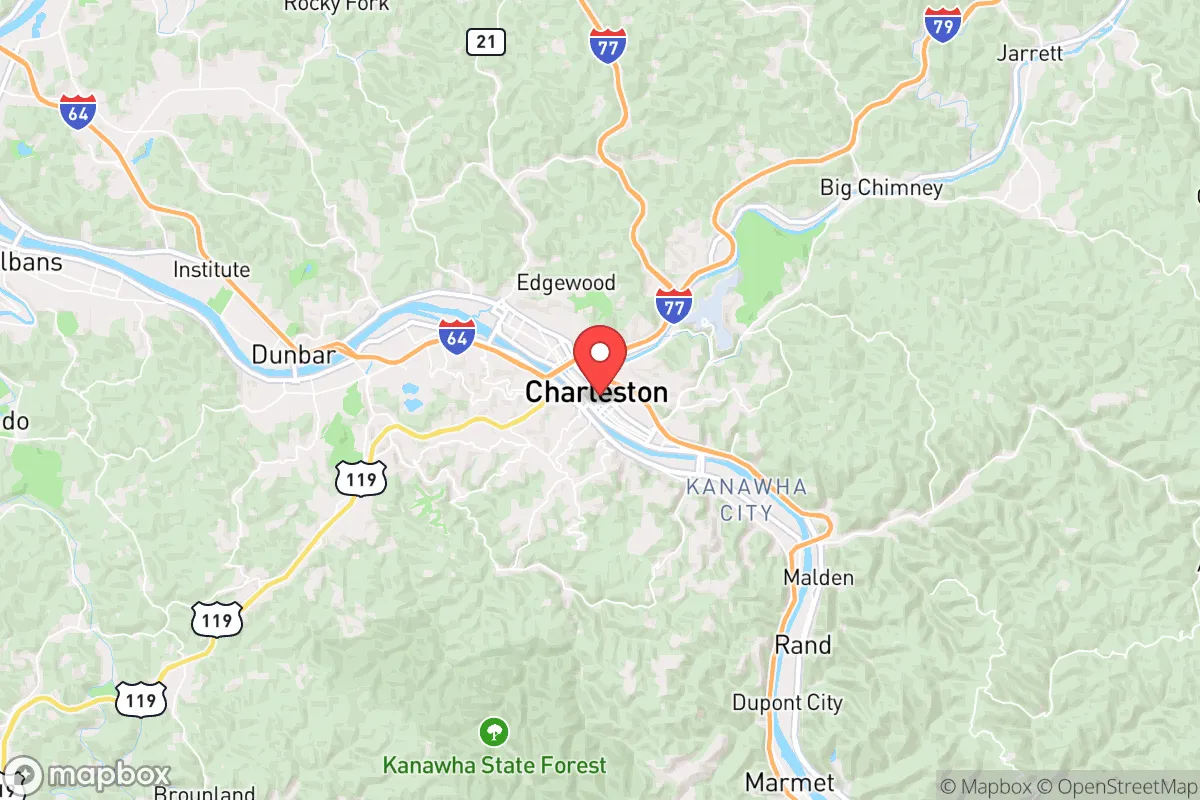
Charleston sits in the Kanawha River Valley, surrounded by the Appalachian Plateau, which creates a natural defensive perimeter. The surrounding hills and narrow river corridors make large-scale troop movements or riot control operations difficult, a factor that matters if you’re planning for scenarios involving mass casualty events or federal overreach. The area is roughly 150 miles from Columbus, Ohio, and 200 miles from Washington, D.C.—close enough to monitor national events but far enough to avoid the immediate fallout of urban collapse. The Kanawha River itself provides a reliable water source, though it requires filtration due to industrial history. The region’s coal and natural gas reserves mean energy independence is plausible; West Virginia is the second-largest coal producer in the U.S. and a net exporter of electricity. For a family prepping for grid-down scenarios, this proximity to energy infrastructure is a tangible advantage, not just a talking point.
Risks, exposures, and proximity to fallout-relevant landmarks
No strategic assessment is honest without addressing vulnerabilities. Charleston’s biggest exposure is its industrial corridor along the Kanawha River, which includes chemical plants, a petroleum refinery, and the Yeager Airport—a potential target for domestic or foreign actors. The nearby West Virginia State Capitol and federal buildings in downtown Charleston could become focal points for civil unrest, though the city’s small size limits the scale of such events. More concerning is the proximity to the Appalachian Storage Hub, a network of natural gas storage caverns that, if compromised, could create a localized disaster. Additionally, the region sits within 200 miles of the Oak Ridge National Laboratory in Tennessee, a nuclear research facility that, while not a reactor, is a potential target for sabotage. For a relocator, these risks are manageable with proper planning—unlike living within blast radius of a major city or military base. The real danger is complacency: Charleston’s quiet exterior can lull one into ignoring the industrial hazards that are part of its economic backbone.
Practical resilience for a relocator: food, water, energy, and defensibility
For a single individual or family serious about self-sufficiency, Charleston offers a mixed bag. The Kanawha River and its tributaries provide surface water, but industrial runoff from decades of mining and manufacturing means you’ll need a high-quality filtration system—think Berkey or reverse osmosis, not a simple Sawyer filter. The surrounding hills are rich for hunting (deer, turkey, small game) and foraging (ramps, morels, blackberries), but public land access is limited; most viable acreage is private, so buying land with water rights is a priority. The local food scene is improving, with farmers’ markets in the East End and South Hills, but year-round food production requires greenhouse investment due to cold winters. Energy resilience is strong: the area’s grid is fed by coal and natural gas plants, and solar potential is moderate (about 4.5 peak sun hours per day), but winter cloud cover can reduce output. Defensibility is where Charleston shines—the hilly terrain and winding roads create natural chokepoints, and many neighborhoods (like South Hills or Kanawha City) sit on ridges with clear sightlines. A well-stocked homestead with a wood stove, a backup generator, and a defensible perimeter can hold out for weeks without outside support. The local gun culture is robust, with multiple ranges and a strong Second Amendment community, which aligns with a prepper’s need for both security and community networking.
Overall strategic picture for a conservative relocator
Charleston is not a bug-out location for the end of the world—it’s a strategic base for weathering the slow unraveling of urban systems. The city’s conservative lean is evident in its politics (West Virginia voted +39 for Trump in 2020), but the local economy is heavily dependent on government jobs and subsidies, which creates a vulnerability if federal funding dries up. For a relocator, the key is to buy land outside the city limits—look toward Clay, Roane, or Nicholas counties—while maintaining a residence in Charleston for work and supply runs. The presence of the West Virginia National Guard headquarters in Charleston is a double-edged sword: it provides a rapid response to disasters but also means the area could be a staging ground for federal actions during civil unrest. The bottom line: Charleston offers a low-cost, low-profile entry point into Appalachian resilience, with real advantages in energy, water access, and defensibility. But it requires active preparation—stockpiling supplies, building community ties, and understanding the industrial risks. For a family or individual willing to put in the work, it’s a solid choice in a deteriorating national landscape.

* Values derived from national, state, county, city and local statistics and may differ in a specific area. Last updated: 2026-05-01T18:25:21.000Z
Narrative content on this page is AI-generated and may contain mistakes. Verify any details that matter before acting on them.
ReloMaps may earn a commission from affiliate links at no extra cost to you.

