
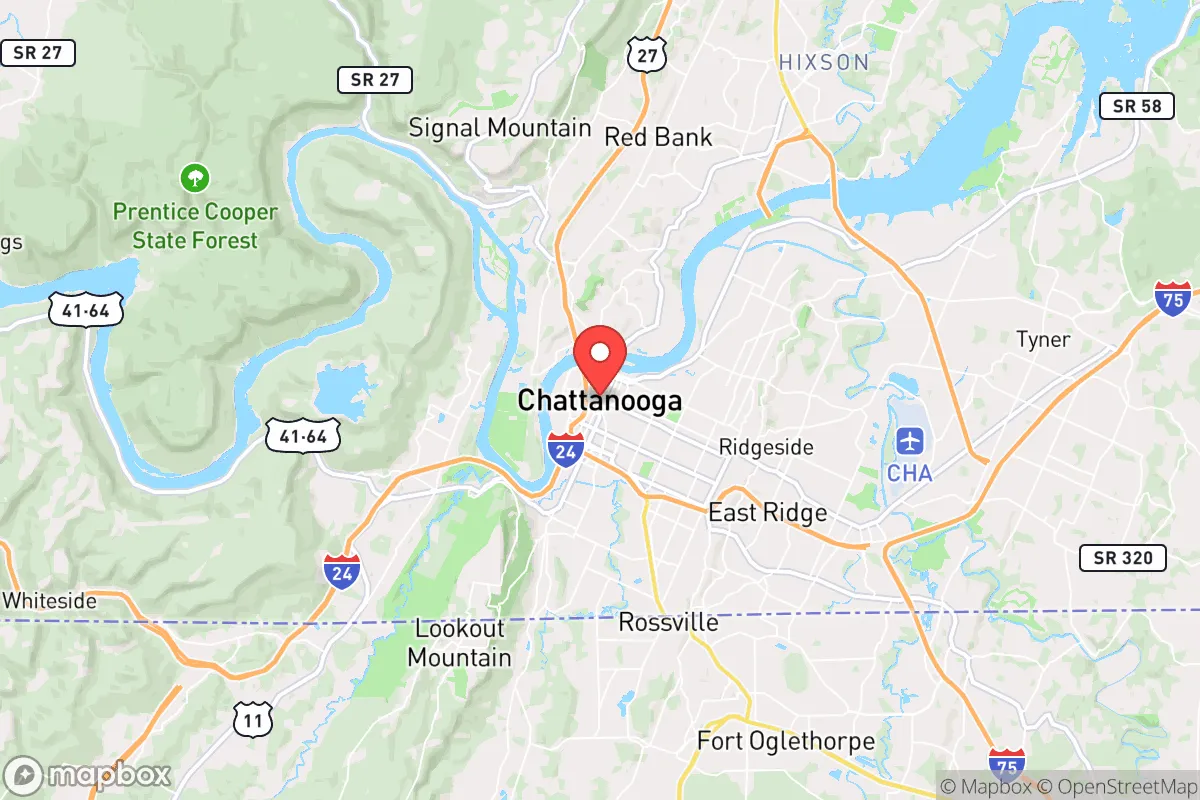
Photo: Wikipedia
Quality of Life in Chattanooga, TN
Above-average quality of iife. The area offers a reasonable cost of living, decent mobility, and a mix of neighborhood amenities.
What does Quality of Life tell us?
Quality of Life blends cost of living, nearby amenities, socioeconomic signals, and neighborhood character. City-level scores represent the whole municipality; individual neighborhoods can differ.
What does this tell us?
Quality of Life blends cost of living, nearby amenities, socioeconomic signals, and neighborhood character. City-level scores represent the whole municipality; individual neighborhoods can differ.
Cost of Living
4% below national average
The Real Cost of Living in Chattanooga, TN for 2026
| Tier | Individual | Family (4) |
|---|---|---|
| Survival | $18k | $35k |
| Comfortable | $50k | $74k |
| Luxury | $110k+ | $171k+ |
| Elite (Top 5%) | $158k+ | $245k+ |
82%
The Area Signal
A metric tracking the socioeconomic signals of the area.


Hobbies
Explore the areaGroceries
5 within 10 miles
Gas
0 within 10 miles
Hospital
3 within 20 miles
Airport
BNA — Nashville International
Post Office
USPS — Chattanooga, TN
Critical Amenities
Quality-of-Life Analysis
Chattanooga, Tennessee, presents a distinctive quality-of-life profile that blends moderate affluence with a notably lower cost of living than the national average. The area attracts a diverse mix of residents, including young professionals drawn to the growing tech and outdoor recreation sectors, families seeking affordable housing near good schools, and retirees looking for a mild climate and scenic surroundings. With a cost-of-living index of 96 (100 = U.S. average), Chattanooga offers a financial advantage that allows many households to enjoy a higher standard of living than their incomes might suggest in pricier metros.
How housing costs and affordability compare to Nashville and Atlanta
Chattanooga’s housing market is a primary driver of its affordability. The median home value sits at $259,200, significantly below the national median of roughly $350,000 and far less than nearby major metros like Nashville (median ~$420,000) or Atlanta (median ~$400,000). Median rent is $1,155, which is about $200–$400 less per month than comparable rentals in those larger cities. This price advantage means that a household earning the local median income can typically afford a three-bedroom home without being cost-burdened. The average commute of 18.7 minutes is notably short for a city of Chattanooga’s size (metro population ~560,000), reducing transportation costs and freeing up time for family or recreation. Compared to suburban sprawl in Atlanta or Nashville, where commutes often exceed 30 minutes, Chattanooga’s compact layout is a tangible daily benefit.
What daily life is like for families and outdoor enthusiasts
Daily life in Chattanooga revolves around a strong sense of community and easy access to nature. The city’s public school system, Hamilton County Schools, includes several highly rated magnet and STEM-focused programs, such as Chattanooga School for the Arts and Sciences and STEM School Chattanooga, which draw families to specific neighborhoods. The downtown area has seen a revitalization centered on the Tennessee River, with the Tennessee Aquarium, the Walnut Street Bridge (a pedestrian-only bridge), and the Bluff View Art District providing walkable cultural anchors. For outdoor enthusiasts, the city is a gateway to rock climbing at Sunset Rock on Lookout Mountain, mountain biking at Raccoon Mountain, and paddling on the river. The Chattanooga Market, held Sundays at the First Tennessee Pavilion, offers local produce and crafts, reinforcing a slower, more connected pace of life than in larger metros. The city’s relatively low crime rate in many core neighborhoods—though property crime is a concern in some areas—further supports a family-friendly reputation.
Chattanooga is best suited for people who value a balanced, outdoor-oriented lifestyle without the high costs and congestion of larger Southern cities. Young professionals in fields like logistics, insurance (home to Unum and BlueCross BlueShield of Tennessee), and advanced manufacturing will find a growing job market. Families will appreciate the affordable housing and short commutes, while retirees can take advantage of the mild winters and low property taxes. However, those seeking a vibrant nightlife scene or a wide array of high-end dining may find the options limited compared to Nashville or Atlanta. For most, the trade-off is a clear win: a lower cost of living, a 20-minute commute, and the Tennessee River at your doorstep.

Crime in Chattanooga, TN
Higher crime rates than 74% of comparable U.S. locations.
Violent CrimeViolent Crime Analysis
Property CrimeProperty Crime Analysis
Crime Analysis
Chattanooga’s overall safety picture is shaped by crime rates that significantly exceed both Tennessee state averages and national benchmarks, a pattern that warrants careful consideration for anyone evaluating relocation to the Scenic City. With a violent crime rate of 704.6 incidents per 100,000 residents and a property crime rate of 3,329.4 per 100,000, the city’s figures place it among the higher-crime metropolitan areas in the Southeast. These numbers reflect systemic challenges that potential residents should weigh against the area’s natural amenities and economic opportunities.
Crime in context
Chattanooga’s violent crime rate is roughly double the national average of approximately 380 per 100,000 and well above Tennessee’s state rate of about 630 per 100,000. Property crime in Chattanooga also runs high, exceeding the national average of roughly 1,950 per 100,000 by more than 70%. The city’s crime index places it in the bottom 10% of U.S. cities for safety, according to FBI data. These elevated rates are consistent with trends seen in many mid-sized Southern metros that have experienced rapid growth alongside persistent socioeconomic disparities. The presence of progressive judicial policies in Hamilton County, including district attorneys who emphasize diversion programs and reduced sentencing for nonviolent offenses, has been cited by local law enforcement as a contributing factor to repeat offending and a perception of low consequences for property crimes.
What residents experience
For daily life in Chattanooga, the most tangible impact is property crime, which accounts for the vast majority of incidents. Vehicle break-ins, package theft, and residential burglaries are common complaints in neighborhood forums and Nextdoor groups. Violent crime, while less frequent, is concentrated in specific areas and often tied to disputes among individuals known to each other rather than random attacks on strangers. Residents in downtown and Southside districts report a heightened sense of caution after dark, particularly near entertainment venues and parking lots. The city’s police department has responded with increased patrols in high-traffic zones and a real-time crime center that uses camera networks, but clearance rates for property crimes remain low, typically under 20%.
Neighborhood-level variation is significant. Areas like North Chattanooga and Signal Mountain report crime rates 40-60% lower than the citywide average, while neighborhoods such as Alton Park, East Lake, and parts of Highland Park experience violent crime rates two to three times the city mean. The downtown core, including the South Broad District, has seen property crime rise alongside new development, though violent incidents remain sporadic. Prospective residents are advised to examine block-level crime maps from the Chattanooga Police Department’s open data portal and to visit neighborhoods at different times of day to gauge real conditions. The combination of high citywide rates and progressive prosecutorial policies means that even lower-crime enclaves are not immune to spillover effects from adjacent areas.
* Values derived from national, state, county, city and local statistics and may differ in a specific area. Last updated: 2026-04-15T23:51:52.000Z
Narrative content on this page is AI-generated and may contain mistakes. Verify any details that matter before acting on them.
ReloMaps may earn a commission from affiliate links at no extra cost to you.

