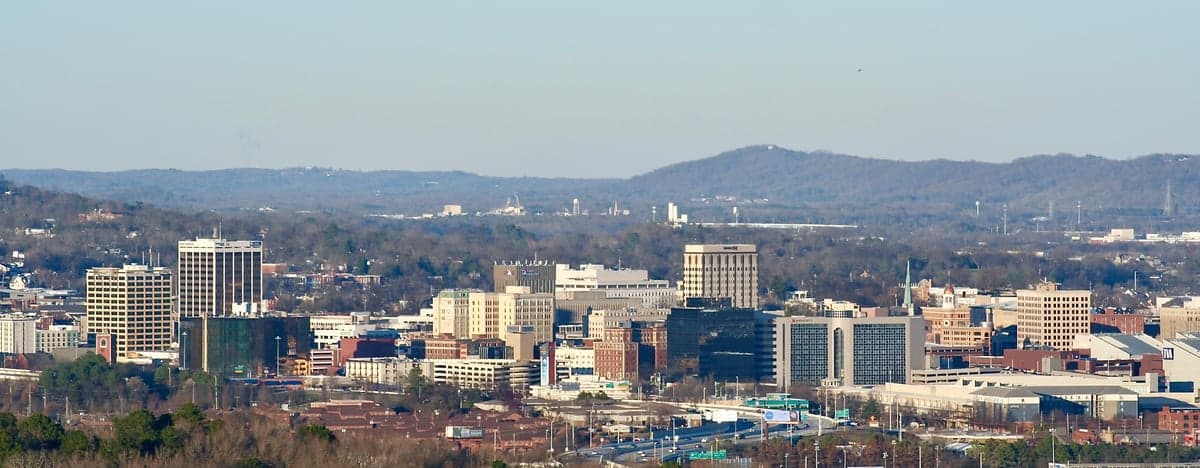
Photo: Wikipedia
Political ClimatePolitical Climate in Chattanooga, TN
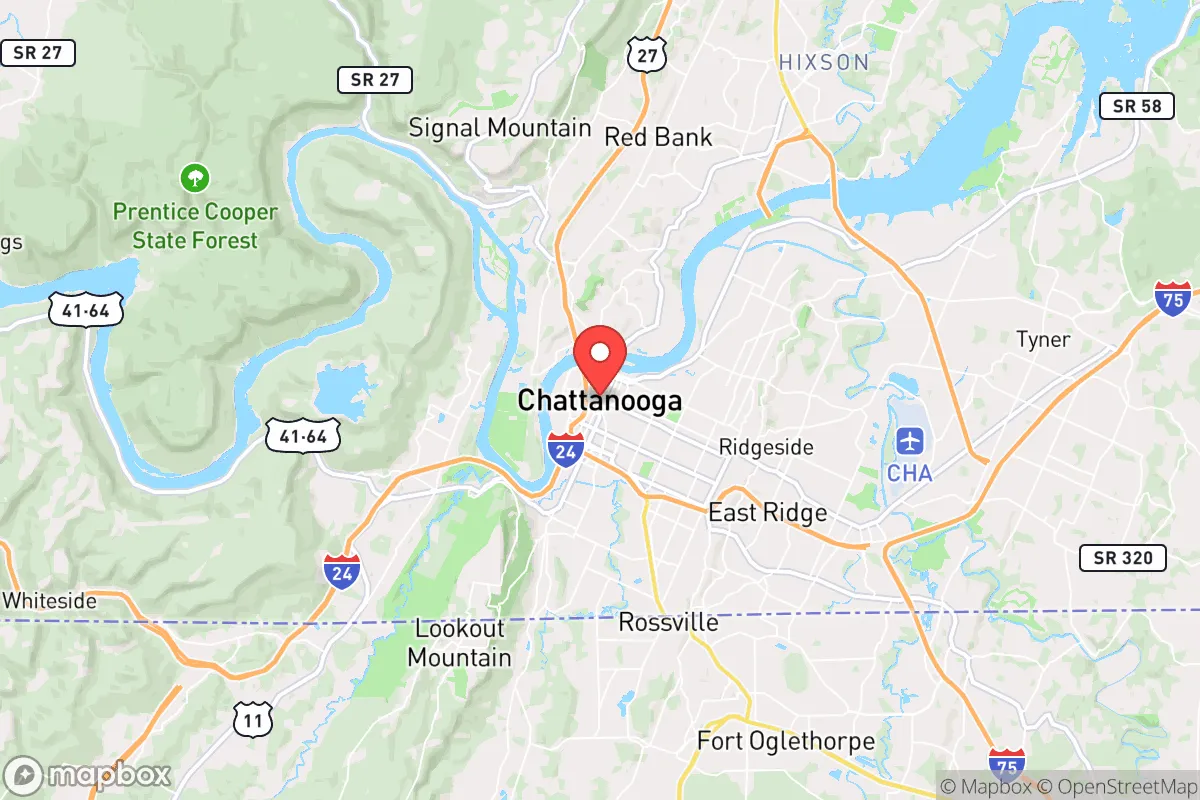
District shown is the primary district for this city’s centroid. Cities may span multiple districts.
Local Political AnalysisPolitical Analysis of Chattanooga, TN
Chattanooga sits in a solidly conservative region with a Cook PVI of R+18, meaning the area leans heavily Republican in federal elections, but the city itself has seen a noticeable shift toward progressive policies in recent years. If you’ve been around here as long as I have, you remember when local government mostly kept its nose out of your business—low taxes, minimal red tape, and a general live-and-let-live attitude. Now, you’re starting to see more zoning overhauls, talk of “equity” initiatives in city planning, and a push for higher density that feels like it’s borrowed from Nashville or Atlanta. The surrounding counties—like Hamilton County’s more rural precincts, or towns like Signal Mountain and Ooltewah—still vote reliably conservative, but inside the city limits, the political vibe is getting muddier.
How it compares
Drive 20 minutes north to Cleveland, TN, or head west to Jasper, and you’ll find communities that haven’t budged an inch from traditional conservative values—low regulation, strong Second Amendment support, and a general skepticism of government overreach. Chattanooga, by contrast, has become a bit of an outlier in this region. The city council has flirted with inclusionary zoning policies and funded programs that some locals see as creeping social engineering. Compare that to nearby Ringgold, GA, just across the state line, where the tax burden is lighter and the local government rarely meddles in property rights or business operations. The contrast is stark: Chattanooga’s progressive drift feels like a slow-motion version of what happened in Asheville or Knoxville’s downtown core, while the rest of the area stays firmly red.
What this means for residents
For folks who value personal freedom and limited government, the trend is worth watching closely. Property taxes have inched up as the city funds new transit studies and affordable housing mandates—things that sound good on paper but often mean more bureaucracy and less control over your own home. If you’re a small business owner, you might notice longer permit wait times and stricter sign ordinances downtown. The school board has also seen debates over curriculum transparency, with some parents worried about progressive social studies frameworks creeping in. On the flip side, if you lean left, you’ll find a growing network of activist groups and a city government that’s increasingly responsive to national progressive talking points. But for the longtime conservative resident, the feeling is that Chattanooga is slowly trading its independent, mountain-town character for a more managed, top-down approach.
Culturally, Chattanooga still holds onto some distinctions that set it apart from deep-blue metros. The gun culture remains strong—you’ll see concealed carry permits in plain sight at coffee shops—and the local churches are still a major political force. But the city’s embrace of “creative placemaking” and public art funding has raised eyebrows among those who see it as a gateway to more ideological programming. The long-term trajectory depends on whether the surrounding conservative suburbs can keep the city council in check during elections. If you’re thinking of moving here, just know that the political climate is a mixed bag: the region is still conservative at its core, but the city itself is inching toward a more progressive, interventionist style of governance that might rub you the wrong way if you value personal liberty above all else.

State Political ClimatePolitical Climate in Tennessee
State Political AnalysisPolitical Environment in the State
Tennessee has been a reliably red state for decades, but the political climate has shifted noticeably rightward over the past 10-20 years, driven by a combination of suburban growth, rural consolidation, and a wave of conservative legislation. The state’s dominant coalition is a mix of traditional Southern Democrats-turned-Republicans, evangelical voters, and a growing number of transplants from blue states seeking lower taxes and fewer regulations. In 2024, Donald Trump carried Tennessee by roughly 30 points, and Republicans hold supermajorities in both chambers of the state legislature—a position they’ve strengthened since the 2010 Tea Party wave. However, the state’s political identity isn’t monolithic; the urban centers of Nashville, Memphis, and Knoxville are increasingly progressive, creating a sharp urban-rural divide that defines most political battles.
Urban vs. rural divide
The political map of Tennessee is a study in contrasts. The three major metros—Nashville (Davidson County), Memphis (Shelby County), and Knoxville (Knox County)—are the state’s Democratic strongholds, with Nashville and Memphis reliably voting blue by double digits. Nashville, in particular, has seen explosive growth and a corresponding leftward shift, with its city council pushing progressive policies like sanctuary city resolutions and defunding police rhetoric, though those efforts have been largely symbolic. Meanwhile, the suburbs ringing these cities—like Franklin (Williamson County), Brentwood, and Collierville—are deeply red, often voting 70%+ Republican. Williamson County, for example, is one of the wealthiest and most conservative counties in the nation. Rural areas, especially in East Tennessee (e.g., Johnson City, Kingsport, Bristol) and Middle Tennessee (e.g., Cookeville, Lebanon), are overwhelmingly Republican, with many counties voting 80%+ for Trump. The divide is so stark that state politics often boil down to a tug-of-war between the urban progressive agenda and the rural conservative majority that controls the legislature.
Policy environment
Tennessee’s policy environment is among the most conservative in the nation, with a strong emphasis on low taxes, limited government, and traditional values. The state has no income tax on wages, a flat 1.925% tax on interest and dividends, and a relatively low sales tax rate of 7% (though local add-ons can push it to 9.75%). Property taxes are also low, especially compared to the Northeast and West Coast. The regulatory posture is business-friendly, with right-to-work laws and minimal zoning restrictions in most areas. On education, Tennessee has a robust school choice program, including charter schools and a new Education Savings Account (ESA) program passed in 2023 that allows families in certain counties to use public funds for private school tuition. The state also passed a law in 2024 requiring schools to notify parents of any changes in a student’s mental, emotional, or physical health—a parental rights measure that has drawn national attention. Healthcare policy is mixed: Tennessee expanded Medicaid under TennCare but has not pursued a state-based exchange, and the legislature has repeatedly rejected efforts to legalize medical marijuana. Election laws are strict, with voter ID requirements, limited early voting windows, and a ban on ballot drop boxes. The state also passed a law in 2023 making it a felony for election officials to send unsolicited absentee ballot applications.
Trajectory & freedom
Tennessee is moving decisively toward more personal freedom in many areas, but with some notable caveats. On gun rights, the state enacted permitless carry in 2021, allowing any law-abiding adult to carry a handgun openly or concealed without a permit. The legislature also passed a law in 2023 prohibiting local governments from enforcing federal gun laws that conflict with state law—a direct challenge to federal overreach. On parental rights, the 2024 “Parental Bill of Rights” law requires schools to get parental consent before providing any medical or mental health services, and it bans instruction on sexual orientation or gender identity in K-8 classrooms. Medical freedom took a hit in 2023 when the legislature banned gender-affirming care for minors, a move that has been challenged in court but remains in effect. Property rights are strong, with no state-level rent control and a relatively straightforward eminent domain process. However, the state’s tax structure, while low, is regressive, and the sales tax on groceries (4%) is a burden on low-income families. Overall, Tennessee is trending toward more individual liberty, especially on guns and education, but the state’s willingness to intervene in medical decisions for minors shows a willingness to restrict freedom in the name of protecting traditional values.
Civil unrest & political movements
Tennessee has seen its share of political flashpoints, but civil unrest is relatively rare compared to states like Oregon or New York. The most visible recent movement was the 2023 expulsion of two Democratic state representatives from the legislature for leading a gun control protest on the House floor after the Nashville Covenant School shooting. That event galvanized progressive activists, but it also energized conservative voters who saw it as a necessary defense of legislative order. Immigration politics are heated, with the legislature passing a 2024 law requiring local law enforcement to cooperate with federal immigration authorities and penalizing “sanctuary city” policies. Nashville’s city council has resisted, leading to ongoing legal battles. Election integrity remains a hot-button issue: the state created a Division of Election Integrity in 2023 to investigate voter fraud, though no widespread fraud has been found. There is no serious secession or nullification movement in Tennessee, but the state’s attorney general has joined multi-state lawsuits against federal vaccine mandates and environmental regulations. A new resident would notice that political signs and flags are common in rural areas, but open political confrontation is rare—most people keep their views private in mixed company.
Projection
Over the next 5-10 years, Tennessee is likely to become even more conservative, driven by two major trends: in-migration from blue states and the continued exodus of young progressives from rural areas to Nashville and Memphis. The state’s population is growing by about 1% annually, with most newcomers coming from California, Illinois, and New York—many of whom are conservative-leaning or at least seeking lower taxes and less government. This influx is likely to strengthen the Republican supermajority in the legislature and push policy further right on taxes, education, and gun rights. However, the urban-rural divide will widen, with Nashville and Memphis becoming more progressive and more isolated from state power. This could lead to more preemption battles, where the state legislature overrides local ordinances on issues like housing, zoning, and police funding. The biggest wildcard is the 2026 gubernatorial race, as Governor Bill Lee is term-limited. A more populist successor could push for even more aggressive policies on immigration, election integrity, and school choice. For a new resident, the Tennessee of 2035 will likely look much like today, but with even lower taxes, more school choice options, and a sharper cultural divide between the cities and the rest of the state.
For a conservative-leaning individual or family considering a move, Tennessee offers a strong alignment with traditional values, low taxes, and a government that generally stays out of your personal life—especially on guns, education, and property. The trade-off is that you’ll be living in a state where the urban centers are increasingly at odds with the state government, which can create friction on local issues like school boards and city councils. If you’re looking for a place where your vote counts and your values are reflected in state law, Tennessee is one of the best bets in the country. Just be prepared for the summers, the humidity, and the occasional political drama from Nashville.
* Values derived from national, state, county, city and local statistics and may differ in a specific area. Last updated: 2026-04-15T23:51:52.000Z
Narrative content on this page is AI-generated and may contain mistakes. Verify any details that matter before acting on them.
ReloMaps may earn a commission from affiliate links at no extra cost to you.

